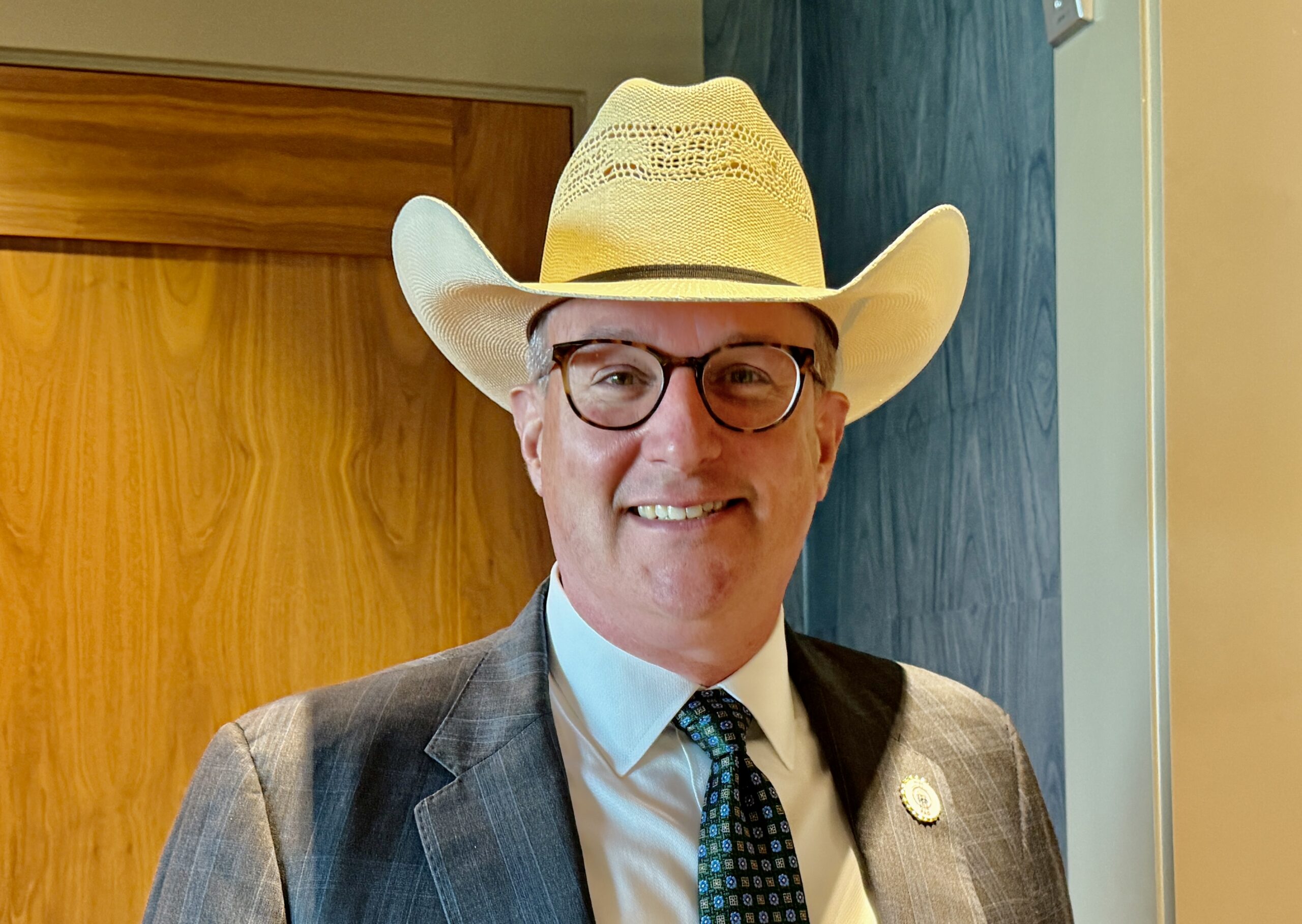
This week, Haley is joined by Colin Woodall, CEO of the National Cattlemen’s Beef Association (NCBA), to dive deep into the cattle ranching industry. From his roots on a small cow-calf operation in Texas to leading the nation’s oldest and largest trade association for cattle producers, Colin shares his journey and answers all your cattle-related questions.
Discover the critical role NCBA plays in advocating for cattle producers and landowners nationwide. Colin also sheds light on the current state of the cattle market, revealing why now is a prime time to be a cattle rancher. Thinking about getting started? Colin and Haley discuss tips, tricks, and resources to help you break into the industry.
Whether you’re a seasoned rancher or just “cattle-curious”, this episode offers valuable insights into how cattle ranching sustains our lands and provides a high-quality, sustainable protein source to the U.S. and beyond. Join the “mooovement” and tune in!
Topics
[1:00] Introduction
[4:39] The role and reach of the NCBA
[13:07] NCBA’s research on nutrition
[15:51] Myth Busted: Cow Farts
[23:09] Positive environmental impacts of cattle
[28:47] Current market conditions
[33:49] International market impacts
[40:41] Resources for cattle ranchers
Haley Mirr (00:06):
Welcome back to the Land Bulletin Podcast, where every other week we bring you experts in the field to impart their knowledge when it comes to the ranch and sporting property market, buying and selling advice, the latest, best stewardship practices, as well as topics that impact landowners every day. I’m your host, Haley Mirr. Let’s jump in.
Welcome back, everyone to the Land Bulletin podcast. Today we’ll be looking at the current state of the cattle ranching market in the American West. What trends are currently affecting cattle ranchers and what resources are out there to cattle ranchers and cattle? Helping me out today is Colin Woodall, the CEO of the National Cattlemen’s Beef Association. Welcome Colin
Colin Woodall (00:46):
Haley. It’s great to be with you. Thanks for having me.
Haley Mirr (00:49):
Yeah, I’m glad Eric made the introduction. This will be a really fun conversation and it’s really nice too, having you guys have a big presence locally, but also nationally, so it’s neat to highlight companies like yours that are out there protecting the American West and the people that make it what it is. So thanks for coming on. And before we get started, I would love to know, Colin, I know you’re an Aggie. I know you come from Texas, do a little research, but I’d love to know what brought you into this industry and to the position you hold now at NCBA?
Colin Woodall (01:20):
So I’m originally from Texas. My family has a small cow calf, commercial cow calf operation in the western part of the state. You’re right, I did go to Texas A&M University. I got a degree in agricultural systems management and when I graduated from a and m, I went to work for an agribusiness company called Cargill, which I’m sure a lot of your watchers and listeners are familiar with, big agribusiness group. What was interesting though is I didn’t go into their cattle division or their beef division at the time I went into their grain division. So I started out by managing grain elevators in Western Kansas and had a great opportunity of working with corn producers, wheat producers, milo producers, soybean producers, and really got to see the world of grain production in the bread basket of the United States. Tremendous experience to get to know more about that side of American agriculture.
(02:15):
But then I had the opportunity to pack up and go to Washington DC where I had a chance to work for a newly elected US senator from Texas by the name of John Cordon, Senator Cordon, and still there. We got to go to work with him and do project work on agriculture issues, energy issues, water and natural resource issues. And it was during my time on Capitol Hill where the National Cattleman’s Beef Association lobbyists would come in and lobby me on the different issues from their association. And over the course of my time on the hill, I got to work with them and one day they came in and said, Hey, we’re getting ready to add a new lobbyist position. You should come on board and apply for it. So I did and I was lucky enough to get the job. I started out as the junior lobbyist in the Washington DC office in 2004 and was able to work my way up the chain there.
(03:11):
I took over as the head of our DC operations in 2009. So I was in charge of directing all of our work with not only Capitol Hill, but also with the administration, other ag groups, and then even the International Attachees and the embassies there in DC. I did that for 10 years before I was selected to become the CEO of NCBA. That happened about five years ago. I packed up and left Washington dc, came out here to Denver and it’s been a great experience leading this association and all the work that we do, not just the work in Washington dc but a lot of the work that we do in things such as research, beef promotion, and this association is responsible for the iconic Beef for dinner campaign. It’s really fun to be a part of that.
Haley Mirr (04:02):
I had no idea about that. NCBA was in charge of that phrase. That’s great. And for those who are listening, who is the NCBA? Because like you said, it’s not necessarily a part of the government. I think there’s some misconceptions there. And how far is the reach of the NCBA, kind of like what you were talking about?
Colin Woodall (04:22):
Yeah, great question. So NCBA stands for the National Cattleman’s Beef Association and we were established in 1898. So we are the oldest and largest national trade association that represents America’s cattle producers and we are a trade association. We are not a part of the federal government. We are not a non-government entity. We are a producer association made up of cattle producers who formed this association. What’s interesting is it was formed by the Denver Chamber of Commerce back in 1898 and the Denver Chamber of Commerce at the time, they had a livestock committee just given the importance of livestock and building Denver as a city. And so they came up with the idea of hosting a convention. That first convention was in January of 1898 here in Denver, and they had producers from I think about 44 states that took the terrain or horseback or whatever it may have been, and came to Denver.
(05:24):
And at the end of that convention, they made the decision that this needed to be more than just a meeting a year. They needed to have a full-time trade association that was actively working on all the issues that were impacting landowners and all livestock producers. Now, over time, the association has morphed a little bit. When it started out, it was for all livestock. Now we are just focused on cattle and our headquarters is here in Centennial, Colorado, which is just on the south end of the Denver metro area. And as we look out the window here, we actually see land that was once the ranch of the first president of this association. Yeah, it is really cool because it kind of tells the story of the industry at a time when he became president, this was nothing but fields and pasture and now it’s housing developments everywhere and it kind of shows the challenges that this industry has had over time.
Haley Mirr (06:23):
Very much so.
Colin Woodall (06:25):
That was the genesis for the association to say we’ve kind of grown from there. We are really known for the work that we do in Washington dc so we have a full-time office there where our staff is up on Capitol Hill, we’re talking to members of Congress, we’re talking to their staff. We work with the White House, we work with all of the federal departments and we also, as I said, work with other organizations, groups like the National Corn Growers Association, American Farm Bureau Federation, and the international community. The international community has a big impact on us as an industry. So being able to talk to the ambassadors and the AG attaches from these embassies is such a critical component of our success. But on the other side, that’s huge. And on the other side of the association, we have a program what’s called the National Beef Checkoff, and every time an animal is sold, a dollar is set aside into what is really a very successful self-help program and that checkoff money.
(07:28):
NCBA is a contractor where we do programs in promoting and researching beef. So we do research on things such as food safety, e coli, if you’ve ever had a flat iron steak. The flat iron steak was a result of the work that our association did with these checkoff dollars to come up with new ways to sell beef. And then probably the most iconic thing, as we had just mentioned is we are responsible for beef for dinner, and it is truly kind of one of those iconic American marketing campaigns. It has been just so incredibly successful in helping promote beef, and it really helped us kind of change the demand for beef and reverse what was a declining course. So we’re really, really excited about that. So we are led by cattle producers while I am a hired staffer, but I report to an officer team made up of cattle producers who are in this job full time, and we are truly a grassroots organization. We have members in all 50 states, and that’s what’s really neat is because the needs for a producer in Massachusetts are different from one in California. It’s different from one in Washington state and also different from those out in Hawaii. So we have this role of trying to find an ability to bring all of those producers together to have one approach to addressing all of the challenges that we see.
Haley Mirr (09:00):
Wow, that’s incredible. And beyond the lobbying power and getting landowners what they need and how that’s different from state to state, how else does NCBA support lands from resources, that kind of thing?
Colin Woodall (09:15):
Yeah, so that’s a great point. It is one thing to be an advocate for landowners and producers in Washington DC because quite frankly, people don’t have the time in their daily lives to spend talking to their member of Congress or to their two senators or being able to be a voice for their needs. That’s where NCBA comes in. We can be that voice, that’s why we’re there full time. But it is more than just that advocacy. It’s about education. We spend a lot of time working on getting information out to producers, out to landowners on a variety of different things. For example, we have monthly webinars where we kind of talk about the latest in cattle production, being able to expose our members to new tools that they can use in producing their cattle for a landowner. We have a lot of programs and resources on things such as grazing management, being able to look at the resources you have and how to improve the overall quality of the grass that you’re growing.
(10:25):
Because when you really boil this down, even though we are the National Cattleman’s Beef Association, we’re about landowners because if we don’t have landowners who are either running their own cattle or leasing their ground to producers to run cattle, we don’t have an industry. So we have to make sure that landowners can protect themselves and also improve the quality of their land. So a lot of discussion about, as I said, tools that can help improve the quality of your forages, making sure that we are good stewards of that land so that way it plays its full role in being a tremendous natural resource, whether it has cattle on it or not, that having that open space and protecting that open space is extremely important. So being able to do things such as helping take down or decrease the burdens of federal taxes, for example, will allow people to keep their land and be able to hopefully expand their holdings and then pass it on to the next generation. So it’s more than just that Washington DC advocacy, it is about the educational component of helping people improve the land they have and then also providing them resources on what they can do to protect themselves from overtaxation and overburden some federal regulations.
Haley Mirr (11:56):
Love that. And this is kind of going off some of the questions I sent you earlier, but as you’re talking, I’m thinking to myself, there’s so much research that NCBA does including the beef for dinner. What are some of the things that you guys are researching from environmental impact of cattle to the nutrients related to beef when you eat it that the public sees? Maybe there’s a lot of landowners who understand the importance of what you guys do. You guys are supporting them, there’s advocacy, there’s research, there’s education, but then to the public, what are some of the things that you guys are researching as it relates to the cattle industry that impacts everybody?
Colin Woodall (12:35):
In order for us to have a future, we have to make sure that we’re looking at the public right? Because if we don’t have a customer for our product, if we don’t have a satisfied customer for our product, that our future’s pretty bleak. So spending a lot of time talking to the consumer is also a big component of NCB. I’ll give you a couple of great examples. Throughout the seventies into the eighties, even into the nineties, it was kind of this war on fat. Anything that had fat was just perceived due to not be healthy. We spent a lot of time researching the overall nutritional value of beef. What do we bring to the table as far as not only being fun to eat and being that great
Haley Mirr (13:25):
Delicious?
Colin Woodall (13:26):
Yeah, exactly. Everybody enjoys a good steak or a hamburger, but what more is it to that? What do we bring in terms of being a great source of zinc, iron of protein, of course, and then a lot of the B vitamins, things that are really kind of in a fuel packed package and being that a lot of cases anywhere from a three ounce or more serving of our product, and that research has just continued to gain steam. We’ve been able to have other researchers engage, be able to go in and test our theories to test the evaluation of our product, and it just continues to come back that we are a very important part of the overall nutritional needs of Americans. So we spend a lot of time making sure that Americans know that we can be center of the plate in the dietary guidelines for Americans, which comes out from the federal government every year, but also making sure that the consumer doesn’t have to feel guilty about eating beef because a lot of times us a boy, that’s really good, but I don’t know.
(14:39):
I can only eat this one today and I may not have another state for a while. We now know that that’s just not the case. So we have a lot of outreach not only to the public, but also to healthcare professionals. So we take this information, we bundle it together, and we have mailings out to healthcare professionals and doctors talking about the benefits, the nutritional value of beef. And what we have seen is that 86% of the doctors and the healthcare professionals that read our information tell us that they feel more confident in delivering our product or recommending our product after they have seen that. So that’s a real win for us as producers because they said it’s not just about the fund value. We have to make sure that people can feel good about it in eating our products. So on the nutrition side, that’s a big part of what we do, but hey, you hit on one that is probably one of the hotter topics that we have dealt with for a while, and that’s this concept of the impact on the environment. Everybody wants to talk about that and rightfully so. It has been a hot topic, whether you’re talking about sustainability or whether you’re talking about climate change or whatever the discussion may be. A lot of times it comes back to this notion of cow farts.
(16:13):
That’s what’s been talked about.
Haley Mirr (16:16):
I hear it all the time, and I like to combat it with knowledge. So I’d love to hear what you have to say.
Colin Woodall (16:22):
Yeah, yeah. Haley, you hit on probably what is one of the biggest issues that NCBA spends time on, and that is this perception or a lot of cases, the misperception of the cow’s impact on the environment. There’s a lot of people out there that want to blame us for climate change and environmental degradation. Matter of fact, I’m sure everybody has heard the members of Congress out there who have said that global climate change is being caused by cow farts, and we know that that’s just not the case for several reasons. One, the greenhouse gas that does come out of the animal doesn’t come out the back end. It comes back up out of the front end. So being able to engage in this conversation is actually an opportunity. It’s an opportunity for us to not only correct the record, but educate some people. We also want to be open and honest.
(17:23):
We have nothing to gain as an industry from trying to hide something or use smoke and mirrors or sweep it under the rug. The fact is the way the cow is constructed, they have a four chambered stomach and that four chambered stomach in the process of digesting grass releases greenhouse gases, and it’s released in the form of methane. Methane is a potent greenhouse gas. We know that. But we also have to have some perspective because methane coming out of the cow is not the same as carbon coming out of a tailpipe. When the methane is erupted, burped out by the animal, it goes up to the atmosphere and it spends about 10 to 12 years up there where it’s synthesized. Then it comes back down in the form of carbon that can be absorbed or sequestered by growing plants and utilize a photosynthesis to help that plant grow more, which the cow can come along graze on that grass and once again, turn that grass into a high quality protein.
(18:30):
So it’s a very virtuous cycle and a very important cycle in being able to reduce that protein while at the same time being able to keep things growing and keep things green. Now, I talk about things such as the four chambered stomach. It has an mason, an abo mason, or a rumen. These are all things that we know as producers, but 99% of American agriculture or American population is not involved in agriculture. And so we need to figure out a better way to take that story and talk about it in a way that’s a little bit more easily digestible. So this is kind of how we’ve come up with it. We say, Hey, think about a technology that’s solar powered. And so already you get people going, all right, all right, solar power.
Haley Mirr (19:25):
I think back to that,
Colin Woodall (19:27):
Yeah, it’s mobile. Without the use of fossil fuels, it can self replicate and it can take a trash substance that is no value to humans and turn it to high quality protein. And all of a sudden you get people shaking their head saying, yeah, that sounds pretty good. Then we can come in and say, well, that’s the cow. That animal, like all animals are truly solar powered. They do self-replicate in the way that they have generation after generation, and they can take what truly are materials of no value to us as humans and turn ’em into a high quality protein. We can’t eat grass, we can’t eat cotton whole seeds, we can’t, can’t eat so many of the things that a ruminant animal can, and therefore it gives them what we call the ruen or the bovine superpower. The superpower of the cow is to take those items that we can’t eat and turn it into a T-bone or a ribeye.
(20:35):
That’s what’s really cool. We also call it upcycling ai. It’s another little term that really gets people’s attention and that upcycling is again, taking things that are no use to us and being able to allow that rumen in the animal to turn it into a high quality protein. And when you think about the animals out there grazing as they graze that grass, it helps that grass promote more growth. So we are keeping land in green space when we graze on federal lands. So for example, so much of the Western United States is owned and managed by federal government agencies, the Bureau of land management or service, et cetera. We can go in and we can get grazing leases from the government to run our cattle. And when you have cattle in these federal lands, they can eat down the fuel loads, which help control forest fires too. So it’s not just about what we can do from the nutritional value of a high quality stake, but anything we can do to keep our forests from burning is also, I think, extremely important to us as producers, and it provides a value, especially on those federal lands. And if we weren’t there, you would have that continued underbrush growing up, which just makes Western fire or western fires that much more brutal and intense.
Haley Mirr (22:06):
I love that you brought that up because a lot of ranchers that we’ve spoken to, not to say all forest fires start in federal lands, but a lot of them start in public lands just because they’re huge. They’re these big spaces that don’t have the money or the management to kind of watch the whole thing. And the ranchers that we work with, they’re always speaking to the fact that if we were there with our cows, a lot of this would’ve been sequestered or at least managed a little bit more or mitigated than some of these bigger fires have started. Another thing I’d love to bring up too, since we’re talking about the environment and misperceptions of cattle, one great group we work with a lot is Colorado Cattleman’s Agricultural Land Trust, and one of the things that I’ve learned a lot through working with them over the past couple of years is how having cows and manage having cows managed correctly can really help with soil health too. So a lot of these landscapes where the soil is really starting to be degradated dried out, used up cows can really help with some of those soil types too. So just another thing I’d like to touch on for the people who are listening who are wondering what the impact cows have in a positive way,
Colin Woodall (23:18):
Thank you for bringing that up. And you also keyed on a couple of our very important partners, Colorado Cattleman’s Ag Land Trust, the Colorado Cattleman’s Association, Colorado Livestock Association, and we talked earlier about NCBA as that national voice, but we also have a federated structure where these state Cattlemen’s associations are also a part of NCBA, and that has been really, really important to ensure that there is not only a national voice, but also a state voice and the ag land trust, they play a critical role because of being able to take a lot of the federal programs that are out there and ensure that land is protected for the future. We’ve got to keep this land in green space regardless of what anybody wants to think about climate change or any of that. Really, one of the things that the cattle industry brings and that land owners in general brings is being able to protect that green space, keep it in range land, keep it in forests, keep it to a point where it is sequestering that carbon from the atmosphere.
(24:34):
But you’re right, we find in a lot of places that there is range degradation and the bovine, the cow going out on the range serves a lot of purposes. One, the cloven hoofed component of our animal, cloven hoof being just, it’s not just one solid hoof like you find on a horse, it just have that split in the middle as the cow is walking across the range of the pasture that clo and hoof helps break up the soil. So whenever you have the chance to help kind of break up that soil, it allows for seeds to get back in to be able to germinate. It allows for that soil to be able to take on and retain more of the moisture. And then as I said, that animal going through it’s grazing what is there whenever you graze, much like mowing your yard, whenever you graze a grass, it’s going to promote growth, continue the growth, and as that process works, ultimately there’s manure that’s coming out of the back of that animal that serves as a tremendous fertilizer.
(25:39):
So we have example after example of where you can take a degradated in a lot of cases, sometimes even a barren landscape, put cattle on there, and over time, especially as you manage the grazing and keep the animals moving, you can restore this range land. There’s a term that’s being used called regenerative grazing. That regenerative grazing truly is that whole process of allowing the animal to do its natural thing, and as a result, you have the land that can really heal, so barren land that doesn’t have much top soil, you start getting that growth of the grass, you start getting the manure, fertilizing it, you’re going to start building, rebuilding that top soil and in making that land healthier. So that is something that, to your point, Haley, we probably don’t talk enough about, but it is a critical component of what ruminant animals, especially cattle could do just for the benefit of rangelands pastures, the health of the soil, the health of the plants, and the overall health of the local flora and fauna. All of a sudden you start seeing the return of native plants and Forbes and wildflowers that you didn’t have before. We have a young lady who she and her family just won the National Environmental Stewardship Award. They have a cattle operation in Texas, and she shows these beautiful pastures that are full of wildflowers and different pollinators like butterflies that weren’t there before. They really started using cattle to better manage that land. So that’s exciting to be able to show the benefits that we can bring.
Haley Mirr (27:29):
That’s huge. Yeah, the reason I just bring that up, it’s a lot of our ranchers that we’ve sold properties for help purchase, you can see the before and after of having cows on certain parts of their landscape and the change that you can see through those regenerative techniques. It’s just incredible. So just something I wanted to hit on because I love cows and I just like to continue to emphasize why they’re a benefit to not only landowners but the public and the rural communities and beyond just the impact of the cows and the education that you guys are putting out there and the research that’s available. I’d love to go into what the market is like for cattle right now because there’s been a lot of changes over the last couple years and this market definitely affects land values for us and for our clients. So I’d just love to speak about the market right now and what factors tend to affect those numbers that we’re seeing.
Colin Woodall (28:29):
The market right now is on fire and it’s distinct. That’s a result of several things. It’s a result of demand. Demand both domestically and internationally, is on fire for beef. If we can produce it, it’s being sold and it’s being consumed. That’s back to a lot of things we talked about earlier of making the consumer feel comfortable about our product, getting excited about our product, and the fact is we’re about fun. People just don’t have fun with a boneless skinless chicken breast, but they have fun with a hamburger. They have fun with a steak or a brisket. And so because of that, we have just this tremendous demand for beef. We also have the lowest cattle herd that we have had in well over 60 years. So it comes down to just true basic economics supply and demand economics. The demand is there. The supply is not as large as it once was, so therefore the prices for cattle are really good right now.
(29:42):
The only thing that tempers that of course, are interest rates and the increase in all of the inputs. So while yes, we are excited about me, what we’ve been able to see as far as that increase in overall prices, it has been kind of tempered or some of the shine has come off because everything else is more expensive too. But overall, right now among cattle producers, we are seeing some really good opportunities to be profitable, successful, and productive. Another thing that we’ve seen is a rise in kind more of the local or niche marketing for beef. So a lot of the consumers are no longer just going to their local grocery store and buying product. They’re trying to look at what’s local, what can they buy that’s close at home. So producers who’ve been able to take advantage of freezer beef or starting some of their smaller plants and having their own labels are really doing well right now.
(30:46):
And I do believe that’s a trend that will continue. I think the consumer’s going to continue to want to have something that they can at least say, Hey, I met that family, or I went to their operation, or I’ve seen their website. So as we look forward, just from a profitability standpoint, I believe cattle producers are in a really good spot to continue to make good money and do what they do. The question is at what point in time do we hit a price that the consumer finally just says, ah, I can’t. I would love to, but I just can’t pay that. We haven’t found that yet, but it is always on our mind and we as producers are trying to look to see what’s next. As I said, that cattle herd is as low as it’s been in 60 plus years. Most of that is because of drought that we have seen over the past several years.
(31:41):
It doesn’t matter how good demand is, if you can’t find the grass or the hay for your cattle, you have to get rid of it. And we’ve seen just tremendous liquidation of our national herd. That does seem to have tempered. We do believe that we’re probably at the low end, and now the next part of the cycle would be expansion, but we’re waiting to see what happens with the weather. We had some really good snow pack, especially across the western United States over the winter. We’ve had some good spring and even some early summer rains. People are getting kind of excited, but there is a concern as to whether or not we will really see the return of a EMIA weather pattern, which typically brings pretty dry weather to most of cattle country, especially in the western US producers are waiting to see because they sure don’t want to go out and buy these cattle, bring them on only to find out that they’re going to run out of water or run out of grass. So as soon as we start seeing the promise of continued moisture, we’ll start to see our herd grow. And as that herd grows, and we’ll continue, I think for the next several years to provide cattle producers the opportunity to get out there and make some money, and we’ve needed it. We’ve had some rough years, and so right now we’ve got a lot of producers who are taking some time to kind of heal up, pay some debts, and really bank some money for the future.
Haley Mirr (33:13):
So Colin, I would love to know there’s a lot of things happening internationally right now that are impacting our interest rates at home. A lot of different markets. How are these international affairs affecting the cattle market?
Colin Woodall (33:29):
We find ourselves impacted tremendously by international affairs and actions that are just way out of our hands. Anytime that you have an international conflict, for example, the uncertainty of whether it’s Israel or whether it’s Ukraine and Russia, the uncertainty has an impact on the market, and that market does translate into what we see as prices being paid for cattle. So we can have a really good price one day and then all of a sudden you can have international news. It kind of rattles all markets and then we’re left really just taking it because there’s nothing that we can do and we have to wait for things to come back. The US cattle market is not just about the fundamentals, it’s not just about supply and demand. We are influenced by what’s going on on Wall Street. We’re influenced by what’s going on in London, Paris, and beyond.
(34:25):
And again, unfortunately a lot of the times those are things that we just can’t control on our own. So we have to be prepared for that. But also we do sell our product overseas as well. We export about 15% of our production. And the reason why that’s important is because today all of the trade agreements that we have internationally are adding over $450 to the value of every marketed animal. Yeah, that’s four $50 in our pocket that we otherwise wouldn’t have. And a lot of times that is due to cuts of beef that really have no use to us as Americans. So Americans aren’t big eaters of beef tongue, for example. We don’t do a lot of kidneys or hearts.
(35:18):
That’s just not what we do. But there are other countries or other cultures that love those cuts from the animal. So if we can take a beef tongue, for example, which is worth maybe a dollar a pound here, we can send it to Japan and it could be worth $20 a pound. And we as us producers get the value for that. So international trade is extremely important for our overall success. And as we think about the future of this industry, while demand is good here, domestically, we’re a fairly robust or mature beef eating country, we’re not going to find a new demographic that’s all of a sudden is going to start eating beef. Here in the US we already have solid beef eater, but there are other countries where they’re just now starting to really get a taste for beef, and we want us beef to be that preference.
(36:14):
China is a great example. As China has continued to grow and mature, they no longer just eat pork and poultry, they’re now eating beef. And as such, China is one of our biggest export markets. So we are making good money off of that. So anytime you have a situation internationally that jeopardizes that China US relationship or the relationship between any other country, it can impact trade. And if all of a sudden we lose an international market, then that’s money out of our pockets as producers. So we watch the international politics very closely because it does directly impact cattle producers and landowners.
Haley Mirr (36:55):
We’ve dealt with a couple people from China who their soil is so bad over there that sometimes it’s pretty impossible to have giant herds of cattle they have to ship. There was this one client we worked with, they had to ship alfalfa in cubes from the US to China to feed the cattle they have. So it’s just how important and cattle is to our country and how hard it might be to actually produce it elsewhere. So to your point, anything that happens elsewhere will affect us in some capacity. But that’s interesting. $450, I didn’t know it was that high. So what’s your advice then for people who are maybe looking at cattle ranches that are for sale or thinking about entering the industry? Is this a really good time to enter this space and what kind of resources are out there if maybe you’ve never really been a producer before?
Colin Woodall (37:49):
Oh, this is a great time and I would encourage everybody, if you’re thinking about a place to put your money, put it in land and put it in land that’s got pastures, has some hay because there is a demand for cattle, you will be able to get in, you will be able to find a way to make some good money here. As I said, I am bullish on this industry right now. We have opportunities now. We will continue to have opportunities, and when you look at the amount of land that is being converted into strip malls, housing developments, I hate it.
(38:31):
It means that those of us who have land are only going to find land one to become more valuable, and the cattle on those lands becoming more valuable. You look at Denver, matter of fact, you’re going just south out of our office here south out of that Denver area. Just six months ago, there were pastures that had cattle on it that now have buildings and housing developments going up on it. As we try to find a way to not only feed ourselves as a country, but also feed the ever increasing number of hungry mouths globally, we’ve, we’ve got to be able to have access to that land. So I am encouraging anybody who can get in, buy up some ranch land, put some cattle on it, you are not going to regret it. The opportunities are there. Now, you also bring up a good question is you may have some perspective buyers who are watching this who say, well, I don’t know anything about agriculture.
(39:35):
I don’t know anything about the cattle business. That is where NCBA can play a huge role. We have all sorts of educational components to help you be able to figure out what you need to do with not only your land, but also with your cattle. I mean, that’s everything from biosecurity to making sure that your cattle don’t get sick from outside sources to how you keep your cattle healthy, how you can market your cattle, everything that it takes to be a successful cattle producer. And if NCBA doesn’t have that resources, our state partners like the Colorado Cattleman’s Association, while the Land-grant universities, we can also point you in that direction. So we can be that truly one-stop shop to help you be a successful producer.
Haley Mirr (40:23):
And lastly, Colin, what are some of the resources available? Let’s say I’m looking at ranches. I want to have a smaller, maybe cattle operation. I want to be a producer, but I might be intimidated by the idea of being a producer. What are some of the resources available to prospective buyers that are out there with NCBA?
Colin Woodall (40:41):
Well, definitely don’t be intimidated because we have a tremendous set of resources available for current producers and potential producers. As I said, I’m really bullish on this industry. We have a tremendous amount of opportunity ahead. For us, there is a demand for not only keeping land open and in green space, but having tattle on that land. So some of the things that we can do is to help you through a program that we call Beef Quality Assurance. It’s called BQA, which is a certification program that helps you really learn everything from biosecurity to the best way to load your cattle on a trailer to the way to help move them around, not only your pastures, but within working pens without even having to say a word. It’s a really impressive and effective trading program that is free, and you can get it from NCBA. We also have ongoing webinars where we, each month will have a new issue or a new topic on how you can become a better producer.
(41:45):
We have what’s called Cattleman’s College. It’s a part of not only the state meetings, such as what you would find at the Colorado Cattleman’s Association, which they just had here a couple of weeks ago, but also every year during NC B’s convention. The next one is going to be February 4th through sixth in San Antonio. Cattleman’s College is a place where you can come and you can hear directly from a lot of these experts on what you need to get into the business, get comfortable with the business, and get better at the business. And so much of this is available at NC B’s website, which is ncba.org. So we truly are a one-stop shop to help you with everything from cattle health protocols, to marketing to animal welfare, to overall just being a good producer.
Haley Mirr (42:32):
Awesome. Well, thank you so much, Colin, for coming on the show and teaching our listeners a little bit more about beef and the importance of the cattle industry. For those of you who are listening, like Colin said, there’s a lot of different resources out there including BQA on their website n cba.org. So we will make sure all of those links are easily accessible to this episode in particular. Colin, thank you again for coming on the land bulletin. It meant a lot, and I’m really excited to see what you guys have in store in the future.
Colin Woodall (43:01):
Well, thanks for having me, Haley. I enjoyed the conversation, and more importantly, keep doing what you’re doing because we need more landowners and more cattle producers out there.
Haley Mirr (43:09):
Awesome. Well, thanks so much, Colin. We’ll see you guys next time.
Thanks for joining us today. To learn more about the ranch real estate market or our ranch marketing process, make sure to subscribe to our newsletter on our [email protected] or give us a call at six two three four five four five. See you next time.