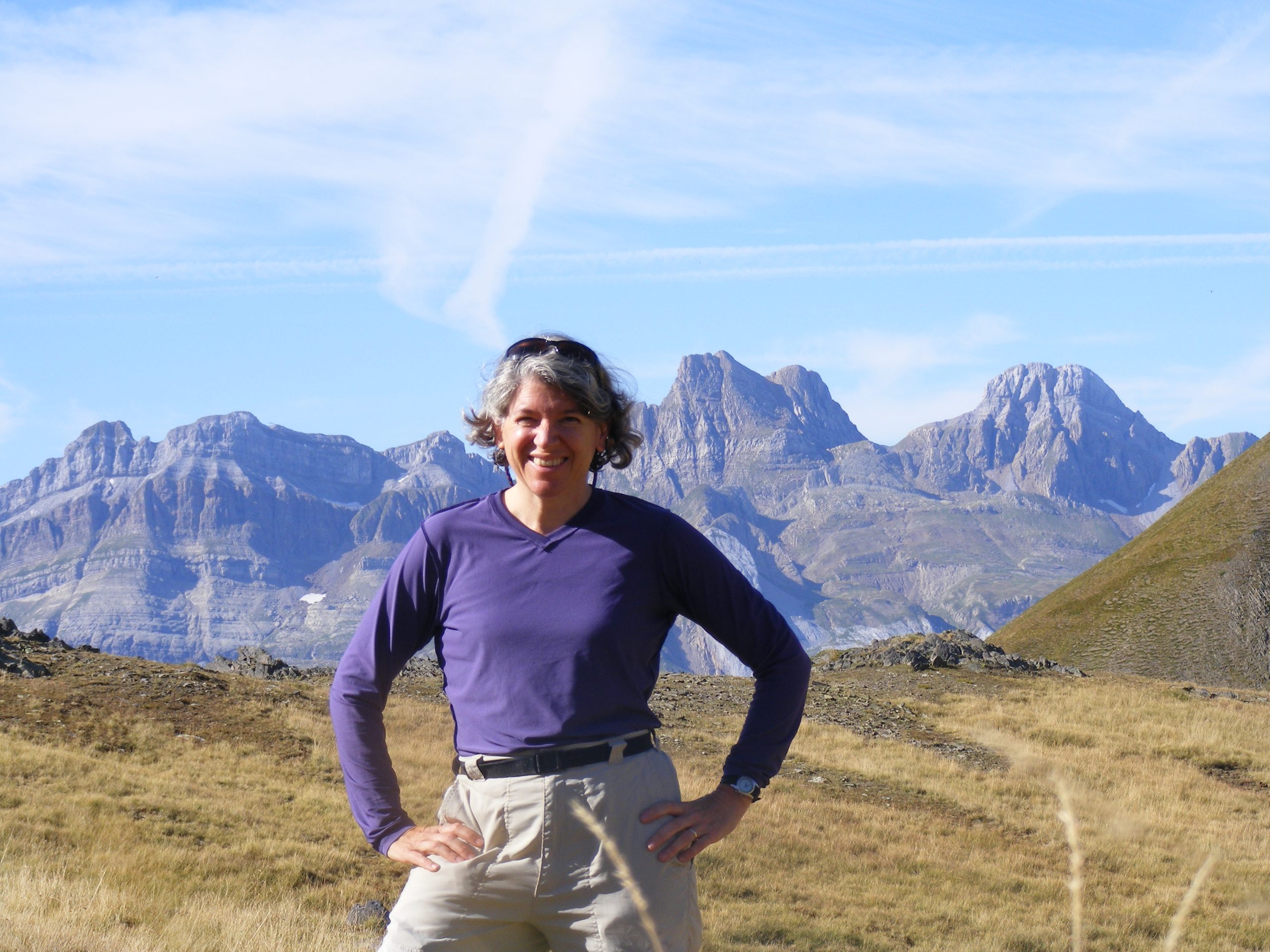
What can ranchers in Colorado learn from herders in Mongolia, Spain, and beyond? According to Dr. Maria Fernandez-Gimenez, a retired professor of rangeland ecology and management at Colorado State University, it might be more than you think. Maria joins Haley on our show this week to explore the relationship between scientific research, local ranching knowledge, and sustainable practices.
Maria shares five keys to sustainable grazing and highlights similar challenges that ranching communities are experiencing across continents. We discuss why generations of firsthand experience on the land could be just as valuable as modern data on that land, and how the combination of local knowledge and science can lead to better land management, healthier rangelands, and a more sustainable future.
Chapters
[0:00] Introduction: From Ranch Hand to Rangeland Researcher
[8:48] Five Keys to Sustainable Grazing
[17:28] Shared Challenges Across Ranching Communities
[21:28] The Value of Local Knowledge vs. Scientific Research
[26:19] Colorado Ranching, Conservation, and Lessons from the Land
Haley (00:06):
Welcome back to the Land Bulletin Podcast, where every other week we bring you experts in the field to impart their knowledge when it comes to the ranch and sporting property market, buying and selling advice, the latest best stewardship practices, as well as topics that impact landowners every day. I’m your host, Haley Mirr. Let’s jump in.
Welcome back to the Land Bulletin Podcast. I’m Haley Mirr, and today we’re going to be looking more at a scholarly look at the Intermountain West and how science, knowledge, local knowledge impact how we run our ranches and how we can learn from each other. And helping me out today is the retired professor of rangeland ecology and management at CSU, Ria Fernandez Jimenez. Thank you so much for being on the show. I’ve always looked at what you guys do in ecology and how ranchers and knowledge and history interacts with science.
(01:01):
I find it so interesting. So I’m really excited to talk with you today. And before we get into the nitty-gritty of the science and your studies and what you’ve found in Northern Colorado, can you tell us a little bit more about your story and how you got started in this study of ranching and range land management?
Maria Fernandez-Gimenez (01:21):
Sure. So I grew up in the Midwest in the big bump on the western side of Illinois, corn, soybeans, hog and cattle country. I was not a farm kid. I grew up in a small town. My dad was a college professor also, but from a young age, I just was smitten by animals, especially horses and the outside. And I had a few formative experiences as a young person going back to my father’s homeland, which was in Spain and witnessing sort of mountain agriculture there in the Pyrenees. And then my horse obsession led me to hang out with farmers and work on some farms as a kid growing up just to feed the horse habit, if you will. Then I went away to college. I studied philosophy, but I’d never been west of the Mississippi. And then after my sophomore year, I worked as a student conservation association in a national park and I did that for a couple more summers in Southern Utah.
(02:28):
And this was the sort of mid 80s, early to mid 80s when conflict over public lands grazing in the West was heating up. And I was hearing a lot of that and I was working in Southern Utah, which was particularly a hotspot of those kinds of discourses. And I though of myself as an environmentalist, but I also was getting to know some of the local people. I did a local history project with the Park Service and interviewed some of the local ranchers around the park. And anyway, I got really interested in what was going on there and wanting to understand it from myself and wanting to understand it from the rancher perspective. So when I graduated from college with my very useful degree in philosophy, I went to work on a small cattle ranch in Northwest Colorado, north of Hayden, Colorado. And I learned a ton and it was a wonderful experience.
(03:32):
And it didn’t really address the public lands grazing context because it was a private lands ranch, although it was surrounded by some larger public lands ranches. So I still wanted to understand that perspective. And I got a job the following year as a sheep herder on a large open range sheep ranch in Wyoming where I worked. I was the only woman and except for the owner and one other ranch hand, the only person born in America. Most of the herders there at that time were still coming from Spain and from the Basque country, which happened to be my father’s homeland. So I spent a lot of time with these men who really taught me everything because I knew zero. I mean, I was hired because I could ride a horse and speak Spanish and work hard. And the rancher probably really needed as many herds as he could get.
(04:31):
And I clearly kind of wasn’t afraid of going out there and doing this. And so I just worked one season there from lambing through shipping and then I came back the following spring for shearing. But I stayed friends with those herders, some of them actually until now. I mean, we fell out of touch for many years. I went back and visited one of the man who had been the foreman of the ranch at the time I was there. He went back to Spain and I visited him in Spain last year. And so that’s almost 40 years.
Haley (05:05):
Wow, that’s so special.
Maria Fernandez-Gimenez (05:07):
And so it was watching those men who this wasn’t their native homeland, but they knew so much in this case about animal husbandry, about how to work with animals, how to work with sheep. And I just was kind of fascinated by that and by their stories and how they had adapted to this completely different environment. And this was a place where we still practice transhumets, long distance seasonal movements of the sheep, some of them on foot and some of them in trucks. And anyway, I just became pretty fascinated by it and realized I still need the science, the ecology part to answer my question about our livestock causing degradation in the West and elsewhere, what can we do about it, et cetera. But the seed had been planted in terms of my interest and respect for the people doing the work on the land, both from my childhood experience working on farms and then from these two experiences working on ranches.
(06:18):
And so I ended up, there was a few other bins in the road, but I ended up going to UC Berkeley for a master’s degree in range management. A lot of people don’t know UC Berkeley has a master’s in range management.
Haley (06:32):
I was going to say, that’s the first I’ve heard. And
Maria Fernandez-Gimenez (06:36):
Then I got sort of bitten by the research bug. Originally, I just was going to get a master’s degree, go out and work for an agency or conservation organization or something like that. And anyway, I got really interested in these issues and understanding not just the ecology, but the people and that relationship between people, animals and the land. And I ended up going to Mongolia to do my dissertation research because it was right in early ’90s when the Iron Curtain had fallen, Mongolia held its first democratic elections in 1990. Globally, there’s all this discourse about how grazing is causing degradation all over the world. And I’m thinking there must be some counter example somewhere. And when I heard about Mongolia, I was like, maybe this is it. I better go there now and see has this been sustainable and what’s going to happen next with these massive changes?
(07:41):
And so long story short, I worked really hard to get the funding to go. I spent a year and a half there living with herders, being a herder some of the time and really trying to understand their knowledge, how it influenced their decisions, and then how these other factors that were, the climate, the changing political and economic systems, how those were influencing their decisions, their land use practices, and ultimately how that would affect the land health itself. And so when I came back to the US, finished my PhD, began to look for jobs and my first position was at University of Arizona. And then about four years later I had the chance to come to Colorado, which is where I always wanted to be. I tried to think about how can I transfer that way of thinking, those questions and that way of working to a Western US context.
(08:37):
And it turned out that no one here had really looked systematically at ranchers’ local knowledge.
Haley (08:48):
There must have been a common thread that led you to, there’s something connecting us all here from the herders on Mongolia to the herders in Northern Colorado. What was something that you started to see where it’s like, okay, there’s something here where we need to look more into it because this could be a broader scale kind of impact on how we look at these things.
Maria Fernandez-Gimenez (09:07):
I mean, I had that question. I went with that question of has it been sustainable in Mongolia? If so, why? What are the keys to sustainability in pastoralist systems? Which I include broadly ranching as part of pastoralism. And do these apply in other places or how broadly do they apply? And basically in Mongolia, the herders taught me there are five keys to sustainable grazing. And in the rest of my career, I’ve looked around the world and those five keys hold everywhere I’ve been. It’s not to say that they are the only things in every situation that you need to have, but I would argue that if you don’t have these, some piece of the system won’t work. And they are diversity, diversity of habitats and often diversity of livestock species. And we can think of other kinds of diversity, economic diversification. But in terms of what I learned in Mongolia, it was really using a diversity of livestock to take advantage of the diversity of habitat types and landscapes over space and across all the seasons of the year.
(10:18):
And the second one is mobility. So we often think of that with pastoralists that mobility is kind of the sine quanone of pastoralism, but it really is the key strategy to avoid degradation and to increase productivity and use the landscape effectively. Where I work in Spain is one of the places that transients probably first evolved. There’s now new archeological evidence that it goes back I think almost 9,000 years there and people are still practicing it in that place. And there you go up in the summer because the grass is good and the weather is cool and you come down in the winter because you can’t stay in the mountains because it’s too snowy and it’s warmer and there’s forage available down below. And so 9,000 years later, people are still doing that. And it makes economic sense, it makes ecological sense, and it’s now deeply part of their cultural tradition.
(11:22):
So that’s one way it plays out in one place, but mobility at different spatial and temporal scales, we see it in every pastoral system and many, if not all ranching systems. So it’s really, really important. And so diversity, mobility, storage. So storage can take a lot of forms. And I used to say grazing reserves because that in Mongolia was the main form storage takes place. When I was there, no feed stores, no opportunity for planted fodder forage, no feed store up the street. You had to live on what grew out of the ground all year round. So that meant that in order to have a secure and ample amount of forage to take a herd all the way through the winter in a place like the Gobi Desert or the Hungai Mountains, you have to make sure you set aside an area that you’re not grazing at the other times of year.
(12:29):
And this is a commons. So it’s not private property, it’s shared resources. And so that has to happen either at a household level or a community level and people have to respect those norms of this is our collective area that we use in the winter. We’re not going to graze it in the summer and fall. In other places, it’s hay. It’s also storing, knowing how to fatten your animals so that they will stand the winter. So there’s various kinds of storage. And now even in Mongolia, buying some feed and having that available for bad winters is part of the strategy. So diversity, mobility, storage, and there’s lots of other, I could go on and on about how greasing reserves work in other parts of the world. It’s very common strategy among pastoralists the world over. And sometimes it takes the form of local community rules about when you can access areas and when you have to come off them.
(13:29):
The fourth thing is shared resources. So on most of the rangelands of the world, there isn’t private property. Most of them are collectively held and managed by herders. Usually they’re technically state property. They’re owned by the federal government of that country, but they are used and managed in common by the pastoralist groups that are head of that area. That’s the case in Mongolia. It’s the case in many areas throughout Africa.
(14:00):
It’s the case in Spain and parts of Europe. All their seasonal pastures, but some of them are commons. And that having that shared resource means that you have access to a much larger area that includes diversity, that includes space to move. So these are interdependent strategies. In order to really make use of diversity and mobility, oftentimes you have to have that large shared resource. And there are other resources that are shared. People exchange live breeding stock. If a family experiences a disaster and loses a bunch of its livestock in a disaster, other herders will lend them livestock to rebuild their herds. We know from the West and ranching that people come together and share labor. That’s a big tradition to do branding together, do gathers together. That’s the case also in other parts of the world. So there are different ways in which resources are shared, but that’s really important.
(15:11):
And then the final thing is in a pastoral context is part of that sharing relationship is relationships of reciprocity.
(15:21):
And we think of it in a ranching community about sort of neighborliness and helping out, “Oh, somebody’s cattle jumped the fence. I’m going to go or I’m going to give them a call or whatever.” And that kind of helping out each other in times of need. In Mongolia, it takes the form of they have these really bad winter disasters every five or 10 years that are terrible. They can kill three quarters of all the animals in a particular area. And when that happens, people often move, so mobility, to another area outside of their traditional territory, to a neighboring, the equivalent here would be a neighboring county, a neighboring state even. And those people there, even if they don’t really want it, even if they don’t really quite have enough forage, will traditionally never say no. They will welcome and help people from another area because they know that next time it might be them and they’re going to depend on their neighbors.
(16:27):
So there’s this, and that’s just one example, that kind of reciprocity really runs deeply in that culture and takes many different forms. And we see it in, I’ve seen it in every other place that I’ve worked with pastoralists, some form of reciprocity that supports these other strategies. So those are kind of the five keys that Mongolian hoarders taught me and that I really see in every other place I’ve been, and we can think about how they work in a Western US context. I think they’re here too, even though our land tenure regime is different and our culture is different, our economy is different. But you started by asking what are the threads that join people? They all complain about the same things. People complain about the same things everywhere. So let’s go down the list. The weather, the prices, I don’t get enough for my livestock and inputs cost too much.
(17:28):
And the government, right? Those are the three things. And then predators, predators, people complain about those two. And so those four challenges are everywhere. And along with that is this sense everywhere I work of we’re misunderstood. The government, the people in the city don’t understand what we do. They don’t understand the value we provide. And there’s this mismatch of rural populations are small. They don’t have the same voting power. They don’t have the same voice in most places. And it’s everywhere.
(18:11):
So tell me if we’re getting too far off.
Haley (18:13):
No, this is great.
Maria Fernandez-Gimenez (18:17):
One of the big things I did this year was help organize a global gathering of pastoralist women across the world. And it was held in Kathmandu Nepal in May. And we worked really hard for it to be a gathering by and for pastoralist women. And so we had pastoralists in every part of the world. We had 12 regions that helped to design the gathering. And then we had representatives from all those regions, everywhere from Sami people in the Arctic, indigenous North American folks, ranchers from North America, from North America, South America, all parts of Africa, all parts of Asia, Europe, all came together.
(19:03):
And it was amazing. And we can do a whole other podcast on that. What these women said was how incredible it was to connect with other people who do what they do in other places. And yes, we don’t speak the same language, our cultures are different, many things are different, but at the heart of it, we do the same thing and we have the same challenges and struggles. And they ended up coming out with a declaration that is a global declaration that speaks for all pastoralist women that kind of addresses some of their challenges. But again, I’m maybe getting off track here, but basically the challenges that people face are similar and
(19:48):
In a basic way, the strategies are similar. And I would say everyone has this, there’s this fundamental affinity, you’re working with livestock in a particular place as part of a family and community and culture. And then that sort of encompasses your identity and your occupation. And so in some ways, people may manage their herds in very different ways, but they’re all lambing, for example, and they’re all shearing and they’re all trying to figure out how to process and market these products. And so there’s a lot they have in common. And what I noticed with these women is the love they have for their animals and the pride they have in what they do and how much they care about the land that they work on. And many of these are in communal systems. And then a lot of them, women have very little in the way of formal rights to the land, but they really care and they’re innovating in how to restore and protect those lands while still preserving their culture and their livelihood and their way of life.
Haley (21:28):
And have you found, because I know some of it is the connectivity between the scientific studies and monitoring reports that are out there and how that can be beneficial to ranchers, but then how important this local knowledge that these people just know through generational ranching or pastoral observation, where do you see those kind of intersecting, especially when you come to groups like that where people from all over the world, how is that knowledge spread? Is it events like that? How can we get some of this local knowledge out?
Maria Fernandez-Gimenez (22:00):
Yeah. Well, I mean, the thing about local knowledge is that it’s local, right? And that is the wonderful thing about it. Science aspires to be very general, right? Yes. Universal principles, laws that apply wherever you go. Local knowledge is by definition local. It’s a particular person or group of people in a particular place who gain their knowledge through experience, through interaction with the land, through other people in their community and in their family. But it’s really experiential and observational. And they do experiment. And we’ll use the term local knowledge. There’s also traditional knowledge and indigenous knowledge. And because we’re in a ranching context, I think local knowledge is more appropriate. Traditional knowledge and indigenous knowledge has those similarities, but it also includes, when we talk intergenerational, we’re not talking five generations, 10 generations, we’re talking thousands of generations. And we’re also talking about a whole worldview, institutions, beliefs, values.
(23:17):
So many of those things are true in a ranching culture too, but for me, it’s a different kind of order of magnitude. So there’s similarities between those two terms, but there’s also some pretty important differences, I think, at least in our context where ranching at most we can say is 500 years old here at the very most, maybe more like 150 in most places. And so that’s really different than having a thousand years or 8,000 years in some places. And Spain is a place where I wouldn’t call it indigenous, but I would call it traditional because in the place where I work, it has been going on for thousands of years in that same place. So that kind of place-based community specific knowledge. And so the value of it is that deep context and the fact that you have, especially if it’s being passed on and communicated intergenerationally, the temporal depth going back and then the fact that going back over time, years or centuries or millennia in some cases, and also the fact that they’re there all the time.
(24:39):
So there’s also this high resolution temporal information because they’re there every day. Now, if you’re mobile, you’re going to be in a different part of the landscape every day, but basically many, many repeated things and on the land all the time. And spatially, like a lot of our scientific data, we can have a few monitoring points where we can collect really in-depth data over a landscape. But when you’re riding across that landscape and observing it, you have a kind of spatial coverage that you don’t get. It’s maybe not the depth of information, but the breadth you have. And then also the other thing we’re starting to use a lot, of course, in science is remotely sensed information, which has a lot of coverage, but the resolution is still not great. I mean, it’s getting better all the time, I will say, but it’s not the same as ground data and having people in place who have this deep time and really particular spatial knowledge.
(25:54):
And part of that is not just knowledge of what’s happening in the environment, in the weather, in the water, in the species, whether it’s wildlife or plants, but also what has happened to the land, the human history, the disturbance history.
(26:19):
And that is one place where, like in the work that I’ve done in Western Colorado where we tried combining, documenting local knowledge and sampling the same ranches and combining that, and then developing a process where we just worked together all the time at the ranchers and the scientists and agency people to understand the vegetation dynamics and develop some models, state and transition models that the BLM and NRCS use. And what we found was that we could go out and have a basic understanding of the history of the land, like, oh, these places all burned in the early 2000s, and then choose burned places and unburned places to sample and to see how they differed and whether what we had hypothesized was supported or not.
(27:26):
But then when we came back… Well, so there was one place where what we found was there was a lot of crested wheat grass, which is a non-native plant that was seeded a lot. And so we had these burned places, unburned places, and then we had burned places that had been seeded, and this occurred in one of those places. So we assumed that, okay, that was what was seeded after this fire. And if we hadn’t gone back and had presented this information to our local community researchers or the ranchers we were working with, that would’ve been our interpretation. And they said, “No, no, no, that area was a homestead.” And they planted the crested wheat grass in the ’50s. This fire didn’t happen until 2010, and the BLM seeded after it with native species, not with crested wheat grass. So what you’re saying is that this crested wheat grass is really tough, has persisted after these wildfires.
(28:25):
It’s not because it was seeded there recently, it’s because it was seeded there in the ’50s. So that’s just one specific example, and there are many more like that. And I would say for me, a lot of the value has been curious people who live on the land asking questions and saying, “Here’s what I think is happening.” Can I tell one sample story? Oh,
Haley (28:52):
Of course. I think anecdotes are the best thing.
Maria Fernandez-Gimenez (28:55):
Yeah. So this was actually a rancher that I met in Northwestern Colorado back when I was a ranch hand, and he was the neighbor to the ranch I worked on. And when I came back and started being a professor at CSU, I went back out to that area and I visited with him and he became a collaborator. And he was one of the first people I interviewed about local knowledge in that area. And he was someone who on his small place had probably in that same era, the ’50s and ’60s, tried to get rid of a lot of sagebrush to increase forage for cattle and sheep. He had both. And over time, this is now 40 years after that when I was talking to him, he had really decided he had a different idea about sagebrush. He though sagebrush was actually good and important. And he had this idea that sagebrush helped to slow The snow melt in the spring so that water soaked in more slowly, that there was less surface runoff and erosion.
(30:10):
And I was like, “That’s really interesting. I wonder if we can test this.” So I did actually work with a hydrologist colleague of mine and we tried to test it, and for various reasons we weren’t able to, but pretty sophisticated thinking along those lines. And that’s just one of many examples. So I think often they come up with great hypotheses and questions that we as researchers can then help answer and that might have management implications as well. And I mean, he was a good example of someone who was a very curious person, pretty much self-educated. He started college, but he never finished it. And he really changed his mind over the course of his life about what the purpose of ranching was, how he wanted to manage his place. There’s a certain part of his life where he needed to make as much money as he could, and he did things that he later really regretted.
(31:15):
He felt like they were mistakes because they took too much from the land. And at the end of his life, he put a conservation easement on his ranch and he was the first person to do that in his whole area. And he was someone who was a… I don’t know too much about his politics, but I know as a younger person, he was not a young man, but a middle-aged man. He was a county commissioner, I believe. He was a Republican. He was not necessarily someone who you’d think would be the first person to work with a conservation organization, but he did. And because he did slowly one by one, almost all of his neighbors have done so too. So almost the whole watershed that his little… And his piece of land isn’t that big. And it’s maybe a hundred thousand acre watershed. His piece was maybe a couple thousand acres in the middle of it, but now tens of thousands of acres all around there of private land are permanently conserved in conservation easements and they’re still working ranches.
Haley (32:24):
Yeah. I love those stories. It just goes to show even with generational knowledge and people do change their way of though sometimes based on these other factors that we’ve been kind of talking about as things shift.
Thanks for listening to part one of our conversation with Maria. In part two, we’ll go deeper into some of the work she did with Carm and hear more firsthand stories of her time working with ranchers and researchers in the field. Stay tuned for our next episode.
Thanks for joining us today. To learn more about the ranch real estate market or our ranch marketing process, make sure to subscribe to our newsletter on our website at merranchgroup.com or give us a call at 303-623-4545. See you next time.