Content Warning: This episode discusses mental health, depression, and suicide, which may be difficult or uncomfortable for some listeners. If you or someone you know is struggling, help is available.
“Pull yourself up by your bootstraps” is a common American idiom, and it epitomizes the toughness and grit we’ve come to associate with the people who work in agriculture. But what does the public not see about the mental and emotional toll of a job that seemingly never ends?
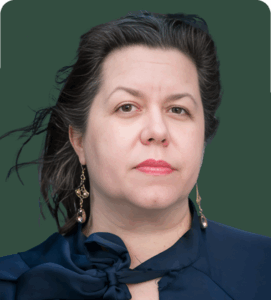
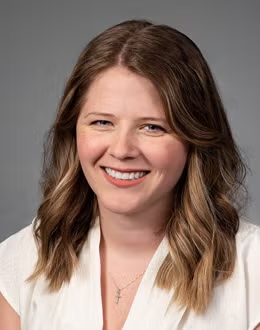
From unpredictable weather and financial pressure to long hours, isolation, and the constant need to pivot, agricultural communities face a unique set of challenges that can take a toll on even the toughest ranchers. This week, we’re having a long-overdue conversation with Laura Del Prete and McKayla Robinette about the work being done to make mental health resources more accessible to farmers and ranchers. We discuss why asking for help can be difficult, how communities can recognize when one of their own is struggling, and the training and resources available to agricultural communities.
If you or someone you know is struggling with mental health, help is available.
Topics
[0:00] Content Warning
[0:34] Mental Health in Agriculture
[5:26] Building Mental Health Programs for Farmers
[10:44] Why Asking for Help Can Be Difficult
[15:27] The Stressors Facing Farmers and Ranchers
[22:05] Training Communities to Provide Support
[29:49] Making Mental Health Resources Sustainable
[33:08] Policy, Funding and Long-Term Support
[39:03] Finding Mental Health Resources
[42:32] Why Asking for Help Is a Sign of Strength
Producer (00:00):
Hello all. My name is Caroline. I’m the producer of The Land Bulletin Podcast. I’m stepping in real quick before this episode starts to give a little bit of a content warning. We speak to two lovely mental health practitioners in this episode, but we do cover topics like suicide, depression, and just some general mental health topics that may be uncomfortable for some people. So we wanted to give a warning ahead of this episode. It does feature that content. And thank you so much for listening to The Land Bulletin and we’ll see you in the next episode.
Haley (00:34):
Welcome back to the Land Bulletin Podcast, where every other week we bring you experts in the field to impart their knowledge when it comes to the ranch and sporting property market, buying and selling advice, the latest best stewardship practices, as well as topics that impact landowners every day. I’m your host, Hailey Mirr. Let’s jump in.
Welcome back to the Land Bulletin Podcast. I’m Haley Mirr, and today we’re going to be having a different type of episode than our normal conversations. We’re talking more broadly about a topic that isn’t usually mentioned or thought about when talking about ranching, but it’s so, so important now more than ever. Ranching and farming creates a unique mental health challenge, as many of you who are listening and a lot of our clients know. And today we’re chatting with Laura Del Prete and McKayla Robinette about the work they’re doing with stress management and mental outreach for ranchers and farmers.
(01:26):
An incredible thing that you guys are both doing, and I’m excited to learn more about the resources that are available to ranchers and farmers. So thank you for being on the show today.
McKayla Robinette (01:36):
Yeah, thanks for having us.
Laura Del Prete (01:38):
Thank you so much.
Haley (01:40):
And I know you guys speaking to you before this call work in different areas, so I’d love to know your background and the very specific kind of regions that you work in right now. And we’ll start with, let’s see, Laura on this one.
Laura Del Prete (01:58):
Great. Thank you so much. So again, my name is Laura Del Prete. I am the former mental health director for the Cultivemos Far SAM program with the National Young Farmer Coalition. I’ve been with the coalition about a year and a half. And my background is pretty varied when it comes to nonprofit. I’ve done different types of nonprofit work. I’ve worked with senior citizens and their caregivers. I worked in food insecurity for a very long time as well as mental health. So when it came to the National Young Farmers position, specifically this one, it was this really unusual blend of two interests that I have. I worked a very long time in food insecurity throughout the pandemic, and I was lucky enough to work directly with farmers and then working in the field of mental health. So this was a good blend of both of those.
Haley (02:47):
That’s amazing. How about you, McKayla?
McKayla Robinette (02:50):
Yeah, so I am fortunate to have been raised on a century farm here in Eastern North Carolina where my family transitioned a row crop operation to beef cattle. And then we also owned and operated a USDA inspected slaughter and processing facility. So my background is very heavily in production agriculture, but all growing up, I realized I wanted a career in agriculture, but I cared way more about the people that were within the industry than the production side of things. And so I was lucky enough to be introduced to the North Carolina Agromedicine Institute through my own family’s operation. And in 2023, I joined the team working for the Farm and Ranch Stress Assistance Network of North Carolina. So the North Carolina Agromedicine Institute serves the health and safety of farmers, fishermen, foresters, their workers, and their families across the state. And then through the farm stress work, we work to help connect them to mental health resources, to education, counseling services, and ultimately just try to ease some of the stressors that they’re experiencing.
Haley (04:07):
Well, that’s incredible. And both of your paths make a lot of sense to where you are today with helping ranchers and farmers. And I would like to look at the focus of the Young Farmers Coalition to start. Why do you think there was such a shift and a focus on mental health when it came to Young Farmers Coalition? And I’ll start with you, Laura.
Laura Del Prete (04:31):
Of course. So for the National Young Farmer Coalition, it was founded to create and for a unified voice for young indigenous Black BIPOC farmers across the US. My specific program is in the Northeast. And through policy work and advocacy work, there was this other consistent theme of need for mental health assistance. And National Young Farmers is made up of a lot of farmers, ranchers, or folks that grew up farming and ranching. So it was part of what they were seeing in their own communities and needed to be addressed. And when the Far Stand funding became available, they started thinking about what can we do? How can we make it accessible? And what are the needs that need to be addressed beyond policy and advocacy?
Haley (05:20):
Great. And what are some of the programs that the coalition is tackling right now when it comes to mental health?
Laura Del Prete (05:26):
Luckily, I get to work with some amazing partners. So in addition to National Young Farmers, University of Delaware, TerraViva, Migrant Clinician Network, I know I’m going to forget someone and they’re going to be sad. FarmAid and Farm First. So all these organizations, we come together to troubleshoot, support one another, and then also kind of what I like to say, cross-pollinate the programs that they’re doing. So those programs look vastly different depending on the population. So for instance, University of Delaware has an amazing program that incorporates humor into confident conversations. So how do you have these hard conversations and add that vein of humor in it? Then we have TerraViva who do conferences and workshops, and they are very focused on making sure that they’re accessible to non-English speakers. And this is what we’re doing across the Northeast. My particular program, what we’re doing is working with McKayla and other partners to get folks trained.
(06:34):
So yes, you get to come in and do a training and get that education for yourself, but what we don’t want to happen is the laptop closes, Zoom is over, and the education stops. So part of what National Young Farmers is looking to focus to do moving forward with our other sub-awardees is train individuals who are farmers and farm workers and ranchers. That way they can then continue to get into those pockets of populations that may not be accessible to folks like me. I’m located in New Jersey. Can I really reach a farmer in Vermont and how far is my reach? Whereas if we train a farmer in Vermont, they can then go to their local community center, engage with their local house of worship and continue that education to continue to spread the seed of education around mental health.
Haley (07:24):
That’s amazing. And I’d love to know from your perspective, McKayla, the fact that you are now being trained and working with these guys, what spurred your desire to get into the mental health space, especially growing up on a ranch and being exposed to some of those things?
McKayla Robinette (07:43):
Yeah. So again, mental health was always something that I think we were aware of as a concept within the agricultural spaces I grew up in, but we didn’t necessarily have the language to identify the concerns and then talk about the concerns. My family was always very open about mental health just within our own conversations and navigating, creating barriers and having hard conversations with each other. My mom is a counselor at a school here in North Carolina, so she had that training coming into this space. And my personal interest and investment in farmer and agricultural mental health started out of COVID. So I was working full-time for my family’s daughter and processing facility. And because it was one of the few spaces that people could come and interact with people outside of their farm, we truly had unofficial counseling sessions that we had to build into our days when producers would pick up and drop off their livestock or their meat products.
(09:00):
And I remember looking at my mom and saying, “Wow, this work is so important and we really have to do something about it.” Now, unbeknownst to me, the North Carolina Agrimedicine Institute had been doing this work in farmer mental health since 2012, and it was similar experience on my end. So the director at the time had a conversation with a farm wife in the western part of our state, and we had been working with them on some physical health concerns. And she came to our director and said, “He is so stressed, he’s so overwhelmed, and until you do something about those stressors, he’s going to continue to have the farm accidents and he’s going to continue to have poor physical health outcomes.” And so our director really took that as a challenge and said, “Okay, let’s fix this problem and let’s see what we can do to help address some of these things.” And so again, when I was able to connect with the AgriMedicine Institute, similar with Laura’s, the start of Cultivamos, coming out of the 2018 farm bill with dedicated funding for regional farm stress networks has really allowed for a lot of this work to receive dedicated attention and dedicated resources both monetarily, but then also relationship-wise where I’m able to do the work that I do in our state, but then also connect with people like Laura and people all across the United States and even some internationally to band together, to develop resources together and help share some of these similar stories so that way we can identify resources collectively and not in a silo.
Haley (10:44):
Amazing. It’s great that there’s so many different entities and groups and people that are finding the resources and working together to accomplish definitely a stressor in these rural communities. And I’d like to look at a broader kind of shifting a little bit. Why do you guys think, because you said it McKayla, it was part of your family’s narrative, but it’s not, I don’t think, a broader conversation that a lot of ranchers have had up till now. Why do you think the ranching culture, the farming culture makes it harder to ask for help or to find these spaces? And I know it’s getting better, but it’s been an issue. So I’ll start with you, Laura. Why do you think that it’s become more prevalent now and why it’s been such an issue in the past?
Laura Del Prete (11:39):
So I’ll answer that in a roundabout way. So when I was working specifically with another org that had a multicultural program, each program that I visited with, South Asian, Chinese, African American, Hispanic program, veteran program, each program had folks participating that said, “Well, we just don’t talk about it. We don’t talk about it in my culture. We don’t talk about it because we’re veterans. We just pull ourselves up by our bootstraps.” So it’s really interesting that you hear this common theme throughout these different groups of people. So whenever they’re folks of color, they’re veterans, they’re farmers, they’re ranchers. It became this thing of not having the conversation. And I think the way that we’ve been able to create more of a safe space to give people that, and I hate to say safe space, because it sounds like touchy-feely, little too fuzzy, but at the same time, agriculture combines personal identity, food, businesses, and giving folks that platform and that permission to know it’s okay before it comes to a head.
(12:51):
But unfortunately, we are getting to that point where it is coming to a head. And what we want to avoid is the type of crisis that we’ve had with folks like our veterans. And I think part of that work, being a veteran spouse, part of that work drew me to this population because it’s not a handout, it’s a hand up. And I think that’s a really important reframing that folks need to embrace.
McKayla Robinette (13:20):
Yeah.
Haley (13:21):
I love that.
McKayla Robinette (13:23):
And I just would like to add onto that. And I think for the longest time, conversations around mental health and the stressors very much so existed within a person’s physical community, who was in their neighborhood, who was in their churches, who were the people in the offices that they interacted with. But as we’ve seen more people develop relationships with people outside of that physical location, so many more of these conversations and these relationships that are built around secrecy or shame, I feel like those are not as prevalent. Whereas before somebody, if they’re going to talk to their neighbor, there’s that fear of, oh, are they going to capitalize on my failure or are they going to talk about me in the church parking lot? But now I can get on a phone and I can talk with somebody in another state and know that, okay, even if they do talk about me, whoever they share that with isn’t going to know my story and isn’t going to know to point fingers back.
(14:34):
And so I think that’s been really, really crucial in a lot of these conversations. But then also along those same lines, like Laura said, giving people the permission and the language to identify some of these things. And I think so much of that has happened at the larger level that’s really just played a role in, again, people’s receptiveness of this conversation and being able to say, oh yeah, when my great-granddad died mysteriously, I can look back on that and say that was probably a mental health crisis or that was probably an incident of suicide. And now I can identify it in my spouse or in my children and know that we don’t want to repeat the same mistakes of the past, and I want to make sure that the people are taken care of around me.
Haley (15:27):
I would love to know from your studies, McKayla and then Laura through the programming and all the different things that you’ve done, what are some of the external stressors and things that are impacting the mental health of ranchers and farmers that might not impact people like me that live in the suburbs of Denver? And what have you guys found are some of the bigger external factors impacting ranchers’ mental health? And I’ll start with you, McKayla.
McKayla Robinette (15:57):
Yeah, for sure. So the thing with agricultural communities and rancher communities is that these stressors are both the agricultural side, but then also probably a lot of the same things that you do experience growing up in the suburbs. We still have our interpersonal challenges with our family members. We still look at how am I going to pay my utility bill? How am I going to afford my groceries to feed my kid? Or they have to buy new soccer cleats and all of these things, the field trip’s coming up. So all of those things still exist. But then for the farmer and for the rancher, we also are dealing with increased pricing for implements, for equipment. And in some cases, we can’t even fix our own equipment. We have to take it to a dealer, which includes travel time to get to those spaces.
(16:57):
We have no real control over our ability to sell our products unless we’re doing a true farmer’s market kind of model, especially for the rancher’s perspective, working with the feedlot systems, working with international exporting and importing standards, not being able to control if the processor is going to mess up their cut sheet and are they going to be able to get the things that they requested back, droughts, weather, all of these different pieces. And so what I kind of boil things down when we describe the stressors for the agricultural community is a lack of autonomy where we think in the outside perspective is that, well, a farmer gets to decide what time they wake up and they get to see the rolling hills and the sun coming up over the field and the birds are chirping, the baby animals are running around and all of those things are great and they do exist.
(17:59):
But then we also don’t get to decide when the cows decide that they want to jump the fence or we don’t get to decide when our feed order doesn’t come into place in time or the payment, somebody doesn’t pay us on time. All of these things are outside of our control. And so when there are so many things outside of our control that we can’t fix, that’s whenever we start to see those increased levels of stress and anxiety related to our operation.
Haley (18:30):
And Laura, what are you seeing and hearing from your clients and the people that you’re working with in the Northeast and some of the programming that you’re seeing in different colleges and universities? Maybe there’s not a common thing, but what are you consistently hearing from ranchers and farmers?
Laura Del Prete (18:49):
Pretty much everything McKayla laid out. And then on top of that also weather extremes and climate uncertainty. June 1st was the start of hurricane season. Actually right now it just got very dark and storms are rolling in. Here in New Jersey, we had this odd cold snap in April and it decimated apples, peaches, and cherries in this area. So places that have every year from September to November, they have apple picking are now scrambling to find a way to make that income. Some of these very large orchards are saying, “We’re really sorry, but everything died.” So they’re doing a pivot to say, “Okay, we have berries. We don’t have cherries, apples, and peaches. They’re biggest sellers, but we’re going to do berries and we’ll do events.” And it goes back to that resiliency, but that also is exhausting, that perpetual pivot, that need to come up with this bright new idea very quickly to replace what you have been relying on for years.
(19:52):
One of the orchards near us has been doing apple picking for 40 years. This is their first season ever that they can’t do it. And you can do all the things right and have all your ducks in a row, and out comes this once of a lifetime storm, hundred year weather event, and here we are. And I think that along with the long hours and cost of equipment, it’s almost like you’re drowning and you only dog paddle and you’re trying to figure out how can I weather this next thing to get to the next thing?
Haley (20:30):
Yeah, we see that. In the West, we’re experiencing really bad drought and had a call with one of our favorite clients yesterday and just hearing just we had this wolf situation and then we had the drought and now we’re having the rivers, it’s just everything. And people just don’t understand that it’s every day they’re monitoring these things. And on top of that, they’re having to listen to the news and stay on top of everything that’s going to impact them. And that must be draining as well because it’s a lot of things that you can’t control. And I know even in my own therapy, it’s like control the controllables, but you can’t really control a lot of things when you’re ranching and farming, it seems like.
McKayla Robinette (21:14):
Absolutely. Again, Laura just mentioned the constant need for pivot. We encourage farmers all the time to diversify your revenue streams and look at all of these different ways that you can make sure so if one thing fails, you have backups. But when you’re trying to octopus your operation and still trying to be a person, I mean, there’s so many other pieces of this that I just think institutionally, there’s a lot of stressors that are impacting our farmers that are. And I don’t know necessarily if there’s one way to fix them, but I think the important thing that Laura and I are trying to do is create ways for them to find solutions and if not solutions, at least comfort and support as they navigate these things specifically.
Haley (22:05):
Well, I would love then to pivot to some of the trainings that you guys are implementing and how you are educating pillars in different communities on helping the people around them to shift and to pivot and to think of these solutions and to lean on each other. What are some of the trainings that you guys are incorporating into your either studies or with people in your communities? And Laura, we’ll start with you with some of that.
Laura Del Prete (22:35):
Sure, of course. So some of the trainings that we’re doing, and we are going to be partnering with McKella and other organizations, which is immensely helpful because it’s about if I don’t have the expertise, I know someone who does, and I need to find that person and we need to make that partnership. So one of the ones we have actually coming up next week is grief and loss, because a lot of people may not even recognize that they are grieving. They’re grieving the way that they used to farm, they’re grieving a way of life, access to things that they had prior that they don’t anymore. Another one we’re thinking about is also ambiguous loss.
(23:17):
Sometimes when you’re grieving, it’s very clear cut, this person has passed on and I’m grieving. What does grieving look like when your person hasn’t passed on, but they don’t remember you anymore because they have Alzheimer’s? What does that loss and grief look like? Additionally, some of the other trainings we’ve done is eight steps of wellness, how to take care of yourself beyond take a bath and take a break, but what other things can you do for wellness? What kind of tools can you tap into? We’re going to be doing mental health first aid. We are going to be doing, let’s see, I have a whole list. I was working specifically with the Association of Suicide Prevention of New Jersey, and we were doing one of their conversation workshops, how to have that conversation, how to identify suicidal ideation in youth, and making sure not only that we have these trainings and growing this platform of trainings, I think we have about 12 coming down the pipe, but making sure, I think during a timeframe that farmers and ranchers can attend, right?
(24:27):
Because if you’re doing it at 10 o’clock on a Wednesday, that’s not going to be accessible. So some of our trainings we have during the day for the folks that we want to engage within the networks that are maybe service providers. And then we have evening trainings for folks that they need to wait for the sun to go down for them to be able to access the training, as well as making sure a lot of our trainings are either presented in or translated in Spanish to make sure that they’re accessible in that manner. And we make sure that they’re free because there’s nothing like having a resource that sounds really great and you can’t access it because you don’t have X, Y, Z. So we’re wiping that slate clean to make sure that those things are accessible. And again, we’re going to be partnering with McKayla on different types of trainings as well as train the trainer opportunities so that way folks can take those things that they’re learning and incorporate them into their community directly.
Haley (25:23):
Awesome. And McKayla, I know you’re studying and doing a lot of things with your doctorate and things like that, and you’re working a lot with the coalition. What are some of the things that you are learning to educate, not just people like yourself that are mental health experts, but ranchers and farmers and people that you work with every day? What are some of the things that you hope that some of these farm stress plans will help and what are you trying to put out into the world?
McKayla Robinette (25:54):
Yeah, for sure. So I just want to piggyback off of Laura’s last answer. So we also offer mental health education at the Agrimedicine Institute through our program. So we teach seven different national and internationally recognized mental health literacy education curriculums, including question, persuade, refer, so QPR training and mental health first aid. We also, over the past year, have been implementing a course called Psychological First Aid, Listen, Protect and Connect, which is use for individuals that are supporting somebody that just went through a crisis or traumatic event. And a large part of that work came off of our response to Hurricane Helene and people entering into those agricultural communities and saying, okay, obviously that there’s a need for support, but these individuals are not suicidal. They just lost their farm or they just had a death in the family or whatever that looked like. And so being able to implement some of those trainings has done an incredible job.
(27:07):
And again, creating spaces for people to have the language to recognize those challenges and concerns and then feel comfortable to say something and to step up and provide that support. But going back to your last question, so much of this, when we talk about farmer mental health and agricultural mental health, so much of it is focused on the farmer. Yes, absolutely. But what I have found the most success in, and I think Laura would echo this, is these resources should not just be targeted to the farmer. I know I cannot talk to every farmer in North Carolina in the span of a year, but if I work on my education focusing on the cooperative extension agents or the loan officers or the veterinarians or the salesmans or whoever it is that also interface with the agricultural community, then hopefully with this wraparound model of education, somebody in that person’s life is going to be equipped to have those conversations in place.
(28:14):
So we want to make sure that we’re engaging with all of the people that interface within agriculture, but doing so again in a way that is culturally relevant and fits again with all of the barriers and challenges that they might face in starting those conversations. So for example, similar to Laura, all of our trainings are offered at no cost. I tend to teach them virtually. However, we’ll do in-person options as they’re requested. But then we also are focusing on education specific to each of those populations. So we offer trainings for mental health and medical providers that is on demand, that is focused on here is the day in the life of a farmer or here’s what grief looks like for a farmer or for a farm worker and creating those spaces so that way whenever they do reach out for help, that help understands exactly where it is that they’re coming from instead of this generic, here’s how to apply the steps of mental health first aid.
(29:28):
No, it’s based around, okay, if this type of farmer or this type of farm worker comes into your space or this family member comes into your space, here are the things that are going to be culturally relevant and culturally important for each of them. And so we’ve really tried just to focus on those as priorities.
Haley (29:49):
God, I’m just so grateful that people like you exist for these communities. It’s really awesome, all the programming that you guys are doing. And it brings up another question. I mean, all these things are free. And the resources are available to people. So I’d love to know, you guys mentioned the Farm Bill. Are there any other kind of policy changes or things that would have the biggest impact for continuing to strengthen this programming and this outreach to these different communities?
McKayla Robinette (30:18):
The Farm Stress Program at the North Carolina Agrimedicine Institute is entirely grant funded. And so it is one of my biggest challenges. And again, I’m a grant funded employee of this program, but it’s one of my biggest challenges is navigating that conversation of how do we make sure that the resources that are available are best supportive of the needs of our communities, but then also how do we make sure that they are sustainable so that way if funding goes away, this resource can still exist in some capacity? And again, I look at all of these things from the perspectives of what would’ve helped my granddad or what would’ve helped my best friend who’s starting her own farming operation on her own as a first generation farmer. And so it’s that piece of, okay, if I’m no longer here, what can be done to make sure that they’re still going to struggle?
(31:24):
What can be done to make sure that those things are still there whenever they do and those access revenues are still in place? So we have incredible support from the agricultural organizations in North Carolina and across the Southeast with the Firsthand South program, with our farm bureaus, with our Grange organizations. And we couldn’t be more grateful to them. But I think from our perspective, any funding that focuses not just on programs, but also focuses on finding solutions, I think is just going to be the biggest barrier. And it’s always the question that we have. But I kind of say all the time, I can put a farmer into counseling, but if they’re going to leave counseling and still have these stressors in place, counseling can only do but so much. And so there’s a space for that, but there’s also a space for, okay, what can we do to increase revenue streams or help with disaster reprogramming and resources post hurricanes or drought conditions or what people can be embedded into a community and what training can these people receive?
(32:46):
So that way if there is herd loss or if there is crop loss, they have that support in place and it’s not dependent on this website or this Zoom call that requires so many other different pieces. And I don’t know if I explained that all the way right, but
Haley (33:08):
No it’s great – Institutional change is difficult, but you can make it happen if you, to your point with the circular education and imprinting some of this education on enough people as you can so that it’s just intrinsic. Laura, how about you? What kind of policy changes or shifts do you think would have the biggest impact? And I know that’s a huge question, but on mental health in this space.
Laura Del Prete (33:36):
So like McKayla, my program is entirely grant funded, which can be scary because what can that look like? And I think when it comes to policy, oftentimes it can feel like mental health is seen as a secondary pillar or even tertiary or an add-on and it cannot be an add-on. It needs to be a primary focus because it’s not just about the programs, it’s about the people. And
(34:05):
So I had faced layoffs last year and the program was paused for a period of time. And that was very difficult because it was sunsetting a program before we were ready to sunset a program simply due to access of funds. So when we started restarting the program, I was really mindful to listen to what folks were talking about in meetings, what were their needs? And yes, mental health is a huge portion of it, but also people had inquiries on how do I write a grant? Is it scary? Because people think it can be scary. If you don’t know, writing a grant is professionally using data and storytelling to brag about the good work you’re doing. So one of the workshops I am going to be incorporating, I had done it last season, was grant writing 101. And we live while on Zoom together, I apply for a grant to show folks how it can be done.
(35:04):
Because what I’m thinking about is have we left the farmers, farm workers ranchers in their family and their families in a better place than when I met them? And that answer has to be yes. And when it comes to funding and policy, kind of like the weather, there’s only so many things I can control. So what I can do is make sure I make educational opportunities as accessible as possible in the realm of not only mental health, but sustainability for farmers and farm workers just in case. I spent five years as a disaster planner. I do a lot of just in case planning. So it’s prepare for the worst and hope for the best.
Haley (35:46):
Love that. And kind of closing out a two-part question. The first would be how can people, because a lot of the people that are listening to this podcast are not necessarily ranchers or farmers, but have a connection to those communities in some capacity. So how can people outside of the agricultural community better support ranchers and farmers in your mind and maybe some resource that are available to them, especially from an educational standpoint? And then second part of the question would be, again, what are some of the resources available to ranchers, farmers who might be struggling a little bit?
Laura Del Prete (36:24):
So when it comes to folks that are outside of the ag world, obviously one we’re always going to say is buy local, buy local whenever possible, but also avoid assuming that every farmer is financially secure because they have land or equipment. Also, recognize the emotional and physical demands of ag work. I was recently at an event when I was just talking about the work that we do. And in the area I was in, a lot of folks had neighbors that were farmers and they all, I’d say 90% of them said, “I had no idea farming was so emotionally taxing on people. I had no idea.” And I think those conversations give people the opportunity to talk about mental health, reduce that stigma. When it comes to what kind of resources, folks are welcome to join. Cultivemos has a Google group. I post scholarships and trainings and people post job opportunities and folks, you don’t have to actively engage and come to a workshop to do that.
(37:28):
You can just join our Google group. I think I had sent that via email on how to do that. But then also join our email list, follow us on social media so that way you can engage and you can see what these offerings are because they’re only as good as their reach. So even if I do an amazing training, if no one knows about it, how good is it? So those are some of the ways that folks can engage with us, with Cultivemos, with National Young Farmers. They do all sorts of work all across the farming and ag world. So cheap, free, Google Group, newsletter, pop into our workshops, come to our quarterly calls. We always have presenters. We also do something called Front Porch at National Young Farmers, which is once a month. It’s the third Thursday of the month where we have a little bit of entertainment education.
(38:27):
So it’s a blend of, sometimes it’s music, sometimes it’s a farmer zine. We just recently did a farming zine, which was amazing. And it was all these farmers that participated in creating this scene. But those are opportunities to engage with us directly. And then also to reach out to different chapters that we work with and different programs. I hope that answered it, your question. No,
Haley (38:51):
That was amazing. Thank you so much. And McKayla, from your perspective, how can communities help farmers and ranchers and how can farmers and ranchers seek the help that they need?
McKayla Robinette (39:03):
Yeah. So I think communities and general public individuals can most support their agricultural communities by just being curious and being kind. I’ll be scrolling on Facebook and it’s this farmer was driving their tractor and they backed up all of this traffic or I don’t understand why are they spraying this on their field? I don’t get this. And I think those are questions and those are concerns that are very valid. But when we approach those things from hostility and when we approach them as the farmer is the problem, that’s where that boundary, it’s truly being crossed. And so I just encourage people to ask the questions, but ask them from a place of curiosity and not a place of judgment and develop those relationships with your local farmers. And if you don’t have a relationship or don’t know where to start, your cooperative extension system is incredible and is a great resource in being introduced and finding ways to support your local agricultural community.
(40:17):
But then from the perspective of the farmers that are looking to seek resources, one of the things that I appreciate most out of the Farmer Ranch Stress Assistance Networks is that every farmer across the United States and its territories has the same opportunity to receive access to mental health resources. Of course, supports that exist are largely state and regional dependent, but I encourage you start at your regional level and work your way down because there’s so many great things that are out there. You do not have to exist in the silo of there’s nobody else out there that understands or there’s nothing that can help me because I guarantee you, just in the conversations that I’ve had this week alone, everybody can find somebody who understands what they’re going through and there is a resource out there that can best support your needs in whatever ways that looks like.
(41:23):
And I wanted to mention earlier too, as we talk about, as Laura was bringing up the emotional challenges that come with farming, I don’t think a lot of people also realize that agriculture has one of the highest fatalities of any occupation in the United States from the industry’s perspective. And so as we’re looking for ways to show empathy and looking for ways to best support, just recognizing that agriculture is not an easy job and it’s not something that is sunshine and rainbows all of the time. There are dangerous aspects to this work and the people that do this work know those risks and take them on willingly because they love what they do. And so as we’re looking for ways to best support our agricultural communities, just being mindful of those things and again, being curious and being open to those conversations and finding ways to engage with them as much as possible, hopefully we would see just cultural change in how we interact with our agricultural communities.
Haley (42:32):
Well said. I’ve always believed ranchers and farmers are superheroes because I see it every day of what they’re able to do and what I would never be able to do. So it’s very important that they have the support and the communities that they deserve and the resources available to them that you guys have mentioned today.
Laura Del Prete (42:50):
But there’s just one thing. I heard this phrase and this saying, and I really liked it. And it was worrying is like a rocking chair. It gives you something to do, but you don’t go anywhere. And you’re not alone and asking for help is a sign of strength. If you had something going awry with your heart, you would ask for help and no one would think differently of you for seeking that help. So there’s no shame in asking for help in your struggling with your mental health because we want you to be here. We want folks to stay. And I think that’s really important to remember.
Haley (43:27):
There’s two phrases you’ve said in this call that I’ve really, there’s been a lot of information about that. It’s not a handout, it’s a hand up and worrying is like a rocking chair. So those speak to me even. So thank you for imparting all of your knowledge, you guys, on this very important topic. And I appreciate you taking time out of your busy day and all the very deserving clients you have to speak with us. So thank you for coming on the pod and appreciate your time.
McKayla Robinette (43:56):
Yeah, thanks for having us.
Laura Del Prete (43:58):
Thank you so much.
Haley (44:00):
Thanks for joining us today. To learn more about the ranch real estate market or our ranch marketing process, make sure to subscribe to our newsletter on our website at myrranchgroup.com or give us a call at 303-623-4545. See you next time.