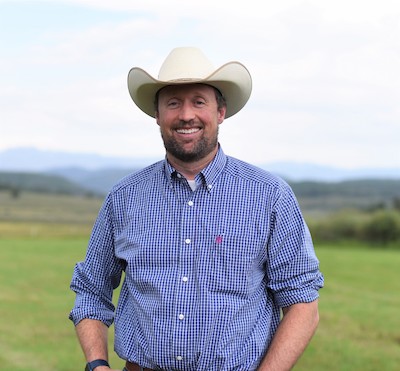
Happy Thanksgiving! If you’re in the giving spirit, then we have just the episode for you!
This week, Haley chats with Erik Glenn, Executive Director of the Colorado Cattlemen’s Agricultural Land Trust (CCALT), to discuss the critical work CCALT does to conserve Colorado’s working landscapes. Erik shares the history of the organization, the vital role of conservation easements in protecting agricultural lands, and how urban and rural communities alike benefit from these efforts. As Colorado Gives Day approaches, discover how you can support this mission to ensure these iconic landscapes thrive for generations to come.
Topics
[0:55] Introducing Erik Glenn and CCALT
[3:36] CCALT and its founding
[7:18] Conservation Easements: What they are and how they work
[13:58] Beyond easements: CCALT’s additive conservation projects
[20:41] How CCALT’s work impacts urban communities and recreation
[27:38] CCALT success stories: iconic landscapes conserved
[37:07] Colorado Gives Day and the importance of western conservation
Haley Mirr (00:06)
Welcome back to the Land Bulletin Podcast, where every other week we bring you experts in the field to impart their knowledge when it comes to the ranch and sporting property market, buying and selling advice, the latest best stewardship practices, as well as topics that impact landowners every day. I’m your host, Haley Mirr. Let’s jump in.
Welcome back to the Land Bulletin Podcast. I’m Haley Mirr, and I’m here with a good friend of ours. Colorado Gives Day is coming up, so we wanted to highlight one of our favorite nonprofits, Colorado Cattlemen’s Agricultural Land Trust. Chatting with us today, thank you for being on the show, is Erik Glenn, the executive director of CCALT. Welcome to the show, Erik. I know this isn’t your first rodeo, so this should be an easy combo.
Erik Glenn (00:48)
Hi, Haley. Thanks for having me back on the podcast and looking forward to the conversation.
Haley Mirr (00:55)
And like I said, if you want to know, see the other episode with Eric, we really went into specifically what a conservation easement is, you know, really the nitty gritty. But today I really want to focus on who CCALT is and why it’s important to give during this, you know, not just this season, but all seasons and what it does kind of for the state of Colorado.So first, can you start by telling us a little bit about yourself and your role at CCALT?
Erik Glenn (01:22)
Sure, so I’m Eric Glenn. I’ve been the executive director of Colorado Cattlemen’s Agricultural Land Trust for now nine years. It’s hard to believe that it’s been nine years. It’s went by very quickly.I’ve worked for CCLT since 2008, which is also kind of hard to believe. But I tell folks all the time that I haven’t had a bad day of work in 17 years. I’ve had a few bad hours, maybe a bad half a day, but never a bad day at work. It’s such a wonderful place to work with some just wonderful people. And not just those that are in staff, our landowner partners, our phenomenal, our organizational partners across conservation and agriculture and beyond are wonderful. And it’s just that I think what makes a really great work environment. And this is this is just a phenomenal one. And we’re able to impact, I think in a positive way, the future of Colorado, which also makes it fun for me. And I can’t imagine a better last 17 years from a look perspective than what I’ve been blessed to have at CCLT in the myriad of roles.
Haley Mirr (02:47)
I would agree. I think I attribute some of my favorite friendships and relationships over the last 10 years at Murray Ranch Group with CCALT. So one of which is my best friend on the whole world. So thank you for bringing Janie into my life, Eric.No, you guys have an incredible organization. It’s filled with really smart, driven people who care about conservation, care about Colorado and we’re just proud to even call you guys friends and partners. So for those of you who are listening, when you hear Colorado Cattlemen’s, your mind probably immediately goes to the Cattlemen’s Association. Where did kind of the land trust start? What was the kind of, you know, the need? Who were kind of the game changers for CCALT to be formed?
Erik Glenn (03:36)
We were founded in 1995. So we’re coming up on 30 years next year, which is exciting.And I hear it’s a special birthday year for Mer Ranch for two, which is exciting. But in 1995, there were a lot of pressures on ag producers that are not unlike the pressures that are there today. They were slightly different. And the biggest reason that the members of the Colorado Cattlemen’s Association looked at starting a land trust was related to generational transfer of farms and ranches. And it was specifically tied to the estate tax exemptions, which were much lower than they are today back in 1895. In fact, I think if I recall correctly, they were less than a million dollars at that time. So as properties were appreciated, property values were appreciating particularly ranch properties and particularly ranch properties around resort communities. There was a real crisis for a lot of our traditional families in a lot of cases have been in these communities working these properties for 50, 60, 70 years, sometimes longer, and there was a transition about to happen and they were facing these really challenging estate tax and estate planning issues. And easements have been a tool for estate planning for a long, long time. I think outside of the conservation benefit, the primary utilization of the conservation easements has been for estate planning. And so the membership of the Cattlemen’s Association took a really, I think, brave, made a really brave decision in going out and creating the first of its kind conservation organization in the country, an organization that was stood up by members of the association to serve the members of the association first and foremost. And I know that those that were around took some grief from some folks who didn’t think it was the right thing to do. But I think if you look back on 30 years, we’ve worked with more than 500 families across the state, which is the key, that’s the key metric for me is how many families are we impacting? We’ve helped conserve, and I say helped because it’s really the landowners that have done the conservation. We just helped facilitate the transaction. More than 800,000 acres of working lands that will remain in agricultural production, will remain open for wildlife, will remain these beautiful scenic views that we all get to enjoy as we travel around Colorado forever. And I think that’s a really remarkable story. And it’s a story of success for the Cattlemen’s Association. I think it’s, again, just another testament to the old adage that the American rancher is the true steward of the natural resources of our country. And they do a really, really good job of that. And like I said, I’m just really proud to have had the opportunity to serve the ag industry, and to serve Colorado, to serve the Cattlemen’s Association in the way that I have through CCLT.
Haley Mirr (07:18)
That’s great. And like I said earlier, we do have a podcast that really dives into what a conservation easement is, what it does for a rancher, you know, the kind of tool that it is, but would you mind just kind of in layman’s terms for those listening who maybe aren’t as familiar with a conservation easement, what is it and how does, you said you guys aren’t necessarily the ones conserving it, you’re helping, how does CCLT facilitate those easements?
Erik Glenn (07:45)
Sure, so conservation easement in essence is a voluntary set of restrictions that are placed on the land and they are they are perpetual restrictions that are placed into the deed of conservation easement that’s recorded against the land. Again, I think that I would stress to everybody listening that these in all cases are voluntary, you know, landowners choose to utilize this property right and it really is a property right and the and it’s it’s sort of a negative property right I think an interesting way to think of it, they’re taking sort of rights and extinguishing those so that that land can remain available to do the things that land is intended to do.And so it’s executed through a deed that’s reported against the property and you have some of the restrictions that you would see commonly and in a conservation easement that’s going to be concerned with is residential housing, large infrastructure and there’s no limitations in ag easement of where you can put for owls or where you can put stock tanks and the stuff that landowners need to run an efficient operation and an effective operation. But what it’s really looking at is is removing the things that are really unnecessary for that land to and to continue to function to grow food fiber and energy for for the country. And that’s not to say that you can’t have a house certainly can we we identify areas in which you can build homes and and other structures within that easement. But at the end of the day what we’re trying to do is keep those areas limited and keep these large intact properties together so that they can function both from a ag standpoint and also from a other natural resources standpoint whether it’s wildlife habitat or it’s open spaces. However, you want to look at it, we’re trying to keep these properties intact and functional. And then the other one that I would say is important on the left is that we’re working to keep water on these properties and water is key to agriculture. And so we’ve got surface water rights associated with the property we’re working to keep those through the deed of conservation easement associated with with that property.
Haley Mirr (10:39)
That’s great. And kind of what I wanted to dive in a little bit more is a good distinction you made was continuing to have the land function.So I think a lot of people have this idea that once a conservation easement is placed, nothing can happen on the land anymore and it has to stand there. How do you guys kind of decide the functionality of the ranch and is it the landowner’s input, biological studies? How do you guys decide what to emphasize when it comes to preserving the property?
Erik Glenn (11:12)
Yeah, there’s certainly misconceptions about conservation easement, Haley, that are being spread by certain groups right now across the country. It’s unfortunate, but, you know, there’s a group that says you do an ag conservation easement and let’s say you grow alfalfa, that you would have to grow alfalfa for forever. And that’s just not correct.The easement is intended to enable a farmer rancher to manage that property the way they see the best to manage it. That means if they need to change crops, they can change crops. It means that they need to change their herd size, they can change their herd size. If they want to change the breed of cattle they’re running, they can do that. We do not get into management prescriptions within our easement and that’s really important what we recognize and I think it was the, you know, why the association with Colorado Cattlemen is so important is what we recognize is that the people who best understand the land and what it needs are the people that have been on the land that have seen the cycles of that landscape over time and they’re the ones that best know somebody from Denver who even if they grew up on a ranch or a farm or in agriculture of some in some respect coming to somebody in the San Luis Valley and telling them that they know better how to do this is sort of preposterous. And I think that’s the kind of conservation and of course that happens from time to time with some organizations but it’s that kind of conservation where academics or the people from the city think that they know better than our landowners and our rural communities that I think has given conservation and some segments that name.That’s not the type of conservation practice. You really want to celebrate and empower our landowner partners to do what they do best which is take care of that land and that landscape and the animals and the crops they care for.
Haley Mirr (13:32)
Beyond even the conservation easement itself and you guys helping with that component, there’s a lot of other things that you guys are doing for landowners from the additive conservation topics that you guys are working on to figuring out other tools to use the landscape to make sure these landowners can continue being stewards of the land.Can you tell me about some of those projects that CCLT is working on?
Erik Glenn (13:58)
Sure. So about four years ago, we wanted to look at how we were doing the long-term stewardship of the easements that we hold and what kind of relationship did we want to have with our landowner partners. And historically, the relationship has been fairly static. We go out and monitor the easements to ensure that the terms are being complied with on an annual basis. And those trips are fun. It’s fun to go visit our landowner partners and see what they’ve got going on. But long-term, for me, as somebody entrusted with trying to ensure that we can be a really effective organization in the future, the static relationship going out and visiting once a year just really isn’t that exciting.I want to find ways in which we can provide additional benefits to our landowner partners over time that voluntarily choose to put an easement on their land. And so we created this additive conservation program, which is really intended to work with our landowner partners on other conservation projects that they’ve identified that they want to do. And when we started looking at this program, we did a survey of our landowners and 88% of our landowners said they had already identified projects. And their limitations for doing those projects were capacity, time, and funding. And I said, well, those are places that we can help. We have a really dynamic team that’s used to administering grants. We know how to work with the federal programs really well. And so could we step in and help our landowner partners across the state get those projects done that they’ve kind of identified. Additive conservation is really about finding ways for us to continue to partner with our landowners to do more conservation on these properties to help them improve their operations and to help the net resources continue to thrive. So we’re still early in the program, so we’re certainly not serving all of the landowners that have an interest in it. But we’re continuing to expand that program. And I think that program is really kind of the future of 2CLT long-term because at some point we’ll stop doing easements.We’ll either run out of land to conserve or the incentives will dry up and there won’t be a reason in which a lot of landowners look to conservation easements as a tool. And so how do we continue to be front and center and in a viable organization that’s layering other conservation on top of these conserved lands that I think does that. And so it may be habitat enhancement project. It may be a riparian restoration project, stream restoration. The number of projects that our landowners indicated that they want to work on is pretty diverse. But it’s really exciting to see what they’re working on and how we might be able to help them.
Haley Mirr (17:17)
Well, it’s neat, too, and let me know if I’m wrong here, but Colorado seems to have a lot of tools available to, you know, emphasize conservation, to help landowners. Have you seen that it’s a little bit different in Colorado versus other states?
Erik Glenn (17:32)
Well, I think certainly in terms of easements, we have more incentives in Colorado, we have more tools available to help put easements, if that’s a tool that will work for a landowner on the ground, but you know, in terms of these other additive projects, I would tell you that, and I, I traveled quite a bit across the west, working with other ag-focused land trusts, that landowners throughout this country have projects they want to work on like this, and Colorado’s not unique in, in that regard, if you’re a farmer or rancher, the thing you care most about is tending to that natural resource that you’ve been entrusted with stewarding, and so how can you, how can you do better by it? And you can do that through doing some of these projects, you know, can we put stock tanks in, in different places to better move cattle around?Can we look at degraded streams that have been degraded over time for any variety of reasons, and can we put them back to a better, better place from a health standpoint, and our land owners want to do those projects, and again, their limitations are just time, money, resources, and if we as a conservation organization that are affiliated with, with ag industry groups can help them do that, I think that’s an exciting place for us to, to be, and again, I think it goes back, for me, it always goes back to what’s our, our mission, what’s our purpose, and, and for us, at Colorado Cattlemen’s Ag Land Trust, and for the other partnership of rangeland trust members, which are all land trusts across the West and the Midwest that have an affiliation with an ag industry group, you know, our mission, our objectives is to make sure that family farms and ranches continue to exist in this country, and that we have places to grow food, fiber, and, and develop energy into the future, and, and, and so if you think about that as your, your purpose, and you think about your goal is to be a service to those members of those organizations that are looking for conservation, then this is just a natural continuation of, of that service mentality, how do we help them achieve what they’re trying to do operationally? And when we do that, it’s natural resources and the land’s going to benefit.
Haley Mirr (20:04)
That’s great. And beyond, because people who are listening, you know, we’re emphasizing Colorado Gives Day and, you know, giving all these funds to nonprofits that people care about that affect their lives, that are important to them, beyond the landowner who is obviously the client, the person that we are here to protect and the landscapes that they cherish and own, how does CCALT and their work affect people in maybe some more urban communities?You know, people in Denver or any of the resort towns that are out there. How, how is your work kind of impacting the people that maybe aren’t landowners?
Erik Glenn (20:40)
Sure. Well, and I just want to start by saying, I think what makes this country great is that we have this history of philanthropy. We have this history of service that is pretty unique. And I think is what makes us this wonderful and durable community.And, you know, I know we’ve got lots of issues. I think if we go back to what, you know, our foundational principles of caring about each other, caring about the land, and taking care of our communities, you know, a lot of these issues and the business will get solved. And so I get really excited around Colorado Gives Day because it’s an opportunity for folks to come out and support charities that they care about, support causes that they care about. And conservation is always one of the top causes in Colorado, you know, there’s polling data out there that, you know, 80% of Colorado support conservation. So that means, you know, Republicans, Democrats, Independents, it doesn’t matter. Everybody gets behind conservation and keeping these places open. Everybody cares about agriculture because we have to eat. And so how does Colorado Cattlemen’s agricultural land trust benefit folks in the urban areas? You know, it’s a multitude of ways. It’s keeping these family farms and ranches in operation so that we can buy local food. It’s keeping these beautiful scenic places open. And, you know, when you drive, when you think about the scenic drives across Colorado, most of them are really defined by these private working landscapes. And many, many of them are conserved. And we all get to benefit from that when we drive around the state to be able to see what is, I think, the definition of Colorado meandering streams in mountain valleys, the rolling and open vastness of the plains. You know, those are what people think of when they think about the West. That’s what they think about when they think about Colorado. And conservation ensures that our kids and grandkids will be able to enjoy those opportunities to engage with those landscapes as well.And then, you know, if you’re a sportsman, you know, private lands really are critical for big game, especially during winter months. And so keeping farms and ranches working is really important for our game species, but also for a non-game species. You know, and so if you like wildlife, you know, the conservation is just really critical for making sure that the animals that folks engage with and love to watch and see will continue to thrive into the future. And there’s just so many things that conservation and working lands conservation touches, not just in rural communities, but in urban areas. That’s why I said I haven’t had a bad day of work in 17 years because I get to go out and impact our state and in the West and in that type of way, making sure that, you know, my kids and their kids will have opportunities to see these special places, interact with these special places,
Erik Glenn (24:11)
interact with the wildlife, engage in agriculture. I think that’s really cool.And I know that, you know, Colorado said that’s cool. And so my pitch would be, you know, if you’re looking for a way to make a difference, making investments in conservation can make a huge difference. And it’s a durable difference. And by durable, I mean, yeah, you invest in conservation, you invest in the work of the Colorado Cattlemen’s Ag Land Trust. That investment carries on long into the future. You know, our easements are perpetual. These landscapes are going to be there a very, very long time.
Haley Mirr (24:53)
Mm-hmm. And I think it’s an important distinction too, you know, when people think move to Colorado, they want the open spaces, they love going to the national parks, they love to go, you know, hiking, but there’s such an important role that private land owners and those landscapes make when connecting all of those things.So even though you might not have access to these private lands without them, like you were talking about with migratory corridors, with, you know, water restoration, riparian areas without, you know, the working landscapes and the, you know, the resources that landowners have, those other places that you do have access to wouldn’t really exist the way that they do today.
Erik Glenn (25:34)
Absolutely. And you think about my family’s from the Upper Arkansas Valley region down around Salida. You think about the massive amount of recreation that happens in that Upper Arkansas recreation area. And that experience, if you’re rafting or mountain biking, would look very different if it wasn’t for private landowners who commit every day to working those landscapes, keeping them in these open and productive state for the wildlife, for the cattle, for the sheep, whatever livestock it is that they might be utilizing to manage that resource.But there’s a big difference between recreating in an area with working farms and ranches in an area that looks like Highlands Ranch and nothing against Highlands Ranch or any of our urban communities. But I think when we think about outdoor recreation in Colorado, we think about going out and interacting with open places. And many of those experiences are elevated by working landscapes. And I don’t think we always appreciate that as citizens of the state, nearly enough. And so I know our landowner partners care deeply about that good stewardship. And they do it because that’s their job, it’s their livelihood, it’s their passion. But we all get to benefit from that.
Haley Mirr (27:15)
And can you give a few just for those listening who, when you say things like that about, you know, these working landscapes, you might not recognize that that’s what you’re looking at without naming, you know, certain ranches or people that like their privacy. Do you have examples of some of those properties that our listeners might be like, oh my gosh, I never realized that wasn’t public land, that is this private landscape that I’m seeing every day.
Erik Glenn (27:37)
Yeah, I think the one that’s probably top of mind and most relatable to folks is if you’ve ever driven from Castle Rock to Colorado Springs, there’s that place on I-25 where the houses just disappear and you open up into these vast rolling landscapes with these really dramatic cliffs and and buttes and that landscape in between Castle Rock, Colorado Springs is largely conserved and so it will look like that in the rest of our lifetimes, our kids lifetimes and long after that and those were all private and still are private working landscapes that landowners have decided you know they want to keep those landscapes working and all of us that travel I-25 get to benefit from from that and I think we all take a deep breath and sort of relax when we get to those places even if there is traffic it’s easier to look out and see these open places than being confined in the cities and again I live in the city you know most of us do but I really think the power of our open landscapes is that it frees us from these human created walls and barriers that I think limit creativity and I think when you get out of that when you interact with these landscapes even if it’s just driving through them that’s when creativity is kind of stimulated and and I think that’s one of the neat things about being able to get out not far from the city and experience the vastness and openness that Colorado is still offers in a lot of places.
Haley Mirr (29:31)
And that’s why we live here, you know, like you, I live in the city, but you live here for a reason. Otherwise you would live in New York or DC or something like that.So it’s important that, you know, we hear about these types of organizations that protect these landscapes for future generations and the people that are listening beyond the Colorado Gives Day, are there other ways that people can support CCL beyond, you know, donating land for an easement? How can people get involved?
Erik Glenn (30:00)
Sure. So I think that I would encourage people to sign up for our newsletter that comes out monthly and in our communications, our social media. I think it’s the best of social media because it’s not the like stressful stuff we all engage with with social media. You know, ours is looking at spaces and the fun beautiful landscapes that we get to interact with. So that’s a great way to engage with us.Of course, that would be remiss not to encourage people even beyond Colorado gives data to contribute financially, you know, for every $25 that people donate to CCLT. We can conserve one acre of land into perpetuity and we can keep these farm and ranch families on these landscapes working them. We can help the next generation of farm and ranchers come up and continue to ensure that we have these wonderful rural communities that provide the food and the fiber we depend on. And so we have events kind of throughout the year that are always a good way to engage to whether that be virtual ranch tours or our forever Colorado barbecue or other events that we host. There’s just a myriad of ways to get involved and we love to bring new people into and welcome them into the organization and tell them a lot about what we do.And, you know, even if you’re somebody who doesn’t have an ag background, I think the neat part of this for those people is warming about it. And we offer, I think, a really neat way to learn about agriculture and to learn about agriculture and conservation together and also how we’re working to make our rural communities more resilient and dynamic as well.And so, yeah, there’s just a lot of different ways and we, like I said, we welcome folks coming in and learning about it. And let’s see and meet new people.
Haley Mirr (32:11)
I would attest, going to the events and actually meeting the landowners and meeting the people that are working these landscapes has changed my life. Highly recommend Beyond Giving, really reaching out and meeting these people because they’re the best out there, I would say.I guess one of my last kind of questions for you, Eric, would be, you know, what is one of the coolest projects that just really, you know, made it clear why you’re doing what you’re doing? I know all of them have their own unique kind of thing, but I know even with ranch sales and working with conservation buyers and sellers, we have the same kind of story. So which one stands out for you about something that kind of changed your perspective on things?
Erik Glenn (32:58)
Well, to change my perspective that, you know, each of our projects is unique and special and in different ways, but that there’s a property just to the north of the town of Burset, Borders, the town of Burset, and it was, it’s been a family farm for a long, long time, right along the Little Topsin River, and it’s in this area what’s quickly changing. I mean, I think it’s like 10 minutes from the Bucky’s gas station. So you can imagine what this landscape looks like, right? And the family that owned it didn’t have any errors. And they were trying to figure out what they were going to do with it. And as they aged, and they ultimately decided that they wanted to ensure it remained a farm. But beyond that, they wanted to find a way to have that property serve agriculture in a different way, and meaning that they wanted to find ways to get kids more engaged with agriculture. And particularly, they had an interest of like, can we get front range youth who may not necessarily always have these opportunities to look in and explore careers in agriculture. So think about that. And so they worked with us, and they worked with the Future Farmers of America Foundation, and a number of other partners to ultimately sell the property to the FFA Foundation. So they’re now the owners of the property.We put a conservation easement on it so that it would remain so that there were the legal protections long term. But that easement also enabled FFA Foundation to be able to, to, to, to great more opportunities for young people to be inspired to get involved in agriculture as a career, even if they’re not from a farm or ranch family. And secondly, as a place that we can bring folks from the city who may not be looking to have a career in agriculture, but they can better understand what it means to live next to a farm, what’s next to a ranch. And my hope is, is that places like that, the National Western Campus, and that’s the issue for the center, that we can utilize those places as these living educational laboratories that help us inspire sort of a return of people to our historical agricultural roots. And I’m not saying everybody should be a farmer or rancher. That’s just not feasible. But we need to understand why it’s important. We need to understand we need farms or ranches to feed the growing populations. And we need to understand what it takes to run an agricultural operation so that we don’t make bad choices at the ballot box. We don’t make, we don’t end up with bad statutes and other laws that make it harder and harder for us to grow food.
Erik Glenn (36:43)
And it makes it harder and harder for wildlife to thrive. So that project to me, while very unique to what we do, is, I think, this really exciting opportunity for us to engage in a different way that furthers our mission.And for there’s a future for Colorado agriculture.
Haley Mirr (37:07)
I love that. I think that’s amazing.And I think that’s exactly, you know, what Colorado Gives Day and kind of that, the desire to learn about what’s out there and how you can help and how it’s impacting a lot of things. That’s exactly what we’re here to do. So I really appreciate you, Eric, coming on the show and talking about all the amazing projects. We have always loved being partners with you guys and inspiring landowners to be the next yards of the land with you guys as your, their, their advocates. So thank you for being on the show and I’m looking forward to celebrating your 30th anniversary next year and further generations to come. So thanks so much, Eric, for coming on.
Erik Glenn (37:46)
Thanks, Haley
Haley Mirr (37:47)
Talk soon. See you next time.
Thanks for joining us today. To learn more about the Ranch Real Estate Market, or our ranch marketing process, make sure to subscribe to our newsletter on our website at mirrrranchgroup.com or give us a call at 303-623-4545.See you next time.