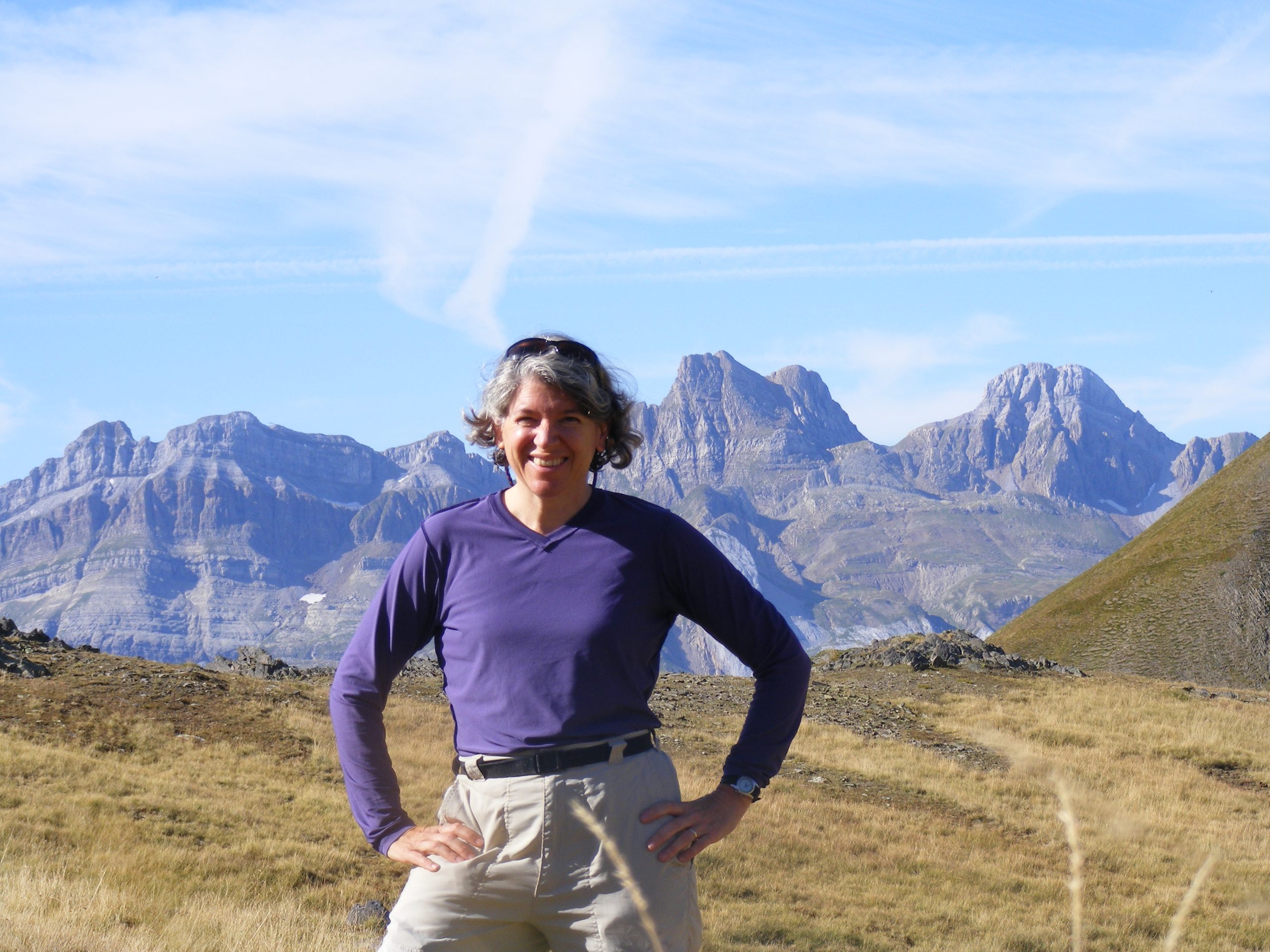
What happens when scientific research meets generations of ranching knowledge, and the two don’t agree? In part two of our conversation with Maria Fernandez-Gimenez, we explore the Collaborative Adaptive Rangeland Management (CARM) study, an ongoing research project bringing ranchers, scientists, and conservationists together to explore different approaches to grazing and land stewardship.
Drawing from her firsthand experience with the project, Maria shares how disagreements can lead to meaningful collaboration and why local knowledge can offer insights that scientific research might overlook. Generational knowledge is invaluable to understanding the land, but what happens when that knowledge is at risk of being lost? And how can we ensure the next generation of land stewards not only preserves those lessons but builds upon them with fresh perspectives?
Tune in to discover what ranchers and scientists can learn from one another and how collaboration can shape the future of land stewardship.
Topics
[0:00] Introducing the CARM Study
[2:48] Bringing Ranchers and Scientists Together
[9:17] Grazing Results, Prescribed Fire, and Disagreement
[14:24] Building Trust Across Different Perspectives
[17:35] The Lasting Impact of the CARM Study
[22:03] Are We Losing Generational Ranching Knowledge?
[25:32] Advice for New Landowners
[32:12] New Opportunities for the Next Generation
[34:48] Final Thoughts and Closing
Haley (00:06):
Welcome back to the Land Bulletin Podcast, where every other week we bring you experts in the field to impart their knowledge when it comes to the ranch and sporting property market, buying and selling advice, the latest best stewardship practices, as well as topics that impact landowners every day. I’m your host, Haley Mirr. Let’s jump in.
One of the things when we were looking up everything you’ve worked on, the CARM study came up. Can you tell us a little bit about that and then how… There’s a lot of mention about disagreement, but actually how that turned out to be a good thing. So would love to know about that study that you participated in.
Maria Fernandez-Gimenez (00:42):
Yeah. So CARM stands for Collaborative Adaptive Range Land Management. And it’s a big story, but I’ll try. So the CARM project kind of emerged out of this longstanding debate among scientists, but also between scientists and practitioners about the value of high intensity, short duration grazing. In a nutshell, there are a lot of proponents of that, a lot of people who have implemented feel that really works. And the science basically by and large does not bear that out. I mean, at best, there’s no difference. In the meta analyses that had been done, looking at all the research either within one continental context or across the world, it’s kind of a wash. It works better. It’s not to say it never works. It works better in some places, some contexts than others, but a lot of the claims don’t seem to be super well supported. And this has led to a pretty acrimonious debate and not good in some ways, not productive for moving forward and solving problems and working together.
(02:02):
And so a group of us though, well, why is it, especially those of us like me who really believe in the value of local knowledge and traditional knowledge, why is it that people’s experiences implementing this, ranchers’ experiences are not aligning with the data that we have? And part of the reason, there’s lots of reasons about how science is conducted and then it’s usually at a smaller scale. It’s not at a ranch scale. It’s very controlled and manipulated. And one thing that almost none of the studies, pretty much none of the studies prior to CARM had accounted for was actual decision making. How do people make the decisions? How do they adapt?
(02:48):
And so we tried to design something which was still a scientific experiment, but that was ranch scale where we had real life people that were part of the experiment basically making the decisions and that agreed to be observed and participate in that so that we could try to account for that adaptive decision making that goes on when people are implementing more intensive rotational grazing, I’ll call it. And so in that experiment, we started out with an invitation only multi-stakeholder group that included ranchers from the local grazing association, the Crow Valley Livestock Association, which grazes the western half of the Pawnee National Grasslands which surrounds the Central Plains Experimental Range, which is a piece of land owned by and used by the Agricultural Research Service, range research unit that’s based in Fort Collins. And so basically the ARS led this and they gave over a big portion of their entire research station to this experiment so that it could be a ranch scale experiment.
(04:23):
And then our team of researchers, I was the lead social scientist and everyone else pretty much was an ecologist, a hydrologist or a livestock person. And later we dragged in some economists too, which was really needed. Stakeholders were ranchers from the Crow Valley Livestock Association, conservation groups, so the Nature Conservancy, Environmental Defense and Bird Conservancy of the Rockies, federal agencies, forest service, federal and state agencies, I should say Forest Service, NRCS and Colorado State Lands, and then CSU extension as well. And then there was the research team, which initially we were supposed to be not stakeholders, but in the end we had to admit we were stakeholders. And so we created guidelines for how and when we would give our opinions about things because we couldn’t pretend that we were objective and neutral because we were not. But anyway, so that was the setup. And the idea was they would have this about 6,500 acre area that was divided in half into 10 pairs of pastures.
(05:48):
And one of each pair was a carm pasture and the other was, we called it traditional management. So traditional management in this area is season long grazing at a set fairly conservative stocking grain. And the idea was that these stakeholders first would come up with the overall goals and objectives for management and then would make the management decisions within certain side boards about grazing on the 10 pastures that were their side of the experiment. So the overarching goal was to basically manage the land so that it would thrive and could be passed down to future generations, so continuity of the land and the livelihood and landlife and community. And then there were specific objectives for vegetation, for wildlife, primarily birds and for that sort of ranch economics. And then later on, we also added social learning objectives. And so then we met, we would meet, I think it was originally twice a year, then maybe came four times a year and then added people.
(07:06):
The ranchers actually asked for more meetings, the stakeholders, it wasn’t just the ranchers. They wanted to participate more in the data analysis and so forth. So anyway, they were making decisions such like, I mean, the big ones were each year, how many steers are we going to put out? So there was steers, not cow calf. And it was an equal number of steers on both halves of the pasture. But the traditional ones, whatever number we decided, if it was 200 steers, then it was 20 steers in each traditional pasture. And initially in the carm pasture, it was managed as one herd. And one herd would be rotated through the 10 pastures and the stakeholders would decide what the order was of rotation and how long they would stay and what the indicators were to move. And there were vegetation indicators and there were animal condition and behavior indicators.
(08:06):
And then it was the research team and really ARS and their technicians that collected the data and that moved the animals. And then they would present the data back to the stakeholder group and say, “Well, this is what happened this year. What do you think? What should we do next year?” And over time there were more options for management in addition to the number of cattle in the order of rotation that included implementing patch burns. And so patch burning is something that historically occurred in this area that there’s been quite a bit of research on and that we know for some species, like for some of the sensitive species out there like mountain pluver, the only way to get habitat for mountain pluver is either to have prairie dogs, which were not part of this experiment or burn it. And for some other species also that require really short stature.
(09:17):
And what we know is that burning kind of gives you a flush of nutrients, the grass, the forage quality is usually higher after that. So we though, “Okay, this could be a win-win. It could be good for the birds and good for the cattle.” And I should preface this by saying the first couple of years of the experiment, the first thing we learned was that the traditionally managed cattle gain more. They gain more, the daily gain and the overall gain is better. So the rotational grazing thing is not as good in terms of weight gain. And so the burning came up as a proposal from the conservation folks for a way that maybe that could be mitigated by increasing forage quality and at the same time might help with bird habitat. But the ranchers in this area, which is different than ranchers in some other areas, but really have a historically strong opposition to fire as a tool.
(10:28):
And they really did not want to do this and basically refused the first year. There were a number of different disagreements like that that challenged our assumptions as researchers that there was going to be this tidy adaptive management process where you assess, you have goals, you come up with agreed upon indicators, you design your management strategy, you implement it, you monitor it, you get all the data. And we had the deluxe data. You never have this level of monitoring in the real world. And we have a whole team to analyze it and present it back and then people will see the data and they’ll see, okay, this is what we have to do next. Didn’t work that way. And we know that. We kind of know that data alone, knowledge, information alone rarely changes people’s minds.
Haley (11:31):
Right. There’s those gaps and that’s where that knowledge that you keep talking about comes into play.
Maria Fernandez-Gimenez (11:35):
Yeah. And so what really had to happen here is that we ended up going back as researchers to kind of focus on the science of learning. How do people learn? How do people’s mental models or conceptions of how a particular thing works in the world change so that you adopt a different conception? And basically just getting information, someone telling you that, “Oh no, that’s not how it is. It’s like this.” It doesn’t work. You have to confront it and have a dilemma, have a paradox, have something that really doesn’t… The pieces don’t line up and you can’t avoid just having to rethink it. And so that’s more of the process we had. It wasn’t a simple, “Here’s the data. Okay, it’s clear that this is what to do.” No, they came up with all kinds of other reasons why the data was the way it was that weren’t what we though it was.
(12:35):
I think we need to do the thought experiment and flip it around. And sometimes, oh, maybe our new scientific discovery is actually validating traditional knowledge.
Haley (12:46):
Oh, I like that.
Maria Fernandez-Gimenez (12:48):
And both types of knowledge benefit. They’re often, in my experience, complimentary and often when they appear to be contradicting, it’s often an issue of scale, temporal or resolution. And sometimes it turns out that the science was wrong and that traditional knowledge was right. I’ve seen that happen. But just when we’re tempted to say that, let’s think about flipping it around the other way. And I think if we are in a collaborative relationship and we’re approaching it humbly and with curiosity, we can do it without putting one kind of knowledge above the other, appreciate their differences and think about, well, why do we have these different views? Is it a social world issue? Is it an issue of the scale of our observations? What’s going on here? And how can we together come up with an answer that we might both come out with a shared understanding?
Haley (14:09):
Well, I feel like it’s everything that you found out with your study. I mean, those are a lot of different opinions and reasonings for doing what you do to come to solutions that just kind of meld all of it together. And that listening concept I think is big.
Maria Fernandez-Gimenez (14:24):
It was that process of confronting those differences, those cognitive conceptual differences, and then really working them out that led to changes and learning. But part of that was also, it wasn’t just that we had different ideas and beliefs, it’s that we came from totally different social worlds. The world of a conservationist, the world of an agency person, the world of a rancher, the world of a researcher. We all speak the same language. We all think we’re in the same culture.
Haley (15:00):
We’re all trying to do the same thing,
Maria Fernandez-Gimenez (15:02):
But really we’re part of different cultures and we have different ways of doing things and different values. And so we had to kind of get to a place where we realized that and started not just to try to blend the knowledge, but blend the social world and understand in a much deeper way where each other were coming from. And that started to happen by accident. It wasn’t really an intentional thing. So I mean, certainly meeting together and discussing, we got to know each other, but what really helped advance it was when I think it was one of the conservation organizations had the opportunity to do a field tour, take other people as part of a visiting group or conference on a field tour, and they invited the ranchers to do it with them. And so that began to sort of forge a shared world. And then one of the ranchers invited everybody to his place for a social get together.
(16:08):
And that really started to break the ice because then you’re not just focusing on what the data says today and what decision we have to make, you’re getting to know people and you’re finding out what you have in common and you’re learning, oh man, this is what they have to deal with.
(16:25):
So it just took it to a different level. And I think that started to break down stereotypes that we all have of each other as members of different groups and to increase respect and at a deeper way. I mean, we all came in trying to interact in a respectful way, but it’s one thing to do that. And it’s a really different thing to really come to respect someone because you know something about their life. And so those things really helped to have us create a shared social world that was the CARM world, the CARM culture that was bringing in and not necessarily blending those different cultures, but it’s its own culture that understands and respects the different places people are coming from, the different values they have and why. And so that’s kind of a little bit of a nutshell about how to… And I’ve now retired.
(17:35):
I haven’t been part of CARM for, gosh, six years, but CARM continues and there’s a new social –
Haley (17:40):
Okay. I was going to say, is it still the same?
Maria Fernandez-Gimenez (17:45):
There’s been turnover in the stakeholder group, the core ARS researchers, most of them are the same, but it’s extraordinary in that it’s rarely in research do you get that kind of long-term commitment to that kind of ongoing process. And it has been replicated in other places. So colleagues of ours at University of Nebraska have started to do it. Their take is different. They’re doing it like actual ranches, multiple ranches, ranch scale kind of work. And then Haley Wilmer, who was the graduate student on the project, I was her advisor when we did CARM, she now works for the ARS. She’s a rangeland research scientist in Idaho at the Dubois Sheep Station. And so she’s created something called the Collaboratory that’s a multi-stakeholder group. It’s much more open, much less kind of controlled. It’s not an experiment. It’s really a group that is building relationships and coming up with their questions.
(18:51):
And it’s honestly a much more conflictual situation at the outset than ours was with people who were suing each other and really couldn’t be in the same room and be civil. And that has changed, that has changed. And they’re now designing a long-term scientific study together to try to answer, try to address these really critical questions about predators and sheep and public lands access and all those kinds of things. So I think the process that we tested and we learned a lot of cool things that I won’t go into about the ecology, about cattle production.
Haley (19:37):
There’s a reason it’s ongoing. There’s a lot.
Maria Fernandez-Gimenez (19:41):
But a lot of what we learned was about that process of call it what you want to, transdisciplinary research, co-production, collaboration, but basically how to build trust and work together over a long time. And that’s not an easy thing, not an easy thing to do. With the collaboration, it is hard work. And the greater the differences, especially if we have cultural differences, language differences working with people around the world, if it’s working with indigenous communities, it’s really hard work and it can be painful. And we, I’m speaking as a white woman, as a scientist, someone who has a certain position and power, I really have to work hard to hold myself in check and to question my own assumptions and to reflect on those power dynamics. And when we do that, with this global gathering that I organized, we really committed to using sort of principles of indigenous research about respect, relationship, responsibility, reciprocity. And every time when I started to get anxious and wanted to push people to get things done or become my sort of teacher boss self, I had to take a step back and focus on the most important thing, which is the relationship. And how do we do this? How do we move this forward in a way that really respects people, where they’re coming from, what their lives are like, and makes the most sacred thing our relationship.
(21:43):
And that’s really hard to do. It’s really hard to do, especially in my dominant academic culture where there’s a lot of pressure to publish and be right. Yeah. But that’s the most important lesson that I’ve learned.
Haley (22:03):
Well, I think time is one of the most important things with ranching and especially with what you do. I mean, it’s something, like you said, the car, most studies take X amount of time, but this one is ongoing. You’re going to learn something new every year. There’s going to be different things that impact what the rancher experiences from weather to political, geopolitical situations to X, Y, and Z. And that’s one of the things I’d like to talk about with you, especially with what we do in selling land. We’ve seen a generational shift and a lot of ranching families don’t want to take on the, I don’t want to say burden, but the family business because they’ve seen what it’s like. Maybe they’re not making as much money as they once did. So there’s a lot of unforeseen things. But as ranches change hands, are we at risk of losing that valuable knowledge that comes with time and comes with some of these generational things that pass down and that knowledge from the native knowledge to local knowledge to kind of what you were discussing?
Maria Fernandez-Gimenez (23:06):
Yeah. I mean, I think we are. And I do think I’ve also seen though that it is possible for newcomers in different settings, even in pastoralist settings to learn, to gain new knowledge. And newcomers also at the community scale bring new ideas and bring their own… Often the people who are coming in are people with education, people with resources. So they can be an asset to the community depending on how they approach it and how others approach them. But I do think there’s value in documenting knowledge and you were asking what advice would you give a new landowner? Well, one thing is to… Well, there are various things, but one thing is to document. And so formal monitoring is really important, but way back when we were talking about local knowledge, I wanted to tell a story about the ranch I worked on at North of Hayden where they were not people who came with a lot of ranching background, but now they’ve been there almost 50 years and they learned from the other rancher whose story I told, he was their mentor.
(24:33):
And one thing that they did, the woman on that ranch was just kept records of everything. And of course, ranchers keep records of their animals, but she kept records of the first wildflowers that appeared each spring, the birds, when the birds came, when the birds left.
Haley (24:49):
I love that.
Maria Fernandez-Gimenez (24:50):
When they opened the head gate, when they closed the head gate, when the hay was ready, when all the cuttings happened, of course the calving, branding, shipping, snowfall, rainfall, just all these records. They’ve been there for 50 years. So they have this record of the changing phenology and the other ecological changes that are happening on their ranch over time. It’s all informal. It’s like on a calendar. She would just write it on the calendar square of a wall calendar. Oh, first whatever plant I saw, the bluebirds are back.
Haley (25:31):
I love that.
Maria Fernandez-Gimenez (25:32):
And so just this deep observation over time, really knowing a place and how it works. So observing, keeping records in whatever way you can, whether it’s photographs on a calendar, in a notebook, and then as much as you can, especially if you have a larger place investing in actual formal monitoring and then learning. Then the other thing is, if you’re new to a place, is to find out who the old timers are and try to make friends and be humble and learn from them and who your other neighbors are. The old timers might be other ranchers, but they’re also often agency people. They might be an extension person who’s been there for 30 years, might be an NRCS person who’s been there forever. I mean, I’ve met some NRCS field people who were the most amazing ecologists. When I was in Arizona, it was the NRCS person who taught me everything and also who was one of the best people in terms of knowing really how to work with ranchers and who showed such a great humility and humanity in dealing with all kinds of people in the borderlands.
(27:06):
And so everybody’s randomized piece of crossing lands, there’s tribes, and treating everybody with humanity and respect. And so he was universally respected and welcomed. And he was one of the only people that could tell the ranchers when they were really screwing up.
(27:32):
But listen.
Haley (27:33):
It goes back to the number four from what the Mongolian pastoral people taught you about shared space. Shared space can be shared space in that context, but then what you were talking about with the colleges, people in the NRCS, they know this space better than a lot because of their time and who they’ve talked to and their connectivity with everyone that has a connection to it.
Maria Fernandez-Gimenez (27:59):
I mean, that’s for all of us, whether it’s a researcher, whether it’s an agency person, whether it’s a newcomer to the community, a new landowner, being humble and being curious and making friends with your neighbors and respecting, you might not always agree with them. Yo might not always believe what they tell you first off, but sometimes it’ll surprise you that they turn out to be right in the end, even when it contradicts something that you thought you knew or something that we though was established science. Sometimes it’s the local knowledge that actually is more accurate to a particular context.
Haley (28:46):
Well, I think that’s great advice. And part of this podcast is we try to educate people when they’re starting this process of either considering selling or purchasing or just want to know about the West. And while we might give them the tools of this is what a conservation easement is, this is what you know with water rights, you’re giving this entirely other perspective of how to really make sure that generational, local, good knowledge is something that you also find when you purchase a property and you become the next steward. And that’s, I think, even more important than some of these more technical things that people focus on.
Maria Fernandez-Gimenez (29:24):
And I think part of it is that it’s a value set and why are you there and having that… Really, there’s a perception sometimes, especially from people who work with Pastors and other parts of the world that all ranchers are just capitalists first and foremost. And of course, ranchers –
Haley (29:47):
They have to be a little bit.
Maria Fernandez-Gimenez (29:48):
Who are 100% of their income comes from their land, they have to make money in order to sustain their operation. But what we know from research Is that their primary motive isn’t profit. Their primary motive is to sustain their operation, to continue to enable their family to live on that land and make a living with livestock. So caring for the livestock, caring for the land, caring for family and community is really often the primary motivation to sustain this way of life, this family on the land. And even people who don’t have their own heirs, I work with one rancher in Northwest Colorado who never married, doesn’t have children, he has a brother and he has nephews, but he’s one of the most dedicated conservationists I’ve ever met. And really it’s all about leaving it better than you found it and passing it on to the next stewards, whether they’re ranchers or they’re something else.
(31:04):
And the ranch that I worked on in Northwest Colorado has passed to the next generation. There’s not going to be a generation after that. And the current generation is turning it back into a biodiversity refuge, basically. They’re not grazing it with livestock, but there’s tons of wildlife. And it serves as kind of a refuge in an area that’s surrounded by more working ranches.
Haley (31:27):
Yeah, a lot of sheep up there.
Maria Fernandez-Gimenez (31:29):
Yeah, sheep and cattle. Their neighbors are cattle. So those things change. But if we can keep the land in a condition where it can sustain itself when it’s passed on to the next steward, whether they’re making a living from ranching or making a living from something else, provided they don’t plow it under or pave it over.
Haley (31:58):
Less of those guys.
Maria Fernandez-Gimenez (32:00):
Yeah, that’s my thinking about it anyway. And I’ll say something kind of radical here at the end and you can edit it out if you want.
Haley (32:10):
No, I’d love radical a lot.
Maria Fernandez-Gimenez (32:12):
I think part of that is, and in the broad sweep of reciprocity, is thinking about returning some of that land to the first peoples that were here. And that is something that some people are doing. And for some families that their operation isn’t going to continue, they don’t necessarily have heirs, that might be something to consider. And I mean, the other thing is the new generation of young agrarians like my daughter. There are all these young people who think that they would love this life and some of them really would and some of them could really contribute. And yeah, maybe they didn’t grow up on a ranch, but that doesn’t mean they can’t learn. That doesn’t mean they can’t be good, productive members of the community. Give them a chance. Yeah.
Haley (33:04):
Well, just look at you, a girl from Illinois that came out and started working as a ranch head. You learned everything while being on the land.
Maria Fernandez-Gimenez (33:14):
I won’t say I learned everything. I got a taste of it. I got a little taste, but it is possible to learn over the course of a lifetime and a generation. And there’s still something really valuable about that intergenerational knowledge. But there’s also something, like I’ve talked to herders in Spain about this question because there’s a lot of concern there, a lot of anxiety about rural depopulation, about we’re the last generation. And one of the people that I know whose family has been doing it the longest and who maintains the most traditional practices, Keith was the one who had the counter narrative. He said, “Why is it the end? It’s not the end. It can’t be the end. As long as there’s good grass up there, someone’s going to use it.” And we need people from outside to come in. This is a community that’s a little bit closed and they don’t really like outsiders coming in.
(34:15):
But this young man who also doesn’t have any ears has mentored other young shepherds, including women and helped them start their own operations. So that makes me hopeful. Someone who comes from probably hundreds of years of doing this, who he’s the last one in his family, but he still is totally motivated to do it himself. He loves it. He lives for it and he’s willing to teach other people who maybe come from very different backgrounds.
Haley (34:48):
I think that’s great. And I think pastoralists and ranchers are maybe the best representation of how you do absorb that and do know your place and hear from your neighbors because it is kind of a collective effort to understand things. But I just wanted to thank you because like I said before this call, I would’ve loved to have had you as a professor and the way you see the world. And I’m sure that our listeners will be appreciative of this as well. And I appreciate all the work that you’ve done to do this and the collaborative effort and the worldwide view you have on this. So thank you for coming on this show and taking a little part of your day to speak with us.
Maria Fernandez-Gimenez (35:31):
It’s been my pleasure. Thank you so much.
Haley (35:33):
Thank you. See you guys next time.
Thanks for joining us today. To learn more about the ranch real estate market or our ranch marketing process, make sure to subscribe to our newsletter on our website at myrranchgroup.com or give us a call at 303-623-4545. See you next time.