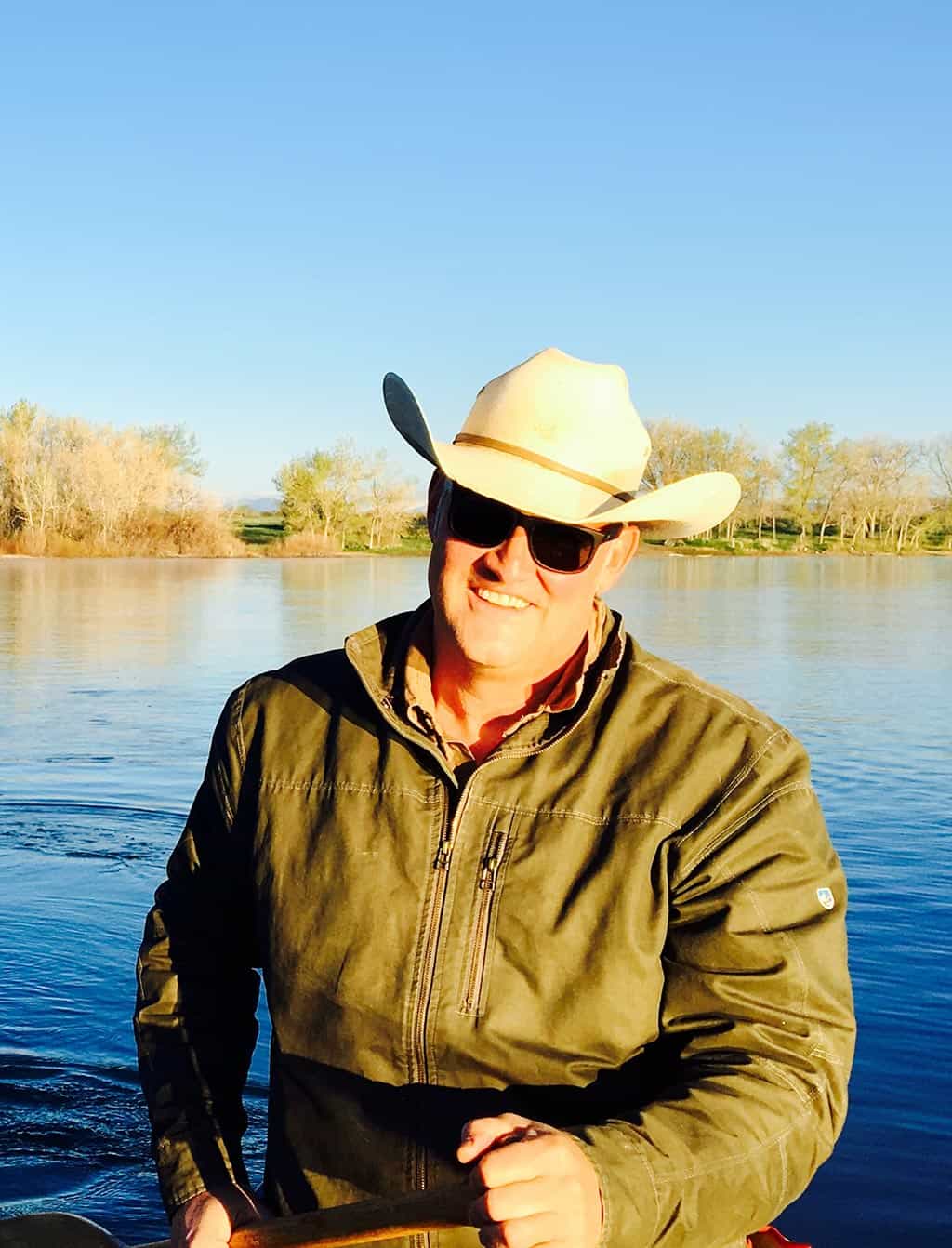
We’re heading to Durango, CO, this week to explore the town and surrounding Four Corners region with broker Woody Beardsley. Woody guides us through the area as we explore the unique mix of mountain and desert landscapes, rich history, outdoor recreation, and ranching traditions that make this area of Colorado one of the most exciting places to explore out West.
Topics
[0:00] Welcome to Durango, CO with Woody Beardsley
[3:02] Getting to know Durango, CO
[7:50] What Makes Durango Unique?
[11:28] Recreation in Durango, CO
[14:14] Ranching in Durango, CO
[18:09] Mirr properties in Durango, CO
[22:17] Durango’s Hidden Gems
[25:28] See You in Durango!
Special thanks to Visit Durango, Nick Korgos, Scott Smith, Dave Sugnet, James Flint, and Rhyler Overend for photo/video permissions in this video.
Haley (00:06):
Welcome back to the Land Bulletin Podcast, where every other week we bring you experts in the field to impart their knowledge when it comes to the ranch and sporting property market, buying and selling advice, the latest best stewardship practices, as well as topics that impact landowners every day. I’m your host, Haley Mirr. Let’s jump in.
Welcome back to the Land Bulletin Podcast. I’m Haley Mirr, and today we’re going back to our back 40 series where we look at some of the most known unknown rural communities that mean a lot to the west and where a lot of our ranches are sold and things you might need to know about these places. So helping me out today, we’re actually looking at a place that I love very dearly, Durango, Colorado. We’ve got Woody Beardsley on the show to help kind of understand the area better, know what to look for, what kind of buyers are looking for real estate down here, and then some of his favorite aspects of it.
(00:58):
So welcome to the show, Woody, to talk everything Durango.
Woody Beardsley (01:02):
Thanks, Haley. I kind ofcame prepared to talk Durango and greater area. So it includes Begosa and Cortez to some degree as well.
Haley (01:11):
Perfect. Yeah, we had Willie on the other day and we did Sedalia and he was like, “The only thing in Sedala is Bud, so I don’t know what to tell you. ” Excellent. So we’re good with doing the big area. So before we get started into Durango itself, I’d love to know your connection to Durango and that kind of area of Colorado.
Woody Beardsley (01:30):
Good question. When I was a kid, I was very fortunate. We had a really cool school program that took us down to McKelmo Canyon where the teachers had a wonderful little ranch, little property that was right next to a very famous rancher and archeologist, a guy named George Kelly. And they ultimately became what is now known as the Canyon of the Ancients, but Mokelmo Canyon has always been a very influential, important part of the archeological and kind of old history of the Southwest and Four Corners area. And it was just terrific. It was so great that a couple years later they offered a summer version of it, a two week kind of intensive and I got to do that. And ever since then, I’ve just always loved it. We get a river raft and go hiking and go into town and get a pop and all that kind of stuff.
(02:26):
And so just ever since then, I’ve always had a warm spot for Four Corners region, Colorado. And now I have some really great friends in Durango, Bayfield, Mancos, and subsequently always fun to get down there and see folks.
Haley (02:45):
I would agree. I think it’s a really cool spot. And what we’re about to kind of go over is I think it speaks to a lot of different kinds of people, especially with the access to amenities and all these things that you might not get in some other areas that we discuss on the show. So for someone who’s never been to Durango or this area, the surrounding area, how would you describe it to someone who’s never been who is thinking of visiting?
Woody Beardsley (03:16):
Well, my first response is that it’s gorgeous. Durango itself sits at the foot of the San Juan Mountains and the San Juans are kind of a younger range. They’re very rugged. They’re very spectacular. And subsequently there’s a ton of high country in the big snow pack. And subsequently just this very vital location for a town with neat, remarkable history. And there’s just so much to do that I guess gorgeous. And then another word that strikes me is diverse. It’s also in addition to being right there at the foot of the mountains, it’s also on the edge of the Colorado Plateau. So it’s really on the edge of desert country with the Four Corners, Mesa Verde, Ute Mountain Park with all that archeological history and prehistory that’s so fascinating, but also just this different ecology of the Colorado Plateau makes it for a really interesting and diverse location just geographically.
Haley (04:27):
We went down there for a ski trip last year and there was a day where we went from… We started in Durango and we were in snow. And then you kind of go through Cortez and it’s desert and then all of a sudden you’re going to Ophir and you’re going to Telluride and it’s snow again. It’s like this really wild combination of things.
Woody Beardsley (04:48):
Well, what you just described is one hell of a drive. I’m not sure that’s exactly the route you took, but yes, it is. It’s very diverse. A lot of top graphical and a bunch of different river basins. I mean, it’s mostly all San Juan River Basement. There’s a number of rivers that feed it and they’re part of that geography. So it’s really cool that way.
Haley (05:13):
And you mentioned history. Can you tell us a little bit about the history of the town? To your point, when you go into town, there’s some of that kind of Old West feeling. Yeah.
Woody Beardsley (05:22):
Well, I can’t tell you a whole lot about the specific history. I know that the location was kind of founded and maybe the town was founded by the Denver and Rio Grande Railroad during the silver boom of the 1870s or 1880s or thereabouts, one of those booms. And the San Juans were very rich in silver war, but other war too, but mostly silver. And so all those miners, and when you’re down poking around that country, you see these amazing mining works and mills and various things up on the sides of the hills and you drive those famous highways, you’re seeing that. All that infrastructure was serviced by a few towns and Durango was kind of keyed to all that. And the Denver Durango and Silverton Railroad, the narrow gauge is still in place and as you know, tourist attraction, which is great fun.
Haley (06:12):
Yeah. It’s one of those towns you still feel the Old West. They have the Silverton train coming into town every couple of hours. You feel that. It’s really special.
Woody Beardsley (06:24):
The other thing is it’s really on the edge of, we mentioned the desert of Colorado Plateau, but it’s also Indian country and it makes for a very diverse place. I mean, you’ve got the Southern Ute, you’ve got the Ute Mountain Ute, you’ve got the Yukuri, Apache, and of course the Navajo all have tribal lands and tribal governments all within the area. And subsequently that just makes for a different dynamic. They have their own lands, they have their own, I said governments, but there’s a whole community kind of involvement with that that is part of the culture in the Four Corners area.
Haley (07:06):
Yeah. And I think when you look at it, we live by maps in our industry. And when you look at a map of that area, you do see a lot of that tribal ground just to the south and it’s vast. So if you’re not as familiar with, “Hey, I’m looking for ranches. I’m looking for things to public ground, what’s the difference?” That’s a very interesting location.
Woody Beardsley (07:27):
Yeah. And you need to understand those cultural things are maybe different than say interacting with the Forest Service. Tribal government or tribal lands are different than dealing with BLM or different dealing with Forest Service. And you still have county government. And so it is just culturally different than other counties that just don’t in fact have that as part of their mix.
Haley (07:56):
How would you describe the personality of Durango and the surrounding area? What does a typical… And I know that it’s a diverse area in terms of landscape, but also people, but what are some of the personalities you might meet in Durango? Well,
Woody Beardsley (08:11):
It’s very kind of typical Western. It’s very friendly for one and upbeat, outdoorsy, athletic. What are some other words you might think of? But it’s also pretty laid back and easygoing. But they also, almost to a core, everyone there really loves being there. They’re there for a reason. And so you get a real sense of that, whether you’re recreating or dealing with local government and people are very much committed to the place because of that. And that was another thing that I wanted to say about why it’s special is its size. And just talking about Durango, it’s a really unique size. I mean, La Plata County’s what? 55,000 people or so. And it’s got a great little airport that it connects to particularly seasonally to some major airports, but for sure to Denver and Albuquerque. So you can get in and out of there. We’ve got a great hospital, but as for a size, it’s just very kind of approachable.
(09:16):
It’s not overwhelmed in terms of the numbers that are there. People have been there a long time say, no, no, it’s gotten big enough. But it really is a great size. But it’s also got these other communities. In Archuleta County, you’ve got Pagosa, which is over at the foot of Wolf Creek Pass and on the headwaters of the San Juan River. And then to the west, you have Cortez and Mankos that are in Montezuma County. And I don’t know if 55 for La Plata and another 16 to 17 for Archuleta and another 25 or so for Montezuma. I mean, you’re 100,000 people in this Four Corners region, but they’re each just spat out what, four different communities. And they really are that. And they each have their own unique sense of place and what’s going on there. There’s some really interesting industry in Mancos. They’ve had a timber mill, a wafer board mill, but they’ve also got some cool recreational manufacturing going on there.
(10:23):
What is it? The pack rafts, what do they call the… Not a coda packsy. What’s the name of the company that makes the alpaca pack rafts are in Manco? So there’s some cool stuff going on there at all kinds of cool farmer’s markets in each of these little communities. Bayfield’s got a wonderful farmer’s market. And so it’s just a really neat vibe when you’re there.
Haley (10:49):
It’s one of my favorite drives when you go over Wolf Creek Pass and you enter into Pagosa and it’s like this, I don’t know, it feels pastoral, but then there’s mountains and there’s cool little towns that you pass and there’s river everywhere. So it’s definitely a neat part of Colorado. And if you haven’t driven through, it’s one of my favorite drives.
Woody Beardsley (11:07):
I’m quite fond of Wolf Creek Pass as well. I mean, there’s a lot of spectacular passes in Colorado, but Wolf Creek may be my favorite as well.
Haley (11:14):
Yeah, we went there. That was that same ski trip and we went over and the amount of snow on Wolf Creek Pass was just nuts, but it’s really cool.
Woody Beardsley (11:22):
That was last year.
Haley (11:23):
That was last year, not this year. I had an interesting call today about some water that I think you’d like to know this year. When we talk about these areas, we also like to look at the recreational component. What are some of the most important or top recreational activities in this part of Colorado?
Woody Beardsley (11:45):
Well, probably somewhere between the, I don’t know the actual economics of each of them, but I mean the winter, summer, spring and fall, hunting and fishing for sure, the skiing and snowmobiling, hiking, but river rafting, mountain biking shoes. Durango’s a major mountain biking hub and it produced some of the world champion type mountain bikers. And so all of that’s going on there for sure. And what I kind of like about it is it isn’t maybe over the top in the sense. I mean, yeah, that’s going on. A lot of people are involved in it, but it doesn’t, or at least in my sense of it, it isn’t the only thing going on. And so it makes for just kind of it’s part of people’s life. It’s not all of their life.
Haley (12:40):
Yeah. It’s not like some communities where it’s like, if you don’t mountain bike, you aren’t going to have a community or friends. You can do some other stuff. The
Woody Beardsley (12:49):
Other cool thing, and going back away from recreation specifically, but back to that diversity piece, Durango’s got a wonderful college in Fort Lewis College and it was originally founded. It was like a merge between an army base and an Indian boarding school from back in the 1800s. And they merge them and they always emphasize importance of educating locals wherever you came from. And so it’s always had a very location specific place-based education. And they’re very involved with the Navajo with all the tribes in other various kinds of programs. And having an institution like that in your community just adds this whole other piece of diversity. Some wonderful teachers that have been there forever and ever and are very much part of the community that’s a big piece of… And that applies to the whole kind of Four Corners area.
Haley (13:56):
Yeah. And it’s always nice to have college towns in the middle of community just because it does bring a lot of different ideas and different types of people and you’re not just stuck with the same community the whole time. So I think that’s always a nice piece. And Fort Lewis College, I have a couple buddies that went there and I think it does make the town even more vibrant than it already is. What is a typical ranch? And I know this is overarching because it’s a pretty big valley when you look at all the communities, but if you’re looking at size of ranch and what people are typically either growing there or their operational capacity, what are people doing as ranchers in that valley?
Woody Beardsley (14:38):
I think because of the elevation and particularly as you’re on the north end of that San Juan Basin, it’s more like a hay ranch type where they’re moving water, growing hay and they’ve got seasonal cattle in and out and maybe seasonal cattle up on the summer pastures. I don’t know enough to tell you whether there was a tradition of sheep and other kind of… I’m sure there were, but I just don’t know that well enough.
Haley (15:09):
Yeah, no it’s definitely, you can get some big ranches down there, but for the most part, you’re looking at kind of smaller, less than a thousand acre properties, I would say. You’re not finding the big ones.
Woody Beardsley (15:21):
Yeah. And you’ve kind of opened it with ag. I would say that there are remarkable hunting properties there that maybe
(15:27):
Are also ag, but maybe where ag production isn’t their main thing, but maybe hunting production is. The topography there creates such an interesting and diverse type of habitat, literally from west to east and north to south that you really… The very productive elker, mule deer, just the turkeys everywhere. And I do think that that’s another big piece is you see a lot of… And historically there have been, particularly over towards Pagosa, a lot of Texas and Oklahoma people have historically gone there getting out of the heat for the summer. And so you see ranches that have been owned by families out of Oklahoma and Texas for a long time and those have a very strong tradition of hunting on them as the very, very productive elk habitat in that part of the world.
Haley (16:24):
Yeah, it’s beautiful. Do you know when the elk should
Woody Beardsley (16:27):
Come down? And terrific fishing too. I should have mentioned the fishing as well. Like you say, there’s rivers everywhere and the fishing on the pine and the Piedra and the San Juan and the animus. It’s remarkable.
Haley (16:44):
So yeah, I guess let’s focus more on the fishing. There are rivers kind of meandering throughout. You’re in this really cool part of the San Juans where the snow melt’s coming down. I know you’re an avid fisherman. So what is, in your opinion, some of the best areas or rivers down there to fish in that part of the world?
Woody Beardsley (17:06):
It just really is, like I said, all those rivers have got very productive fisheries on them. And I’m getting to be where I never used to, but I really like fishing in the spring before runoff. And of course, all those drainages offer that. But I mean, they’re just people who are, you’ve got the Rio Lanco and you’ve got the San Juan and Piedra. And they’re very typical kind of Western rainbows cuts and browns and some places where they’ve enhanced habitat and really tried to turn it into brown trout fishery, other places where they’re really trying to enhance and otherwise encourage native cutthroat habitat so that you see a little bit of everything. And I can’t speak very much to, as I just don’t know, but the tribes have also done a lot to enhance fishing habitat, but also just the habitat in general. And I just don’t know a lot about those programs.
Haley (18:16):
Can you tell us a little bit about some of the properties that you have represented down there or work you’ve done in the region?
Woody Beardsley (18:24):
Yeah. Interestingly enough, most of my properties have kind of been near Bayfield and on Los Pinos or the Pine River coming out of Vaisito Reservoir and that piece of the San Juans. Huge, huge mountain country above. There was a Cottonwood Canyon Ranch was a little kind of hay and horse place, but the more recent one was a really neat ranch called the Remo. And it was interesting because Remo is Walmart spelled backwards. And the Walmer family had put this ranch together and I was dealing with maybe the fourth generation of Walmers who’ve been kind of inheriting it from dad. I mean it’s third generation, but anyway, and it was an old school Colorado Western ranch that had not had anything done to it since. I mean, they didn’t have power back in there and they had run this hunting camp in there and really neat property kind of behind what I’ll call the Hespers Hogback.
(19:33):
It was neat because the property was kind of a series of valleys. And even though it was maybe 2,200 acres total, it felt like a much bigger ranch was surrounded by national forests. So that helped a bunch. But it also had these kind of unique specific valleys. And so actually you could have people, you could have hunting parties in each of the three valleys and they’d never know the other parties were there. And that’s one of the things I really like about that whole part of the world. It very quickly becomes very intimate, whereas some parts of Colorado are big and wide open and you’re just kind of there in the big wide open. Whereas this part of the world, you go around the corner and you feel like you’re in a whole nother part of the world in a way. And so there’s maybe a little more subtlety or a little more intimacy to the specific habitat of a ranch.
(20:25):
And there’s a lot of Gambrel Oak. A diversity of habitat down there is pretty remarkable as well. I mean, high Alpine, Alpine Aspen, mixed conifer, all that. And then you get starting to transition more to the desert habitats. And so it’s pretty unique that way.
Haley (20:43):
I would agree. I think the valley piece and the undulating kind of landscapes and how everything feels like you’re in your own little section of the world. Ken, when I first started, was working on that property, Rocking Bar MB Ranch, and it felt very similar. It was like you were close enough to town so you could access things, but then you had the continental divide. And it was like this cool piece of the world where you’re like, “Whoa, I can’t believe this still exists.”
Woody Beardsley (21:12):
And then not trying to bounce back to fishing, but in talking about those rivers, sometimes you’ll be in a river somewhere and you’re not sure which river you’re on if you just had to take a quick glance or a quick look. I feel like down there, each of those rivers is enough unique that you can kind of tell, oh, I’m on the San Juan, or I’m on the upper San Juan, or I’m in the Piedra, or the Animus is different, particularly above town. And you have a different sense of each of the Pinots similarly is… And they’re each a little bit different size. So when you’re on them, you’re kind of like, “I know I’m on the Piedro or I know I’m on the Pinots.”
Haley (21:54):
Yeah. I’m not an avid fisherman, but I’ll have you teach me that one day about that area.
Woody Beardsley (22:01):
Someone else. I’m a terrible fisherman. I’m impatient.
Haley (22:05):
You’re a walker. I’m a walker as well. That’s what I like to do. I do
Woody Beardsley (22:10):
Like, but I’m not good at imparting its joys.
Haley (22:15):
Yeah, there you go. I like to ski and then go into town and have a pot, like you would say. This is one of my favorite questions and our producer’s favorite questions. What are some hidden gems, restaurants, bars, sunset spots? We won’t talk fishing areas because I know you don’t want to give those up.
Woody Beardsley (22:38):
But what are some of the hots? I was going to say, no way. I’m not giving you all my favorite spots. I’m embarrassed I don’t remember the name. They have redeveloped the hot springs in Durango. It may just be Durango Hot Springs. It is fabulous. I love Hot Springs. I love poke around that country. And that’s one of the great things that this part of Colorado, there’s a bunch of hot springs down there, one in Pagosa, one in Durango. And it can get busy during tourist season, but boy, if you can catch it on an off day, that is just a fabulous facility. And then the other little hidden thing I love to do, I only did it once and I want to go back. If you take the Durango and Silverton Railroad and you get a one-way, one half back, I can’t remember what they call the ticket, you can get out at the needle stop.
(23:28):
And the Needles is one of those places where it’s switching. I mean, it’s really climbing through the rough country, the high country, and they rewater for the steam engine. And you can get off at the needle stop and you can hike up into the Sunlight Basin. I think it’s Sunlight Basin. And there’s three 14ers up there and you can go camp and you can go hike. And that’s just a really neat… When can you just get off a train and walk up into the mountains? And that’s
Haley (23:54):
Special. Oh my God, I love that. I’m
Woody Beardsley (23:56):
Not giving up any secrets there because there’s plenty of people doing it. So I feel okay sharing that one.
Haley (24:01):
That’s so fun. I’m looking because we did Purgatory and I did Silverton this winter, which was not good. But that would be awesome to stop halfway and do some of that train. I feel more comfortable sometimes with some of those switchbacks than by car. I feel like that would feel a little bit better. You’re not
Woody Beardsley (24:20):
Going anywhere on the track.
Haley (24:22):
Yeah. No, that’s awesome. I think in town, the hot springs up there are so special. And then what’s that old hotel on Main Street? I always forget the name of it. It’s
Woody Beardsley (24:36):
Really cool. There’s a number of really good restaurants in Durango. There’s a bunch of good brew pubs. I mean, they’ve kind of taken advantage of that whole kind of boom and all of that. There are no shortages of great places to go in town. And that’s true of each of those towns have got some really great stuff to see and do in terms of food and restaurants and all of that.
Haley (25:03):
Yeah, I love it. Well, I am excited for summer for towns like this because I feel like there’s things you can do along the way. And since Michael can’t walk this summer, we’ll do some nice driving things. There you go. This is one of them.
Woody Beardsley (25:17):
Get on a raft. Go for a float. There’s a ton of great floating. Is unable to do some of that too?
Haley (25:26):
We’ll get him in the water.
Woody Beardsley (25:28):
Ther you go.
Haley (25:28):
We can float him down, be a life raft. Well, thank you for being on the show, Woody. I can’t wait to go down there. It’s one of those places seasonality-wise, you find something every time you go down, but I hope we can do more listings down there because it’s a fun place to visit and I just appreciate you taking the time.
Woody Beardsley (25:52):
Thanks. Yeah, I’m looking forward to it and hope to be able to report a new property there in short order.
Haley (26:00):
Awesome. Can’t wait to hear about it. Well, thanks, Woody. Great. Talk to you soon.
Woody Beardsley (26:03):
Thanks. Thanks, Haley. See you.
Haley (26:05):
Bye. Thanks for joining us today. To learn more about the ranch real estate market or our ranch marketing process, make sure to subscribe to our newsletter on our website at mirrranchgroup.com or give us a call at 303-623-4545. See you next time.