Island Park, Idaho, sits just across the Idaho-Wyoming border, on the edge of Yellowstone, and offers a unique mix of forests, rivers, recreation, and more. This week, Chris Corroon is back on the pod to share Island Park’s history, reputation, recreation, and ranching.
With abundant access to public lands and a rare opportunity to own land near Henry’s Lake, Chris goes into what you can expect from Island Park, whether you’re just passing through or seriously considering putting roots down. From world-class fly fishing and winter recreation to its quiet ranching communities, Island Park offers a different kind of Western experience that’s worth getting to know.
Topics
[0:52] Getting to Know Island Park
[3:28] History of Island Park
[5:21] What to Expect in Island Park
[6:58] Island Park and the Surrounding Area
[8:28] Ranching in Island Park
[11:21] Mirr Properties in Island Park
[14:19] Fly Fishing in Island Park
[16:36] Who is Island Park For?
[18:18] Island Park Hidden Gems
[20:09] See You in Island Park!
Haley (00:06):
Welcome back to the Land Bulletin Podcast, where every other week we bring you experts in the field to impart their knowledge when it comes to the ranch and sporting property market, buying and selling advice, the latest best stewardship practices, as well as topics that impact landowners every day. I’m your host, Haley Mirr. Let’s jump in.
Welcome back to the Land Bulletin Podcast. This is Haley Mirr and we’re back at our Back 40 series. And today we’re going to be checking out a new spot on the map that I have yet to visit and I’m excited to learn more about Island Park. And helping me out today is Chris Corroon to help us better understand the area, maybe some haunts that we should know about, and what to look for when you’re potentially purchasing a ranch. So thanks for being on the show today, Chris.
Chris Corroon (00:51):
Thanks, Haley.
Haley (00:57):
Before we get into the haunts and where you like to go and my favorite part of the episode, how would you describe Island Park and the surrounding area as a geographical location and how it is different than maybe some of the other areas nearby?
Chris Corroon (01:13):
So Island Park is obviously one of my favorite places and it’s located about four hour drive north of Salt Lake City. It’s eastern Idaho. It’s just west of the Idaho and Wyoming border, but basically it’s a big caldera in terms of its geography. That area is also kind of a major headwaters of the Henry’s Fork, which is a significant tributary to the Snake River. And it’s relatively, if you were to go up there, it’s relatively flat. A lot of big flat forested pine areas with some parks dispersed within the area. And it’s beautiful. Again, it’s a little bit higher elevation. We had a relatively low snowfall this year in the west in Utah, Northern Utah. But as you left Utah and went up into Island Park, there was still quite a bit of snow up there in March and April, which is nice.
Haley (02:23):
That’s awesome. Did you get any good cross country skiing up there?
Chris Corroon (02:27):
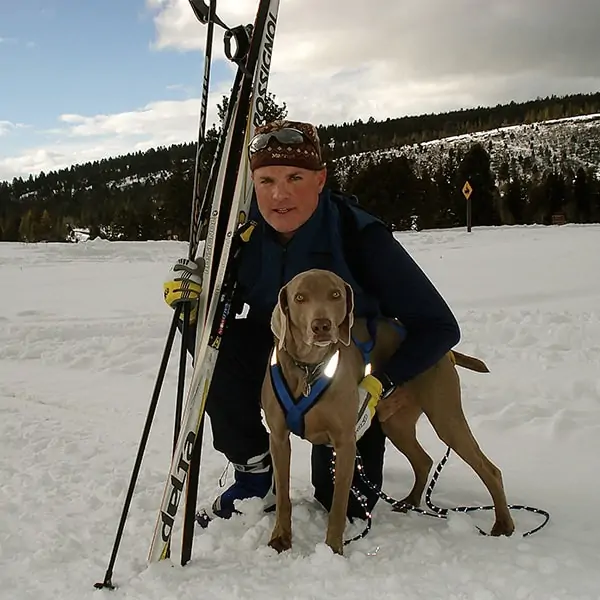
Yeah, I did. As a matter of fact, it’s probably some of the best Nordic skiing in the region. There’s a significant trail system up just outside of West Yellowstone called the Rendezvous Trail System. And so there was a lot of snow there this spring, unlike some of the other areas out west. And there’s also a state park up there. It’s the Herriman State Park, which was donated to the state of Idaho Park System by the Harriman family as they did with their land holdings in New York State. Those from the East Coast may know of the Herman State Park in upstate New York, but beautiful area where they groom the trails. They’ve got little cabins. It’s known as the old railroad ranch. So one of our favorite places to stay in the winter.
Haley (03:20):
I love that. Well, a good upseat New York family, they know how to Nordic ski, so it makes sense that it’s kind of all connected. Yeah. Can you tell us a little bit about the history of Island Park? How was it settled and why was it created?
Chris Corroon (03:45):
It was just typical in our country, a lot of activity with the railroads around the 1890s and early 1800s. It was established as basically a. And really West Yellowstone, which is the west entrance to the Yellowstone National Park, was established as a railroad town by Union Pacific Railroad. But Island Park too is trading posts. There was folks that went up there to ranch and there’s some old historic ranches up there, including the railroad ranch. But it was really the Oregon Shoreline Railroad, which was a division of the Union Pacific that helped with the settlement of that area. And then as Yellowstone became a prominent destination in the early 1900s for visitors from throughout the country, the area continued to grow. Island Park has always been a favorite for Utahans and folks from Idaho to visit in the winter and summer. It’s a big cabin community.
(04:52):
There’s probably thousands of small cabins along the Henry’s Fork, along Island Park Reservoir, which were all big fly fishing destinations, but also a big snowmobiling destination, probably one of the best snowmobiling destinations in the country. So great recreational area.
Haley (05:20):
Sounds like a fun spot. What is the culture like at Island Park? Is it your typical mountain town? As a potential buyer or someone that’s passing through, what will one expect to see from a cultural perspective in Island Park?
Chris Corroon (05:39):
So it’s really kind of a tourist destination, but it’s become very popular as. And when I say Island Park, I always like to include West Yellowstone because it’s super close. And by the way, West Yellowstone has probably one of the nicer airports I’ve ever seen. It’s relatively new and it’s really easy to fly in and out of, especially folks traveling from Salt Lake and Denver. But the culture there is, it’s very much a lot of tourism, a lot of second homes. You are seeing a lot of people that are retiring in Island Park and it’s a good destination. It’s fairly spread out, but it’s a great destination for. It’s become an alternative as a lot of these smaller communities in the West have to places like Jackson and Park City.
Haley (06:33):
So would you say it’s more of a summer destination or it sounds like snowmobiling and things like that, but Yellowstone.
Chris Corroon (06:40):
Definitely a summer destination. A lot of people that are traveling, you have a lot of folks that will fly into Salt Lake from all over the world and you can drive up through Jackson or Driggs or Teton Valley.
Haley (07:03):
Well, I think one of the things that I wanted to ask is you’ve mentioned Yellowstone a few times, and obviously that’s a huge lure to the area, but what are some of the other towns or attractions or parks that are nearby to Island Park if you want to get away from the crowds a little bit?
Chris Corroon (07:23):
So Island Park is actually fairly spread out. It’s got, I think the longest main street in the country.
Haley (07:31):
Oh wow.
Chris Corroon (07:32):
So really once you get up beyond Rexburg, there’s the town of Ashton, which is small town, but it’s its own little recreational area. And then probably 25 minutes from Island Park is West Yellowstone, and that’s a huge obviously tourist destination. So beyond that, and Yellowstone is a world of its own in terms of visitation and tourism. It’s a lot of B&Bs and hotels and rental cabins, very much of a second home tourist community. But yeah, there’s not a ton around there. There’s some little areas within Island Park like Max Inn and the reservoir and some communities. There’s the Henry’s Lake community, which is beautiful, but a lot of little kind of communities within Island Park itself.
Haley (08:33):
And from a ranching perspective, what are some of the typical ranches that you might see in Island Park and why would you maybe invest in properties up there versus other places in the region?
Chris Corroon (08:47):
That’s a great question. So there’s not a ton of larger ranches within the Island Park themselves. There are some. We actually have a listing that’s 629 acre piece that’s one of the larger irrigated ranches within Island Park. It’s just west of Henry’s Lake. But if you look at a GIS map of the area, there’s not a lot of irrigated, not a lot of pivots up there, not a lot of irrigated farm ground until you get further south into Ashton and Rexburg where there’s a lot of big production, commercial production farms and ranches. Most of the properties up there are smaller. So Harriman State Park was a cattle ranch at one point, but that’s used to operate as a cattle ranch. Now it’s just a trail system.
Haley (09:45):
Is it similar to maybe other areas like Jackson where maybe there’s just a lot more private land or public land and parks and national forest and things like that?
Chris Corroon (09:56):
Okay. Yes, good point. There’s a ton of public land up there, ton of National Forest Service land. As a matter of fact, our listing there is surrounded by, a portion of it’s surrounded by forest service. Plus a lot of the bigger ranches up there have been placed into conservation easements. They still operate as cattle ranches, but that’s also another interesting part about Island Park. It’s a very wet region in terms of you get a lot of good snowfalls, so short grazing season and still a lot of forested real estate. Reminds me of lapland in Finland. If you go up there in the winter, a lot of lodge pole pine forest, beautiful forest areas.
Haley (10:44):
That’s why you like it. That’s why you
Chris Corroon (10:46):
Like Island Park. But again, we love going up there in the winter just because it’s so beautiful and so quiet. And West Yellowstone is not as crowded. There’s the West Yellowstone Grizzly Center and Park to visit, which is fascinating. There’s an IMAX theater there, which I think is maybe shutting down, but it’s a great place to go in the winter.
Haley (11:16):
I was going to say, maybe they’re showing the Odyssey. That’s what we’re waiting for.
Haley (11:20):
Can you tell us a little bit about the property that you mentioned earlier that you have listed up there right now and maybe what makes it unique?
Chris Corroon (11:37):
We have a ranch called the Henry’s Lake Ranch, which is about 629 acres just west of Henry’s Lake. And it’s probably the largest land offering up there. It’s beautiful setting. It’s on our website, the Henry’s Lake Ranch. If you go to myrranchgroup.com, you can see pictures and video, but the nice thing about this time of year is despite the lousy snowfall we had in the Intermountain West, if you drive over around Utah and even parts of Southern Idaho, there’s not a lot of water on the ground. But I was up there first week of July at the Henry’s Lake Ranch and just recently last weekend, there’s still water coming out of two creeks, Duck Creek and Rock Creek and beautiful kind of sub-irrigated pasture just at the western edge of Henry’s Lake and perfect ranch for somebody that wants to build a home and you could put a conservation easement on that property and take advantage of federal tax credits, but a really spectacular setting for horses or cattle.
(12:57):
The owner puts about 300 pair of cows and calves up there in the summer during the grazing season and runs two pivots and easy to maintain, manage, and easy to get to and it’s accessible year round. So beautiful, probably one of the prettier properties I’ve been on in Utah or Idaho.
Haley (13:19):
That’s awesome. And you brought up accessibility and you mentioned the airport earlier in Island Park. If this is your secondary residence, things like that, are there other towns nearby from a regional standpoint for airlines that are easy to get to or is that Island Park one pretty.
Chris Corroon (13:38):
Really Idaho Falls, which is probably just about over an hour away. And again, it’s a big, huge destination. People get there. Fly fishing, which we haven’t really talked about is one of the more significant recreational offerings up there. But yeah, it’s not the easiest to get to relative to some of the communities outside of Park City, Morgan County, Summit County, but sometimes that makes these properties more appealing where they’re not so overrun with destination visitors.
Haley (14:14):
I would agree with that. Yeah, sometimes it takes away from the charm of it all. So fly fishing, since we haven’t talked about it and it’s one of the drivers here, what type of fly fishing is there? What are the big rivers that people tend to go to and what kind of fish can you expect to find when you’re fishing up in Island Park?
Chris Corroon (14:40):
Yeah, so there’s the Henry’s Fork, which is kind of world renowned blue ribbon fishing, and that runs really from Henry’s Lake down through Ashton into Rexburg, which is where it meets up with the Snake River, but it’s about 127 miles long. It’s beautiful fishing. Even for beginner fisher folks, there’s some really gently weightable waters along the Henry’s Fork. So there’s a lot of really good old fly fishing shops with some great guide services in Island Park and West Yellowstone. As a matter of fact, the Union Pacific has one of the oldest railroad depots in West Yellowstone right now, and they’re having an exhibition on some of the old fly fishing guides in West Yellowstone that date back to the late 1890s and early 1900s. So for anybody that’s in the area, you should check that out. But yeah, great fly fishing. I mean, cutthroat, all kinds of trout.
(15:56):
Henry’s Lake has a, I think they call it the Henry’s Lake or the Yellowstone Cutthroat, which is a pretty big fish. I actually went and did some stillwater fly fishing up there on the lake last week with a great guy. There’s only two or three outfitters that were able to guide up on the lake, but it’s known for some pretty good big fish and beautiful area and never that crowded. So if you’re into fly fishing, there’s some old camps on the Henry’s Fork by Max Inn, which is kind of cool, but it’s kind of a classic old fly fishing community.
Haley (16:41):
And who do you think is your ideal person that wants to invest there? Who do you think would thrive in a place like Island Park? It sounds like a combination of things, but since you’ve been working up there.
Chris Corroon (16:55):
Yeah. Well, we all like to promote areas that haven’t been discovered from. Our particular offering is unique in that it’s large, but great place to. I don’t always like to promote investment values. Some properties have better investment values than others, but this would just be a great place to put money for the long term. If you have the means and you want to spend time up in this part of the world, it’s a great place to spend time. Especially, I mean, you don’t have to be from Salt Lake or Denver, you could be from the coasts, you could be from West. And if you can fly to Denver and Salt Lake, it’s an easy connection. It’s such a pleasant flight to get into West Yellowstone and really nice airport. I’ve been driving to Island Park for years, and I flew up there for the first time last week, and I don’t think I’ll be able to do that drive again because it was so convenient.
Haley (18:00):
It’s so true. When you go to these remote places and you just make the call and you fly, it’s so nice. Yeah, like when I go to Durango or Gateway, it’s like, “Ooh, this is a lot.”
Chris Corroon (18:11):
And there’s two rental cars. There’s a rental car facility right at the airport, so it’s nice.
Haley (18:17):
That’s huge. And lastly, this is my favorite part of this, as is our producer, but what are some of your favorite local haunts that when people are driving through, they have to stop by, whether that be coffee or cool hotel or the IMAX like you were talking about, what are some of the places that you stop through when you’re in Island Park?
Chris Corroon (18:44):
I would definitely check out the Grizzly Bear Wildlife Visitor Center in West Yellowstone. It’s fascinating, and they’ve done a really good job maintaining that place, but to see those grizzlies 40 feet away is pretty spectacular.
Haley (19:03):
Oh, you see them?
Chris Corroon (19:03):
And wolves. In person.
(19:06):
Yeah, and there’s wolves up there as well, by the way. I think it’s the Grizzly Bear and Wolf Visitor Center, and the biologists up there are just incredible. They’ve done a really good job. Wow. So that’s great. There’s a ton of little cool lodges to stay at. Sawtelle Resort is great. Connie’s Restaurant is there. I’ve stayed there. I’ve eaten there, stayed there. It’s really neat. If you like ice cream, you can go into West Yellowstone and there’s no shortage of good ice cream shops. Eagles is the old. I think they call it Eagles or the Eagle. It’s the old gas station right in town. It’s been there since 1906, and they have a huge ice cream spot, plus all these lot of really good fly shops up there, guide shops. Sweet. Freeheel and Wheel is my favorite little bike and ski shop. And then last time I was up there, I went into the Buffalo Bar and best chicken wings and salad that I could find in town.
(20:06):
Wow. Those are my recommendations for now. There’s plenty of others to come.
Haley (20:15):
Those are great. You hit all the important markers. I love the name Free Heel and Wheel. That’s a clever name. I love a pun. Well, thank you as always for coming on the Back 40 to educate our listeners on these new places in the West that maybe none of us have heard about, but deserve our attention. And I appreciate you taking the time today, Chris.
Chris Corroon (20:36):
Thank you very much.
Haley (20:37):
Thanks. Have a good one.
Thanks for joining us today. To learn more about the ranch real estate market or our ranch marketing process, make sure to subscribe to our newsletter on our website at mirrranchgroup.com or give us a call at 303-623-4545. See you next time.