We’re headed to Casper, Wyoming, to explore all the diversity and adventure this town offers, nestled in the heart of the Cowboy State. We look at what makes Casper special for ranchers, outdoor enthusiasts, and land investors alike. From its historic roots as a stop on the Oregon Trail — and a curious misspelling that shaped its name — to modern-day ranching opportunities, this episode of The Back Forty reveals why this corner of Wyoming offers untamed beauty, vast grazing lands, and hidden gems you won’t want to miss.
Topics
[0:00] Intro: Exploring Casper, WY – What Makes it Unique?
[1:59] History of Casper
[3:08] Nearby Towns
[4:03] Recreation in Casper
[5:15] Best Time of Year to Visit
[5:55] Ranchland Near Casper
[7:38] Who Lives in Casper?
[9:32] Hunting in Casper
[10:55] Life in Casper: What Makes it Special?
[12:03] Ranch Spotlight: Wild Horse Basin
[14:02] Hidden Gems: Local Restaurants and Bars
[14:55] Closing Thoughts: See You in Casper!
Haley Mirr (00:06):
Welcome back to the Land Bulletin podcast, where every other week we bring you experts in the field to impart their knowledge when it comes to the ranch and sporting property market, buying and selling advice, the latest, best stewardship practices, as well as topics that impact landowners every day. I’m your host, Haley Mirr. Let’s jump in.
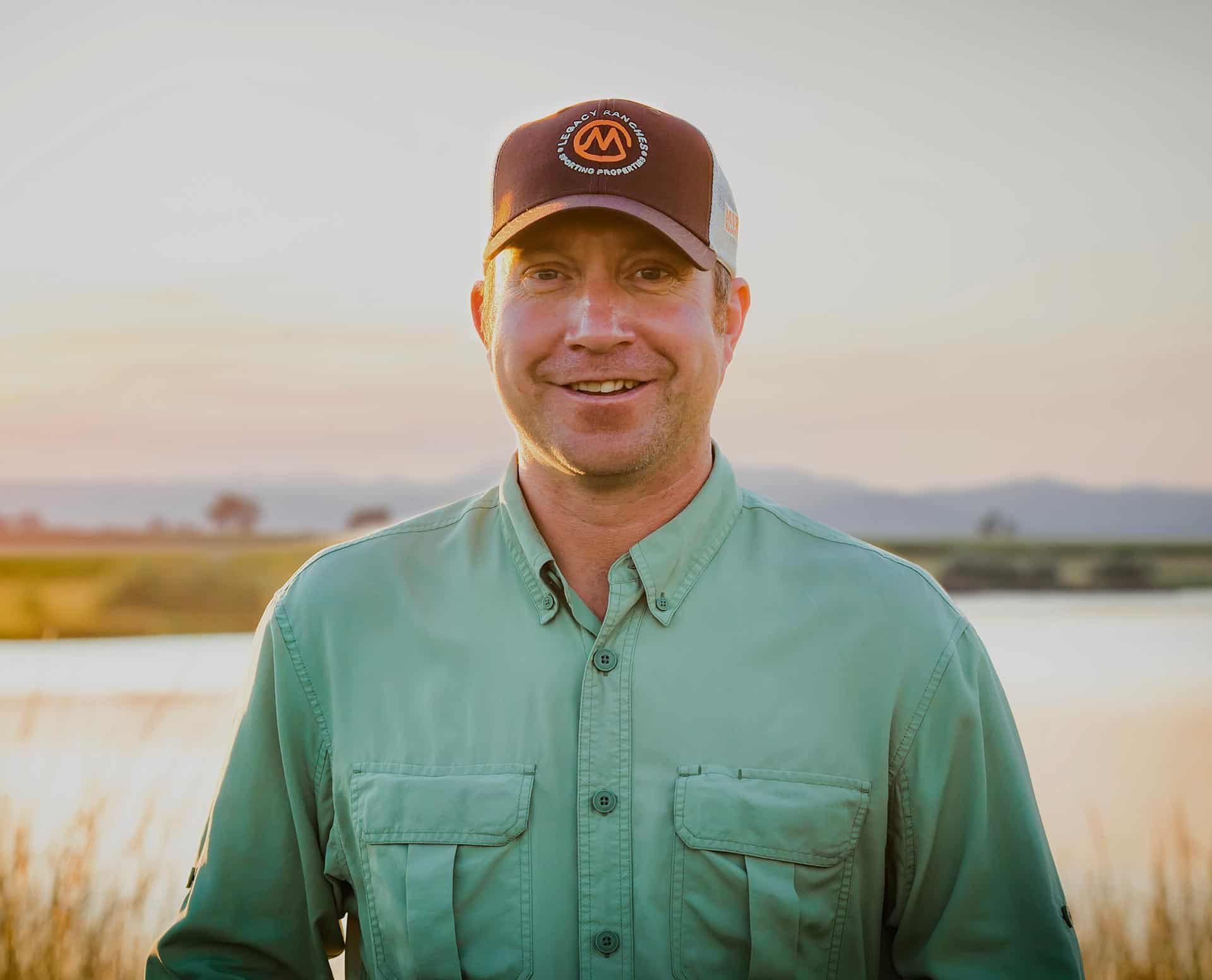
Welcome back to the Land Bulletin podcast and our series, the Back 40 where we look at some of the West’s most intriguing areas in small towns at big towns, just places you guys might not know a lot about. And today we’re actually looking in Wyoming in a town called Casper and helping me out today with this back 40 episode is Jared. Jared is our senior VP and managing broker up in Wyoming. So he’s the man to know everything about Casper. So thanks for coming on the show.
Jared Souza (00:53):
Yeah, thanks Haley. I’m excited to talk a little bit about Casper today.
Haley Mirr (00:57):
It’ll be good. I’ve actually never been, I’ve driven kind of to the north and to the south and to the west, but so I’m excited to learn a little bit more. For those who’ve never heard of Casper, Wyoming, how would you describe it? Where’s the location? What are kind of its main attributes? I’d love to know a little bit more there.
Jared Souza (01:15):
Yeah, so Casper’s located alongside the I 25 corridor. Obviously that’s on the eastern portion of the state. I 25 runs north and south from the Colorado line to the Montana line basically. But for all intents and purposes, everyone in Wyoming considers Casper kind of the heart or the central location of the state. So it’s kind of the hub. You basically got to go through Casper to get to a lot of parts of the state. So that’s why I spend so much time in Casper. If I need to go to Sheridan, I could drive through Casper. If I need to go to Cody, I drive through Casper.
Haley Mirr (01:57):
That’s awesome. Well, next time I’m going on the I 25 corridor up, I’ll stop by. Can you share a little bit about the history on this region, how it’s been used over time? What are the types of ranchers that have settled there over the years?
Jared Souza (02:13):
Yeah, so I know just enough about the history of Casper to kind of be dangerous I guess, but originally it was just a fort, which was actually, it was called Fort Caspar, which is kind interesting, but it was along the Oregon Trail and the Pony Express, so it was in there on the North Platte River. And then later once the railroad started coming, then the town of Casper started, and it sounded like maybe there was some kind of a misspelling or something in the newspaper article. And that’s the reason why Fort Caspar exists and the town of Casper, which is kind of crazy. It always confused me whenever I’ve been around Casper, why the fort had a different spelling than the town of Casper.
Haley Mirr (03:07):
I never knew that. So that’s a great little history for dinner parties. What are the towns anchor the area other than Casper, when you’re looking at different places to potentially buy ranches, it’s always good to know some of the other kind of bases around there.
Jared Souza (03:23):
So directly south of Casper you got Glenrock and then Douglas, which is obviously alongside the I 25 corridor. And then North you got Midwest and kc, and then obviously Buffalo and Sheridan to the north and then west you get into Rollins or Shoshone and Riverton. And then east you don’t have a heck of a lot except for Lusk and then obviously the Nebraska line, but there’s a lot of kind of robust towns and cities within 110 to 200 mile radius of Casper.
Haley Mirr (04:06):
And when you go up there, if someone were to drive up to Casper and kind of do a tour, what’s the best way to see the Casper area in your opinion?
Jared Souza (04:14):
Yeah, I mean, Casper’s got a lot to offer. It’s pretty, I guess, robust. It’s a growing city, but it’s also incredibly diverse. You got to the east, you got kind of your flatter country with your riparian corridors along the north Flat River, and then you got Casper Mountain, so you got some skiing and then a little bit west southwest of Casper along the North Platte River corridor. You got a lot of reservoirs, so you got Kova and Pathfinder and Seminole reservoirs. So it’s pretty touristy and pretty diverse. There’s a lot of water, a lot of hunting and a lot of sightseeing. You get a little further west of the reservoirs and you get into the pecker dunes in the Red desert, which are really incredible. And then you get into the Boris Tusk and Hell’s half Acre, and I mean there’s just a lot of really cool geological formations within a close proximity to Casper.
Haley Mirr (05:19):
And in your opinion, Jared, what’s the best time of year to visit the area if you really want to experience Casper?
Jared Souza (05:26):
Yeah, I mean, late springtime is incredible time, especially if we’re getting some decent rainfall. I’m real fond of them, big sage, sage brush basins. There’s a lot of wildflowers and it’s just pretty big wide open expanses and mountains in the background and everything’s turning green, which the unfortunate part is at that elevation in that rainfall. The green time of the year is a short window, which I think makes it even special.
Haley Mirr (06:00):
And for someone looking to potentially buy land up there, we’re ranch brokers, we’ve got to talk about it, but buying land, what are the biggest draws to owning land in this neck of Wyoming?
Jared Souza (06:13):
So the land acts aspects kind of unique and I would consider Casper being a transitional point between what we would consider kind of mostly deeded acreage. As you go west, there’s not a lot of public land component. So as you go east, if you get east of east of Casper, it’s mostly all deeded ranches. There’s virtually not a lot of BLM or Forest Service. There’s a little bit of state ground and stuff. But as you go west, obviously you get into some big expansive BLM allotments, some forest service, and then obviously everyone knows about the checkerboard orientation as you kind of get along the I 80 corridor. So as far as a ranch buying aspect, you can buy a small deeded acre ranch that has significant amounts of BLM allotments or Forest service allotments with them, which obviously ups your carrying capacity. So there’s a lot of ranches in the area that might be only three or 4,000 acres of deed ground, but they got a couple hundred thousand acres of grazing land associated with them, which as an investment strategy, obviously that makes your cost per animal unit drop significantly compared to a ranch in southeastern Wyoming where every chunk of ground that you’re going to have to own to graze is going to be deeded.
(07:44):
So it makes it kind of nice. So
Haley Mirr (07:51):
What are some of the landowners up there? What’s the makeup of some of the landowners near Casper? Are they, to your point, big cattle operations with a lot of those leases or what are you looking at if you’re looking at ranches up near Casper?
Jared Souza (08:04):
Yeah, there’s a lot of historically old historical ranches up in that area. A lot of old sheep places that converted to cattle. And then obviously there’s some huge landowners as well. I mean, you got Q Creek, which is a substantial operation kind of to the west southwest of Casper, but there’s just a lot of really big ranches. And what I enjoy about that area so much is the country’s still big enough that it’s cowboy country. You’re not going to ride a four wheeler on 200,000 acre BLM allotment. Everybody’s still primarily horseback and that kind of stuff. So I really appreciate that.
Haley Mirr (08:53):
And you mentioned some of opportunities from a leasing perspective for cattle. Are there other opportunities for landowners in the area like hunting tags, conservation easements, tourism, that kind of thing?
Jared Souza (09:05):
Yeah, so that’s the great thing about the area is it’s just incredibly diverse. So you still got mountains and you got your sagebrush flats and you got big basins and you got a lot of rock formation. So there’s good fishing and there’s good hunting and there’s good tourism. And on top of that you got some mineral development as well. So I think the right purchase, there’s a lot of upside potential depending on the area and a lot of different strategies that an investor can go with on a ranch in the area.
Haley Mirr (09:45):
And just out of curiosity, not that I care because I’m not a hunter, but what’s the kind of hunting that you might find up there as an investment? What are the kind of hunting opportunities that exist?
Jared Souza (09:58):
Yeah, so I mean there’s an expanding herd of elk pretty much all over that region about any kind of cover, any kind of rock formations. There’s typically some elk in the area. It’s in good mul deer habitat as well. So there has been historically good numbers of mul deer. Obviously the blizzards a couple years ago kind of knocked them numbers down a little bit and hopefully they’re coming back and then you got a tremendous amount of antelope running around the area. So that’s probably the largest number of big game is the antelope. But another thing a lot of people don’t know, but there’s a decent herd of a bighorn sheep too, right around Seminole Reservoir on the Seminole Mountains. And then there’s some talks about maybe some reintroduction in the Sweetwater Rocks, which is kind of up closer to a split rock, which would be north of the highway. So that’s kind of a nice attribute, I guess to the area is a bighorn sheep, which you don’t see them everywhere in the state.
Haley Mirr (11:07):
For the hunters out there, that’s important to know. What are some of the practical or even just fun benefits of living out there? Maybe something unexpected that people fall in love with once they buy a ranch or even if they buy a house up there?
Jared Souza (11:21):
Yeah, I mean, I think the thing that most Wyoming Heights and Casper rights I guess appreciate is just the vastness of the country and the diversity. You can literally drive on two track roads for a thousand miles if you wanted to, and you’ll probably never see another person within thrown a stone throw away from you in days if that’s what you’re interested in. I grew up not far from Casper in the Shirley Basin area, right in between Shirley Basin, Madison Bow is where I grew up. And so I’ve spent a good amount of time out there and there’s still things on my bucket list that I haven’t been able to go and see and that I wanted to see. So it’s just mean a lifetime’s worth of exploring opportunities within a hundred miles of Casper.
Haley Mirr (12:19):
I would love to know, I haven’t learned a lot about this listing, but can you talk a little bit more about the Mirr Ranch Creek listing in or near Casper that we’re working on right now?
Jared Souza (12:30):
We got the WildHorse Basin Ranch, which is really close to Casper, so it’s only 25 miles to the west of Casper, which is, so it’s right at 93,000 acres, about 32,000, a little over 32,000 deed acres. But it’s really rare that you find an asset of that size, of that magnitude that close to a growing city like Casper. And then on top of that, it’s about, it kind of incorporates everything that Wyoming has to offer just on that one ranch. And that goes to speak of how diverse Casper, the Casper region it is anyways, but I mean, we got pine mountaintops all the way down to your Sagebrush flats with a lot of riparian corridors. So that ranch is just incredibly diverse, which not. You don’t see that very dang often where you kind of have all them aspects on a say and go contiguous parcel. So it’s an incredible offering.
Haley Mirr (13:37):
I look forward to getting up there with you one day. Who do you think would really thrive out there? So whether as a landowner or a rancher or a weak in adventurer, who’s kind of the ideal demographic looking at ranches up in Casper,
Jared Souza (13:52):
The ideal candidate is someone that’s got some strong ag background and is really interested in an expansive cattle operation and not scared to not have any neighbors. We’ve sold quite a few ranches in that part of the world, and we’ve had a couple ranches where the nearest neighbor was 16 or 17 miles away, which isn’t for everybody, but there’s obviously a certain demographic that really appreciates the privacy that that region holds.
Haley Mirr (14:30):
So before we wrap up, Jared, I’d love to know about any hidden gems, restaurants, cafes must see stops for folks who are traveling through Casper. Need a break?
Jared Souza (14:41):
Yeah, so right now my favorite dinner spot is a place called Whiskey Butter. And then if I’m just swinging in for a quick lunch meeting or something, the Brandon in Iron’s kind of my favorite go-to spot in downtown Casper. And then if you get out towards the lake, like Alcove Reservoir, everyone swings into Sloan’s for some ice cream or the Sunset Bar that’s basically right across the highway from there. It’s kind of a cool little hole in the wall bar that’s pretty special. If you’re in the area, you need to stop by and have a beer.
Haley Mirr (15:18):
That’s awesome. Well, I’ll be sure to stop for a beer next time I’m going through Casper. Well, thanks Jared for imparting your knowledge on this region to us. Like I said, some of these western towns are the biggest reason why we do what we do is because the people that live in these rural communities and the heartbeat of the west. So it’s fun to get to know all these little places around Wyoming, Colorado, New Mexico, all these different states we work in. So thanks for taking the time and giving your insight, Jared.
Jared Souza (15:48):
Yeah, no problem.
Haley Mirr (15:50):
Thanks for joining us today. To learn more about the ranch real estate market or our ranch marketing process, make sure to subscribe to our newsletter on our [email protected] or give us a call at (303) 623-4545. See you next time.