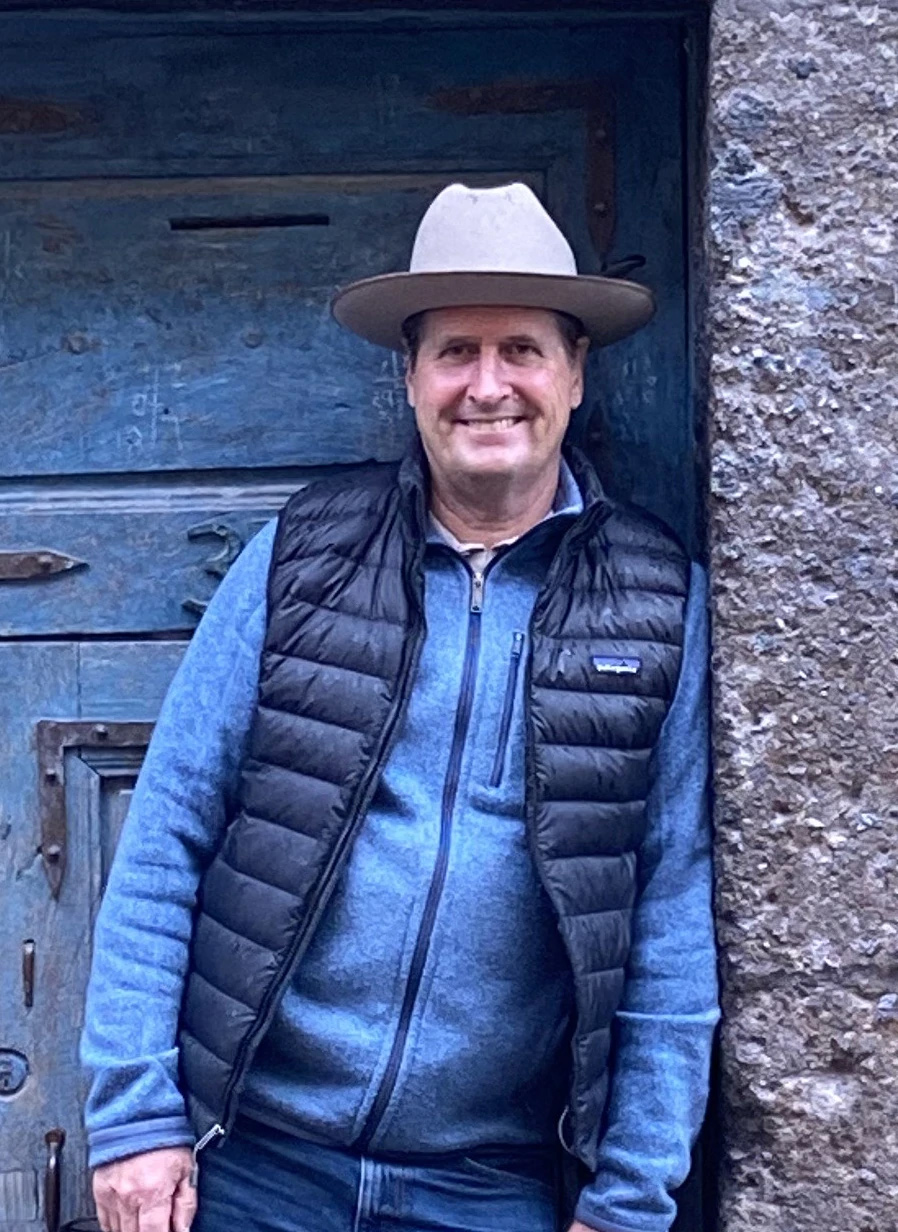
In this month’s Back Forty episode, Haley is joined by Ken Mirr to explore one of Colorado’s hidden gems: Grand County. From its deep ranching roots and historic ties to the Colorado River, to world-class recreation in Winter Park and Grand Lake, Grand County strikes a rare balance of adventure, community, and opportunity.
Discover why Ken and Haley say this region still “feels like Colorado,” what makes it unique for landowners, the diversity of ranch properties available, and the local haunts you won’t want to miss on your next road trip.
Topics
[0:00] Intro
[1:29] Getting to Know Grand County
[3:00] History of Grand County
[7:13] Water Access in Grand County
[12:59] Life in Grand County
[17:19] Mirr Properties in Grand County
[25:55] Who’s Buying in Grand County?
[27:20] Hidden Gems in Grand County
[31:26] See You in Grand County!
Haley (00:06):
Welcome back to the Land Bulletin podcast, where every other week we bring you experts in the field to impart their knowledge when it comes to the ranch and sporting property market, buying and selling advice, the latest, best stewardship practices, as well as topics that impact landowners every day. I’m your host, Haley Mirr. Let’s jump in.
Welcome back to the Land Bulletin Podcast and our news series, the Back 40 where we look into some of the west kind unknown counties communities, but places that we really hold dear and give you guys the opportunity to learn more about the West and kind of where to look at properties, where to invest or where to just stop through if you’re taking a road trip. So today we’re going to be going through one of Ken and I’s favorite places in Colorado and that is Grand County. There’s a couple towns within Grand County, but it’s a place that holds a special place in both of our hearts. So what better person to have on than Ken Mirr? So welcome to the show, Ken.
Ken (01:04):
Thank you Haley. And indeed Grand County is, it’s a first for a lot of things, so
Haley (01:12):
Yeah,
Ken (01:12):
Great spot.
Haley (01:14):
It’s definitely a special and I always say it’s something that is an area where it’s still Colorado. To me, it hasn’t gotten the fruit freeness of some of these resort towns and things. It still feels like Colorado. So we’ll kind of go into it a little bit. First, I’d just like to know from your perspective, Ken, for those who’ve never heard of Grand County, how would you describe this area of Colorado?
Ken (01:38):
Oh, grand County is in the mountains. It’s on the west slope of the Continental Divide. In fact, the entire eastern boundary of Grand County and even it’s northern boundary really is the continental divide. So you’re entering the mountains and you do take, if you’re driving from Denver, you do take I 70 up there, but then you have to go over birthday pass. It’s a playground in the mountains, but it’s not directly off of I 70, which makes it unique.
Haley (02:10):
I would agree and I think there’s all these kind of towns that we’ll go through some of them today, a lot of ranching communities still exist up in Grand County. A couple really neat shared ranches exist up there and to your point, it’s accessible. It’s close to Denver and some of the major regional airports without really having to deal with the I 70 traffic. That one is to expect these days.
Ken (02:37):
Yeah, we still drive up there. You still have to get to Empire to what used to be Louis Sweet Shot.
Haley (02:45):
I know, I think it might be there still, but we’ll get into some of our favorite little haunts up there because like we said, there’s still kind of these funky little restaurants and highway stops when you’re up in Grand County. Before we get into why you might want to invest here, I’d love to know a little bit more about the history of the region, how it’s been used over time, what these communities look like up in Grand County and what you might expect when you’re going up there.
Ken (03:16):
Well, some of the history, grand County was all part once of Summit County and Grand County used to include Route and during the territorial days of Colorado, like 1874, it goes back there and do you know why it’s called Grand County?
Haley (03:33):
I think because the river, right? It used to be called,
Ken (03:36):
There you go.
Haley (03:37):
Grand River.
Ken (03:38):
Yeah, the Colorado River was at one time called the Grand River and hence Grand County, hence Grand Junction and other places like that. So that’s what you go back to, that headwaters of the Colorado River are in Grand County, right coming out of Rocky Mountain National Park. In fact, we do have a property that we call the Headwaters that is in what we refer to as the Ki Winche Valley, which comes right out of the National park, Rocky Mountain National Park, which is the northeast side of the county, which includes Grand Lake, et cetera. And then that river flows from there all the way down to the Gulf of Mexico and along its route it flows through over by Grand Lake and makes its way to grand be and hot sofa springs. And then there’s that stretch basically essentially between Granby and Kremmling where the river takes on. It’s a little larger, a lot more feeder streams. That part of the river is really renowned for fishing, ply fishing and along that river than you do find from Grand B. The county seat is hot Sulfur springs, there are actually sulfur springs there. It’s a relax in.
Haley (04:58):
Yeah, I’m glad I knew what Grand River was because I feel like I should know that with our history, but I’d love to know kind of your connection to this area and what makes it unique to you.
Ken (05:08):
So it has two ski areas. The predominant one and everybody knows is Winter Park Ski area, but Winter Park is just at the base of Bertha Pass. So Bertha had a ski area actually at one point and it’s a large pass. I mean you got to go up and over and once you drop down into the valley, really the first thing you come to is Winter Park skier. And so skied there forever. And of course you guys, I used to drive you over there in the mornings early so you could be and ski and you were part of the ski club went Hannah. And so that was my experience at first was just skiing. And then over time we spent so much time there, we owned some property up at Yuri Ranch, which was an old YMA camp and then just downstream from the URI ranch we bought 160 acres on the Colorado and also had access to Willow Creek and so that was great and so we spent time going to Grand Lake, just spending time on the ranch, hiking, mountain biking, a lot of mountain biking up there, so it was all recreation and that base area has since expanded.
(06:23):
It’s right actually the train, there’s a train from Denver that goes through the Moffitt tunnel and you come out of the tunnel and you’re now on the east west side of the Continental divide and its first stop outside of the tunnel is Winter Park and we have a ski train so you can actually kind of like Europe, you can take a ski train from Denver Union Station to the ski area and get off ski and you can take it back in the afternoon. And in fact they’re expanding that service to hopefully include a steamboat and Grand V so you don’t have to drive, you can actually take a train, which is very unique and that’s a really neat spot, a part of the history of that area.
Haley (07:09):
You’ve mentioned a couple lakes since we’ve even been talking and there are I think four or at least four larger reservoirs and in Grand County alone, including Grand Lakes, Granby, Woolford, Williams Fork, there’s these bigger lakes that you don’t really see in Colorado that often or at least that close to one another. And that’s another kind of added benefit where people kind of invest in these areas because you have access to these larger bodies of water.
Ken (07:39):
That’s right. Well you have a lot of feeder streams that come out of the Continental divide and if you start right near the National Park, you have Grand Lake, which reminds me of the Adirondacks in a way, and it’s on the largest natural lake in Colorado, so it’s very cabin kind of feel. It represents the west entrance of the Rocky Mountain National Park. So it starts kind of up there and it is the largest natural lake, but we talked about in the series of things over the years that water rights are big in Colorado and so there’s what they call West Slope Water and some of that West Slope water and that’s west of the Continental Divide does and is transferred over to the front range to communities from Fort Collins, Denver down to Colorado Springs. And so over the period of time they have built reservoirs to store water and they’re great recreational reservoirs. It’s not like they pop these things dry. There’s always water, there’s recreational water, there’s fishing on the far west side of the county you have the Blue River, which then flows into the Colorado River right at the Grand River Ranch. And beyond that then you have Gore Canyon, which has a Class five rapids. So there is just so much to do in Grand County and including hunting, but the ranching is a big part of it as well.
Haley (09:10):
It’s a place to hunt, it’s a place to mountain bike, it’s a place to ski, it’s a place. But then based on what we’re chatting about, it’s a place to own land too and have access to water rights and to be able to own these larger swaths of land that maybe have been segmented off in other counties like Grand County still you can find some really cool pieces of land with water with the agricultural component that you might not get in some other kind of areas of Colorado.
Ken (09:38):
70% of the county is owned by the federal government or public lands. And so the private lands, like any area that’s homesteaded are a lot of them are near the river corridors along the roads and the roads are along the river corridors and the trains are around the river corridors. Along those corridors you’re going to find private land and that private land will also then have water rights that are associated with it so they can irrigate the hay fields. So the Ki Winche Valley, that’s a wedge of private land between the National park and the Forest Service and you also have guest ranches up there, see Lazy U Guest Ranch. One of the finest guest ranches in Colorado is in Grand County along Willow Creek and of course Winter Park if you want skiing, you got Granby Ranch, another area where it was a smaller ski area where there’s some opportunities to own Taber Frazier. There’s a lot of communities smaller, right? There are small. I think the largest really is Granby, which is you’re right near the junction where the Frazier River and the Colorado River meet.
Haley (10:55):
There’s still a lot of opportunity just from kind of an amenity standpoint where you can own these places and still have access to these towns. They really are scattered pretty evenly throughout the county, so you wouldn’t just be away from everything if you bought a piece of land. There’s little communities throughout Grand County, which I think makes it very unique as well. You’re not driving miles before running into the next town. They have these kind of set up, which is really nice too from a landowner perspective.
Ken (11:27):
It is, you’re right, because you get in some places and you could be an hour from the next town and there are a series of towns, it feels very Midwestern from that standpoint. I grew up in Indiana, you’ve got towns and towns of towns and there really is that connectivity, especially on the east part of the county as you roll from Winter Park north to Grand Lake and then as you move from Grand Lake West and you hit Granby and you hit and then you arrive at the county seat and then as you go north from Kremmling, you head up towards rabbit ears like you’re going over to Steamboat or towards Walden. And there again there’s some more ranches, really nice open areas, so there’s still, there’s a lot of focus of land conservation up there too from Colorado Cattles we’ve done, there’s the local Land trusts and Colorado Open lands have done a lot of work with ranchers up there. That area has been famous for some of the ranches and the ranching community, so the communities are still tied together and so you’re always going to have the base services. There’s areas, especially again more on the east side of the county where there’s more services for medical and hospital and clinics and things like that, but you’re never too far away, but you have wilderness and national park right out your back door.
Haley (12:54):
What are some of the practical or even just really fun benefits of living up there? I mean you’ve owned land up there and I’d love to know kind of what made you fall in love with owning land in Grand County from a benefit perspective.
Ken (13:11):
Sure. I just think there’s so much diversity there that you’re just not necessarily living in a resort or you’re not living near an interstate. You’re in a community that has been there a long time and the space is broken up and I just love it. You can go up to Grand Lake, I think it has the largest or highest elevation yacht club or pretty darn close to it where you can get in a classical craftsman boat and drive with those old wooden motorboats or just sail up on the lakes. It’s gorgeous. And you can enter into the national park and you just forget how close that national park is and that west entrance and going through the Rocky Mountain Lodge and all that in there is just so, there’s so much character. You feel like you’re teddy rosa or something exploring that area and all the lakes and the hikes and things like that, but then you can be skiing and all of a sudden you’re on an open ranch with Meadows and you’re fishing on the river or you’re floating down the Colorado and you’re going through rapids and all of that, but you’ll have planes and open areas, but you’re always seeing the mountains in the distance.
(14:28):
So you get to see all those things and you’re just in this really large valley of just extraordinary that’s not that far away on top of it. Over the years they’ve really done things to enhance the area. Of course they built a double stone lodge, which is probably one of the premier lodging areas and the west too, and especially for Colorado, and they have back country skiing. It is just very high end lodging, not that far from skiing, but again tucked in its own little valley and it’s really amazing food service and everything else there is good. You can still go to a guest ranch, like I said, the sea lazy re guest ranch. Friends of ours help operate, which is beautiful. It’s just the diversity. It’s just a lot of fun things you can still do up there. And it’s not just high alpine either. And the skiing’s great and they’re actually now going to be expanding and putting more money into the ski area, good thing, bad thing depending on how you look at it, but it’s going to improve the fish, the quality of the skiing and I can’t wait for that either.
Haley (15:44):
I love what you said about being able to kind of see mountain ranges from every inch of that county because it really is true. You can be anywhere from Devil’s Thumb and seeing kind of the continental divide there to be on Reader Creek Ranch and being able to see Continental Gore and all these other ranges to being in trembling and seeing the same thing. It’s just this really neat area that I just love and I hope it retains its character and keeps that old rural town community element together.
Ken (16:19):
I agree, the rural, because Winter Park itself, it doesn’t feel at all like a veil or a Breckenridge or a Steamboat or something like that. Over the years, I think the birth had passed over time it’s been expanded and it’s really quite nice now and how they’ve improved it. So it always lingered behind and I think it lingered behind too because the ski area wasn’t necessarily connected to the town. So over time that might have delayed the growth of that area. And so it just was a little behind in that sense. But it has all these other things to offer, which makes it a little more attractive to people who may not want that level of improvement, that level of density. It just doesn’t have that.
Haley (17:14):
So we have a couple, we’ve had a lot of experience selling property in Green County over the years, including our own, sadly that we sold successfully. But we have a couple cool new listings as well that kind of really capture the essence of Granite County. So first we’ll start with that Reader Creek Ranch. That property has been owned for decades by the same family and is one of the larger offerings in the area. And I would say it sits near a lot of the larger landowners in Grand County too. There’s this nice grouping of people near crumbling the town that we’ve been mentioning that own these larger operational ranches and that’s kind of what makes that area unique and Reader Creek. What makes it even more unique when compared to some of those larger ranches is the access to not only Williams Fork Reservoir, but the Colorado River,
Ken (18:15):
Right. Well, reader Creek was a combination of a few old ranches of the TAs Ranch in the May Hoffer and old families that had branched in that community for a long time. Part of the significance is of course the Colorado River and having done water rights out of the Colorado River and some of those water rights are very, very senior and that matters when you start talking about the Colorado Compact and how water from Colorado goes all the way down to New Mexico and we share so much water with all the lower basin states and it also has a unique water rights right there below the base of Williamsburg Reservoir. It just sits just above the reservoir. And so there’s great views across the reservoir to the Continental Divide, Rocky Mountain National Park. So you almost got 1500 acres or more 1800 acres of irrigation kind of in that area alone.
(19:19):
And it’s on these plateaus that drop a little bit as you go down. And then it allows the family to have built some reservoirs and storage for fishing and ponds and that whole area. Then because of the capacity and you’re growing hay, for the most part you’re growing grass hay, but you’re attracting in now different species. There’s certainly elk migration corridor in there. That area is protected and focused on because protection of bird species as well. And then of course the fishing and the fishery component. And it’s just been a classic ranch that’s been worked by this family and they’ve been very involved really from a conservation side and sustainability side too, and finding and experimenting with new crops that require less water use from the Colorado and continuing to figure out. And so they’ve been very proactive just in their management, let alone the site location of that where you look to the east and you see the continental divide and look to the west and you’re seeing the Gore range and you’re still 10 minutes to Kremlin or 15 minutes and you got partial, which is a very little town, but then you have the Partial Inn, which is awesome place for lunch, but you have choices.
(20:47):
You’ve got access to rafting and floating and just the hunting right on your own property or the adjoining in public lands. So it just offers all of that, but you’re still few hours from Denver, which is really rare to have a piece that large with all those amenities still that close to Denver. And then closer in, you were talking about the upper or the Colorado Headwaters Ranch and literally that is at the headwaters of the Colorado River right near Grand Lake. It’s pretty unique and the river goes right through the middle and the old name of that area, I’ve always referred to it as part of Kiichi Valley, so it has old water rights, has a lake on it, no major structures on that, but literally you walk right off your property and you’re on National Park and it’s rare to be able to adjoin a national park and be in an area where a part of the national park where it’s not crowded, it’s not like people drive up there, it’s very private on the way up. It’s gated.
Haley (22:00):
And I think that’s what makes it different too. Talking about these different areas is Reader Creek Ranch is nearly 6,000 deeded acres and the upper Colorado headwaters is about 68 deed, but that also kind of leads into the area of Green County. You’re looking in closer to Granby Grand Lake, some of these other areas you’re looking at those a hundred acre lots sometimes, but then closer you get to Kremlin kind of on your way to Jackson County, that area you will kind find larger properties. It just depends on what’s important to you and what amenities and what location you kind want to be in when you’re kind of looking at Grand County as well. Another thing, we’ve mentioned some past experiences and other opportunities in that area, but there’s this, we have the Elk Creek Ranch, which is closer to Meer, but then there’s some other kind of shared ranch communities including Grand River Ranch where it’s still one of those kind of HOA away kind of communities where you have access to the main lodge and all the amenities provided to owners, but you own larger amounts of acreage within the area. So that’s another project that we’ve worked on in the past. Granby Ranch is another kind of where you can own some lots more of like a HOA kind of situation, but I know they have some larger properties that you can own within there. And then same with Devil Sum, it’s kind one of those share branch kind of opportunities where you can own land but also have access. So another kind of thing that differentiates
Ken (23:31):
As well, I think you have a smorgasbord, you’re at the Bay Line and you’re looking at what you want to buy. You can buy, like I said, a smaller acreage, but you’re wedged in between National Park and the river. A lake, I mean that’s about as good as it gets. Or you can get close to 6,000 acres bounded by the Colorado River and having frontage to fish and own and backing up way to National Forest as well. But a larger scale property, part of that might be conserved, but a part of it is not conserved. So it opens up a whole other angle of ownership and opportunities and investment opportunities. And then on the far west side you have Grand River Ranch. And so Grand River Ranch has become a very unique shared ranch where the largest or the smallest kind of properties within there are maybe a couple hundred acres and they go to over a couple thousand acres and it’s limited to so much ownership, but that ranch still operates as a functioning cattle ranch.
(24:40):
But then of course you have amazing lodge and all those things, trap and skeet shooting and that type of opportunity. But then you go up to Sea Lazy U and it’s amazing guest ranch where it’s fine dining and all of that, but it’s truly a guest ranch. You get on a horse and we all rode horses up there ourselves and in winter they even have winter activities. And again, a very, I would say traditional focus on guest ranch like you’re in the west, but the comforts of having very nice accommodations, dining and just so grand County’s just moving up and up as far as the amenities that it’s providing without necessarily losing its rural characteristics.
Haley (25:37):
I would agree. And with that in mind, looking at our avatars of people looking to own land, it seems like Green County has something for every type of buyer, but what are you seeing in this space of who’s purchasing in the area?
Ken (25:54):
It really, it’s all very different. We’ve got like a Reader Creek is a Colorado family, but people who have purchased are from all over the world really. And we’ve got hedge fund operators that have these wonderful hunting deals to just folks from the front range that still find that area very attractive and a getaway. And there’s still value there too. That’s why we bought up there and I continue to look at that area and you’re getting married up there. So there’s just a lot of attractive qualities and the fact that you could fly into Denver from anywhere and be on your property, let’s say the upper Colorado, the Colorado Headwaters is about, let’s call it two and a half hours from Denver. That’s not bad considering what you’re getting for that. So that’s the extent you’re two and a half hours to get to any part of Grand County, and that’s pretty darn good if you’re under three hours. It’s a measuring stick we’ve always had from an investment standpoint. So that always fits within that range.
Haley (27:10):
Then before we wrap up, I think one of the things that we’ve been doing with this back 40 is educating people on these areas, getting people excited about the West and these rural communities, seeing how these places might fit into what you’re investing in. But it’s also a tool for myself and our producer Caroline, to know where we need to stop when we need a cup of coffee, when we want a sandwich, when we want to have something on our road trip list. So I’d love to know what are some of your favorite haunts in Grand County and then I can offer some of my insight from touring ranches up at Grand River for so many years.
Ken (27:51):
Yeah, well if you had a day in the life, right? I mean we talked about it every time we would go skiing, I remember we’d get top of birthday pass and we say, what’s it going to be? What’s the weather going to be? Is it going to be a cold one or not? But it didn’t matter how cold it was whenever we drove back, when we get down over the pass and get towards the empire, we’d stop at Louis Sweet Shops and literally it could be below zero and everybody
(28:19):
Ice cream go figure. But in town Dino’s Dino’s has been there I think as long as I’ve been around, but it’s still a really charming place right inside Winter Park. It’s still there, still captivating. So I always liked that right in Tabernas fine dining right there. And of course that’s not too far from Devil’s Thumb where it really is fine dining, nice bar. I mean, it’s incredible what they have there, quite frankly, if you’re willing to go down a little bit off road to get to, not off road, but just off the main highway to get into Devil’s Sum and Taber and Frazier used to always get sandwiches and things up there in grand be One thing I didn’t even mention. When you’re in the summer especially, there’s nothing can compare to driving over Trail Ridge Rogue. It’s only open in the summer. Going through that and ending up in Estes Park, I mean that is probably one of the most incredible drives you can see in all of Colorado. So that’s great. And then as you get out of Granby and you’re heading west, there’s a funny little place, the Partial Inn pool table and burgers right off the Colorado River in the middle. It is one of those fun places. Trembling offers dining too, but I know you have your haunts. Haley, what are your
Haley (29:55):
Place? Well, I’ve toured a lot up there over the last couple years, especially with their work at Grand River and the one spot I always meet people is big shooter coffee and crumbling.
(30:07):
It’s really good. They have really good baked stuff and they have ados if that’s kind of what you’re looking for too. And they have a drive-through which from kind of running late to a tour and you needing a cup of coffee, it’s like the best place you can stop. And then there’s this really good hot dog spot in Winter Park that I’m forgetting the name of right now, so Flipping Good and a fish taco place. So those are kind of my favorite. And of course, devil’s Thumb holds a special place in my heart and their food is, I can attest. Unbelievable. But yeah, big shooter coffee, if you’re ever kind of going through Highway 40 on the way up to rabbit ears, make sure you stop there before you continue your drive.
Ken (30:51):
So you’re saying there’s alternatives?
Haley (30:55):
There are alternatives with drive-throughs where you don’t have to stop at.
Ken (31:00):
Yeah. But you’re on Mountain Time, so when are you late to anything on Mountain Time?
Haley (31:05):
You’re right,
Ken (31:05):
You don’t need
Haley (31:06):
It. Well, it’s two hours away. So you can always leave Denver for a tour, which is super nice, but that’s when you run into it. I guess kind of to wrap it up, I feel like we could talk about Grand County for hours just because we love it so much and it’s always been a part of our lives from having the ranch to Saturday mornings, going to the Eskimo Ski Club at Winter Park to getting married up there now. I think it’s just always been a part of our lives, so I always thought of it as a really incredible place to invest. It continues to have this character that I don’t think a lot of other counties in Colorado does, and we happen to know a lot about it. So it’s something where we can get listings and really educate people on why this place is important.
Ken (31:56):
One of my first real estate transactions ever actually was in Grand County, and I probably closed more transactions in Grand County than any place in Colorado. So it was a learning experience for me from professionally, from just the family and spiritually. I mean, it’s just a really neat spot. Sometimes you just forget to engage all aspects of it and you really can. And so I’m looking forward. Hey, I may be at your wedding. I may be late, I may be hiking.
Haley (32:30):
Yeah, you might be on a continental divide getting lost. That’s good. Well, I appreciate you taking the time to talk about one of my favorite places, and if anyone who’s listening has questions about Grand County or any of the properties that we have listed up there, please don’t hesitate to reach out because as you can tell, we love talking about it. So thank you, Ken for being on the show, and we look forward to chatting with you again soon.
Ken (32:54):
Thanks, Sam.
Haley (32:57):
Thanks for joining us today. To learn more about the ranch real estate market or our ranch marketing process, make sure to subscribe to our newsletter on our [email protected] or give us a call at (303) 623-4545. See you next time.
Need professional help finding, buying or selling a legacy ranch, contact us:
Mirr Ranch Group
901 Acoma Street
Denver, CO 80204