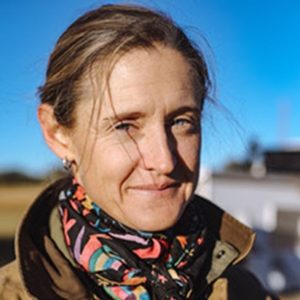
In our new series Voices of the West, Haley sits down with Marissa Taylor of Lonetree Ranch in Wyoming to explore the unique challenges and rewards of managing a family-owned ranch. From winter prep to implementing sustainable conservation practices, Marissa shares how Lonetree Ranch balances biodiversity with agricultural production through collaboration and ecological stewardship. Tune in to learn how ranchers like Marissa are preserving open spaces and wildlife habitats while sustaining the ranching way of life in the modern West.
Topics
[0:00] Welcome to Voices of the West!
[2:10] Lonetree Ranch – history and background
[4:58] Conservation and Collaboration at Lonetree
[12:18] Prioritizing Ranch Projects
[17:01] Challenges with Public Land Access
[23:16] Migratory Projects in Wyoming
[26:13] Connection Ranching, Conservation, and Biodiversity
Haley Mirr (00:06):
Welcome back to the Land Bulletin podcast, where every other week we bring you experts in the field to impart their knowledge when it comes to the ranch and sporting property market, buying and selling advice, the latest, best stewardship practices, as well as topics that impact landowners every day. I’m your host, Haley Mirr. Let’s jump in.
Alright, welcome back to the Land Bulletin podcast. I’m Haley Mirr, and today we’re starting a new series called Voices of the West and helping me out today kind of spur off this new series is our really good friend Marissa Taylor, welcome Marissa to the pod. Happy to have you on.
Marissa Taylor (00:43):
Thanks for having me. It’s good to see you.
Haley Mirr (00:46):
Good to see you too. So how’s your day been? Let’s start there. What are you guys doing up there at the ranch?
Marissa Taylor (00:52):
I think in our conversation before we started this, I said I’m 25 minutes behind all day or maybe even all week. So it’s a busy time of year, but I don’t know if that’s a great even point to narrow it to this time of year. So it’s just sort of running these days. But yeah, gosh, this morning there’s kind of a lot going on at three Inch. We’ve got some contractors doing some kind of winter prep work at looking at some winterizing, some stock water tanks, and we have horses’, teeth being floated and we’re moving livestock around and have a kid at home from school today. So all the things.
Haley Mirr (01:36):
All those things. And on top of that, being a mom. So you got a lot going on. I learn a lot from you every day, Ms. Marissa. Well, I would love to talk about, before we go into what you’re doing now with Wyoming Stock Growers, your work with conservation, that kind of thing. I’d love to learn about the Lone Tree Ranch, what you guys are doing up there, how it might be different from other ranches that you know about. And we could start with where it started and what the goal was when you guys first bought the property.
Marissa Taylor (02:09):
My parents had a ranch in southern Colorado my whole life. And when my dad was ready to expand the ranch, they looked at expanding it regionally in southern Colorado but couldn’t find what they liked and looked at a ranch in northeast Wyoming, which kind of opened up the state to them. And with kind of the list of stuff that they knew that they needed for production agriculture, were able to find a ranch in southwest Wyoming, which is where the operations kind of headquarters now. And I think like all ranches you try and that are agriculturally oriented. You’re trying to match your agriculture production with the land resource base that you have. And so that’s what we try to do just like everybody else.
Haley Mirr (02:59):
And so we met you through your dad and my dad originally. And how long have you didn’t just start at lre, I know you’re now working there and running the show, but where was what led you to where your position is now and what you’re doing with Northway and that kind of thing?
Marissa Taylor (03:19):
I have two kids and they were at my mom’s house and they found a Dr. Seuss book from the eighties. I’m sure anyone else that grew up in the eighties may be able to remember this book. And it was like a Dr. Seuss about you. And so it has prompts you to rhyme about what you want to do when you get older. I think I filled it out when I was five and on what you want to do when you get older piece. I had a veterinarian rancher dog trainer, an artist cook. I think
(03:59):
I come full circle and I get to do all those things and I’m not a certified veterinarian, but there’s plenty of that work to be done. So I think it turns out I’m coming first full circle, but I didn’t have necessarily a direct path here. So I went to undergrad in California and then I spent some time in Colorado skiing back in Colorado skiing and did a master’s degree through University of Denver. And agriculture’s always been interesting to me, so I looked kind of focused my studies in agriculture business and then had an opportunity to work overseas doing some land-based agriculture, which turned into working for Rio Tinto, which is a big mining company. And I came to the ranch after my parents had purchased the ranch in Wyoming and had been living here for a couple of years. I came for an extended visit and then just never left.
Haley Mirr (04:57):
I mean, it’s a beautiful spot. I understand why you decided to stay and raise your family there and work the land. So it’s really cool what you guys are doing up there. And I know after looking, knowing you and your family conservation in addition to ranching has been a big part of your guys’ life. Is there any conservation projects that you guys have implemented on the ranch to take you where you are today with Wyoming Stock Growers?
Marissa Taylor (05:25):
I don’t think we’re that different from all production agriculture ranchers that I know and that a healthy ecosystem or healthy environment is what’s good for your livestock and it’s also what’s good for the wildlife. And so in talking about conservation, I think what we mean by that is that the ecosystems intact or there’s large areas of undeveloped landscape of which animal wildlife can move through and that it’s healthy for both our production livestock and then for the native wildlife. And so keeping or protecting those spaces is something that we value, but it’s not uncommon for all ranchers because is a requirement to do what you do for your business and it benefits the wildlife. But it is a passion of mine in keeping these open spaces open. And I am on the board of the Wyoming Stalkers Land Trust and the motto Keep Wyoming, Wyoming.
(06:35):
It’s just open spaces and conservation easements are a tool to do that. We don’t have a conservation easement on our ranch, but it’s a great tool for either ranchers or landowners that want to make sure that that open space stays open or give them an opportunity to either expand an operation or deal with an inheritance issue. And so it’s not a tool for everybody, but it is a great tool to support keeping those spaces undeveloped, those big stretches of landscaped undeveloped. And so outside of the ranch, then that part of the volunteer part of my life does revolve around conservation. And on the ranch, I think good production agriculture management really does support a robust ecosystem for wildlife. So there’s fences that are designed specifically to let wildlife migrate through easily. It’s a project that we’ve taken on and as we can install fence or fix fence, make sure it’s wildlife friendly, and then good grazing management and make sure your land’s healthy so that you can support all the other life that comes on it. My dad’s really, I think, again, not uncommon from other landowners or ranchers, and that waters a really important resource to us. And so maintaining the water infrastructure and understanding the way that the water moves through our property and then benefits all things from fish to moose and livestock is another area that we really look at.
Haley Mirr (08:15):
Are there groups other than Wyoming stockers that you guys work with some of the planning that you’re doing on your own ranch?
Marissa Taylor (08:22):
A few years ago we did an ecological planning day with all of the agencies or groups that are involved in a project on the ranch, and it was overwhelming actually. We have great service agencies in the area from the Farm Service Agency, FSA, we’re the NRCS. And then we also work with our federal lease partners through the Bureau of Land Management, BLM, the Forest Service or state lands, Wyoming State Lands. And then we’ve done a project with Autobahn recently on some fencing and some sagebrush mowing to kind open up the canopy, a sagebrush canopy for more grasses. I’m on the board, I said is Wyoming Stock Growers Land Trust, and then also Western Landowners Alliance. And so from a personal side, like a volunteer side, I spend time with those organizations helping to support their missions.
Haley Mirr (09:19):
That’s huge. And with that, when you had the ecological study done, how do you decide what priority these things take? I know some of it is like as you affect this, it’ll affect that, but when you do something as overreaching as an ecological study like you did, how did you decide what to attack first? Was it based on funding or the groups that you were working with or was it based on need of sustaining the cattle and that kind of thing?
Marissa Taylor (09:51):
I think my answer might be luck. There is planning involved and you have a priority list of things that just like in all things, there’s a list and when some things at the top of the list because your highest priority, you kind of make it happen. And so there’s for sure elements of what we’re doing that hit that. And then there’s also timing and a little bit of luck maybe there is funding for a project like that weed mowing project, that Ottawa approach just with an opportunity to get that done. And that was not on our priority list, but it was an important project to be done. And then there’s also kind of the collaboration. You asked me, the agencies, I listed four, there’s 40,
(10:34):
And so not intentionally leaving anyone off because there’s many agencies in Wyoming. I would say the Wyoming Natural Resource Trust Fund is one that’s critical for all projects. We’ve worked with Trouts Unlimited for a number of projects supporting some fish friendly head gates, like head gates that fish can migrate through on top of just other diversions. And so the Wyoming Natural Resource Trust Fund helps fund projects that might be either engineered or designed or kind of spearheaded by another organization. And so yeah, there are so many opportunities to do great work, which is part of the answer to your original question is sometimes it is a priority of something that just has to get done because we’ve either noticed or erosion, you just can’t avoid something. Oh, it’s going to erode out a bridge, it’s time to do that project. Or the stars align for a project which has unlimited and the funding’s available and it was on the list. So yeah, it feels a little more like a shotgun than a rifle.
Haley Mirr (11:50):
Yeah, yeah. It’s kind of like if people approach, it’s one way, if it’s a need, it’s another. And I’m just overwhelmed even with the five that you mentioned. How did you learn how to reach out to these people when you needed them? Was it through the network of ranches with WLA and the community that you’re in that you learned about some of the tricks of the trade or just time of being in this environment?
Marissa Taylor (12:17):
I don’t know. I’m going to have to think about that. I think one, my dad’s a real natural collaborator. He’s a real inviting person, and so he invites people to the ranch often. So sometimes I’m just keeping up with things that he’s committed us to do following through, yep, okay, yes, we’re doing this. He initiated it and said yes. And so we’re doing it. And then I will say there’s a bit of a learning curve in being able to stay up or stay on top of the opportunities that that’s a landowner might have through some of these agencies. Some agencies are great at reaching out with and helping educate on the priorities or the opportunities that may be there. And in other places, ranchers have to really, landowners have to advocate for themselves within these agencies. So we have a really great conservation district in our area, so the County Conservation District can help navigate some of that.
(13:17):
Like, Hey, there may be, if you have this need, here’s an opportunity to either find funding or to support the technical services on that. So there are definitely different places to look or to go to help with that. But all of the things between the networking I do outside of the ranch to the networking that my dad does with all of our local service providers or our agencies, and then yeah, word of mouth on stuff that’s worked well for our neighbors or stuff that I may have heard through one of those board service opportunities. But I think the opportunity is there. The barrier is figuring out the channel to go through.
Haley Mirr (14:02):
And I think that’s a lot of people who are purchasing properties, they go into it because this is a really good investment or they’re trying to put their money somewhere or they just want to recreate on the property. But it’s super important when you buy these properties to understand that there are all these tools at your disposal and figuring out the right people to talk to and how to manage the ranch the right way to reach your goals. And I know a lot about that with your work with Northway and figuring out the best path forward with owning a property because sometimes people just don’t know where to start.
Marissa Taylor (14:40):
It can definitely be tricky. I think, I am sure you guys see this in the real estate side, that every property has an unfair advantage. There’s something about that property that makes it a really incredible elk hunting experience or fishery or cattle production, or even within cattle production, maybe a specific inner enterprise or class of cattle that would be suited for that really arid environment or really lush environment or really high mountain environment. And so I could imagine coming in blind that figuring out what that property’s unfair advantage is or the thing that it’s the easiest to be, can be challenging because I think we have a tendency to make our world around us fit what we want it to be. And so yeah, it’s definitely easier to not fight with Mother Nature where you can work in sync. She’ll still humble you plenty, but where you can work in sync, it’s a little easier.
(15:56):
And so yeah, identifying if you want it to be a great mule deer property, but you’re not in a mule deer corridor anywhere where really to go, it’s going to be a tough sell or tough find. Or I think one thing I can say about our places that we would really love for this to be an incredible fishery, and we’ve done so much work to try and help support what could be a fishery, but ultimately we don’t have the flows for to support what we want it to be. So our unfair advantage isn’t an incredible fishery on our place. We have great water, but not a great fishery. And so yeah, finding out what that discovering and learning about what the property, the unfair advantage that that property has can be hard. I would say for landowners that are looking for resources, they’re out there, the farm service agency, so the FSA is a great place to start.
(17:00):
The NRCS is another place to start because they likely have data going. It predates either that particular ownership or multiple ownerships. And then anytime there’s a local conservation district, it’s another really great place to start with resources. And then I would say engage in Western landowners lines can be a really great resource for anyone across the west that’s looking for answers from a really wide gamut of questions. From predator engagement with wolves and grizzlies all the way to public access issues is another really big thing we’re tackling right now. Or not, I just say tackling, but
Haley Mirr (17:46):
Well, Wyoming specifically, there’s a lot going with that. We don’t have to go into a lot of detail, but when things like that on a statewide scale happen, it’s good to have a lot of ranchers who are going through a similar thing to figure out a solution to handle some of those decisions that are made. But I know Wyoming tends to be a little bit more understanding of the ranchers. Some of these decisions that are made do take that into account. Have you found that, I know you said you had a Colorado Ranch and now you guys are in Wyoming. Is there a bit of a difference even there with how things are handled?
Marissa Taylor (18:23):
I’m sure. I think my dad would probably be better to answer that because I wasn’t involved in the, probably wasn’t privy to the conversations as a young adult that I am now from the Colorado Ranch to here. And the times have changed. So I think when we had the Colorado Ranch, Colorado was still really agriculture and a state that was easy to do business in. And Wyoming continues to be a state that prioritizes agriculture in our legislative process. And we have senators and representatives that recognize the role agriculture plays in each of our rural communities and across the state, and so therefore have favorable conditions to operate or continue to have favorable conditions to operate. We can for sure see a difference when we look west wide on, we could take the public access issue, for example. New Mexico’s recently had a ruling that’s changed public access to water.
(19:32):
And I’m in no way a expert on this issue, but I can recognize that when you aren’t living in these places or when you aren’t and haven’t done the work to maintain these ecosystems, it kind of just looks like that’s how it was supposed to be. That’s just natural. You might not be able to observe the amount of work it took to restore, say, that creek into a fishery and how delicate it is to keep it a fishery. And so I’m not sure that, I think Wyoming’s been able to maintain that connection and understanding. And so our legislative process supports that. I think as we get more urban development or less rural or more urban rural divide, that communicating those nuances that really make a difference and achieving the conservation that we all are, that goal is probably likely not far apart how we get there. It feels like it’s getting further up, further apart.
Haley Mirr (20:45):
And for those listening who might not know kind of what you guys have gone through recently with the corner crossing things happening in Wyoming, do you mind just mentioning how that might affect ranchers a little bit and maybe how you guys have been affected?
Marissa Taylor (20:59):
So on corner crossings, I’m, again, I’m not an expert in this. I would call myself more of a living witness to what’s happening than a technical expert. And so I say that to hopefully insulate myself from risk of saying something wrong and then airing it publicly. But as the west was settled, there are a few states that live within a system called the Checkerboard, which is where a section of ground is owned by the Department of the Interior through the Bureau of Land Management. So the BLM and then a section is deeded. And so when you look at a map and say there’s a section, the BLM is yellow and the deeded is blue, it looks like a checkerboard, like a chessboard or a checkerboard like the game. And the ownership of those layers in 640 acres is different every other, so it might be different between the deeded, but then the BLM owns their ground.
(22:04):
But in these large kind of large open spaces, the 640 acres aren’t all fenced off. So the private space isn’t separated by any visual or physical barrier from the BLM. And so they’re often managed as kind of a comprehensive unit instead of just the BLM or just the deeded ground. And so public is allowed access to deeded ground and not necessarily private, but that’s not, it looks straightforward on a map, but when you get out into these spaces, it’s not straightforward. And we all have access to some technology that helps us understand exactly where we are in these spaces. Questions of can you move from a corner of A BLM, so of a public space to a corner of another public space without ever crossing into private space? And the historic understanding of that. And then as that’s evolved or that theories being tested is changing. And from my perspective, the intent isn’t to keep people out of public spaces as much as it is to protect the private spaces and the investment that’s gone into those private spaces. So it’s a tricky issue and it is very heated issue from all sides.
Haley Mirr (23:47):
I mean, that’s whenever these big state decisions are made in any capacity that affect ranchers or things like that, and it’s not made locally, there’s always going to be something. But it’s just interesting for people to know. I mean, when you were buying a property and when you’re running a property, you need to know what’s happening out there. It’s so important to really understand, okay, I’m looking in Wyoming, I’m looking in this specific conservation space. These are all the resources available to me. This is what I need to be weary of. I mean, it’s huge. And I feel like you guys have probably just over the years, you learn something new every day as you’re running your ranch.
Marissa Taylor (24:34):
Yeah, there’s no endless for projects and you learn from your mistakes. So there’s no end to that kind of learning for sure. With trial and error making mistakes, I would say you made a comment about placed based decisions in landscapes and being, we make better decisions the closer we are to that landscape. And I am more familiar with, or again, would not consider myself a technical expert, but I am way more familiar with the Rock Springs Grazing Association has been going through a range management update to the plan, the range management plan, and worked collaboratively with the local community to develop an alternative that would suit multiple use. So the Bureau of Land Management has always supported multiple use in multiple public use in that land space. And so I think the collaborative worked for over a decade to produce an alternative, kind of a new plan and a community-based alternative.
(25:49):
And when it came time to make that decision, that alternative wasn’t selected. And so Wyoming’s appealed that decision a couple of times in a couple of different ways. And the kind of final say has just come out. And there were many concessions from agriculture and grazing that were fixed from the way that the federal government picked the alternative they thought was best, which wasn’t the community alternative. And so through the process, through the appeal process, there’s been many grazing components that were fixed. There were many other components that were not fixed that didn’t align with the work that the community had done to select the best alternative for the people living closest or most involved with the ground. And I do think we will all continue to face challenges as decisions about our public lands are made very far away from where they live. And being able to have the foresters who are working in the forest help make decisions about the forest.
(26:56):
That’s where the best decisions are going to be made about the forest and or the people that are using those landscapes for timber or agriculture or recreation. And we have historically had those processes in place, but are seeing tendencies for those decisions to be made quickly and far away. And I think that’s a risk for us all. And I think that would be something really hard to know is happening if you weren’t living the consequences of it. And I think Colorado is potentially a good example of what happens when people that are living really far away from a decision get to make a really big decision with the introduction of wolves. The people suffering the impacts of that are not the people that were the voting base that made that bill pass. And I think that’s another example of where we make decisions really far away from the landscape that they live in, and the unintended consequences are either bigger or more suffering than they would’ve been had it been made from a place where those consequences are felt. And so, yeah, not to say that wolves should or shouldn’t be in landscapes, I just think that the way that those decisions are made should be very close to the place that they’re being impacted.
Haley Mirr (28:31):
I would agree. And I think even we’re dealing with some stuff up at the monastery up near Aspen, and there’s a lot of decisions. They have these caucuses up there that kind of reign supreme when it comes to zoning and regulations and all these things. And we’re just seeing how impactful it is to have people on the ground locally making these decisions because it impacts them. Instead of having these kind of statewide decisions made. When you were experiencing some of those decisions with the Rock Springs Grazing Society, would you see that as a win? Some of the things that came out from that, some of the decisions?
Marissa Taylor (29:12):
That’s a hard one. So yeah, we were able to adjust the plan moving forward in a favorable way for agriculture, and we’re grateful for that. I think if we look at the long-term precedence of the federal government, picking a plan that doesn’t align with what the community developed is a problem. And so I’d call it a small win for ag, and I’m grateful for it, and I’m proud of the team that helped to articulate why those particular selections or concessions needed to be made. But I’m overall worried that an agenda outside of this place is going to harm the long-term ecosystem health. And I’d also say probably the filter that I’m using for making these decisions is the long-term ecosystem health. So grazing, there’s good and bad applications of lots of things of grazing, of oil and gas production, of wolf, introduction of, so it’s a little bit less of right or wrong in industry because nuance across all of it. And more in looking at how are we going to continue to preserve these open spaces, and not so much in preservation as in isolation and no use, but more in conservation of maintaining the maximum biodiversity and opportunity across these landscapes.
Haley Mirr (30:57):
Right. No, it sustained. It’s a way to sustain this industry and ranching, but also, I mean, you’re even working on these migratory corridor project for mule deer and up in Wyoming. It’s all connected. And I think if the constituents and people making decisions were aware of how these are all kind of connected, I think a lot of better decisions would be made. Because I mean to go from, I love how our conversation has gone from ranching family up in Wyoming to conservation to migratory corridors for animals. I mean, it’s all connected and private landscapes are such an integral part into those things being connected, which I think is huge.
Marissa Taylor (31:47):
I think if we were going to evaluate, if we had to boil it down to one evaluation criteria for health, right, of a space or an ecosystem, it would be like biodiversity. So how many different things is that space supporting? And that then kind of goes the gamut, right? If you’re trying to support a connection for recreation, mule deer migration and robust herds, sage grouse, all the plant life required to support all of those species, the water systems. Biodiversity for me is the optimizing and maximizing biodiversity in a space I think is a great indicator and how we’re evaluating these other decisions, whether it’s how we’re going to use public space and the health of your deed land. That’s one I would say in connectivity. The Wyoming Migration Initiative is such a cool organization and has been able to help all of us visualize what connectivity looks like, why it matters that the deer that summer in Teton County need to also be able to get to just north of Rock Springs for their winter feed or winter grounds. And how come the rancher that lives outside of Pinedale is supporting a really critical key stopover, as is the rancher in Farson or a tourist going to Teton County could see that whole path that they maybe drove is connected for certain species. And I just think the visualization of that, it’s kind of also changed how we think about these ecosystems. It’s not just the littler or it’s expanded the idea of it, for me anyway.
Haley Mirr (33:56):
Yeah, I think that’s huge. And I think what you’ve said with the goal of your guys’ ranch, I know you’ve changed things around. You’ve started things and maybe they didn’t work and tried something else, but at the end goal has always been to sustain the biodiversity of the landscape that you guys work on, that you love, and understanding that that landscape spans. It’s not just the property you own, it’s everything within the state. And it’s just really cool to see what you guys have done at Lone Tree, but I know it’s always an ever-changing kind of story of what’s important and where you’re headed. But it’s just been really great to know you and your family over the years of learning the resources that are available, understanding the importance of community, not just in Wyoming but the West. So I just appreciate you taking the time today and kind of going through what you guys, lone Tree might by its own little ranch that your family has loved and will love for generations, but to understand as a landowner, things are ever changing, and it’s just important to know what’s out there and available to you.
(35:00):
So I appreciate you, Marissa, and what your family’s doing out there.
Marissa Taylor (35:04):
Well, thanks for having me. It’s good to see you.
Haley Mirr (35:06):
Yeah, of course. Good to see you too. I hope we can have another kind of reunion coming up here. That’d be great. Maybe before the winter.
Thanks for joining us today. To learn more about the ranch real estate market or our ranch marketing process, make sure to subscribe to our newsletter on our [email protected] or give us a call at (303) 623-4545. See you next time.