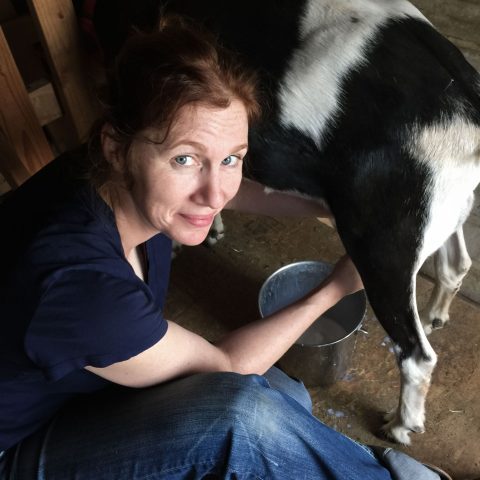
In this episode of Voices of the West, Haley chats with Amanda Weaver, a geographer, professor, and the farmer behind Five Fridges Farm, a unique urban farm near Denver. Amanda shares her journey from academia to hands-on farming, her innovative approach to urban conservation, and the challenges she faces balancing farm life in a suburban environment. The duo chat about Amanda’s work with conservation easements, goat grazing programs for invasive species control, and the importance of connecting urban communities to local agriculture.
Whether you’re starting a journey into urban farming, or just interested in learning more about urban easements, Amanda’s farm, or goats, this episode provides a fascinating peek into the world of inner-city agriculture!
Topics
0:00 – Introduction
1:19 – Amanda’s journey: from geography to urban farming
4:54 – Conservation easements and 5 Fridges Farm
8:28 – Learning the ropes of urban farming
15:40 – Diversifying income strategies
18:52 – Goats for invasive weed management
27:50 – Community response and connection
31:19 – Challenges of urban farming
42:05 – Conservation easement and urban green spaces with Colorado Open Lands
50:47 – Advice for aspiring landowners
Haley Mirr (00:06):
Welcome back to the Land Bulletin podcast, where every other week we bring you experts in the field to impart their knowledge when it comes to the ranch and sporting property market, buying and selling advice, the latest, best stewardship practices, as well as topics that impact landowners every day. I’m your host, Haley Mirr. Let’s jump in.
Welcome back to the Land Bulletin. I’m Haley Mirr, and today we’re continuing on with our Voices of the West miniseries and helping me out today is Amanda Weaver. Amanda was introduced to me by my mom, actually, but she’s more than just that. She is a agricultural researcher and professor at Denver and also a farmer, but it’s a different type of farming than we have typically talked about on this podcast. It’s urban farming, so we’re kind of going to be going through some of her practices, how she got started, and some of the things that she faces that we might see differently in an urban versus rural setting. So Amanda, without further ado, welcome to the podcast. Thank you. Perfect. Well, what we’re going to do first is I’d love to know your background and how you came across Five Fridges Farm and what you’re doing today.
Amanda Weaver (01:19):
Sure. I actually started out as an urban geographer and I was interested in issues, so I teach in a department of geography and environmental science, and I was interested of urban issues in Latin America and ended up doing my graduate work at the University of Texas on migrant workers who were migrating through the Midwest and settling out of the migrant stream into smaller towns throughout the south and Midwest, up through Colorado and Minnesota. I grew up in northern Minnesota and was always amazed having come back from various study trips in Latin America, how much Spanish I was hearing in some of these rural towns. And so that’s what really got me interested in the agricultural and sort of rural geography side of things. And that’s how I ended up later. I actually had about 10 years of a different career in geography before I came back to academia and moved back to Colorado, which is where my mom’s family is from, and decided to finish a dissertation.
(02:36):
And my subject, this was in the early ts, the early two thousands, and was looking around Colorado and seeing at a very changed place from the place I had come to visit my grandparents driving across the plains from Minnesota and just all of the local food that was grown up through Brighton and into Weld County. All of that was moving of course out of the city and sort of up through the river valleys. And I was really fascinated with the question of course that has been on our mind for the last 30 years, which is what happens when people want to live in these dry places. We have limited water, we have limited agricultural spaces, and of course in the plains and the salty areas where we do flood agriculture, that’s the same places where we want to build suburban homes. And so I really became fascinated around this concept of people want local food.
(03:42):
They’re moving out west in droves. Where’s that local food going to come from with housing values the way they are? I found this really, I don’t know if I should call it a happy place, but at least for my brain, those questions of overpopulation in a desert west questions of food production, is that sustainable? Should we be doing this? All of those different things kind of came to a head. And so I ended up doing a dissertation where I was interviewing vegetable farmers all over Colorado, but mostly who were closer to the urban areas and sort of what were the issues they were facing with urban encroachment and having sort of the ranchettes close to not only the larger ranches as they are now encroaching on, but at the time 15 ish years ago, it was more what we think of as truck farms, and we don’t even really use that term anymore, but that’s where a lot of truck farms are, where a lot of what we think of our farmer’s market type items are coming from.
(04:54):
And so those questions of encroachment and food and resource management just became really fascinating to me. And one of the last people I ran into and interviewed, I was driving about, my farm is about seven miles from the center of Denver. For those listeners who don’t know Denver, Denver’s a big western city. And so where I am is a suburban area or kind of a classic for string suburb of Denver and around my farm are now apartment buildings and schools and large suburban homes, not even ranchettes. And so this was a very unique situation and one of the last farmers that I interviewed, because I was driving out literally four miles from my house that was close into the city, and I saw this sign that I pulled in because it reminded me of driving around rural places in northern Minnesota where it was sort of the understatement of sales where you just see a blackboard sign that says eggs or baby goats.
(06:09):
And I think all three of those words were on this sign. And I of course was like, wait a minute, I got to pull into this place. And sure enough, I drove in and it took a bit of time, but I finally found the owner who was 86 at the time, she has since passed, and she was milking goats, and we struck up a conversation and she ended up being sort of the person that I really needed to talk to to finish my dissertation. She was fascinating because she helped establish Wheat Ridge in the late sixties and 1969, and I just said, what is this farm doing here? And she said, it’s a conservation easement. And so for me that was this aha moment of, oh, okay, here’s a tool I’ve been reading about. And here’s an actual example of an open space now. She was just raising goats on it, but it was land that was flood irrigated for vegetables and things like that. And so that’s how I ended up, and as a silly academic, my famous last words were, how hard could it be? I’ve been studying this stuff for years. Yeah. Then you get boots on the ground, you’re like, oh, okay. I get why Totally do. It’s the best job I’ve ever had, and I still love teaching, but I love farming even more. So that’s the story of how I ended up with a farm in the middle of the city. That’s so
Haley Mirr (07:49):
Awesome. And you said it perfectly, you’ve been studying this forever. How did you jump into managing this place? Was it because even though it’s at a smaller scale, it’s still I can’t even take care of the a hundred square foot lawn I have in the back of my house. So where did you get started, especially with ranchers and farmers, there’s managers in place already, there’s neighbors that they ask questions to. There’s a lot of kind of flow of information, but if you’re in the middle of this urban center and you have this farm, how did you learn how to manage it and what worked?
Amanda Weaver (08:28):
Well? It’s so funny that you say that because of course, I was writing in this dissertation about how farms in the city, they’re separated from traditional agricultural connections, friendships, all these things. And I mean, to quickly answer your question, it was truly naivete like, oh, it’ll take me a year or so to sort of get this together. I’ve gardened, I’ve taken care of pets. I think it was that what I didn’t know couldn’t hurt me at the time. And in reality, I think that what I tell my friends when they say, what made you say yes to this? I’ll tell you why I hadn’t been studying this for so long. And the people I met in agriculture, they loved the land, they love the land, I loved land. And they were observers. I really feel like they’re all geographers because they watch their land, they watch their animals, whether you’re involved in growing crops or animals or both, there’s just so much research that goes into a person who’s involved on the land.
(09:43):
And so in knowing that when this 86-year-old woman, her kids didn’t want the farm for death. And because it had been put into an easement, and for me as a person who had a position at a university, it seemed like just the perfect lab to be able to bring students out to help them understand the connections with their food and agriculture and all those different things. And because it was an easement, a middle income like myself could, I sold my house in central Denver and was able to buy 13 acres. Now, granted, the buildings were pretty run down, and I have done a lot of work since then, but it was a dream that in the back of my mind, I just never thought I would get to because I didn’t grow up in farming. I did not have family that was involved in it in any way, shape or form.
(10:44):
And so when this woman asked me if I wanted to buy the land and it was a price I could afford, it was something I knew would never come around to me ever again. So the answer was yes, and I just thought, I’ll figure it out, and if I really fail, I can always, always sell it to someone else and check it off as a huge failure. But it was too compelling. It was like winning the lottery and saying no in terms of not having the opportunity because of course a lot of what I study is new farmers access to land. And as you probably have talked about on this program, it’s very, very difficult if you don’t know or have family or know people with land or can lease to own or all of these different things unless you have quite a bit of money in order to not make a lot of money in farming. Yes,
Haley Mirr (11:47):
Exactly. The barrier of entry to
Amanda Weaver (11:49):
Is
Haley Mirr (11:49):
High.
Amanda Weaver (11:51):
But yeah, that was sort of the, it didn’t matter. I couldn’t say no, it was too much of a, this is the only chance I’m going to get. And I liken it to a lot of people say they’d love to go to the moon. And then I think, what if you actually got that offer? Would you say it? And that was the offer for me and my background and what I’d studied for many years. That was the offer I got. And I was just like, I guess I’m going into farming at 40. That’s
Haley Mirr (12:20):
Awesome though. And when did this, so how long have you had the farm then? Have you had it for a bit now?
Amanda Weaver (12:26):
I’ve had it since 2010, so I’m going on 15 years.
Haley Mirr (12:29):
Okay. And I’m sure, has the management changed from when you started working it to today? What has the growth been? Have you changed the outlook? Have you had to succumb to some things while own it? Yeah,
Amanda Weaver (12:45):
Everything. Well, and again, these are all things that those of you who have been in farming and ranching, it changes every year. And that was one of the first things that I had to understand about land, especially land in a changing climate. You make new decisions every year, and you can’t call them failures. It’s about listening to the land and listening to your animals and looking at food sources and how things grew and that the same things that grew, well, this year won’t grow well next year and it will hail if you live in Colorado, it will once every, that’s a thing. It’s a way of life cry. It’s a thing. It has been the most meditative thing I’ve ever done because the only thing that I have learned that is a sure thing in farming is that it will change every year. And that that’s something you just have to accept. A predator will find a new way in because they sit there all day thinking about how they’re going to get good.
Haley Mirr (13:49):
That’s awesome.
Amanda Weaver (13:52):
Yeah, and I love it for that reason, but it’s hard to explain to other people, especially in the urban area where we’re so used to controlling everything really. People often ask me, well, what’s the difference between urban farming and rural farming? Because the actual farming piece isn’t that different, but the people’s attitudes around you are, they expect to see a very neat farm all the time. And of course, if you’re an organic growing, you’re not going to have these neat clean rows because you’re using weeds as a cover for shade and things like that. And so it’s the constant, I feel like only farmers and ranchers, the exploring your confidence all of the time and looking in the mirror and saying, I’m going to do this another day. I’m the expert here and I’m going to talk to friends who do this, and I’m not going to take other people’s opinions who haven’t done this. They’re not good sources of advice.
Haley Mirr (15:04):
Well, at least through your research you have these people you can reach out to and be like, Hey, I’m going to try this new thing. Have you done it before? Versus just totally going in blind. So it’s neat that you’ve had a little bit of background. And I’d love to know, I read a little bit on your website and from what my mom was saying, but the way you run it is pretty smart too with the income generation piece about leasing some of it out to other people who maybe don’t have the land to work themselves. Can you tell us a little bit about that program that you’re working on?
Amanda Weaver (15:40):
You bet. I could do a couple different things, and this is the piece where being an economic urban geographer did help in terms of
(15:48):
I’ve got this piece of land farming is probably not going to pay the bills initially. I’m not going to quit my day job. And so what I did was the first thing I built rather than necessarily rebuilding the home space though I did that sort of in conjunction, was build a commercial kitchen so that I could rent that out because that was one of the things that I was studying that has been one of the big changes that many of us have seen in the last 20, 30 years, is that we’re really having to diversify into either BB or events or you pick it operations or just sort of the agritourism piece of it. And with the opportunity of me being in the city, I could both utilize physical internal space, but also outside space. And so I built this commercial kitchen as an idea of being able to use it for my own cheese making and a few things like that, but also for events.
(16:54):
And then on the leasing land side, there were two things that I needed to do. It’s interesting, 13 acres is nothing compared to most of the farms and ranches in Colorado, certainly. However, in the city, it’s a huge amount of space. And to your point, whether it’s 13 acres or 1300 acres, the land management is kind of a similar thought process of, oh, I have invasive weeds here, I have this, I have. And so I quickly realized that though my expertise was in vegetable, so I started leasing out spaces for vegetable farming, and that worked pretty well, but I realized that doing the animal side of it was a much easier way to kind of clean up fields in the fall and winter. Also, I’m not really big enough to grow my own hay and
(17:57):
Have the machinery to do that. So the irony of having an urban farm is my hay comes from outside the city to the city for all animals. So the other piece that I did was that in the intensive farming areas, so I have about five flat acres that are easily originally flooded, irrigated now drip irrigated with the rest where water was hard to push. That’s when I started to expand the goat project, we’ll call it. I started in dairy goats just because I was a woman of a certain age, and the New York Times was talking about all these women across the nation buying goat farms and making cheese and all of these different, I hadn’t read the article yet, but I did the thing.
(18:52):
And then an evasive wheat specialist who actually came out of Boulder County who was then working for Wheat Ridge, she was the one who said, why don’t you start keeping your boy goats and having them graze these weeds in back because of course, even less about animal agriculture. So everything I learned about goats was from this 86-year-old woman who I apprenticed with for two years before her death. And so I got pretty good knowing goats and understanding that. But the whole idea of understanding restoration agriculture and the piece of regeneration, that’s when the whole weed eating thing got me on to more of the regenerative ag and I started doing projects in that light too. Now that didn’t make a lot of money for me. However, I realized that in putting my goats out back to manage weeds, and we can talk about this in another question if you want. I started a program of weed management in the city of Wheat Ridge using those goats. And it turns out the best way to market a farm is to just put your goats out. You don’t need a billboard, you don’t need to take out ads, goats and parks and put name tags. Wow. Put name tags on ’em so the kids can see what their names are.
Haley Mirr (20:18):
Well, can you tell me a little bit about that? My parents lived down in Cherry Hills and we were on the Highline Canal the other day riding our bikes, and we saw this giant herd of goats, and we knew what they were for just because of our background and everything, but it was just such a jarring thing to see that in an urban setting. You said parks and things. Where do your goats go to help the city of Wheat Ridge?
Amanda Weaver (20:45):
Well, this is a fun, the beauty of not knowing anything about what you’re doing is that you absolutely try everything. You’re literally just throwing stuff at the wall all the time and saying, oh, okay, that didn’t work. Let’s try this. And you may have already interviewed this person, but I was put in contact through this friend who worked for Wheat Ridge about the weeds with a person named Lonnie Mellberg. And Lonnie Moberg is, have you interviewed her on
Haley Mirr (21:26):
This? No, not yet.
Amanda Weaver (21:27):
Okay. But
Haley Mirr (21:28):
We love new guests, so that’s a great name to, okay.
Amanda Weaver (21:30):
Yeah, she’s a pretty busy person. And this was many years ago, more than 10 years ago now. But I got ahold of her and she is sort of the woman. She had studied with Alan Savory in Boulder when he was there and had a herd of, I think 600 khassi goats that she kept in Wyoming at the time and worked with her sons, and they would truck these goats all over. So there’s a couple aspects to this story. So I get in contact with, I tell her, I said, Hey, so I’ve got this invasive weed problem, and I didn’t have a herd of goats yet, so the park program hadn’t even started. I just knew I had invasive weed issues and I had eight acres that I had to deal with, and I wasn’t prepared to put the three dairy goats that I had out there and everything else. I just wasn’t prepared for herd management at that point.
(22:34):
And I am sure she smiled the entire time we had this conversation, but I said, I am. And the reason the weed specialist had gotten involved with Wheat Ridge is because they were getting calls at the city that I was causing all of the invasive, the allergy problems in Wheat Ridge at the time, because I had taken the horses off when I bought the property. There were horses being bordered, but they weren’t being, they were just allowed to graze all over. So they had grazed and no offense to horses, but they razed on the riparian area, and it looked like a golf course, clean cut. You didn’t know anything about weeds or grazing or anything like that in an urban environment that looks like an idyllic thing. The horse grazing everything down to two inches. Well, of course, as a person learning about all this, I was kind of horrified. So I took the horses off. But of course what happened the next summer is that I had invasives and giant weeds that were about six feet tall over the property.
(23:46):
And I started getting these calls and I was like, and then the city wanted me to mow the whole thing because of course, urban rules say that you can’t have grasses taller than 12 inches. And I’m just like, but it’s a farm and this is the stuff I signed. This is the stuff I knew how to deal with because I’d been studying the urban environment, but I really didn’t know how I was going to do this because I really felt like this is wrong to get a bush hog and try and mow this whole area because that’s why I took the horses off in the first place. This is my first step into dealing with this stuff,
Haley Mirr (24:24):
Making it natural.
Amanda Weaver (24:26):
So I connected with Lanie, Lanie Mellberg, and she cut me a deal and she brought that was going to be less than having the whole eight acres mode. And I think she just did it more as a sort of a sales pitch for her, but it was really, really kind of her. When I look at the time that she took and what she did, she brought 300 kashmere goats down on semis. Her business was to take goats to some of the large easements, the oil and gas easements where they had disturbed the land and there were invasive weed issues. Might’ve even been one of her herds that you saw down there.
(25:11):
But she works all over the west. And she basically said, here’s what you’re going to do. You’re going to call up the chief of police, you’re going to get a parade permit. You’re going to do this. You’re going to let the school know next to you what time we’re going to be bringing these goats in. You tell that principal, they’re going to want to bring the kits out. And she just gave me a list of things to do and I was like, okay, I guess this is sweater raising. Looks like I did all these things. And what she was guiding me to do was turn a situation that was an eyesore into an opportunity to tell people about, to help them, realizing realiz that there was a new owner and what I was trying to do. So it was this ultimate educational opportunity, and that’s how this whole thing began. She brought these goats in, she herded them with dogs from the main street down a side street right in front of the neighbors, the neighbor who was calling about me right in front of his house. And the police had people out ready for him to be angry.
(26:22):
That’s so cool. And the original owner who was still alive of the property, so she came out, I mean, and good was just thrilled. The kids came out on the hill behind the farm, and for two weeks it was kind of looking at something in India or Africa where there was this 300 goats grazing what you saw in the middle of Wheatridge. And it was gorgeous. And they used some mobile electric fencing and just learned a ton from having them there about how that’s done. And she was the one who really started me understanding this concept. And this was even before I was hearing the word regenerative ag. And so that was when it sort of clicked for me of like, oh. And so I started keeping all of my boy goats and built up a small herd of, because I have a buck that I have for the dairy goats. And after I had started a rotational grazing plan for my farm, the invasive weed expert came back and said, Hey, can we put them in the easement right next to the fart? And we tried that, and of course we had no idea what would happen. We were really stressed out. We thought people are going to poke ’em with sticks or I dunno, they’re going to,
Haley Mirr (27:50):
Yeah,
Amanda Weaver (27:50):
You never know. So we made signs and said if there’s any issue, they gave her number and my number, and again, we put name tags on all the goats and I work a full-time job, so I would go check them. It was in the winter? Well, no, it was in the spring, so it was still dark when I would go out and check them in the morning and then I would check them in the evening. But nobody was out there when I would be out there to check them. So I thought, oh, huh, okay, seems to be going fine. Water’s good. They’re eating these weeds. And then when we took them back onto the farm onto another part and that neighborhood couldn’t see them anymore, we started getting emails and phone calls, where’s Daryl? Where’s this other brother Daryl?
(28:38):
And sorry, I had two goats named Daryl. I love that name for a goat. And this is when I realized that a community might be a great place to have a ranch, but it was looked like something very, very different. And so my educator self went about thinking, well, how would we do this? And the benefit, while I don’t get any money from the parks, it’s really great because I get free food for half the year. So my goats now get transferred and the city helps me transfer ’em. They put new water in every week, they make sure the water never goes down. They own all the fencing that they put up year, they bought the T posts and the fencing and it’s goat fencing, it’s welded wire fencing so they can pick it up anytime and put it back in and they leave the T posts in and people love it. It’s a really great way to not bring in mowers to some of the less intensive park areas. So we have some more open space park areas
Haley Mirr (29:51):
Kind of near the farm. There’s a couple of really cool parks over there.
Amanda Weaver (29:55):
Is
Haley Mirr (29:55):
That kind of where you’re doing it? Okay.
Amanda Weaver (29:56):
Exactly. So there’s a park called Lewis Meadows and everyone around there are a couple spoil sports who say, oh, we don’t like the goats. They’re stinky. But for the majority all year, people stop me. They don’t know me as council member Weaver, they don’t know me as Professor Weaver. They know me as the crazy goat lady. I love that. And I’m just the person who mines the goats and they like dogs, they know the goat’s names, they don’t care what my name is. And I’m like, is that they understand why the goats are there.
Haley Mirr (30:31):
And I mean, it’s so cool that having the farm, that’s one. I think the benefits of having it in this urban center is you’re educating from afar, you’re educating it in person, you’re making people fall in love with just kind of the idea of agriculture in general because sometimes there’s such a divide between urban settings and rural that you don’t understand each other, you don’t understand kind of the effort that goes into these things. But one thing you mentioned that I did want to kind of go into a little bit deeper. You mentioned how the city has codes that have to do with weeds and the height of the weeds or grasses or what have you ran into anything else being an urban farmer that maybe rural farmers wouldn’t run into when it comes to city ordinances and codes and things like that?
Amanda Weaver (31:19):
Yeah, just about everything.
Haley Mirr (31:23):
Loaded question.
Amanda Weaver (31:24):
Well, and it’s a great question. It’s kind of like I’ll use the example is fencing in versus fencing out. The opposite applies in the urban environment. So whereas on a farm, well, one of the great examples was I bought this property that has always been a farm for the last 150 years. It’s never had anything else on it. The original boundaries of the farm, the old barbed wire fences were set four feet in from the boundary of the actual farm so that horses could reach over and graze. And that is more of a rural thing to do on a boundary. And what was happening in the last five years were my neighbors, and there are 10 houses that directly back up to the farm, they were building their fences and decks up to that boundary, not realizing that I actually owned four feet. So I had to move my fence
Haley Mirr (32:29):
Resurvey.
Amanda Weaver (32:30):
I had to resurvey and then move a fence, and I had to move a fence that was not just a barbed wire fence. I had to build a fence out, fence out fence because they all had big dogs and they all had, my goats won’t go near those fences because there are dogs barking at them. I had to make sure those dogs couldn’t get in. Got it. Okay. So that’s a big one. Everything from, and having two apartment buildings around me, they’ll accuse my chickens of smelling when it’s their dumpsters of smelling others, there’s actually a difference between chicken poop smell and dumpster smell. And so it’s interesting because most urban people have no idea what living on a farm looks like.
(33:28):
I have to be extra conscious not to. I happen to harvest my own chickens and turkeys. I sell a few for Thanksgiving, the chickens mostly for me and my mom, but I don’t do that where anybody can see me doing that because that would cause a call to create something. I have been reported to the city for not changing the water for my goats every day, even though it’s clean water. And I was reported to PETA for that. Yeah, I’ve had, and again, no offense to any of these organizations, I am a huge advocate of humane slaughter to treating animals in the most humane way possible and have studied many of those things. But there is a difference between having a pet. The way I treat my dog in my house is different than the way I treat my goats.
Haley Mirr (34:33):
You’re heard
Amanda Weaver (34:34):
In that they live in a pen and they poop where they sleep. Not that I’m being mean to them in any way, but no goats don’t need their water changed every day.
Haley Mirr (34:47):
Yeah. Well, it just sounds you have a lot of people because of the location and the boundary limits and the neighbors that you have. There’s a little bit more of eyes on you at all times than maybe other farmers might be experiencing when they buy these larger swaps of land that they’re doing their thing. So it puts a lot of pressure on you, it sounds like a little bit.
Amanda Weaver (35:11):
Well, it’s interesting because they also aren’t used to a single woman farmer grow wing. And so
(35:18):
It’s fascinating to me. Everybody’s got an opinion on what I should be doing and what I’m doing. Because for a while, and I don’t know where this got generated, I think because I teach at a university, this is probably what happened, but when I bought the land and I started not having neat, I was clearly organic farming and a few things like that. And then there were students out there sometimes during the day, a rumor got started that I was running a women’s cooperative, and I don’t even know, don’t even know what that is, by the way. But the way it was talked about and someone who didn’t know who I was, because I had shown up at some other meeting not looking like a farmer, and probably looking more like a professor said they had this crazy woman who had moved in down the street at a farm and that she was running a women’s cooperative. And I looked at her, I said, what’s a women’s cooperative? And she said, I don’t know. But it’s questionable, isn’t it? So you’ve had a few, I just have to laugh at it because again, I’m glad that person was being aware of who had moved in down the street, but unlike in a rural place where you might stop by or you might run into that person at the cafe, or you might see them at the seed store or whatever, there’s no conversation for me to be able to communicate what I’m doing other than, so what I realized over time was not just the connection with the university, but I got on planning commission. I eventually ran
(37:09):
Council, and I realized that the best way for people to understand the issues of urban agriculture or agricultural in general were, for me, and I think this is a very rural thing, I think that most farmers or ranchers are very politically activated in terms of what’s going to affect their land, their livelihood, all of those things. And this land, because everyone looks at conservation differently. And in the way that this farm was conserved, it had not been maintained in many years, probably because the owners were very old. It was starting to be an eyesore. And so it’s been an interesting, that’s really been the main thing is that I stand for all agriculture apparently. So when people meet me, they’re meeting a rancher, they’re meeting a vegetable farmer, they’re meeting, and to those people who do those things full time, I am not that person, but I do know enough and I interview and talk to and study enough about people who are doing this full time that I help to bridge that gap of communication because there is, to your point before, there’s a huge divide and people, they have no idea who’s growing their food.
(38:32):
And that’s one of the things I tell them when they come to the farm or this is not where your food is coming from. These are expensive eggs to buy. Eggs grown in the middle of the city. And of course I buy a locally grown and milled organic feed, and these eggs are amazing, but they’re 10 bucks a dozen and people are happy to pay me that, but that’s not what’s going to feed America. That’s not going to create the food equity that we need to create in this country. And so I’m really also trying to have that conversation with them about, and again, no offense to plant-based diets, that’s just fine, but there’s a lot of nuance between what they see in a YouTube video and have decided that all animal agricultural is bad or all whatever is good. There’s a lot of gray area.
(39:37):
And I want to encourage people to actually learn who are the people who are growing the beef that you eat on your table or whatever you’re choosing to eat, go find out how it’s grown. Go see if you agree with, because people are always asking me, and this is what I want people to ask me, I want students to ask me, isn’t it crazy to care so much about taking care of the animals to eat them? And I say, yes, and it is the fastest and best protein that we have. So my question back is, it’s really hard and you have to take a lot more time in your life to create a diet that gets you the same high value protein as a meat-based diet. And so I don’t want to tell anybody how to eat them. And I said, and I care immensely that I am giving that animal the most natural for domesticated animals. I don’t even know if we know what that answer is, but I also tell them, if for animal’s sick and it needs antibiotics, I’m going to give it antibiotics. And of course going to withhold that milk until those antibiotics are through. But I’m not going to call that animal because it got sick and it had a treatment that I could give it.
Haley Mirr (41:02):
Right? You’re going to go with it. But the educational piece, I think in the urban setting is so important because a lot of times when you’re talking about food security and where does my food come from? People don’t have the capacity to visit these rural communities. So to have a space in a neighborhood with apartment buildings and people that live nearby, it’s just so cool that they can kind of see at least a piece of what that might look like. And I did want to kind of talk too before wrapping up about the easement that you have on your property. Forgive me if I’m wrong, but is it with Colorado open lands? It’s okay, great. And when we think of conservation easements, we think of huge pieces of land that are helping migratory corridors and these kinds of things. When was this easement written up and how is it different from maybe some of those other conservation easements that we have grown accustomed to in our line of
Amanda Weaver (42:05):
Work? Well, it helps. I’m also on the board of Colorado Open Land, so that helps a little bit. And since understanding this tool, I should say, since first encountering this tool and in buying this farm, I’ve learned a ton about it because yes, I think the first thing to think about is understanding that there are public easements and then there are private easements. And so this was an easement on a private piece of land, but our working lands are mostly private lands. And so this easement was one of the first written actually in the state of Colorado, and ironically, of course, I didn’t know this at the time, but my grandfather in the early nineties was working on the Estes Parkland Trust, and he was one of the first in the state too. So this easement was written in 1991, and there’s a wonderful story about that if we have time to tell it. This is the tool that can save working lands because it can allow people who either need to pull money back out for their operation, or if their intention is to sell for retirement purposes, it allows them to keep it in the family and again, pull some of that sales money out by protecting it. And the main idea is that you are taking off the development rights for the land. So it can’t be subdivided. So my easement, it can’t be subdivided and I can’t build, I can modify, but I can’t build beyond a certain point.
Haley Mirr (43:55):
Yeah, I just wonder because we don’t see many urban conservation easements. We, we’ve worked a lot with Cherry Hills land preserve, and they have a couple easements down there. The Highline Canal just put a very interesting conservation easement on their property, which is never before seen. So it’s just an interesting concept, and I don’t think people sometimes realize that space isn’t going to always be there. So the fact that they can have these conservation easements in urban settings so people can experience that green space that’s maybe not owned by the state or the city, that’s such an important kind of concept that I think people forget because sometimes they don’t recognize how conservation easements affect them if they aren’t the landowner. But it is crucial, especially in urban areas, to have these pockets of kind of green space, what Colorado used to be, agriculture. I think it’s all very important. So it’s just cool to see that companies like Colorado, open Lands, cherry Hills, land Preserve, all those things are doing these kinds of projects even at a small scale. I think it’s important.
Amanda Weaver (45:02):
Agreed. And I think this easement was taken in 91 and just after these apartment buildings around me were built, and so the writing on the wall was kind of there, and it was a new tool that upon the original owner’s deathbed, I’m the third owner of this farm, if you can imagine that. It’s so crazy to me. She found this tool and was able to do this.
Haley Mirr (45:35):
I love that.
Amanda Weaver (45:36):
And I love it too. Sometimes in researching things, you really are trying to look at the past and look at all of these different things just to predict the future. And I often think about, her name was Ernestine Williams, and while I understand she could probably see what was happening to the larger urban environment in Denver to have the foresight that this would be engulfed and probably that you couldn’t stop it from being usurped by development. But the foresight to do that is pretty amazing to me because the city that of course not only grew beyond it, and there is very little open land between here and even Golden now, and I’m watching it sort of go beyond C four 70 on the west side. And to your point, we take these view sheds. I think that’s an important word.
(46:46):
It’s a view shed that we have in our mind, and when it’s gone, we realize it, but we don’t necessarily take it in. And that was the thing that really struck me when I moved to Colorado after seeing it as a kid, I saw how the landscape had radically changed between just driving I 25 between Denver and Greeley, and that’s what was so amazing to me, and it sneaks up on you. It was only that I hadn’t been back for the 20 years to then see this mass of development, and it just happened so quickly that we don’t think about it, and then it’s developed.
Haley Mirr (47:35):
Well, I love too, this is a personal note, that there’s been three awesome women who have had the foresight to take care of F Fridge’s farm. I love that. Thanks. Yeah, and as I was researching, I’ve been to your farm before for a Colorado Opens Lands event maybe like three years ago with Woody Beardsley, whose family is super connected with you guys, but it’s a really neat spot. And for the listeners, because a lot of our viewers and listeners are from Denver, any kind of advice on how to get more involved in urban ag or with your farm in particular classes? They can take events, they can go to schools at your disposal?
Amanda Weaver (48:23):
Well, because I teach full-time right now, I am not able to do a lot of events at the farm outside of what I do with Colorado Open Lands. But I’d say two things. I’d say get involved with the conservation community. There’s a lot of great information out there on buying products from conserved properties, and you can find that out from going to Colorado Open Lands on their website. The other thing is just ask the question at the grocery store. Ask the question at the farmer’s market, oftentimes we don’t have a rule in Colorado that farmer’s markets have to actually be local.
(49:04):
I didn’t know that. Some farmer’s markets are, but a lot of the area farmer’s markets are not. And I tell my students, if you’re seeing bananas at the farmer’s market in Colorado, it doesn’t have a local rule, but a lot of times it’s just food consolidators. And so asking the question about where your food comes from, and the question I get a lot is, is it more important to buy organic or is it more important to buy local? I think it’s more important to buy local simply because that’s how you support the land. And you can call up any farmer, and I am so thrilled when someone asks me about my land practices or they ask me about how I treat my animals because so many people just make assumptions about what they think is happening. And I don’t know a more caring group of people than people who are taking care of land or taking care of animals or both, especially in Colorado. It’s just such a group that, and that’s why I’m part of all of these groups where Rocky Mountain Farmers Union and Colorado Open Lands and all of these different groups because those are the people that I love to connect with.
Haley Mirr (50:23):
So one of the things I want to ask in our viewers, a lot of questions that we get from potential buyers of properties is, I really care about ranching or farming. I’ve always wanted to get into it, but it seems a little daunting. What’s one piece of advice you would give to a potential landowner steward of the land who may have those feelings and apprehension of joining the farming crew?
Amanda Weaver (50:47):
It is daunting, number one, and admit that were actually two things. I would say the big mistake I made was jumping in and assuming I could do everything. And having that urban mindset, really you’ve entered into a long-term project, and if you love long-term projects, then you’re in the right place. If long-term projects are something that are sort of too much on the patient side, then I would really question whether ING is for you, because it’s definitely a five to 10 year horizon even before you start seeing your successes, because there’s a lot of failure and learning to read failure as learning experiences is not for everybody. That is one thing I have realized is farming and ranching isn’t for everybody. And the second thing I would say is get involved with, if you’re in a rural community, learn where people hang out and talk about these things because no farmer is doing this alone.
(52:09):
I will tell you that right now, as a single farmer in the middle of the city, I learned to join groups not only with the city as far as planning commission, but other groups. The Land Institute, I take savory classes just so you can have a group. Colorado Open Lands, that group of people. The reason I’m on the board is so I can be with like-minded people as well. It’s not just an issue I care about. It’s a group of friends that are like-minded. And so find those groups that are going to help you and reinvigorate that love of whatever situation you’ve decided to go towards in farming at ranching. That’s great
Haley Mirr (52:59):
Advice. That makes me want to get into it. Awesome. Well, I love, I could talk to you for two hours likewise, but I can’t wait to visit the farm again. It really is a beautiful spot, and just to see where you’re headed, I’d love to see your goats around town. I’m in Wash Park, but maybe I’ll make my way to Westminster and see them in the park one day. Well, thank you so much, Amanda. I am so grateful that my mom. Shout out to Julie, put us in touch, but all your work with Colorado Opens, lands, what you’re doing for the city of Wheat Ridge and what you’re doing for students and teaching kind of how to get involved, how to kind of change what we might see in our view sheds, like you said, it’d be great to start to conserve these places and connect the rural with the urban so that we all kind of understand each other a little bit more. But thank you so much, Amanda. I really appreciate you coming on the show. Great. Well,
Amanda Weaver (53:58):
Thank you for having me.
Haley Mirr (54:00):
Thanks for joining us today. To learn more about the ranch real estate market or our ranch marketing process, make sure to subscribe to our newsletter on our [email protected] or give us a call at (303) 623-4545. See you next time.