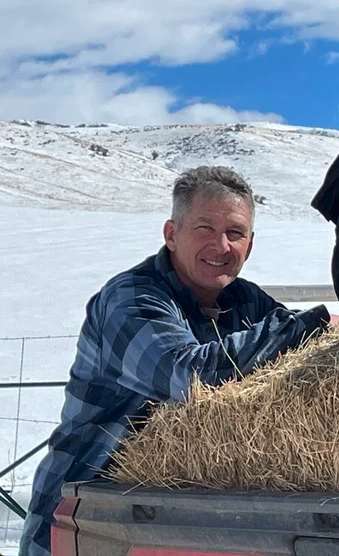
In this episode of our Voices of the West series, Haley sits down with John Schlichte, founder of Warrior Rizen Ranch, to explore his unique approach to ranching, conservation, and community healing. Located in Utah, Warrior Rizen is a one-of-a-kind ranch dedicated to serving veterans, police families, and youth groups through agricultural therapy, horse work, and meaningful connection to the land.
John shares his personal journey—from military service to business success to building a ranch with purpose—and the inspiration behind giving families a place to heal. With the help of his own family and a supportive local community, Warrior Rizen is reshaping what it means to own and operate a ranch with heart.
If you’re looking for an inspiring story rooted in service, stewardship, and the spirit of the American West, don’t miss this week’s episode.
Topics
[0:00] Intro – Welcome Back to Voices of the West
[3:52] Building Warrior Rizen: Mission and Goals
[11:08] Typical Day at Warrior Rizen
[15:39] Conservation and Stewardship
[20:49] Looking Ahead: What’s Next for Warrior Rizen
[24:17] East Canyon Ranch Sale and Legacy
[27:38] Closing Thoughts: Ways to Support Warrior Rizen
Haley Mirr (00:06):
Welcome back to the Land Bulletin podcast, where every other week we bring you experts in the field to impart their knowledge when it comes to the ranch and sporting property market, buying and selling advice, the latest, best stewardship practices, as well as topics that impact landowners every day. I’m your host, Haley Mirr. Let’s jump in.
Welcome back to the Land Bulletin series. This is Haley Mirr with Mirr Ranch Group, and we’re going to have another Voices of the West episode this week. We are interviewing John Schlichte, founder of a company called Warrior Rizen. And Warrior Rizen actually owns a ranch called Warrior Rizen Ranch. So we’re going to be looking at what him and his family have created and what makes this such a unique way of owning a ranch and using it for this purpose. So without further ado, I’d love to introduce John Sch Lty, welcome to the show.
John Schlichte (00:54):
Thanks for having us, and we’re looking forward to telling our story, and hopefully it will resonate with some people in your audience.
Haley Mirr (01:01):
No, I love this. Before we get into Warrior Horizon, I would love to know your connection with Meir Ranch Group, how you met Chris, and then a little bit about how you got connected to just the podcast today.
John Schlichte (01:12):
Sure. Well, the Meir Ranch Group is well known, at least in the state. I am in Utah, and I know there’s some very large ranch transactions, and we engaged them to sell some parcels of ground. I felt comfortable with the organization from the ownership all the way down to Chris. Chris. He knows what we do, he knows our business, he knows how we live or what we do, and I think it can effectively communicate that to a potential buyer.
Haley Mirr (01:44):
I love that. And so I’d love to know about, so you said you’re in Utah. What drew you to Utah? Why did you and your family set up shop with Warrior Rise in there and then later purchasing the ranch?
John Schlichte (01:57):
Well, it’s been a journey. I got out of the military in 84 and went back to school and got my degree in business back east. I grew up in New Hampshire for 20 odd years, raising horses, living on a 60 acre farm in New Hampshire. And after graduating from college and finishing the military service, we moved on in 92, and I built some successful businesses along the way, and after 30 years of doing that, we just said it’s time to do something different. And so sold some of the businesses and decided that would go into ranching. And that’s sort of where I guess this story all begins is transitioning from insurance or financial services over to ranching is 180 degree change in terms of running an operation. But we’ve enjoyed it. It’s been a journey and it’s really where I want to spend the rest of my life is on the ranch and then helping veterans, police families, and then youth groups.
Haley Mirr (03:02):
Amazing. So does your family live on the ranch that you guys are doing all of these different projects with?
John Schlichte (03:10):
It’s interesting. I have a lot of friends that are in very large farming operations and ranching operations. And one of the things that counseled me on was it generally is best to have families not living on the ranch. And so we have sort of gone that route. So all of my, I have five sons and they’re all married and they all live within 10 to 15 minutes of the ranch, but they don’t live on the ranch.
Haley Mirr (03:37):
I love that. And tell me a little bit about, okay, so when you first purchased the property, were you envisioning that it would be the safe haven with Warrior Rizen or what was your initial attraction to the property from an operational standpoint?
John Schlichte (03:52):
Well, seven years ago we made three transactions. We purchased a smaller farm, and then we purchased a larger section a year later. And then a year later we purchased another larger section and we combined the three into one. And we knew we wanted to build a place for veterans and police families to come and to learn about the West, to learn about agriculture. I think there’s a lot that can be taught there. And so that was seven years ago, and it took us three years to essentially level what was in place because the ranch hadn’t been used in 30 years. So we essentially started from scratch. So we had to level everything, rebuild everything from the ground up. And we’ve been having families come to the ranch, this will be our fourth year that they’ve been coming to the ranch and spending a week at the ranch doing the normal activities you’d have on a ranch on a daily basis.
Haley Mirr (04:55):
I love that is the mission of Warrior Rizen Ranch to bring these families, give them a little bit of therapy. I know I read on your website some of the programming that happens there. What are some of the things that are available to these families when they come on the ranch and what’s, I guess, the mission of some of these programs?
John Schlichte (05:16):
Sure. If you describe what we are, we’re a farming cow calf operation that’s worked with veterans families and police families, and then also youth groups. And we do this during the summer months, mostly because we have a family program for both of those groups. It was very important for us to bring mom and dad and kids to the ranch to receive therapy, to do horse therapy, a RT therapy for posttraumatic stress and also do family history for veterans because most veterans are multi-generational. And so our thought was if we could help these veterans understand that if their family history was able to get over Vietnam, Korea, world War ii, world War I, then the kids that are going to Syria, Afghanistan, Iraq, they could get over the issues they’re dealing with now. So it’s really important for us to hit those three things, and that’s what we teach throughout the week at the ranch, in addition to a very busy schedule that they have from 7:00 AM in the morning to about 10:00 PM at night.
Haley Mirr (06:34):
So John, we talked a little bit about the youth groups that are coming onto the ranch and learning a lot through working on the land, being a team, working on all these things. Why do you think it’s so vital for young people today to build a connection with the land? What’s missing in today’s community where people aren’t working with the land, and why do you find that to be important in your mission?
John Schlichte (07:04):
I think we’ve got a great generation of kids, but you really don’t learn on TikTok or YouTube that does not help you learn to get the project to completion. And so I think when you look at a ranch or a farm, there are so many variables that happen that can go in, whether it’s weather, terrain, broken equipment, whatever it may be, they have to deal with issues every day. And so in my opinion, there’s a certain amount of resiliency that ranch Kit Farm kids have when they grew up in that environment. It’s our hope of these youth groups that spend their time with us so we can help them understand how to effectively think through various processes to get to a good outcome. And that creates resiliency that they can be proud of later on. It won’t translate into probably a profession later on in life, but the skillset of being resilient and working through an issue till you get done is stuff that applies to any industry that’s out there.
Haley Mirr (08:08):
I would agree. And I think with the resiliency, we talk about it even at Mer Ranch Group, the capacity to pay attention to things and to lose interest. You can’t really do that when you’re on a ranch. To your point, you have to finish things to completion or else the rest of the organization doesn’t work. So I do love that. Wow. I know you said you’re a veteran as well. What kind of gave you this idea of creating this? Was it from personal experience? Was it you started ranching and were like, Hey, this has helped me out a lot. I would love to know kind of the catalyst that created this amazing organization.
John Schlichte (08:52):
Well, I remember as I was getting into my 20th odd year in the business that was in Salt Lake and we’re having great success, and then you start to ask yourself, well, what am I going to do with this success? And ended up reading a book all at once in right Away by Greg Brennaman. And he was a very successful CEO of many large companies. And in his last chapter of his book, he said, if you find yourself at the end of your business career and you’re somewhat successful, don’t leave these sums of monies to your kids. Spend it with them. And so that was a genesis of we did well in business. We bought the ground, we want our family to serve this community. We want the community to come in and serve these veterans and these police families. And so to me, it was just the good way of taking our future, my kids’ future inheritance essentially, and building this ranch into what it is today.
Haley Mirr (09:57):
That’s amazing. And are all five of your sons involved in Warrior Horizon?
John Schlichte (10:02):
So they’re all involved in certain degrees. They all have their own occupations. They volunteer at the ranch, have daughter-in-laws that run various programs at the ranch. So they’re involved. They’re also in the phase of young kids, lots of young kids. We have 12 grandchildren. And so they’re raising their families, running their careers, and then also working at the ranch. So it’s been
Haley Mirr (10:30):
That’s amazing.
John Schlichte (10:31):
And then the community’s been coming by and helping out and volunteers, and that’s really made it what it is today.
Haley Mirr (10:39):
That’s amazing. I love a family affair of sorts like that, and it’s neat. I might have my dad read that book just about. I think that’s important to, and I think that’s what people find in ranching is it’s this incredible opportunity for families to come together and work the land and create something. And it sounds like you guys are doing that. So for a veteran to hear about you and then be excited to come to Warrior Rise, and what does a typical day look like for these veterans and their families?
John Schlichte (11:08):
So they arrive on a Monday morning, we pick ’em up at the airport and we shuttle ’em to the ranch. There’s an orientation and so forth that goes on, and then essentially, and then they leave Saturday morning and their days are extremely busy. The typical day looks like the kids are up at 7:00 AM helping us do our chores. The children of the veterans, they need to know that where their food comes from out there taking care of their horses, the chickens, the cows, the pigs, et cetera before they eat is importance. And then they’ll go into our greenhouses and harvest the vegetables we’re going to have for the dinner that night. And so they start at 7:00 AM and then they go in for breakfast, and then they have activities throughout the day. And these activities would include roping, riding, all the western activities you would expect a cowboy to do.
(12:06):
And they learn all these things in our arena and we have our staff train them on how to do all of this. And then while they’re doing that, we try to peel off mom and dad’s for our therapy sessions. And it’s really important that the veteran gets in there. Most veterans would tell you, and I’ve heard it probably from everyone that came to the ranches, like, I’m fine. I don’t need therapy. And once they get to the ranch and they realize that there’s time, and frankly, there’s really nothing else to do out there other than ranch that they find the time to go through the therapy and they find that it works. And so once we get generally dad going through or the veteran going through, then we want to get their spouse going through and then we want to get the family going through. And while that’s all happening, these kids are doing service projects. And like I said, they’re riding, they’re roping, archery, fishing. They’re kept busy till 10:00 PM every night, every day of the week. And when they leave Saturday morning, they are totally exhausted. But they have learned a lot about where everything comes from and what ranchers do and what farmers can do. And so there’s a lot that these kids learn at the ranch that generally they were never exposed to.
Haley Mirr (13:27):
That’s amazing. And where did you get the influence of your programming? Do you have a project manager who’s doing all of this? Did you take inspiration from maybe some other organizations out there? I’m just really impressed by using the landscape in such a way that is really helping these families. But I’d just love to know, are there other organizations out there that are doing stuff similar to you guys?
John Schlichte (13:49):
It’s interesting. And my sons, three of them are veterans. One’s a police officer. They have gone to various veteran programs and seeing what they had, and it really wasn’t, it was more of a vacation than it was therapeutic. And when they come to the ranch, we focus on the family, we focus on the therapy, we focus on bringing the family together because more often than not, the veteran was traveling quite a bit and away from home. And so that’s a challenge. And we saw that and we thought that, hey, we need to help reconstruct those things that bind the families together. And that’s hard work. That’s perseverance, that’s being around animals, and this was really important to us. So we see the benefits of that, even that short period of time. It’s our hope when these veterans leave that they’ll continue with the therapy, they’ll continue with and the horse therapy, and they’ll continue with the family history to help them overcome the challenges that they have came across or got because they’re in Iraq, Afghanistan or Syria or other places.
Haley Mirr (15:09):
Yeah, that’s amazing because it is, it’s true. It’s work. It’s not just a vacation where everyone can be together. It’s when you’re on the landscape and you’re working the land and you’re doing these things, you’re exhausted, but you’re doing it as a family unit, which I think is really awesome. And beyond the programming for Warrior Rizen, how else are you guys managing the landscape when veterans aren’t there? Do you guys have a manager on staff? I read somewhere you have a conservation easement in place. I’d love to know the inner workings of the property.
John Schlichte (15:39):
I’m there every day. Like I said, it’s my second job, second career, if you will. My family is in and out almost every day. We have volunteers coming in, helping. We have youth groups. We have what we call, they’re service missionaries from the church of Jesus, c Christ latter. They saying they’re service missionaries out there doing service work. So because we’re a nonprofit, we will have anywhere between 10 to 30 service missionaries at the ranch serving, whether they’re feeding animals today, for example, they were up, we’re no tilling in our three-way, in no tilling in our alfalfa going in. We have calfs that needed to be tagged. Stalls need to be cleaned. They’re doing all these things. And most of that is done with the service missionaries, with volunteers that help manage them to make sure we have a good outcome. And so that’s the youth component that’s been really well for us. And there’s a huge benefit that they have from it. They’re getting this experience, and I call them the Covid kids, but they essentially were locked down for a couple years. We have these 19 to 25-year-old kids that are learning about agriculture, being taught how to drive tractors, excavators, swats, Baylors, Rackers, all that type of stuff in a safe way. And they’re growing. And this gives ’em confidence later on in life that I think is, they’ll always rely upon.
Haley Mirr (17:21):
That’s awesome.
John Schlichte (17:23):
That’s who helps run the ranch. And then in terms of the conservation easement, if you lived in Utah, you’ll see it’s development from one end of the state to the other. And Barbara and I just see that everywhere we go and we thought, okay, what is our legacy? What can it be? And so we decided to put 5,000 acres into a conservation easement to say, this ground is protected. It’s not going to be developed. It’s going to be used for the purpose of veterans and families and police families, and it’s going to be like that in perpetuity because it’s pretty desirable ground that could have been very easily developed. And to us, it made good sense that this is our gift back to the community and it’s back to the veterans and police families that they could always find a place to go to.
Haley Mirr (18:19):
I love that. And just for the people listening, where are you located in the state? Is it pretty accessible for a lot of these families to get to the ranch if needed?
John Schlichte (18:29):
Yeah, that’s needed about it. I mean, from the Salt Lake City Airport, we’re under an hour to get to us. We’re north of Park City, we’re east of Ogden, and so we call it the Wasatch back. So we’re behind the mountain range, we’re Park City is, and we’re just further north, so very accessible, easy to get to under an hour, and that’s what makes the ranch sort of unique when people come and visit. It’s really close to have 6,700 odd acres actively ranch farmed and having these groups attend it.
Haley Mirr (19:07):
That’s amazing. And just in terms of accessibility, in terms of payment, how do you guys handle some of these veterans who are coming in who maybe don’t have the means to pay for some of these other kind of dude ranches or things like that? How do you guys help with bringing those veterans and their families in?
John Schlichte (19:26):
So there’s no cost to the veterans of the families? None. When they attend
Haley Mirr (19:30):
Amazing.
John Schlichte (19:31):
All the costs are picked up. We have a nonprofit which will help solicit donations to help offset the costs that we incur. And so no one coming to the ranch was a police family or veteran family incurs any cost. And so that’s important. So offsetting that cost, we have to obviously sell hay, sell some of our cow calf population. We need to sell some of our finished beef. We have great hunting that we lease out also, so the revenue from those operations help offset the costs for these families to attend the ranch.
Haley Mirr (20:16):
That’s beautiful. We hear a lot of different creative ways of viewing ranches throughout this podcast and throughout running Mer Ranch Group, this is the first time we’ve heard of this type of nonprofit use of it, and it’s just remarkable what you guys are doing. So I just thank you for everything you’ve been doing for your community and beyond. I’d love to know, looking ahead, what’s next for Warrior Rizen? I know you said you purchased the ranch seven years ago. You’ve been having families there for the last four years. What are you kind of foreseeing for the next five to 10 years of the organization?
John Schlichte (20:49):
Well, we want to continue to helping those populations, the veterans, the police families. We want to continue to help out the various youth groups. If you look back, and I’ve always looked back at the greatest generation at Fadden, world War ii, when you look back at those guys and you say, well, they came through the Great Depression, they came through probably an ag experience, and they became our greatest generation. And I think having the youth come and work at the ranch is something we really want to develop going forward. So much to learn, obviously continue having the police come there and veterans come there is really important building. We want to make sure that we build a brand in terms of a B2B business for selling beef to help fund the ranch. So that needs to continue to go on with our online portals and building our brand.
(21:42):
But that’s here what we really want to focus on. We’re a ranch that specializes in helping those that served our country. And secondly, we’re a ranch that’s in the process of paying this expenses by the hay that it sells, the beef that it sells or the cash that sells at the market. And so we need to continue just really focus on those two core areas. We may develop a little more in the horse side of things because we’ve found that the horse therapy has really helped out the veterans. And if we can assist them in finding horses and having the availability horses to them to ride, that would be another key component that we could focus in on.
Haley Mirr (22:24):
That’s amazing. And I know you talked a lot about the community around, you have a lot of them, other ranchers, neighbors, things like that. Have they gotten involved in kind of helping you guys out at all, or?
John Schlichte (22:35):
Well, if anyone knows ranching, everyone knows ranchers are like, we have our seasons, right? Calving season or planting, we’re harvesting. They’re the busiest individuals I’ve ever worked with. And I’ve worked with some very driven people, and I am amazed by how much that they do. So obviously when things we call Go Western and cows were missing and there were issues going on, the local ranchers are all there to help out. And a lot of the people that may not be in ranching but in horses come by and help out. And so the local community has been very giving and helpful to us and getting up and running and going. And it’s been very collaborative. They’ll come during our weeks and the veterans are there, I think is probably from a ranching perspective or farming perspective, they bleed red, white, and blue. They are so patriotic. And so our neighbors have been super helpful and supportive of what we do. And I think patriotism just runs down that vein of ranching and farming in a way that probably doesn’t happen in other industries.
Haley Mirr (23:50):
Oh yeah. I would say veterans are taking care of the country in one way, and ranchers are in their own way too. So I can see how those go hand in hand. And this was a question we had, you said it earlier in the podcast that Mer Ranch Group is the East Canyon Ranch. What does the Bat ranches tie to Warrior Rizen, and what kind of role has that property played for your larger vision and how will the sale of that kind of impact Warrior Rizen?
John Schlichte (24:17):
It’s interesting. So the ranch is actually located in Porterville, Porterville, Utah. And I was reading on the history of the Porter family that came here and they lived in the Salt Lake Valley, and they hiked up over the mountains in the wintertime because you could, in the wintertime, you couldn’t get through there without winter. And in 1860 and they hiked back over after they staked out their ground. And so they built these farms and ranches there in 18 60, 18 61. And this ground hadn’t been sold until we bought it. So three generations later we bought this ground. And so we’re continuing in my mind what they started. And it just so happened in the Porter family, there were a fair amount of people that served in World War ii, and so they started building a ranch for the hopes and dreams of bringing their families there, building a saw mill, doing all those types of things.
(25:20):
And it’s really no different than what we’re doing now in terms of how does that tie into the Warrior Rise and Ranch speaking to the current family members. They’re ecstatic for the purpose that it’s serving, and they come out to our concerts and they meet with the veterans. They’re just really, really happy where it is. I’ve thought through this a bit, and when we sell a large parcel of ground, you got to sell it for a couple of reasons. And when I bought the grounds, I remember the previous owner saying, Hey, if I don’t sell this ground, it could cause problems, estate tax problems and other issues that ranchers generally face. So we face a similar problem. And so we’re looking for a buyer of that ground that will allow us to continue to graze it, farm it, and do a long-term lease on it. That is what our hope. So by selling it, I’m selling it at a price that I think allows that to happen. And I’m looking for a potential owner that would say, you know what? I want to be in that era. I want to be there to help out people, and I believe in this vision. And so yes, we are looking to sell a chunk of ground, but retaining the rights to continue to farm it and to graze it in perpetuity.
Haley Mirr (26:44):
That’s amazing. Well, we know we’ll find the buyer for that because I think, and I think this discussion too will really help with some of that. Just understanding what you guys are trying to do and the community up there and being able to become a part of that, I think is a huge selling point for purchasing land. And when we talk to a lot of buyers, the ability to purchase land and have an existing operation and have people to lease your land for you is kind of like the golden ticket. So thank you for answering that. I would also love to know, I live in Denver. A lot of our listeners live across the country, if not abroad, and some people might want to know how this probably is resonating with a lot of people on our show. How can people support your mission, even if they’re not living in Utah or they can come and volunteer? What are some other ways that people can get involved?
John Schlichte (27:38):
Sure. We have a couple website Warrior Rise and Foundation, which is the nonprofit arm, and then we have Warrior Rise and Ranch, which is the for-profit arm, which helps, that sells hay and beef and so forth in their cow calf operation. I’ve always said, I know it’s, people can take it one of two ways. We love donations, but I really like people coming and visiting and spending time. Time is our greatest resource. And so people can support the ranch by, yeah, yes, you can make donations, but we really like people that have experiences that want to come and mentor and help these kids, these youth groups, these veterans, these police groups. And it makes our job a little bit easier. I mean, think of it, we have all these groups coming during the summertime where we’re trying to harvest all the hay and put it up and move the cows and still run an operation. So we highly encourage people to come visit and participate, to get the experience, to get the understanding, and that’s been a big help and a blessing thus far. And we still encourage it on a go forward basis.
Haley Mirr (28:52):
That’s amazing. Well, for everyone listening, again, those two different websites, we’ll have those in the comment section, but it’s Warrior, they’re two separate, will you say those once more? Warrior Rizen,
John Schlichte (29:04):
Yeah. Warrior Rizen Foundation and Warrior Rizen Ranch.
Haley Mirr (29:08):
Amazing. John, I just really want to thank you for coming on the Land Bulletin today and for creating Warrior Rizen. It’s really, we talked to a lot of different ranchers with a lot of different types of operations on this show, but what you’re doing for the community and for the people impacted who are protecting our country every day is really amazing. So I really appreciate not only what you’re doing, but for coming on the show today. Well,
John Schlichte (29:32):
Thanks. I really appreciate it.
Haley Mirr (29:35):
Thanks for joining us today. To learn more about the ranch real estate market or our ranch marketing process, make sure to subscribe to our newsletter on our [email protected] or give us a call at (303) 623-4545. See you next time.