

Western Legacies: A Best-of Year in Ranching and Conservation


Join us for a special episode of The Land Bulletin as we reflect on some of our most inspiring conversations from the past year. In this compilation, we delve into the values central to Western life—heritage preservation, land stewardship, and community legacy. Hear from voices like Rick Knight on the deep-rooted knowledge that shapes private land stewardship, Faith Hamlin on balancing tradition with modern ranch management, and Joshua Coursey on the critical role of private landowners in wildlife conservation. We also highlight the National Western Stock Show’s impact on celebrating Western culture and education with outgoing CEO Paul Andrews. Together, these insights capture the spirit of the West and the collective responsibility to keep its legacy alive for future generations.
Topics
[0:00] Introduction: Best of The Land Bulletin
[1:04] Rick Knight: Ranchers as a Keystone Species
[11:00] Faith Hamlin: The Next Generation of Ranchers, Grits, & Guts
[20:21] Joshua Coursey: Protecting the Mule Deer Population of the West
[31:31] Paul Andrews: The Great Western Stock Show
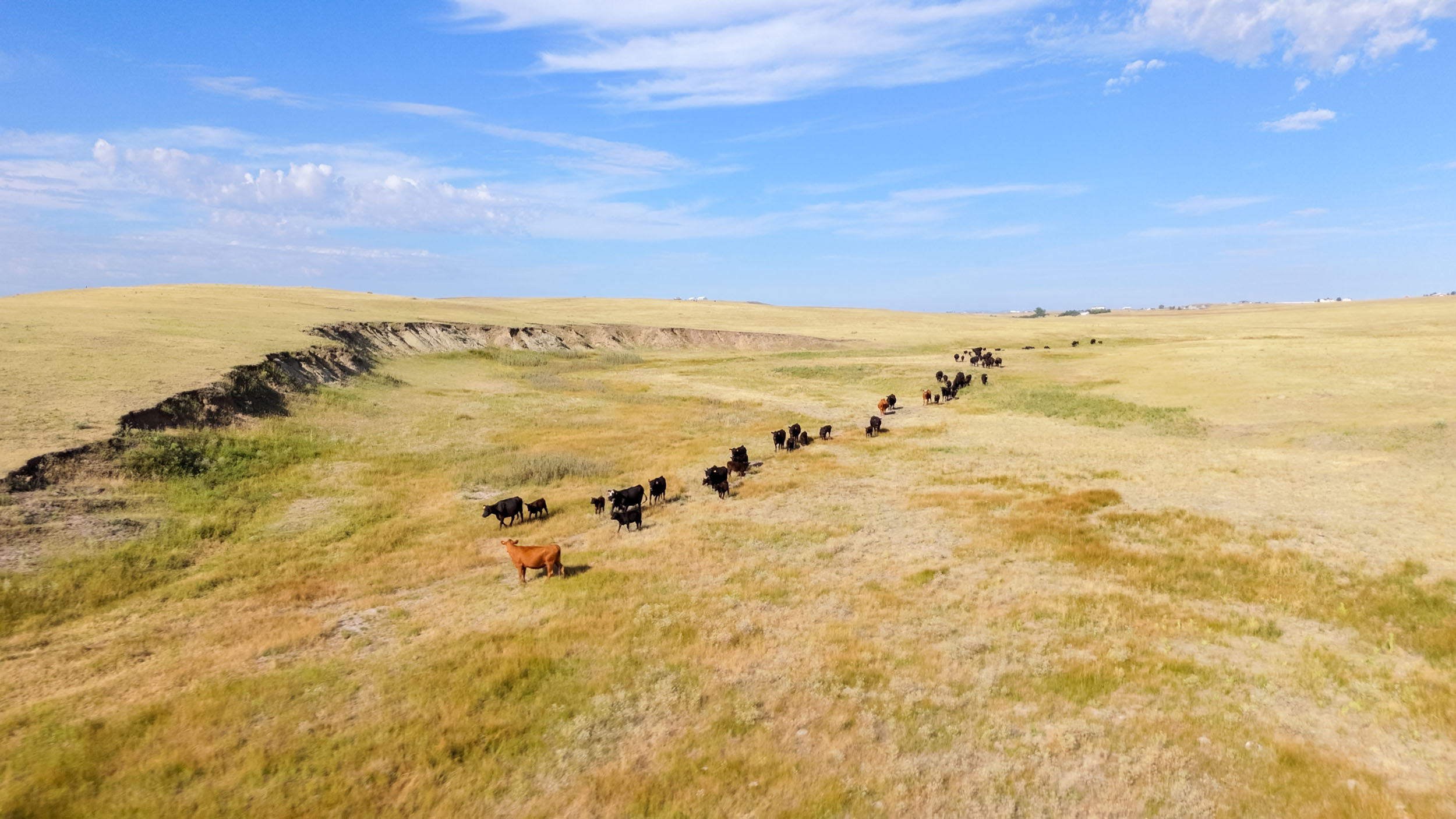
Watch the full video on our Youtube channel
Links
Need professional help finding, buying or selling a legacy ranch, contact us:
(303) 623-4545 or https://www.MirrRanchGroup.com/
Haley Mirr (00:06):
Welcome back to the Land Bulletin podcast, where every other week we bring you experts in the field to impart their knowledge when it comes to the ranch and sporting property market, buying and selling advice, the latest, best stewardship practices, as well as topics that impact landowners every day. I’m your host, Haley Mirr. Let’s jump in.
Welcome to this special episode of the Land Bulletin where we take a look back at some of our favorite conversations from the past year. Today’s theme is one that’s central to the life in the American West, preserving our heritage, caring for the land, and passing down traditions. We’ll hear from ranchers, conservationists, and leaders in the West each sharing their unique perspective on how we can keep this legacy alive for future generations. Let’s start by hearing from Rick Knight, whose thoughts on private land and intergenerational knowledge. Remind us just how intertwined the people and land of the West really are. Before we get into the specifics, I would love just to kind of at the very highest level, how much of the west is private land and why is this private land so important to the West when we look at it from a bigger scale?
Rick Knight (01:19):
Well, thanks for asking that and I think it’s just not appreciated because the private land, unless you have the landowners, okay, we don’t have access to the private land. So oftentimes the private land is not front and center in our thinking. People come west for the public lands because they are the nation’s birthrights for all Americans. But turning back to private lands, so private lands are the majority of the lands in the us. It’s about 60% of the landmass of the United States of America are private lands, very similar to the percent private lands in the state of Colorado. It’s about 60% across the American West, and this is a more nebulous percentage. Approximately half of the American west is private, the other half is public and sovereign nations, but it’s blended. It’s like they threw it all together in a mixing bowl and they just beat it up.
(02:20):
It’s just an absolute blended mess. So I guarantee you anybody who’s genuinely concerned about the health of the American West and they ignore the private lands, they are missing, actually, dare I say this, the key ingredient in that mixing bowl, because these are the sort of three critical components of private land that’s separated from public lands. The first one, it’s the most biologically productive lands. So a graduate student of mine did a study and academic from Idaho did a study, and we compared private and public lands. I did mine in the Southern Rockies and Mike Scott did his for the entire American West. Turns out the private lands are at the lower elevations, so they have a much longer growing season try to grow tomatoes on the top of long peak. You aren’t going to pull that off. Second of all, they have the most productive soils.
(03:26):
And soils are also something we sort of take for granted. But the soils are really what we stand on. And if you’re interested in the natural heritage of the American West, it starts with the soils and then given the lower elevations, they’re also less likely to be steep. So we don’t see a lot of people climbing mountains on private lands. You can make a living on those lands. They’re more level than vertical. They have the deeper soils and their better water. The other thing about private lands, in addition to being the majority of the United States, of the American west of Colorado is this is America. They’re for sale.
(04:14):
One of the strengths of the United States of America is we have a very strong tradition of being able to own property, something historically, many parts of the world. So it’s private land and if you want to sell it, you can sell it. It’s your God-given right to do most anything you want to on private lands. So because of that, because it’s the most biologically rich of the land versus the public lands and because it’s the majority, and lastly because it’s for sale, it’s so important to give due consideration to the outcome, the fate of our private lands. The thing that we find with people who have multiple generations on the land, they live by what we call slow knowledge. Fast knowledge is what all of us use daily on the ethernet, but ranchers like indigenous people, they’re almost near indigenous because they may have been farming or ranching and irrigating or cutting trees going back to 1598 when one Deonte brought this entrata north out of Mexico City and settle present day Espanola. So that’s over 400 years. And what you do when you live on a piece of land for generations, you, and in this case raising livestock, you really pay close attention to the soil type, to the climate, to the flat community and the things you have to do to keep the land healthy enough so the livestock is productive. And that slow knowledge, that intergenerational transfer of knowledge cannot be found by Googling. I’ve tried try it, see what comes up. It’s going to be as corn as ai, it’s going to be.
(06:16):
So there’s this cultural component of ranchers that once again, it’s not like we take it for granted. We’re basically unaware of it because Americans are born on wheels. The average American lives eight different places in their lifetime, the average American. So how do you ever become really part of a place and right amongst us are these farmers and ranchers, loggers and irrigators who are learning still adaptively, learning how to live better on a piece of land.
Ken Mirr (06:50):
Yeah, I wish I had that connect. That’s the things that when you get on the landscapes with the owners, that’s what you really appreciate. And I still want to know that, but I will never know it the way they do because of that slow knowledge and the fact that you wake up every day and you see, and every season and every, to me, it is hard to acquire it. So I can only look in myself as many years as I spent in these areas and share what I know or what I see, but I’ll never be a rancher. I mean, I can’t claim to have that knowledge, just I have knowledge based on just the things I work on as best I can and try to read as best I can and also interview and just spend time with these folks. And you’re right, there’s a culture there and understanding it’s like the old storytellers in these old communities. You go back to Africa and people how they pass down generations of stories. How do you continue to share that knowledge?
Haley Mirr (08:02):
We try with things like the land bulletin, like Ken said, we have an appreciation for what these ranchers do and the cultural impact, the ecological impact, and now talking to you, the economic impact that a lot of people probably don’t realize. So it’s important to share this as much as we can with not only landowners, but people in our communities that may never have a connection to ranching. It’s so impactful.
Rick Knight (08:30):
The state of Colorado is not like any other state. I mean, so true. The way it protects its natural resources, both public and private is exemplary. And we’re really fortunate and the citizens of Colorado have shown that time and again because they support conservation that
Ken Mirr (08:51):
Works with great outdoors Colorado. I work in a lot of different states in the west, and we really have it lucky in Colorado from that standpoint with all the funding mechanisms, especially that tax credit has done just wonderful opportunities for people to put these conservation easements on property. It’s really truly amazing. Yeah, we’re leaders of that movement, one of the leaders in the United States for that perspective.
Haley Mirr (09:23):
And again, this is something that doesn’t just impact ultra high net worth individuals. It impacts ranchers, it impacts families, it impacts fourth generation ranchers who want to keep the land, who want to continue
Ken Mirr (09:36):
Their
Haley Mirr (09:36):
Legacy. So it’s an incredible opportunity and it’s amazing that Colorado has figured out a way to make a lot of these families be able to stay the careers and the way they live their lives, which I think is huge. And when you were getting emotional about the cultural piece of this, I mean that’s one of the biggest reasons we do what we do is these families. This ranching culture is you don’t see this anywhere else in the world. So it’s pretty amazing. And we’re just so lucky to have someone like you, Rick, who’s spreading the word, helping figure out solutions to some of the issues we’re facing that these communities are facing. So it’s just really special to have you on today with Ken and I to learn about this. Rick’s insights on the slow knowledge of ranchers and the vital role of private lands set the stage for understanding the deep connection between people in the land in the west. This connection is something that every rancher and landowner feels, and few know this better than Faith Hamlin of the little Jenny Ranch. And our next segment Faith shares how she blends tradition with modern business practices all while keeping the heart of ranching alive in her community.
(11:00):
So tell us a little bit about what you’re looking at. What is the little Jenny Ranch? What are the attributes about it and why is it different from maybe some other ranches up there?
Faith Hamlin (11:09):
Totally. So the little Jenny is a ranch that’s made up of several homesteads and was put together originally in the fifties, and that’s when it was named the Little Jenny Ranch. And we’ve carried that name because I think that’s part of its history and I love it and I love that it’s a thing that doesn’t have my family’s name on it, even though it’s very personal. It is something that we get to be a part of. The little Jenny is located between the Grove Mountains and the Wyoming Range. So we are tucked in the mountains. It is very snowy, it is very cold, and we have challenges, but we also have advantages from that location. Some of those advantages are being close to Jackson Hole, which is where we started developing our outfitting operation here. So we run a cattle ranch and an outfitting operation here.
(12:10):
And the idea is that they are one team of my crew, but we’re running multiple businesses. I try to keep our goals as holistic as possible. So when I look at the outfitting and I try to give our crew the vision of what we’re doing, we’re here to promote Western agriculture and traditions through taking guests out into the mountains. So everything that we do, I’m hoping is going back to promote what we’re doing as cattle ranchers and livestock producers. We love Wyoming. These are real Wyoming people and they work hard. It’s a very small community, but it is a very tight-knit community. I think we’ve been really grateful to be welcomed into it in a lot of ways. We’re new ranch owners. We know we’re the new kids on the block, and it goes back to the, if you don’t think you deserve it, earn it.
(13:08):
Earn your place in your community, dig in, be good to your community and not just with your time and your care, your heart. And I think I’ve tried to do that with my community and I have. I’ve felt like people have been so welcoming and wonderful here, and I feel really lucky to be here in Wyoming because it is beef country. I think we talk at our Cattlemen’s, the Green River Valley Cattlemen’s Association. I think the number is we raise beef for over 500,000 people annually. Wow. Could be. That’s amazing. We’ll fact check it after this. Yeah, we raised beef for over several hundred thousand people annually just in our little county, which is incredibly, I think, impressive to come out of such a small community. But ranching is such a rich tradition. It is part of what we do, and it is in the grand scheme of it, we are really lucky.
(14:11):
I feel very lucky to have a community of people right out my back door that I can lean on. And just through things like Cowbells and the Cattlemen’s Association and getting involved with your FFA and four H and supporting them, I just feel super lucky to be part of this community and what they’re trying to do. And everyone’s doing a little bit different things. Every ranch, even my neighboring ranch that runs in nearly the same place, we manage very differently. People would not be anywhere without their neighbors, in my opinion. I think of just Sublet County. I have neighbors, whether they’re five miles away or 65 miles away, and I still call them my neighbors, but they’re the first people who are there for you. They are the people you lean on. They’re my advisors, my mentors. And I think to make it in this industry, you have to be a good neighbor. And I think that’s very much in line with Code of the West sort of things. But my neighbors are everything here, so I try to encourage my whole crew to be a good neighbor. We could be in the middle of something really busy, but if our neighbor calls us and says, I need help, we’re going to be there.
Haley Mirr (15:32):
What do you foresee kind of the future holding for your ranch up there?
Faith Hamlin (15:36):
You have to take advantage of the opportunities that come your way, and one of them has been spent brewers grains.
(15:43):
That’s been kind of one of my, I guess it’s not exactly to be a great steward of the land, but it’s to be creative with your resources, which I think resources and stewardship is kind of what we’re talking about, but I don’t need to buy more hay or alfalfa or an extra supplement from my feed store. I can work with some opportunities and I don’t have corn stalks or sugar beets or things that other producers may be utilizing. I’ve got craft breweries next to Jackson Pool and they have this essentially trash to them that helps me build body condition in my cows. So got to be great. That’s
Haley Mirr (16:25):
Awesome. Well, I think what you’ve spoken on really well, faith is just how at the little Jenny and kind of what you’re trying to do, you definitely incorporate some of these older ranch management techniques, but you’re not too proud to take on new things and new technologies and new information that’s out there. And I think that’s what’s so cool about this next generation of ranchers is that openness to the past, but also to things that might enhance not only your operation but the landscape that you work on every day.
Faith Hamlin (17:00):
When I think about our goals, I always go back to this concept that we are doing this for the land, our animals and our family. And I think that encompasses a lot of the heart of ranching. I love that ranching is never just about today, tomorrow or next week or this season. It’s about the seasons to come and the generations to come. And so for me, the basis of my goal are generational, which can be very daunting at
Haley Mirr (17:37):
Times. Yes. So a heavy burden to have definitely.
Faith Hamlin (17:42):
But at the same time, it is a privilege and what an amazing perspective to have such kind of long-term goals, I guess. But I guess I base it in those three things when I’m thinking about what’s going on. Is this good for my land, the animals, my family? But overall I hope to build a resilient business overall. So it stands the test of time and difficulties because as we all know, especially in ranching, things are good and things are bad. There are really bad times and there are really successful times. We’re in a really strong market right now, but every rancher is preparing for when we are not in a strong market. So I’m hoping to build a resilient business that’s based in the little Jenny Ranch, so that be direct to consumer beef, our livestock operation, our outfitting operation. I am hoping to grow those to be resilient for my next generations, hopefully, whether that’s my niece or my own children.
(18:50):
I would say on top of that, we talked about this earlier, but promoting agriculture is really critical to that because you won’t have that longevity if the consumer and people around us don’t believe in beef and how we’re raising animals. We need to be telling the story of what we’re doing. And personally for me, I think that looks like not stepping on the necks of any other producers in order to promote your own ranch, which is why I have this tagline for the ranch Eat Wyoming beef because that’s something that everybody can jump on board with. It’s not just buy beef from the little Jenny Ranch, but go buy beef in your own state. Go buy beef from your neighbor, learn their stories, get excited about them, get excited about our story and get in there.
Haley Mirr (19:45):
Faith’s passion for Wyoming beef and her efforts to run a holistic multifaceted ranch showed just how vital it is for younger generations to keep telling the story of the west. But land stewardship doesn’t stop at individual ranches. Whole ecosystems rely on the thoughtful management of open spaces. Joshua Coursey from the Mule Fanatic Foundation gives us a great example of this as he explains the crucial role private landowners play in wildlife conservation, especially when it comes to Wyoming’s mule deer.
Joshua Coursey (20:21):
So much of Wyoming is public land and so much of it is private land. It’s about a 50 50 split or real close to it. So when you talk about conservation with mule deer, certainly private land ownership is a key component and a vital stakeholder to those conversations. And conservation easements have really become something that we’ve been a big proponent of in recent years, knowing that those wide open spaces really provide not only great habitat, but really are essential to the sustainability of build deer herds. And that fits perfect with the stock growers land trust and their mission. And so working with them and the Stock Growers Association and the private land ownership within Wyoming, that’s a key partner and stakeholder for us.
Haley Mirr (21:07):
That makes a lot of sense. And that’s obviously how Jared brought you to us. I’d love to know what started the MUE Fanatic Foundation. What drew you to this cause and gave you the passion to do what you’re doing now?
Joshua Coursey (21:23):
That’s an interesting story. It didn’t start just with the idea of let’s start this foundation and make it happen. Unfortunately, it just isn’t that simple. It doesn’t come with that type of playbook or owner’s manual. It really started with our involvement with another conservation organization called the Mule Deer Foundation. A friend of mine, Joey Fagel, also a Wyoming native, him and I went to school together, have been long friends, just our own observation in southwest Wyoming of the mule deer population decline. We just thought we got to try to do something. We have been firsthand witnesses to this and seeing it at a firsthand level that there is a need for conservation for deer. And I think I would say it probably is something that just comes at a time in life when you have your own children and you relish in your own memories and your own passions, but you also turn a corner or turn the page to a level of responsibility that for so long as a young person, you maybe were just consumed by the take of the resource. And then you start to, I don’t know, it makes me sound old to say this, when I looked at my two daughters, I thought, man, will they have the same opportunities that I have had? And so we reached out to the Mulder Foundation in 2005, led a chapter effort of theirs for a long time, six years, decided after six years that there was a different model that would be better for Wyoming for us.
(23:01):
Not that it was, I mean, it was a great learning experience. I don’t have anything but good to say about anybody that’s doing conservation for dare. But we just seen a different model of how to do conservation in Wyoming where local people could see the results of basically measure the fruit of their own labor if they were supporting conservation. Not that they didn’t care about Deer and Gunnison, Colorado or Boise, Idaho, but we could come up with a model that would give them local control to make a difference really in their backyard.
Haley Mirr (23:32):
And
Joshua Coursey (23:32):
So we established the MUE Fanatic Foundation in 2011, and it really wasn’t designed to be what it is today, 13 years later, it was really designed just to be a local effort in southwest Wyoming to make a difference in southwest Wyoming. And then the phone started to ring, some folks in Colorado wanted to kind of piggyback off the idea of folks in Casper that were involved with MDF also wanted to maybe implement something more along what our model offered. And it’s just taken off from there. And now there’s 17 chapters in seven states. It’s doing what it was designed to do and we couldn’t be more proud. So I’m a big proponent of citizen science and folks, and I think this goes beyond just hunters, but I think folks that have had generational ranches and land ownership within Wyoming, and there’s not a week that goes by where I don’t talk to somebody who’s had four or five generations of history in Wyoming and to be able to hear and learn that their landscape used to be occupied heavily with deer, and it’s been replaced with the elk population.
(24:38):
And I think that’s a very common tone that’s expressed throughout Wyoming, not just in Western Wyoming, but I think the citizen science of what hunters bring to the table and being able to have those observations. I mean passionate hunters are in the field year round, whether it’s scouting or coming up here soon looking for sheds. I mean places that you would’ve thought you would’ve been able to pick up sheds last year, those critters weren’t there because the snow didn’t allow for it or it moved them into other places. So I think the citizen science aspect of it is very important. And I think we have right now probably the most respondent commission and department that I have seen in years that really takes into account how important that type of feedback, those firsthand accounts of hunters and sportsmen and sportswomen are as well as landowners.
(25:30):
So I think that’s a big component. Of course, hunting is a tool in the toolbox. I mean, hunting is used, it is conservation, it is used to coal, the herds to objective levels. But I think that the sportsman also, Wyoming is very unique. A lot of people don’t realize, but our game and fish budget is primarily made up by sportsman dollars in the sale of licenses. Our game and fish does not receive any funding for our general legislative body. And there’s some Pittman Robertson dollars that are there as well. But sportsmen are a key component to the management of our wildlife resources. Absolutely. And
Haley Mirr (26:09):
I think people when they hear hunting and conservation, they don’t understand how intrinsically they are connected. So I like to always kind of emphasize that when we do have these is how integral and important that whole system is to the funding of it, to the citizen science of it all. It’s just I think it’s important to really emphasize that when we have these kind of dialogues.
Joshua Coursey (26:32):
Yeah, I’m glad you did, Haley. I was in our Sierra front chapter in Reno, Nevada. I was at their event a few weeks ago, and while I was in the airport, I had on meal fanatic foundation, 10 year anniversary hoodie that has a big rack on it, which Joey and I have visited about this several times. Thinking back, our logo shows us this huge desired buck, and maybe we didn’t do justice by having a logo that had do and fawns, but it just didn’t seem as cool if I’m being honest. But I had this lady in the airport saying, so let me understand conservation. You’re wanting to do your part to help grow big deer so you can kill them.
(27:20):
I had to just kind of think that that maybe is a mindset that is out there more than what I realized because birds of a feather flock together, you tend to associate in your social circle, involves people that hunt or enjoy the recreational sport of hunting or just the aspect of the health benefits to eating wild game. But the one thing it does bring to light for me is that there is a stewardship responsibility for conservation and that it is an important heritage that as hunters, we have to do really a good job to promote the need for hunting, the heritage of hunting and how important conservation is actually directly tied to that because nobody cares more about the resource than those that want to hunt. I mean, that’s an absolute fact in my mind.
Haley Mirr (28:12):
Why is this species in particular so important to the West and especially the area that you’re speaking of? Southwest Wyoming,
Joshua Coursey (28:20):
Quite simply, mild deer are just really freaking cool, to be honest with you. I mean, if you are a hunter, and certainly conservation is not just all about hunting. Hunting is just one of the tools in the conservation toolbox. But if you like big game critters, the great ghost or the icon of the American West, the mule deer, there’s nothing, I mean elk or great, I love elk. I love to eat elk, but I love to chase mul deer. I mean, if you want to match your wits against nature’s best when it comes to big game ence, mul deer is where it’s at. And I just always had a deep passion for mul deer. Joey shared that same passion as well, and we just thought, man, we got to do something. Mul deer holds such a strong fidelity to their migration where elk will just roam and continue to look for a new place. Mild deer holds such strong fidelity that these are landscapes that they know and only know they’re not the wanderers or the nomads of the landscape to go seek out new areas. And they remain very faithful and true to what they know. And when you lose that, then it puts them in a compromised position.
Haley Mirr (29:33):
How can the listeners and the public of Wyoming, Colorado, wherever people care about mule deer, how can they get involved in what you’re doing and some of the education that you provide to anyone, not just big landowners?
Joshua Coursey (29:48):
So I mean, I guess twofold on that, Haley. I think there’s opportunities where folks can be involved with what we’re doing organizationally, but I think the bigger thing of involvement is get outside go hunting. Just because you have a hunting license doesn’t mean you have to harvest something, but take someone else hunting, take a youth hunting, get outside, enjoy what God has given us with our natural wildlife resources. And I think just those levels of enjoyment will spur one’s churning inside that will create a fire for them to realize how special that is, to be able to unplug and to get to places where Verizon has yet to invade and recognize that those special places come with a great responsibility as well to be able to protect and enhance that. And I think that once someone has those experiences, then they tend to gravitate towards organizations that are doing good things to protect and ensure that those continue to exist for years to come.
Haley Mirr (30:55):
As Joshua reminds us, taking care of the land and wildlife is a responsibility we all share whether through the ranching or conservation, but it’s also about celebrating this way of life and sharing it with others. That’s something the National Western Stock Show has done for more than a century. Paul Andrews talks about how the stock show brings together the people from across the country showcasing the best of western culture while educating the next generation. Let’s listen to what Paul has to say about the future of this iconic event.
Paul Andrews (31:31):
We’re known as the Super Bowl livestock shows, and it really is because of that founding back in 1906 and moving forward, and the fact that a carload and pin show started here way in the early days because as the train moved along the track, the Carload show started because a carload could come out of there and be shown in a pin, and that carload was 10 to 12 animals. And so the Carload show began at the stock show because of that. Same with the pins. Pins are three to five animals, and we still do all those shows today, but we evolved over time into Rodeo in 1931 became a really big deal. The horse shows were going on almost since day one, but rodeo became a big deal. And then along the way, once the rodeo started, we started things like Catch a Calf program where youth are catching an animal at our rodeo and then they’re raising ’em all year that year and feeding them out and bringing ’em to compete at the next year’s stock show.
(32:34):
Just an incredible educational program. And then all of a sudden the trade show started up and all the vendors started coming here to sell everything from boots and hats and saddles and all that. We got 800 trade show booth spaces. Now it is just unbelievable to think about the amount of shopping you can do here at the same time. And so all these things evolved over time, but the centerpiece of the National Western Stock Show is our livestock show and our education and keeping the food chain healthy across America and really the rest of the world because leading genetics is found out at the National Western Stock Show, and those best practices are shared here by our producers that are in the stockyards and on the hill here showing their animals. And that’s really important to the food chain that we continue this and keep that part going in addition to the great entertainment that you get, whether it’s a rodeo or horse show that you might see or just you want to come down here and shop and see the animals and put your kid in the petting zoo.
Haley Mirr (33:38):
I mean, it’s so important to have a place like this where people from all over can gather and to have a space where you not only can gather there, but feel comfortable there, can have educational events, have these things that people can attend. I’m super excited just to see where this is headed. And that brings up another point that I’d love to talk about, and one of the things I mentioned earlier that I love about the National Western beyond the impact that this has on the city that I love, this is having a huge impact on education and kids and scholarships, not just in Colorado, but across the West. And that’s what I hold dear and why I’m so connected to the Young Guns and Cord Western. And Paul, I know you’ve been here for a while now at the stock show. What do you foresee the future, the stock show holding, what are you the most excited about beyond the campus and all of those different things that are going on?
Paul Andrews (34:29):
Well, I think the stock show really is going to evolve into this behemoth event that the whole world will converge on here, ultimately in a place known as the National Western Center that celebrates agriculture and preserves our Western Heritage year round, not just during the National Western Stock Show, but the stock show itself. I’ll be the first one to predict that even though today we’re doing about 700,000 when this campus gets fully built out after the replacement for the Denver Coliseum gets done, those sort of things, I’m pretty confident this National Western Stock Show is going to go well over a million people in the 16 days. Now if we grow to 22 or 23 days, that million is going to be certain, in my opinion, because we’ll be able to program other things in there that’ll be for a future board to decide and future leadership here at Stock Show.
(35:27):
But I think the ground has been set for a sustainable business model for the National Western Stock Show with these new buildings and a sustainable business model year round for the campus that frankly has been hard to do in the current campus we’re in. So I’m very, very excited about really changing the dynamics of both the National Western Stock Show with our partners, Colorado State University, the city of Denver, and the National Western Center Authority. This whole campus is going to change over the next decade into something I think we can all really be proud of showing both the history of stock show, celebrating the National Western Stock Show every January, and then being a place you can come to.
Haley Mirr (36:18):
Paul has been the president and CEO of the National Western Stock Show since 2010 and is retiring this year. On behalf of everyone at Myr Ranch Group, we’d like to thank Paul for his contribution and congratulate him on a retirement well earned from preserving the land to celebrating our heritage. Today’s guest show us how the legacy of the West is being carried forward. Whether it’s through ranching, conservation, or major events like the National Western Stock Show, it’s clear that the Western way of life remains strong. As we look ahead to the future, let’s remember the importance of these values and the role each of us can play in sustaining them. Thanks for joining us on the special episode of the Land Bulletin podcast. To listen to the full interviews highlighted in this episode, check out the show notes for the links to these four episodes. Until next time,
Thanks for joining us today. To learn more about the ranch real estate market or our ranch marketing process, make sure to subscribe to our newsletter on our [email protected] or give us a call at (303) 623-4545. See you next time.
