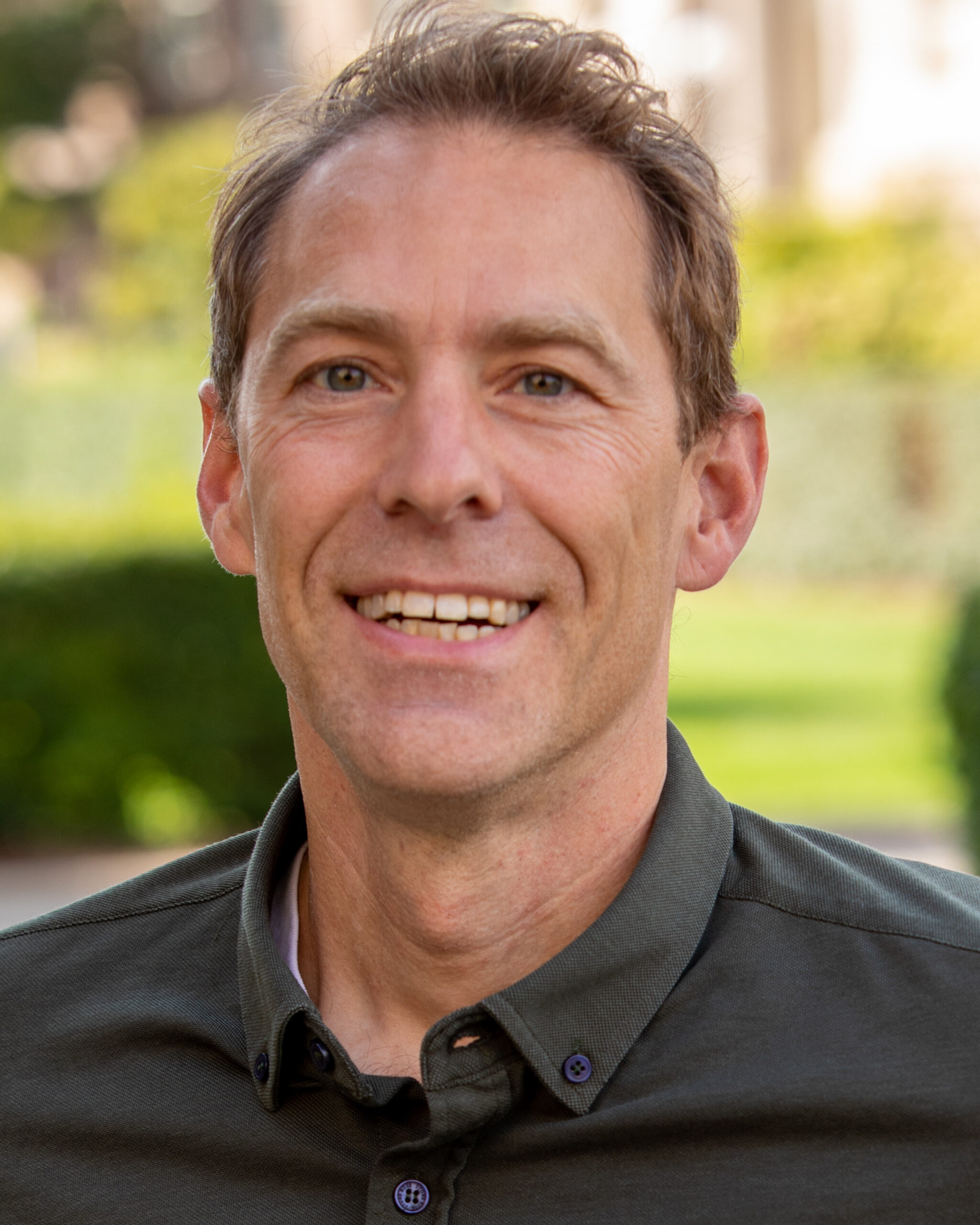
Conservation tools play an important role in protecting private land across America, but who stands to benefit from them? This week, economist and University of Wisconsin professor Dominic “Nick” Parker joins the show to break down the economics of conservation easements, transferable tax credits, and what these tools could mean for the future of working lands.
Nick’s research points to new opportunities to keep land in the hands of the people who live and work on it by leveling the playing field through transferable credits and giving ranchers and landowners more flexibility in their financial decisions. From misconceptions around easements to the role of voluntary markets and emerging technology, this conversation offers an optimistic look at the future of private land conservation, if landowners know how to use the tools available to them.
Topics
[0:00] Introduction: Nick Parker’s background in economics and conservation
[3:17] What is a conservation easement?
[7:07] Who benefits most from traditional conservation incentives?
[12:06] Which states offer transferable conservation credits?
[21:28] How incentives can support working ranches and farms
[28:00] Misconceptions, bad actors, and safeguards
[33:21] What’s next for private land conservation?
Haley (00:06):
Welcome back to the Land Bulletin Podcast, where every other week we bring you experts in the field to impart their knowledge when it comes to the ranch and sporting property market, buying and selling advice, the latest best stewardship practices, as well as topics that impact landowners every day. I’m your host, Haley Mirr. Let’s jump in.
Welcome back to the Land Bulletin Podcast. I’m Haley Mirr, your host. And today we’re going to be looking into a deeper dive into conservation incentives, easements, and the future of working lands with Dominic Parker, the professor of applied economics at the University of Wisconsin. Welcome, Nick, to the show. I’m personally looking forward to this conversation just with my background from college, but thanks for taking time out of your busy day to teach us a little bit about your work with PERC and as a professor at the University of Wisconsin.
Nick Parker (00:55):
It’s great to be here. Thanks for having me.
Haley (00:57):
Before we get into your work with PERC, as I described earlier and what that organization is, I’d love to know about your background and how you came to what you’re teaching today with economics and the role that conservation can play when looking at operations and larger kind of macro scale. So tell us a little bit about your background and how you got into this line of work.
Nick Parker (01:23):
I’ve always had personal interest in conservation and natural resources like forests and water, wildlife, and land stewardship. And I’ve always had this intellectual interest in the economic way of thinking. And by that, I mean really a discipline focus on thinking about the power of incentives and thinking about trade-offs to different challenges that societies face, including conservation challenges. So I’ve just been lucky and grateful to be able to have a career as a professor that merges those two interests. And I’ve spent much of my effort both in teaching and in research, trying to understand how communities can improve environmental conditions without sacrificing other things we value, like individual freedom and choice. And so this is why I’ve spent so much time in my thinking focused on how, if and when voluntary markets can resolve conflicts over resources without needing excessive government regulation or mandates. And actually that’s one of the reasons I started studying conservation easements.
(02:37):
That was over 20 years ago. It was one of the first topics I wrote about as an economist, and I like the idea of voluntary conservation and kind of bottom up forces and incentives that could change landscapes.
Haley (02:53):
That brings up a good kind of segue into our first discussion. For the layman’s listening, we’ve talked about conservations in the past as a tool for landowners, but I’d love to know from your perspective, what is the power of a conservation easement? And practically, how does that tool incentivize people through financial means?
Nick Parker (03:17):
Absolutely. So just in terms of the macro perspective, conservation easements now cover 35 million plus acres of land in the US. So that’s larger than the state of Washington. And this is growing fast. I mean, there was one million acres or so of easements in 1990 up to 35 million. So this is really the fastest growing type of American land conservation. And what they are fundamentally is they’re voluntary legal agreements between a private landowner and holder. So that’s a land trust or a government agency. And in those agreements, the landowner gives up certain rights. They can vary, but typically they’re giving up rights to develop subdivisions, rights to develop shopping malls, rights to strip mine or clear cut forests. But they keep the right to live on the land, to sell it, to farm it, to ranch it, what have you, to enjoy the land.
(04:20):
And so what communities can get is environmental benefits associated with undeveloped land. So open spaces, scenery, wildlife habitat, watershed, watershed quality, watershed improvements, working landscapes. And what landowners get is typically a tax benefit and more rarely a cash payment depending on the program that the easements are in. So I’m happy to say more about how the easements are appraised and what that value is determined to be, but that’s the basics.
Haley (04:58):
Thank you, Nick, for that kind of overlook on what an easement is and what the benefit is. So when we look at conservation easements overall, you said over 35 million acres have been conserved. Why do you think it’s become such a dominant conservation tool in the West?
Nick Parker (05:14):
Well, it’s a great question. I mean, I think it’s useful to compare easements to the alternatives. And there’s two main alternatives. And the first is top-down land regulations or mandates on land use. And I don’t think those are perceived to be fair. Why should rural landowners be forced to provide environmental amenities without compensation? And the second big alternative is government or nonprofit ownership of land. And in contrast to easements, that takes land off tax rolls and can make it unproductive. So by contrast, conservation easements, they compensate landowners. They keep land in private ownership and they allow production, property tax flows to continue. And I think that’s a big reason easements have grown and become so popular. They’ve enjoyed bipartisan support for many years. From the right side of the aisle, their preferred mandates and government ownership. And then from the left, it’s another pathway for conservation.
(06:23):
And for landowners, the voluntary nature of them is attractive. And so all of these reasons I think have translated into support for easements and hence tax benefits at both the federal and state levels. So I don’t think this means conservation easements are universally loved. There are some concerns about them that we could probably circle back to at the end, but it does mean there’s this coalition that’s strong that prefers conservation easements to those alternatives I described.
Haley (07:00):
And who historically has benefited from these conservation incentives?
Nick Parker (07:07):
Well, the main tax break and the main funding vehicle has been the federal income tax break. And then states offer income tax breaks as well. And because of those incentives, easements are typically treated as a charitable donation. And so the donation is valued as the difference between, well, how much would the land be worth if it was unconstrained if there wasn’t an easement? If you could do the many things that I described on the land, a subdivide, build shopping malls, et cetera, versus how much it’s worth with those restrictions. So the difference between those two is the value of a charitable donation. And so a landowner can claim that as a deduction against their federal and state income tax liability. But the interesting thing I think, and what you’re asking is about who benefits is, well, those benefits are fundamentally limited by how big your tax liability is.
(08:12):
And so if you don’t have a big tax liability, this isn’t a very strong incentive to donate. And so in that sense, the charitable deduction, the dominant incentive is much, much more attractive to high income donors than low and moderate income donors because the high income donors have higher tax rates. They can utilize a full donation over time. And so this is why IRS data shows easements have disproportionately been utilized by very high income donors, often wealthy out-of-state donors. For example, Ted Turner, who passed recently, donated an easement on the Flying D Ranch in Montana outside of Bozeman, Montana where I used to live. And so it was over a hundred thousand acres, beautiful land. And other high income donors have also utilized easements. And I don’t think this is a bad thing necessarily. Some very important conservation values are supported by high income donations, but it is a big feature of the incentive structure that if the funding comes through charitable deductions, then those who are incentivized to donate are those with really high incomes.
Haley (09:34):
Well, it would make sense. And to your point, it’s not necessarily a negative. It’s just how this type of product or incentive works and why it’s been beneficial and something that people have been incentivized to do for years. And what exactly is. So when we’re looking at the different mechanisms and how deductions work, and for people listening who are looking at different tools to be able to benefit from, what exactly is a transferable tax credit? And how does it differ from a normal deduction when looking at how easements work?
Nick Parker (10:12):
Right. Well, transferrable tax credit, the transferable title means that the tax benefit can be sold and it can allow a low or moderate income donor to sell that benefit to a taxpayer who has higher liability. So if you are a rancher in Colorado and you are interested in donating an easement and you have a transferable tax credit system like Colorado has, without it, say your benefits from the easement donation would be really limited, 5,000 or 10,000 because you just don’t have high enough income to capitalize on those incentives. Transferability would allow you to sell the benefit, the tax benefit of the easement to somebody say that lives in Denver who makes more income and can use the full tax benefit. And so then the flow of cash goes to the rancher in say Central Colorado and the buyer in Denver gets the tax break. So what this does is it de-links some of the incentive to donate from owner income and it helps equalize that donation incentive so that it’s less about what tax bracket you fall in and instead about the conservation values of the land and the interest of the landowner to commit to long-term conservation.
(11:40):
So the federal government doesn’t offer transferable tax credits, but five states do, including Colorado, which is why I used that example, Georgia, New Mexico, South Carolina and Virginia.
Haley (11:55):
Oh, wow. Do you see any other states implementing these types of incentives in their own policy or have these states kind of taken a while to get to where they are today?
Nick Parker (12:06):
Well, some of the programs are fairly seasoned and old. So Colorado has had its program for over 20 years and so has Virginia. Other programs are newer. We wrote a report. I collaborated with some PhD students here at University of Wisconsin and worked with PERC and Montana on this project. And since that report was published, we’ve got some interest from representatives at states and even one in Canada who are curious about implementing a transferable tax credit and asking questions about how it would work and what kind of benefits might it deliver.
Haley (12:46):
So this is great news for landowners. And to your point, even Suplane fields a little bit from historically who was incentivized to benefit from these. But when a landowner is looking at this, how do they calculate how much the benefit will be to them and what will be recovered if they do do this donation?
Nick Parker (13:06):
Good question. And I’ve spent a lot of time with a former collaborator building a tax calculator to estimate exactly this, to estimate benefits in general to a landowner from an easement donation and how those benefits might change with a transferable tax credit system. And I want to give a shout out to my former colleague at PERC and a fellow economist who’s now retired. His name is Wally Thurman. He was an economist at North Carolina State University for a long time. Him and I started building this calculator over 15 years ago, and it’s like a turbo tax for landowners contemplating an easement donation. So you would enter in the size of the donation, the donor’s income, the year, the state, and what the calculator will do is spit out an estimate of tax savings. You can do this for any state in any year. And what it demonstrates is a really sharp decline in the benefits for low income and moderate income donors after transferability.
(14:15):
And you can just see these sharp drops and the gap and the incentive between high income and low and moderate income potential donors shrinks a lot when states introduce these programs. So for example, if a donor has an income in the range of 50,000 to 150,000 per year and they make a donation under transferability, they’ll increase the tax benefit by a lot. And then we estimate it has this dramatic impact on the flow of donations from low and moderate income donors. Transferable tax credits seem to be associated with about a 50% increase in the flow of donations from lower and moderate income donors in that range I described.
Haley (15:06):
And you found this just across the board in your research for the states that did adopt transferable credits?
Nick Parker (15:13):
Correct. What we do is we look at before and after comparisons, before transferability and after for the states, for the five states. We utilize this calculator to see how the details of each state’s program affect this incentive to donate across income levels. And then we estimate how the pattern of conservation easement donations after transferability responds to this change in incentives. And that’s where we see evidence that lower and moderate income donors are becoming more involved in conservation.
Haley (15:51):
I think it just shows that if this is going to continue, and I would love to know even in your state of Wisconsin, are you seeing those kind of incentives? I know it’s more kind of farmland and things like that, but are you seeing any of that kind of surface in Wisconsin since being a professor
Nick Parker (16:11):
There? Not so much in Wisconsin. I mean, one thing that we describe in the paper is all these, and something that our tax calculator pays a lot of attention to, the states vary a lot in terms of their tax policies. I actually think it’s kind of the beauty of federalism is states do different things with their tax policy and it allows for experimentation. It allows us to learn what’s working so that other states can begin to replicate. But some states would be closer in structure to feasibly implementing a transferable tax credit system than others. So some states have credits already, but they’re not transferable. And that would make this move to transferability the easiest. So like Iowa and North Carolina are examples of states like that. Other states don’t yet have a credit program and some even don’t even allow itemized charitable tax deductions from their income code.
(17:19):
And so if a state is in that position, the layers of reform that would be needed would be more complex than a state like North Carolina or Iowa that’s already close to being able to implement.
Haley (17:33):
Okay. That’s good to know. I was wondering just how hard it is to start integrating this more into policy.
Nick Parker (17:40):
There’s other states that have charitable deductions for easements like Idaho and Montana. And I have heard some interest from those states. It would be a little bit more complicated than say Iowa and North Carolina, but there is interest in other states as well.
Haley (17:56):
And besides what you were talking about with leveling the playing ground and making more incentives for those working landowners who might not be the high income landowners that have typically benefited, were there any other surprises from your research and with the data that you found with states that adopted these transferable credits?
Nick Parker (18:18):
We studied how transferability affected the environmental and kind of farm and ranch benefits of conservation. And we were surprised and impressed, I guess, more impressed than surprised to find that by various measures of quality, easements acquired in states that had transferable credit programs looked a lot better than easements acquired elsewhere. So for example, measures of ecological quality are higher. So like wildlife habitat measures, for example, are higher on easements that were acquired under transferability. Scores of soil quality. So the inherent productivity of a farm, for example, tended to be higher for easements acquired under transferability. And so too did measures of conservation conversion pressure. So in other words, estimates of how likely farm and ranchland would be to be converted in the absence of an easement were higher for easements acquired under transferable tax credit systems. So I think all of this suggests that targeting was better under transferability.
(19:37):
And I think that demonstrates the power of markets really. I mean, when credits are transferable, you have this larger pool of interested donors and it expands just beyond the smaller subset of wealthy high income people. This means organizations that hold easements. So primarily all these land trusts in the West, they can be more selective. They can focus on lands with high conservation values rather than just passively accepting easements from a smaller pool of high income donors. So I think it just changes the structure of conservation and the opportunities for really selective high value conservation.
Haley (20:22):
Yeah, I was going to ask, so in your opinion, one of the significant correlations between the two would be just the system improving overall and being able to be a little bit more selective with the landscapes and the habitats that we protect versus the highest kind of donation that might come through or things like that once you have these transferable. Is that
Nick Parker (20:46):
Kind of – Exactly. I mean, if you think of the pool of possibilities, and it isn’t just what’s offered to land trusts who hold easements, they can begin to be more proactive under a transferable credit system. They can build relationships with communities and landowners across the income spectrum because they know that the program has something to offer to everybody instead of just 5% who have high income. So it opens the field for just better focused selective conservation and the data bear that out.
Haley (21:28):
And we’ve talked about this. And I think one of the other benefits of this is these transferable credits do in fact allow these working landowners to keep their land when maybe the income wasn’t, they had a bad year, crops were bad. There’s all these different things that might impact landowners. But it seems like in these states where these transferable credits can occur, it’s a little bit easier or it’s a benefit to these landowners to have something that they can fall back on if they need to.
Nick Parker (21:58):
Correct. And we see evidence that under transferable tax credit systems, there are more easements held by landowners who live locally, who live on the land that has an easement rather than the land holding easements being second or third homes. So I think that encourages commitments to maintaining communities of ranching and farming over time. And I think that’s important because I didn’t mention earlier, but conservation easements are supposed to be forever. They’re supposed to be perpetual. And so if these kinds of commitments are going to help communities in the long run, it’s probably a good thing that those who live on the land are those who have committed to the conservation agreements.
Haley (22:50):
And so it would then suggest that your research has a positive outlook on working lands in the American West through these different incentives that impact not just the wealthy absentee landowners, but the working landowners as well.
Nick Parker (23:07):
I think that’s right. I mean, again, this is not to say the wealthy donations haven’t generated a lot of conservation value, but a big portion of the population hasn’t been incentivized. And we’re going to have an enormous transfer of ownership on farm and ranch land to new generations. Could disrupt land uses, the composition of communities. And I think easements, especially under transferability, could help moderate the transition. It could help keep farms and ranches operating further into the future with at least slower disruptions. And so I think that’s a reason to be optimistic.
Haley (23:49):
Yeah, I would agree. I think that’s kind of what we try to do is through this education and finding the next stewards of landscapes is how do we keep these landscapes? Because from a habitat perspective too, the more protection you have, the better because fences don’t stop habitat for wildlife. So the more and more of these incentives and this conservation-minded ethic that we can have, the better it will be, especially from a private land perspective.
Nick Parker (24:19):
We’re on the same page.
Haley (24:20):
Yeah. In your research, what would this data and all these things suggest to states or policymakers? What can they learn from this research? What do you hope they can glean from what you and some of the other, you said, PhD students found through PERC?
Nick Parker (24:41):
The conservation easement movement is maturing. It was a novel approach and the pioneers and the ’70s and ’80s, places like the Montana Land Reliance were innovative in coming up with new approaches to conservation. But now we’re at a point where the approach can be refined, it can be improved, it can be augmented. And I think policymakers should be thinking about how to augment conservation policy, improve it, refine it at this later stage. I want to emphasize, Haley, that two things I think are really important that maybe I haven’t said yet. One is I think these improvements can come in a fiscally neutral way to state policymakers, maybe even to federal policymakers. We’re not talking about changes that would cost taxpayers more in promoting conservation. It’s just a change in the structure. So you could have a fiscally neutral change in policy that just gets better outcomes for ecology, soil quality, and preserving lands that are under conversion pressure.
(26:03):
And the other thing is this change wouldn’t require new ecological mandates. I mean, basically you’re introducing more market forces, more market incentives into the process, and there’s no reason or need to introduce mandates. So I think policymakers could think about those two things. This could be fiscally neutral and it can remain as voluntary as it’s always been. And I think the same kind of thinking could apply to potentially refining of federal policy. I mean, we’ve been talking about states experimenting with transferability. The federal government could potentially as well.
Haley (26:44):
Yeah. And I think we’ve found that with any of these programs, the voluntary nature of these really does help drive the incentive for a lot of our landowners that we work with. I mean, we’re talking about conservation now, but there’s different pilot programs that have occurred between states, even about water usage and how to combat that, which is an entirely different episode. But to your point, just really kind of figuring out how to create policy that doesn’t mandate anything, but have landowners have the choice and decide how that looks like and working with local land trusts and things like that to get it done. When you look at conservation easements, are there any misconceptions about transferable credits that you’d like to address? Because I think there have been some bad actors in the past with some of these things. And I think there’s a gap in education.
(27:42):
And part of why we’re doing this interview with you is to help narrow that gap with some of our listeners. But I’d love to know your perspective, what those misconceptions are and where you think it can get a little bit more nuanced when looking at the transferability.
Nick Parker (28:00):
Yeah, really, really important question. Certainly we need safeguards against tax fraud. We need safeguards against irresponsible and exaggerated appraisals. And these are issues that the conservation easement movement has grappled with over the years. Tax fraud has been an issue mainly with unsupported appraisals of how much land would be worth if it were allowed to be fully developed without conservation easement restrictions. Much of that problem has been addressed by Congress. There was a reform in 2023 that capped how much claim as a charitable deduction could be made for an easement donation. I actually wrote an op-ed at the time favoring that change. And I think you’ve seen a lot of bad actors basically pushed out of the system through those changes. And I don’t think there was ever very many bad actors. There were enough to frustrate the integrity of the movement. And so it’s important that forces continue to push those actors out of the system.
(29:22):
And I think that’s been happening with reforms and changes. In terms of broader misconceptions and nuances, I want to say something more broadly about conservation easements aside from transferability. And there are deeper questions about conservation easements. There’s legitimate concerns about their uses. I’ll talk about two and then I’ll circle back to the role of transferability. But one is we’re at a time where a lot of concern is about affordability of housing. And. And hence, there’s concerns that conservation easements might be driving up housing prices because they put restrictions on land use. We know from basic econ 101, restrictions on supply can increase prices. And so a PhD student who I advise here at Wisconsin has been studying that exact issue, and he is finding some impacts of nearby conservation easements on housing prices. But what he’s also finding is this is where the amenity values of conservation easements tend to be quite high.
(30:42):
And that’s important because what it means is housing prices are going up a little bit by permanent land conservation, but it’s because people in nearby communities value the amenities that are getting conserved. And so there’s two sides of this coin. On one hand, you have a little bit higher prices. On the other hand, you have better amenities that people value. The second big issue with conservation easements that always comes up is the question of perpetuity. So easements are agreements that run with the land. So successive landowners are bound to the agreements of original grantors. And that’s supposed to be forever. It’s supposed to be for a really long time. And so there are questions about if that’s a good provision, should easements last so long? When should they be extinguished? When should they be amended? And these are really important conversations to have as we kind of move into this next stage of the use of easements.
(31:51):
And I think that’s a conversation like your conversation about water, Haley, that’s for another episode.
(31:59):
But I just want to say that transferability improves incentives, it broadens the playing field. And that’s just especially more important given that easements are supposed to be perpetual. It’s critical that we have a process, we have markets that select the right lands for conservation and transferability really seems to help with that. So that’s doubly important because easements are supposed to be perpetual. And then second, given this effect on housing prices, it’s also doubly important that we are selecting the right lands for long-term conservation. If they’re affecting housing prices, we want to make sure the amenities are there, that the benefits are there to justify this for communities and for society. And so on both accounts, it’s even more so critical that we experiment with incentives and utilize incentives like transferability, given these nuances and questions about conservation easements more broadly.
Haley (33:09):
Are you researching some of these ways that we can kind of have a deeper dialogue on those misconceptions and nuances that you were just talking about? Or is that –
Nick Parker (33:21):
Absolutely. I mean, I’ve been interested in incentives for private land conservation for well over 20 years. And there are tools beyond conservation easements that are shorter term contracts, some complement easements, some are different animals altogether. And so I think researchers, practitioners on the conservation side, landowners, donor agencies all need to be at the table thinking about not only what works now for this big transition we discussed, but what’s going to be durable, what’s going to last into the future.
Haley (34:00):
Yeah. Well, I’m excited to continue reading about your research. It keeps me kind of connected to that economic side that I find so interesting. And I’d love to know your optimism about the future of private land conservation. It seems, and I love your perspective on the power of these policies and these tools for private landowners to continue to not only help them financially from the working landowners to the ultra high net worth individuals, but also from just an ecological perspective. I mean, all of these tools help benefit kind of our habitats. The west has always been big for me. And it sounds like you lived in Montana, so you understand, but I’d love to know your optimism for the future for private land and conservation.
Nick Parker (34:52):
I’m an optimist about the future of our environment generally and specifically about the future of conservation. And I’m an optimist partly because I think private landowners are the best stewards. They have the strongest incentives to keep land productive, to keep it sustainable. And so in that sense, 35 million acres or what we now have in conservation easements is just the tip of the iceberg. I mean, we see conservation informally that isn’t under the auspices of conservation easements. We see it in all kinds of ways in private stewards. And then we also see markets that are emerging, that are win-win approaches for conservation, not just land, for water and for wildlife. And so as an economist, I’m focused on finding ways where those who benefit from different forms of conservation have incentives to pay those who can provide it and who might bear some of those costs.
(36:00):
And so organically we see a lot of voluntary agreements emerging. And one of the reasons I’m optimistic too is we have a bunch of new technologies to support this. Virtual fencing is one example I think that came up earlier that can help make more fine-tuned agreements that can benefit wildlife and benefit producers, ranchers on the ground. And so I could go into more of this. I mean, different organizations are wielding technologies to monitor and measure changes that are happening on the land and then to pay landowners who are delivering those. So maybe another episode. I love that. I’m optimistic. I’m optimistic because to the extent we embrace voluntary markets and to the extent we incorporate new technologies and incentivize and compensate those who can provide the kinds of stewardship that we all benefit, value, we’ll be in good shape.
Haley (37:04):
I love your outlook and I look forward to continue to see your research and we will a hundred percent have another episode with you because I think the way that you describe things and the benefits that they create for our landowners is more than helpful for the people that listen to this pod. So thank you, Nick, for your insight and for taking the time. And I’m looking forward to seeing what else you guys figure out. And I am also an optimist. It’s always good to meet a fellow optimist about the future. So thanks for coming on the pod and thank you for the continued research you’re doing for the West and some of our landowners. So thanks, Nick.
Nick Parker (37:43):
Thank you, Haley. Great to be on the program. And I miss living in Montana, but Wisconsin’s been pretty good to me too.
Haley (37:51):
Yeah, we love Wisconsin. My whole family’s Wisconsinite, so we’re all about the Badgers. Thanks, Nick.
Thanks for joining us today. To learn more about the ranch real estate market or our ranch marketing process, make sure to subscribe to our newsletter on our website at mirrranchgroup.com or give us a call at 303-623-4545. See you next time.