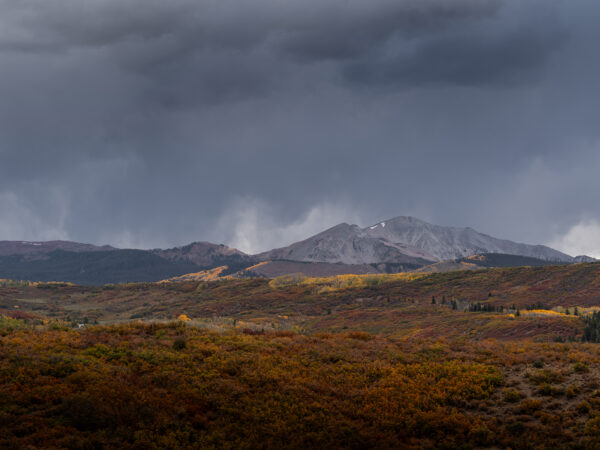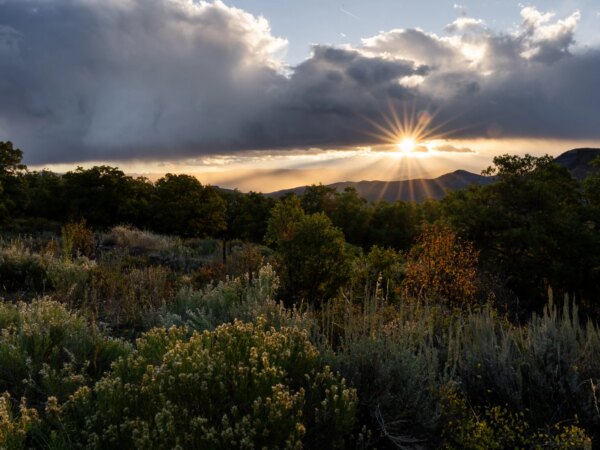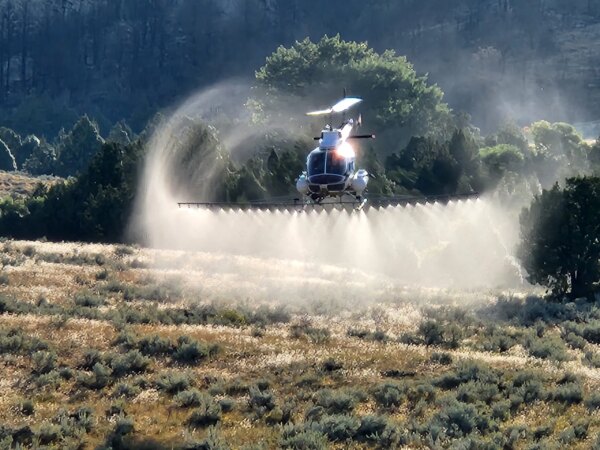

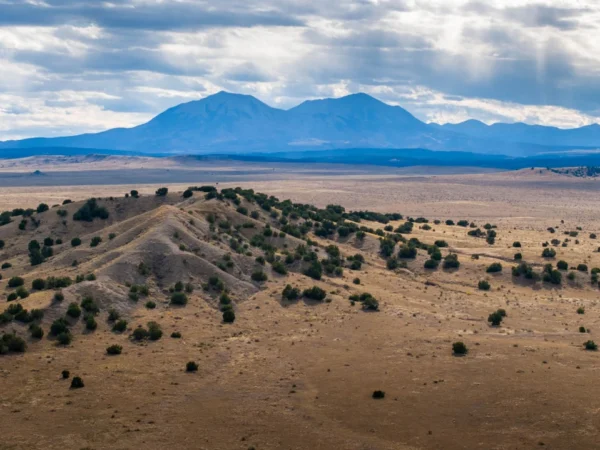
Sale of 30,000-acre Cucharas Ranch to The Nature Conservancy exemplifies the very best in land conservation
Read more
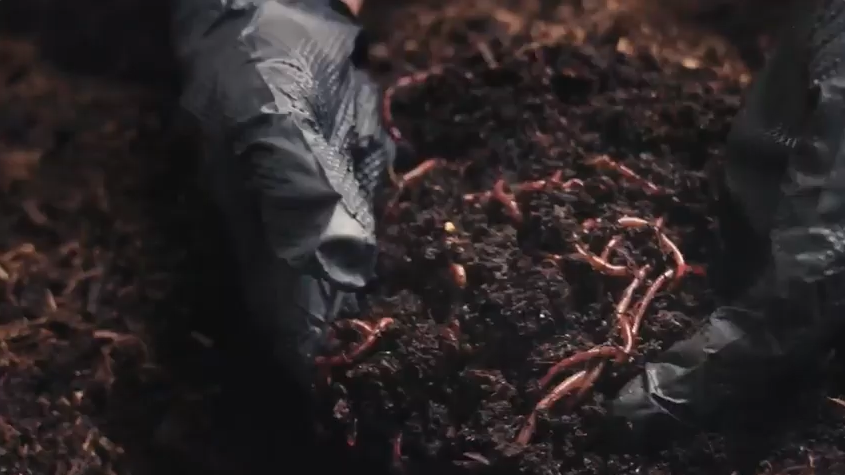
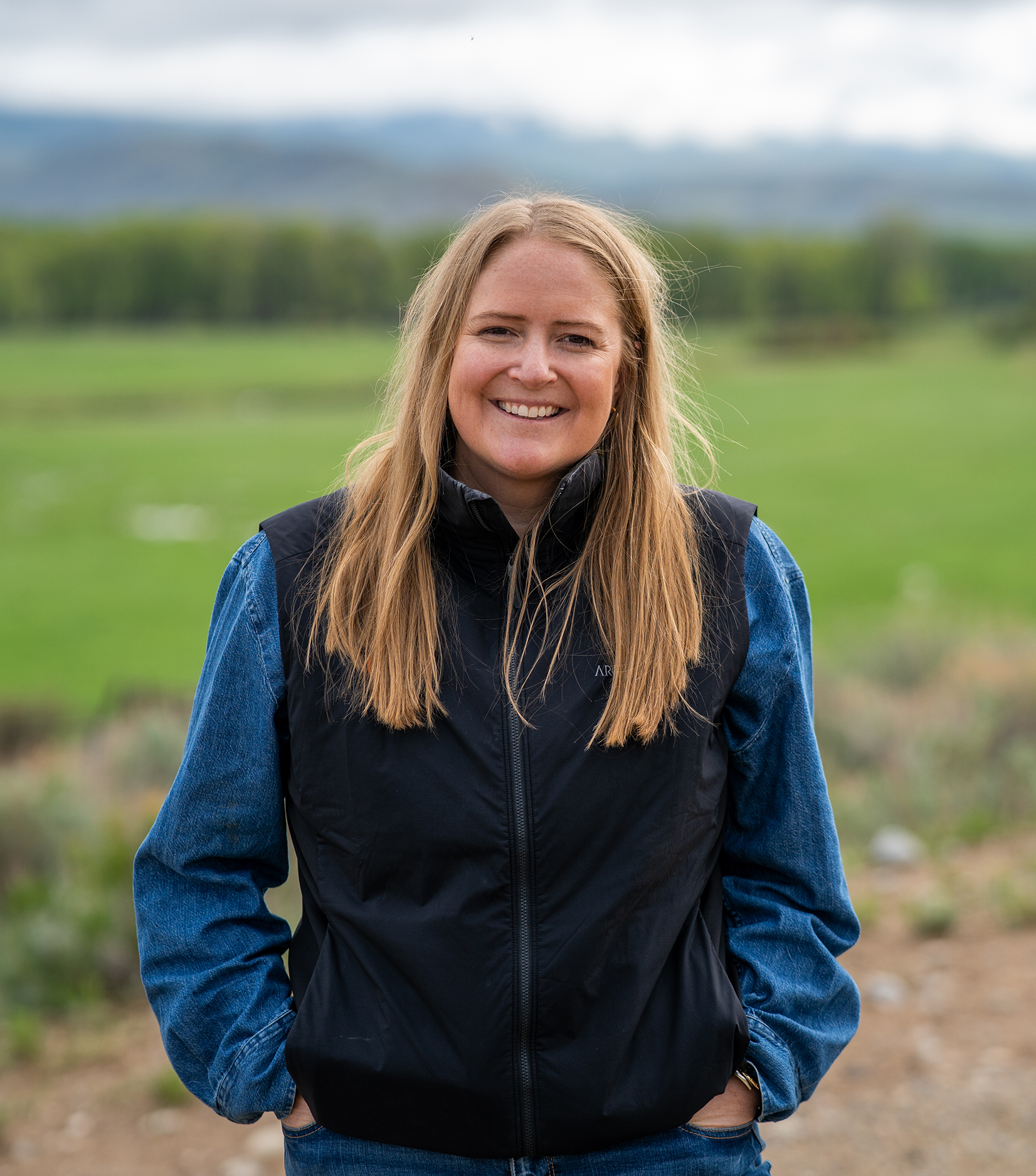


We’re taking a trip back to science class this week as Haley is joined by Sam Baker of WriggleBrew to dig deep – literally – into the power of earthworms. These humble creatures are an underutilized resource in modern farming and ranching, but their nutrient-rich castings and surprising ability to break down plastic may hold the key to the future of regenerative agriculture. Discover how cutting-edge research and unconventional innovation are transforming soil health, boosting drought resilience, and giving ranchers a sustainable edge. The future of ranching is wriggling just beneath your feet – tune in to find out how to harness it.
Links
Want to watch this episode? Check it out on our YouTube!
Haley Mirr (00:06):
Welcome back to the Land Bulletin podcast, where every other week we bring you experts in the field to impart their knowledge when it comes to the ranch and sporting property market, buying and selling advice, the latest, best stewardship practices, as well as topics that impact landowners every day. I’m your host, Haley Mer. Let’s jump in. Welcome back to the Land Bulletin podcast. I’m Haley Mer, and today we’re going to be doing a little bit of a different episode. We’re exploring science and innovation and how that kind of connects with the ranching market and what ranchers are doing today. As ranching develops, there are a lot of new alternative methods being researched to ensure lands stay fertile and usable for years to come and helping me out today is Sam Baker with Wiggle Brew. So welcome Sam to the podcast.
Sam Baker (00:53):
Thanks for having me. I’m happy to talk ranching, earthworms, and soil and all that good stuff.
Haley Mirr (00:58):
That’s awesome. And I should have probably put earthworms in the intro. Can you tell me a little bit about Wave Brew and how worms are connected to your company?
Sam Baker (01:08):
Absolutely. And how critically they’re connected to ranching. What makes us relevant? So what our company does is we make fertilizer basically, and that fertilizer we sell to a lot of farms and ranchers and people who are growing all kinds of different things. But we make our fertilizer in a very special way. We actually use earthworms to produce the fertilizer. And so earthworms, as a lot of farmers will know, are very important organisms because their main role is to take material detritus, whether it’s leaf litter or bits of grass or manure, and to recycle that back into nutrients, usable ones so that our plants can flourish, our grass can grow, and our animals have something to eat. And the reason our company focuses on earthworms specifically is because one, they produce a lot of compounds that are very unique and useful specifically to growing grasses and regenerating soil. And two, very critically, we are focusing on trying to make fertilizers that actually help build the soil back up. A lot of people don’t realize that fertilizers actually quite bad for soil overuse of synthetics can be very bad and harmful. So we want to try and get away from that. We want to use earthworms to get back more towards how it’s supposed to work naturally.
Haley Mirr (02:21):
Awesome. And where did you guys see a need for this? The fertilizers and that market space is probably pretty hard to enter some that are giant conglomerates. Massive. Yeah. What did you see as the biggest issue and how did you think of worms are the response to that issue that ranchers are
Sam Baker (02:41):
Facing? Well, worms are kind of an odd direction to go. And I mean, we all see them out in the grass or whatever. We don’t really realize just how important they are, but we became interested in earthworms and in their capacity to make fertilizer originally because of fertilizer runoff. So where I live, where I’m from originally is Florida. And in Florida we have a lot of ranching actually, and we have a lot of farming and we also have a lot of coastline. And the interaction between those two has led to fertilizer runoff happening to such a degree that we have these algal blooms, we call it red tide, these algal blooms that occur in our waterways, our rivers, and in our bays that are so big, you can see them from space. And these algal blooms lead to big fish kills. They lead to a lot of really negative environmental consequences.
(03:28):
And for the farmers and the ranchers, the real issue is that the use of these fertilizers has depleted their soil to such a degree that they’re reliant on using more and more of this stuff every year. So we’ve got this very negative feedback cycle and we wanted to do something about that. I’m a Florida native, so fishing is important to me, my friends, my family. Fishing is big, and we were worried that if this kept up, there wouldn’t be anywhere left to go fishing. So I was, at the time when I started this business, I was a junior at the University of Central Florida, myself and my best friend Gabe, we were working at the same lab and we decided we wanted to try and solve this issue very naively. As students, we thought we could do something.
Haley Mirr (04:09):
Change the world.
Sam Baker (04:10):
Change the world. That’s right. And Gabe, my best friend, he’s very, very smart. He’s a biochemist. He had the idea to use earthworms as a source of nutrients. We know that earthworms are very good for regenerating soil, but it turns out that the manure they produce on a pound for pound basis is the best manure chemically. It’s the best fertilizer manure there is on planet that’s known. So it’s very, very amazing stuff. He actually showed me some videos of these guys farming worms in Puerto Rico. I thought, that’s amazing. You’ve got these worms. They eat basically garbage, horse manure, cow manure. They eat leaf litter, all this junk, and then they poop out a fertilizer that is as good as, or better than a lot of these synthetic fertilizers. And it doesn’t cause runoff. It doesn’t cause soil depletion. In fact, it helps build the soil back up.
(05:01):
So it seemed like a really obvious question. If this exists, why aren’t we doing anything with it? Well, there are some actually rather sad answers as to why we’re not doing stuff with it. And it ended up being, the big one is a technical challenge, earthworm castings, compost manure. You can make liquid fertilizers out of these that are applicable to fields and farms, but all of those organics tend to have very short shelf lives. So if you make, they call it a weed tea or a compost tea with your cuttings, or if you make a worm tea by taking worm castings and you put it in water, that will go bad. That will expire functionally in 24 to 48 hours. It’s extremely fast. So you can’t manufacture it centrally and send it to a farmer. So he can’t use it as a fertilizer. The farmer has to make it onsite. And that’s not practical for the lives of most farmers and ranchers. They cannot do that.
Haley Mirr (05:56):
Yeah. It’s a second job to start. Exactly.
Sam Baker (05:58):
Or the third or the fourth and the fifth that they have.
(06:02):
So we thought, we thought, okay, that’s a problem. But something going bad, something spoiling is really, that’s an engineering or technical challenge. A lot of people will be aware in the dairy industry, milk used to go bad very quickly. Raw milk will go bad very, very fast. Louis Pasteur, the Frenchman, had to invent pasteurization to facilitate milk being transported nationally to facilitate that logistics network. So we thought we could do the same thing with worm tea, with compost tea, we could find a way to make it shelf stable or at least more shelf stable so that we could ship it to a farmer and he could use it like any of his other fertilizer products. And after about two to three years in the lab, two and a half really, we managed to crack that code. We got that to work, and we created a fertilizer and we started selling it. We started getting some big farms to use it, and they were very, very happy with it. And now that’s what we do full time.
Haley Mirr (06:57):
Amazing. And beyond soil health, does this type of fertilizer help with other kind of issues that ranchers might face, like erosion and soil stability and things like that?
Sam Baker (07:06):
Yes, and that’s actually a very relevant question. So when we think about earthworms, right, they’re often described as being geo engineers. So one of the great things that earthworms do when you have them in spades in your soil is they help improve the structure of the soil so that water can more easily flow through it properly, but also can stay around. So worm castings are actually very good at keeping water in the soil. Water use is very important, especially out west. There’s a lot of farms that are using way more water than they normally or naturally should be because the overuse of fertilizer has led to depletion of the soil. And that when that soil’s depleted water flows through it very easily. When you use an organic fertilizer, it helps build the soil back. And so it’s a little more spongy. It holds the water a little better, better water retention means it’s less water the farmer has to use, but it’s also more solid ground.
(07:56):
So the fertilizer goes further, it doesn’t run off. And when you’re talking about a worm casting fertilizer, like what we make, it’s a very similar effect. So we’ve observed better drought resistance in all the plants we’ve used this on. We’ve observed better stress resistance to biotic and antibiotic stressors. We’ve noticed that the plants, given this seem to anchor better, so their roots are spreading a little more wide. This is due to some of the impacts that the biochemistry involved. So earthworm castings are not just full of nutrients, but they’re also full of signaling compounds that earthworms add. So that’s things like glic acid. This is the compound plants used to signal the germination. So more seeds will actually sprout. They can include oxon. Oxon are not the animal, A-U-X-I-N, the plant hormone. Those are compounds that are very useful because they trigger root, lateral root development. Wow. So it’s a fertilizer that’s not just improving the nutrients the plant has access to, but it’s literally shaping the plant’s biology to be one that is more resilient and stronger. And that has huge, huge impacts for fields and farms and the longevity of the crop.
Haley Mirr (09:09):
And I know a lot of ranchers, especially out west, one of the bigger issues that’s become more and more relevant is carbon sequestration and making sure you have enough carbon in the ground. We even have friends that are doing carbon sequestration, mining and figuring out how to help with some of those credits and things like that. How can, what you’re doing and soil health in general, how does that play into that kind of carbon sequestration and climate resilience?
Sam Baker (09:40):
It’s a huge part of it because, and this is very important to note, one of the big negative impacts of the use of these synthetics, the use of the nitrogen, the phosphorus, is it destroys a lot of the IC acid that we have in our soil, the humus, the top soil. So we have significant topsoil erosion here in the United States, and a lot of that is driven by our fertilizer use and by our herbicide and pesticide use. And so if we can switch more to organic stuff, to riggle brew, to things that are designed to rebuild the soil, what you see is you start to see more of a humus layer start to build up and over acres, that’s many hundreds of pounds of carbon, and it becomes a very large amount, very fast. So you start getting into the tons, the tens of tons, hundreds of tons, depending on the farm size of carbon that’s starting to build up in layers in that soil worm teas are particularly well suited to this because they are chock-full of the kinds of bacteria that produce humic acid.
(10:37):
They generate those compounds as a function of their digestion, fish emulsion and those other kinds of organic nutrients. They’re good, they provide nutrition, but they don’t provide the bacterial basis to start to rebuild top soil. And this has immune impacts as well. So it’s not just a matter of, okay, I’ve got healthier soil, but when you have healthier soil, you also have healthier plants, which means those plants require less pesticide, they require less spraying, they require not nearly as much maintenance and time and hours to care for. And those all have cost savings that trickle through every aspect of a farm operation. And yeah, it can be a really big profound difference. I mean, we’ve seen with, I’m sorry, lighting just struck, right? We’ve seen with soy farmers, we’ve seen this really, really potently. The soy yield goes up a lot, but more than that, they’re using less water for their soy. And soy is a pretty water intensive crop we’re
Haley Mirr (11:36):
Seeing. Yeah, that’s what I’ve heard.
Sam Baker (11:37):
Very healthy soy plants in comparison to what they were looking like a year before. You’re seeing more buildup of the top soil. There’s also a carbon aspect to this on a grand scale because nitrogen fertilizers are massive carbon dumps. And I don’t mean that in a good way. I mean, they literally, we use huge amounts of electricity to produce nitrogen fertilizers. The production of ammonia urea fertilizers alone is 1% of the world’s electricity, and then it gets loaded on container ships and shipped across the ocean and brought here to the us. A massive amount of our fertilizer comes from abroad. It comes from other countries. For example, in 2022, there was the war in Ukraine. And when that war kicked off, the price of fertilizer, as many people remember, went up 400% in some places.
Haley Mirr (12:22):
Yeah, it was tough for a lot of ranchers out there.
Sam Baker (12:24):
It was terrible. It was catastrophic. And that kind of volatility is recurring. We’re now seeing that with the tariff situation, we’re seeing recurrences of this. So when those things are affected, it affects the price for the farmer. So using an organic fertilizer is not only tariff proof, it is volatility proof compared to the nitrogen or fertilizers, but it is also something that’s rebuilding your soil and is costing a lot less carbon to manufacture. So there’s benefits to basically every step of it. It’s a domestic fertilizer. We make it here in the United States. Almost every other fertilizer you’re going to find either has components or is sourced from raw materials that come up from abroad. With few exceptions. I mean, a lot of phosphorus is admittedly mined here in Florida, but it’s very bad for Florida to do that. So there’s a lot to it. But I think ultimately Riggle brew is very, very good for the carbon future of our farms.
Haley Mirr (13:22):
Awesome. And I think that soil piece is just super important for people to understand, especially people that have never owned a ranch and are looking at it. I don’t think they think of the topsoil as much as a valuable asset, but when you have that type of healthy topsoil, it really does kind of add to the viability. And then overall just operation of a property,
Sam Baker (13:43):
It is the asset. It is the operation. If you don’t have good soil, you don’t have calories to go into your animals. All of the calories in your animals come from your soil. And when your animals leave your field, whether it’s a slaughterhouse or whether it’s going somewhere else, wherever it’s going to go, those calories are physically leaving the soil, they’re going somewhere else. So they have to come back in from somewhere. Now you’re either going to add those calories and those energy pieces directly through nitrogen or phosphorus or other things, or you’re going to need to do a lot of cover cropping and a whole lot of work to try and stay fully regenerative. And for most people, that is not practical. So there needs to be, in our opinion, a middle ground. It needs to be something that allows the farmer to regenerate their soil, but it doesn’t require them to change their methodologies so dramatically and drastically by using rle, by using a worm tea, you get the benefits of having a healthy earthworm ecosystem rebuilding your soil without the cost of having to do the intensive effort of regenerative agriculture entirely.
Haley Mirr (14:42):
So that would be another question I have. What are some of the first steps that you say a rancher should be taking before investing into your point, changing the whole management of your entire ranch that you’ve managed forever and it’s been the way it has, and sometimes regenerative can get really time consuming and you don’t really see the benefits for a couple years. What are some of the things that people, ranchers, landowners can start to do to really improve soil health and start that kind of process?
Sam Baker (15:12):
There’s a lot of things people can do, and it also really much, it depends very much on where you are. So in Florida, we have an entirely different system of ranching than exists in Montana or in Wyoming. It’s a totally different ballgame. So what works here does not work there. We can’t afford to have a universalist approach on this, but there are some things that we can generally say are good, like for example, using more bacterial soil boosters. So there are a lot of these products now out there that add bacteria back in the soil that add micro rza back in the soil. So these microbial inoculants, these are starting to become more recognized in the ranching world. These are very good to use. A lot of ranchers and a lot of people growing in general don’t realize that when you have your field cut clean or eaten clean through practically the actual bacteria underneath, there are a lot of the heavy lifting and regenerating it.
(16:13):
And when we use things like nitrogen fertilizers, we’re killing those bacteria. They’re the first victims of our industrial and synthetic fertilizer use. So it does help to switch your fertilizer to something like Riggle Brew, but you can take a half step to just start using. There’s plenty of them available. They’re very cheap. There’s a lot of them out there. Now adding things like those into your watering schedule is very helpful. There are other things that can be done in terms of what are you doing with waste material. Obviously we start to go down the regenerative rabbit hole pretty quickly, but Riggle Brew is also a good first step for that. Switching your fertilizer to something that’s more regenerative to the soil rather than depleted.
Haley Mirr (16:59):
No, I think that’s a great, great. And on this podcast, we’ve had a lot of different ways of improving this piece, but we really have focused on, is that thunder by the way?
Sam Baker (17:12):
It is. Yeah.
Haley Mirr (17:15):
We focused on a lot of, yeah, it’s okay, regenerative practices, but a lot of it is about rotational grazing and those kinds of things. So to get to the science behind what’s happening actually in the soil is just amazing. Talk about that.
Sam Baker (17:31):
And this is something we understood very fundamentally as farmers for hundreds or thousands of years, Charlemagne back in the Middle Ages literally required crop rotation among both grazing animals and just cereals and grains. It was the law to leave fields fallow for years, you had to do that. We don’t do that here. And we reap the reward of that, which is we have lower quality material and less material and we struggle. But leaving things fallow is important. And why is it important? Because it allows bacteria and fungi to recolonize the soil, to pull phosphorus in, to pull nitrogen in, to pull these nutrients and to build humus. These humic acid nets of large organic molecules that create a spongy black, brown top soil that holds moisture and allows plants to thrive. That is based on good biology. When we don’t have good biology, nothing else follows.
(18:30):
We can get plants to grow big and green if we pump fertilizer onto them, but it’s like a steroid. It does not lead to better results really in the long run. And critically, it accelerates decomposition of the soil because it kills off those microbes. And the lack of earthworms in North America is a big problem. People are always talking about bees, right? Like save the bees. It’s important to have bees. It’s just as important to have earthworms. An anecdote that I once heard from Dr. Richard Blackmore, who is the predominant researcher in the earthworm community, just kind of an odd not to have, but that’s him title. He did the calculation on how much nutrients, earthworms, and other decomposers like them cycle and soil, and actually calculated this for grazing animals. So if you have, let’s say a hundred ton of cattle on a given area of land, let’s just say an acre, I know that’s not very much, but let’s say an acre, you got a hundred ton of cattle on that acre. To support that much biomass, you need to have at least 100 to 120 tons of earthworms below the ground producing the nutrients, which means you have two herds. You have a herd that you see above ground with four legs and multiple stomachs, and then you have a herd below ground with no legs. That’s basically just stomachs. And if you don’t care for that second herd, you won’t be able to support the one on top.
Haley Mirr (20:02):
That’s such a good visual to have of the herd underneath the ground. Well, is that kind of what you guys are doing in your warehouse and things? Are you creating worms? Are you creating an environment where worms can thrive and as such create this fertilizer or what’s going on behind the scenes?
Sam Baker (20:22):
We have an earthworm farm here. We have pallets and pallets of earthworms in big bins, and we feed them food and farm waste. So we get a lot from local farms. We get some from the local grocery store, so it’s like bits of cantaloupe and fruit and vegetables and all kinds of stuff that never normally just rots. And we have a digester that breaks it down into food for the worms, it gets fed to them, they eat it. And the consequence of that is a whole bunch of earthworm manure comes out the other end. And with that earthworm manure, we can then produce our liquid fertilizer, which we can ship to farmers. So the farmer doesn’t have to worry about actually making sure he has earthworms in every bit of his ground. He doesn’t have to do these regenerative practices as much. He can focus on what he’s been doing and he can just kind of swap his fertilizer out and still see a lot of the good benefits that he would expect from a full regenerative system.
Haley Mirr (21:20):
Amazing. And I would love to know what else are these earthworms doing? It looks like that you guys got a grant recently about digesting more than just the waste from farms and things that they could also digest plastic. Can you tell me a little bit more about that research and what that’s helping? I know soil has probably been to focus, but how does that kind of play into your ongoing research?
Sam Baker (21:45):
So this, in my opinion, is one of the most interesting things about what we’ve been doing here, and it’s kind of a different direction, but it is related. So when we were originally studying these worms, we were really interested in seeing all the different things they could eat so we could figure out what their diet is going to look like. You don’t want to feed them the wrong stuff, and then all your worms die. So we wanted to make sure that they’re eating the right kind of food And doing that background research, we ended up learning about some worms in some papers that were published, being able to eat different kinds of plastics that’s is primarily like wax worms and other stuff. So thinking more like larvae. But these worms are literally, they’re finding these worms are eating plastics. And it raised, again, the question in our head the same way it did with the original question, which is, if worms can eat plastic, why aren’t we doing anything with that?
(22:39):
We have so much plastic, there’s plastic everywhere and in fields and in farms, it’s becoming a huge problem. The farm industry produces huge amounts of plastic waste, and there’s big costs to farmers to get rid of it. The food industry, for example, I work with a citrus farm near here. Of course it’s Florida. They sell citrus to one of the big name stores. I’m not going to name them, but one of the largest, you would recognize them. They’re like the biggest employer in the country. They sell citrus to those guys. And those guys have very strict requirements on what happens to all the plastic from the containers on the other end. And the farm has to worry about that because they’re sending plastic to the street chain. So it becomes a big concern of the large farm. And so we found out that these worms are eating plastics, and now they’re not eating all plastics.
(23:30):
They’re eating polystyrene plastic, they’re eating certain other things. But we said, why isn’t this being used? And the answer to why there is no massive facility somewhere full of worms eating plastic is because they’re not very good at it. They really don’t like to eat plastic. Plastic is not a top food choice for them. It’s very unhealthy for them, as you can imagine. So it’s not something that easily scales. But we had ideas. We thought maybe much like with Riggle brew, there’s a way we can engineer this to happen faster, to be easier, to be healthier for the worms, or maybe to even take the worm out of the equation entirely. So we had all these ideas, so we pitched them to the National Science Foundation. We said, national Science Foundation, we’ve got this plan to feed worms plastic, would you be willing to fund us Again, we were college students at this time, and they said, yes, we will give you $275,000 to pursue this research to investigate using worms to break down plastics because it’s such a big problem, which was a life-changing thing for us. We got that funding in. We started running those tests after about nine months or so. We ended up having a breakthrough on that. We found that the worms themselves can’t really eat the plastic very efficiently, but if you isolate the bacteria from their gut, you can use that to eat the plastic much, much more quickly.
Haley Mirr (24:58):
How do you do that? Sorry.
Sam Baker (25:01):
I mean, you kind of cut ’em open and you get a Q-tip. How So? We had to build basically a giant artificial worm gut called a bioreactor. And I actually have one of the pieces of the bioreactor, one of the bioreactors we built, because I didn’t drop this, Gabe dropped this. I can blame it on him. So this is a broken piece of a bioreactor. So basically think a big glass vessel and inside of this vessel, it would sit like this. There’s a machine that agitates it that adds oxygen and maintains the pH. It does all these things that simulates the conditions of the worm’s gut. And then we colonize it with the bacteria from the worm’s gut. And so just like with the soil, it all comes back to the bacteria. They’re really the key to everything. And so when you put them in that artificial worm gut, they’ll breed and they’ll work really fast. And what you can do is you can feed them the plastic and they’ll eat it way faster than the worm does, and they poop out a kind of manure, which then earthworms can eat directly, and the earthworms eat that, and then they poop more worm castings, and now you have more manure and more fertilizer. So you go from about a month, you go from something like this to black worm castings.
Haley Mirr (26:20):
That’s amazing. It’s pretty cool. I mean, it sounds like you guys are just finding new and new ways to use these worms, study them, and then using them to kind of help the future of soil health. Where do you see the future of soil health and conservation, and what excites you most? Because it sounds like you guys are working on this, you’re working on that. Where do you see this all kind of headed in the future?
Sam Baker (26:48):
Well, there are a lot of good places to go. So one of the big ones is I see a lot more farms using Riggle Brew to regenerate their soil. We’ve already, in the last year had a huge increase in the number of farms doing this. Both ranchers, row crop farmers, we’ve had a lot of different and new customers using it and having some really great results. We shipped 25,000 gallons of it this last season, which is a huge amount would fill half this room if we filled it well with that. And those farmers, they’ve been using it successfully and they’ve been getting better results, better drought resistance, they’ve been using less water, and they’ve been seeing a better bottom line. They’re saving money doing this using less nitrogen pound per acre, and that’s making a difference for them. And on the grand scale, that means more efficient farms for the us, but it also means way less runoff for our water waste, way less soil depletion.
(27:46):
That means soil that’s able to hold onto water better. It means soil that’s able to last a lot longer between uses of fertilizer. Then on the plastic side of things, we want to start working with a lot of these large companies and a lot of these large businesses to start taking their plastic, taking the plastic from the farm, from the retail place, from the manufacturer or the waste, bringing it here, breaking it down in our big artificial worm guts and turning it into more fertilizer and soil. And eventually we want to push that far enough that we can start going to landfills. We can start going to ocean cleanup crews, the people who are pulling in the plastic out of the ocean and start breaking that down. So rather than that turning into microplastics over the next 200 years, we turn that in two months into soil that then gets used by a farmer or gets used in landscaping or in ranching or in agriculture anywhere. And those are all possibilities, and I’m happy to announce, I’m very proud to announce as of last week, we received a $1.2 million follow-up grant from the National Science Foundation. They liked our work, validated it, and they want us to keep going. So that’s amazing. We’ve been fun to do. That’s, yeah, it’s really, really cool.
Haley Mirr (29:03):
It always gives me this, with all this stuff happening in the world and the fires and all this stuff that we’re experiencing, it’s good to hear people like you that don’t not only care about this stuff, but are excited to learn how to fix it. Because I don’t know half of this stuff that you said today before this conversation. So it’s just really good to know that there’s people like you and wiggle brew out there trying to figure out a solution to help our ranchers be viable in the years to come, especially in the West, when we don’t have ample water. There’s a lot of dried up fields out there. A farmers have sold off their water rights to municipalities, so the soil is even worse than it was. So to kind of have these solutions to make it something that people can continue to do throughout the country, I think is huge. So
Sam Baker (29:57):
It needs to be a national priority. We need to eat. I like food.
Haley Mirr (30:04):
It’s super important.
Sam Baker (30:06):
You would think that that would fundamentally get a lot of people interested and excited and working on these problems. But I think as a country, we’ve become very complacent in a lot of ways, but we have to have, get out of that mentality because these problems will only be solved if we stand up and fight
Haley Mirr (30:23):
Them. And how cool that you’re learning how to do it from something like an earthworm,
Sam Baker (30:31):
From something so humble. It’s a very humble organism, but they’re so capacious. They have so much to teach us. I mean, we’ve been studying them for years, and you’d think as simple as they are, we’d know everything there is to know about them, but we’re finding out new stuff all the time. I want to talk about one last thing, and it’s maybe a little sad, but it’s also important to talk about, and it’s an impact of the way we do our agriculture. One of the problems that we’ve seen increasingly in third world countries is the overuse of fertilizer has led to nutrient depletion in their food. So it’s not just enough to have bountiful quantities of food. The quality is also a concern. And in places like India and China, the impact on rice has been very significant. The zinc depletion. So zinc is a very important micronutrient.
(31:18):
We need it for our immune systems in these countries. They have used so much phosphorus to grow their rice and their grass that the zinc is no longer available, their rice crop. And the consequence of that is hundreds of thousands of children a year die from immunodeficiencies that their parents never had, even though they had less food available to them. This is something like 4% of all the child deaths in the world. It’s a significant impact, and it’s happening. Even though we’re seeing good crop growth, we’re seeing big plants, we’re seeing lots of rice being grown, record yields, and then people are dying from immune deficiencies. And this is happening in the US on a small scale, and I fear that we could be headed in that direction more in the future. Here of Florida, we produce oranges. The average orange of today is six times less nutritionally dense than the orange of the 1960s or seventies. Geez. So that’s six times less. Vitamin D, vitamin C, all those things. Calcium not present in the same concentrations it used to be. And the reason is because we have used synthetic fertilizers to make up for the lack of nutrition in our soil. Earthworms and other decomposers used to play the role of bringing those nutrients back, and they’re not there anymore. So we need to address that issue. That is an issue that I think is totally under-reported, and it affects our meat as well. It affects every part,
Haley Mirr (32:47):
Cows, everything.
Sam Baker (32:49):
The health of cows. We’ve got a lot of these cows that they’re on antibiotics, they have very weak immune systems. I foresee a future where zinc deficient grass, which is fed to these cows, leads to immune deficiencies, coupled with an over-reliance on antibiotics, resulting in some super bug developing that just runs like wildfire through our animals and our herds. One of the ways around that is to do a better job producing good quality grass and good quality soil so that our animals are healthy because they have access to zinc and to calcium, to magnesium for the things that give them a proper immune system. And ultimately, downstream of that, we are the consumer of their nutrients as well. So we got to worry about that too, ultimately. And I think that we should, Riggle brew is a piece of solving that problem, but it is something that needs to be, I think, in the cultural zeitgeist. It needs to be in our minds that that is also an issue.
Haley Mirr (33:45):
Is there anything that you would recommend to our listeners, because obviously a lot, and a lot of it is from school and research and doing all of this, but are there any resources that you recommend to people to make it a part of the zeitgeist, to have it be a part of the narrative?
Sam Baker (34:03):
Dr. Robert Blackmore, I mentioned him earlier, is a lot of very good papers on the subject, on multiple subjects related to this. Charles Darwin actually wrote at length about the value of earthworms. His final book was on earthworms. And I myself am working on writing a book right now that is compiling all this information together. So hopefully in a few months I can provide that to you.
Haley Mirr (34:24):
Perfect. And
Sam Baker (34:25):
To your listeners, but there’s a lot of good stuff out there, and I encourage you to look, anyone listening into this, look into what makes plants healthy from a micronutrient perspective. The University of Hawaii actually has a very wonderful, it’s like two pages long, just a little dossier that tells you about every nutrient in the soil and exactly what they do and how you can identify when you are deficient in those nutrients.
Haley Mirr (34:49):
That’s amazing. Well, we’ll link those things in our show notes along with informational riggle Brew. But I just want to let you know, this has been so informative and helpful, and I agree that people need to care about this more because if you don’t think it affects you, it certainly does because it affects every bit of food, every bit of cow, everything that we’re eating in this country. So thank you so much for coming on the show. Really appreciate it. And we’ll follow up and hopefully we get that book deal done soon.
Sam Baker (35:20):
Yeah, well, we’ll see. But thank you so much for having me on. It’s been an absolute pleasure. If anyone’s interested in learning more, we [email protected], W-R-I-G-G-L-E-B-R-E w.com. Thanks for
Haley Mirr (35:32):
Having. Awesome. Thanks, Sam. Thanks for joining us today to learn about the ranch real estate market or our ranch marketing process. Make sure to subscribe to our newsletter on our [email protected] or give us a call at (855) 930-2189. See you next time.
Be the first to see the latest Ranch news and advice
 0
0
Start saving properties by clicking the + button on any property page.