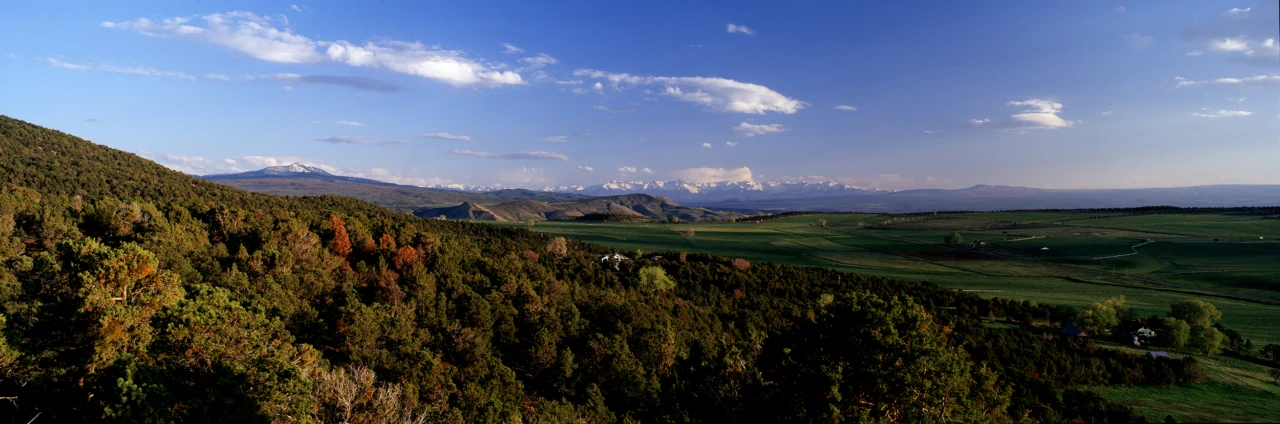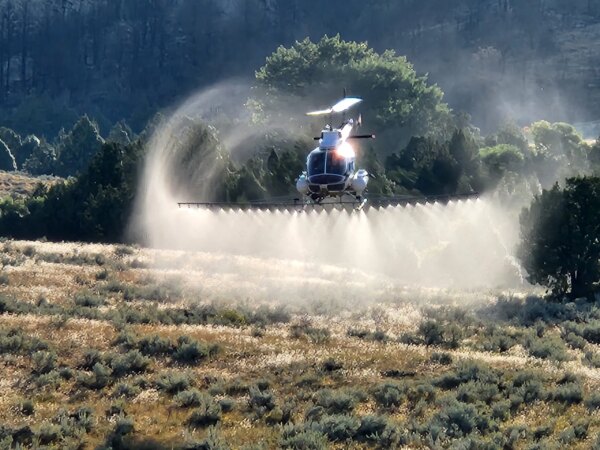

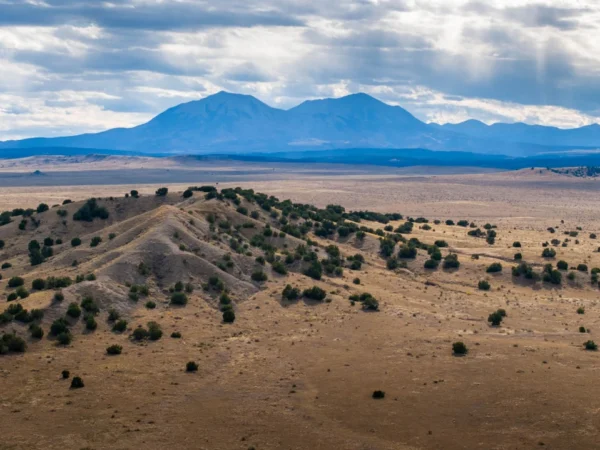
Sale of 30,000-acre Cucharas Ranch to The Nature Conservancy exemplifies the very best in land conservation
Read more
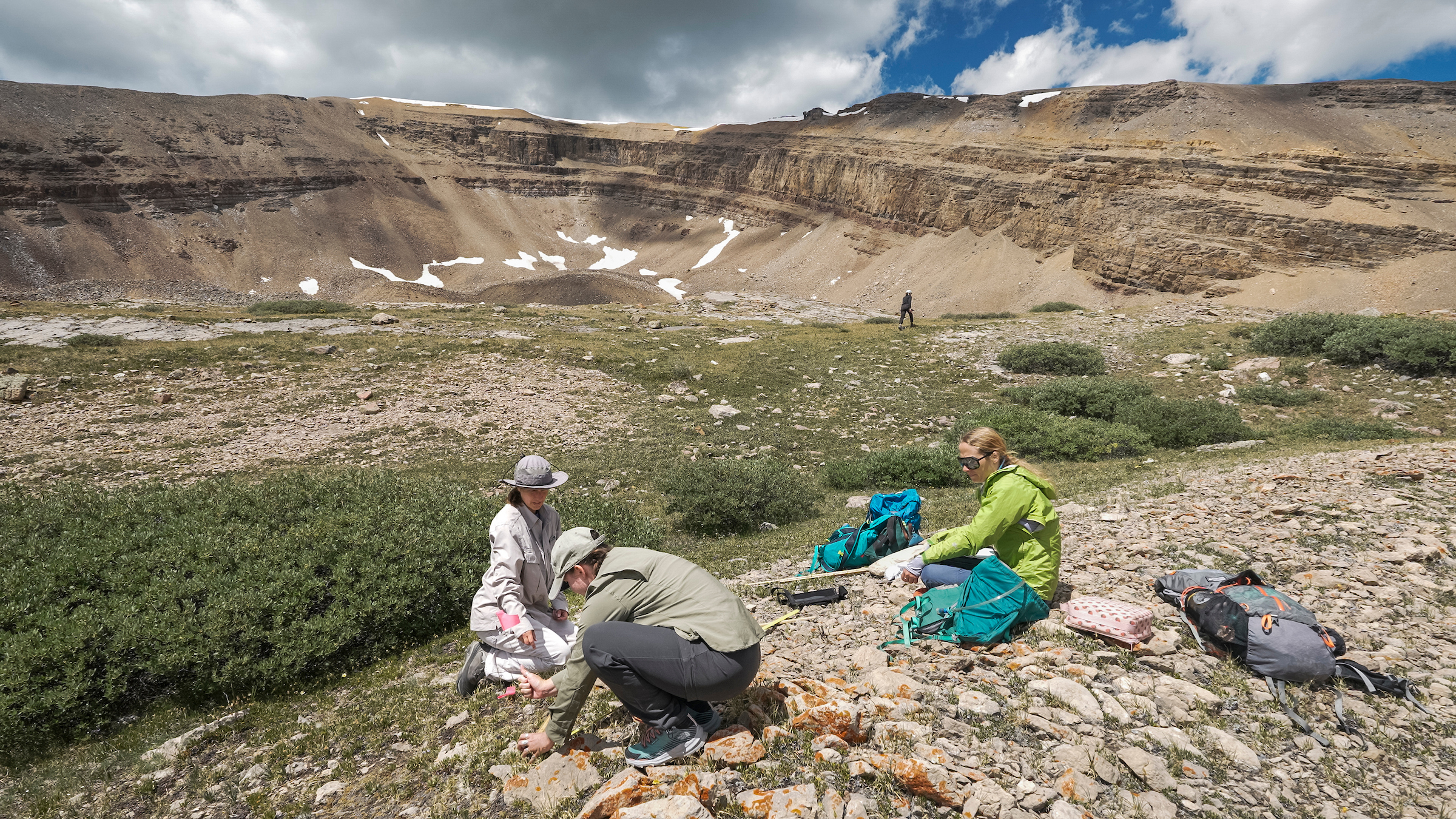
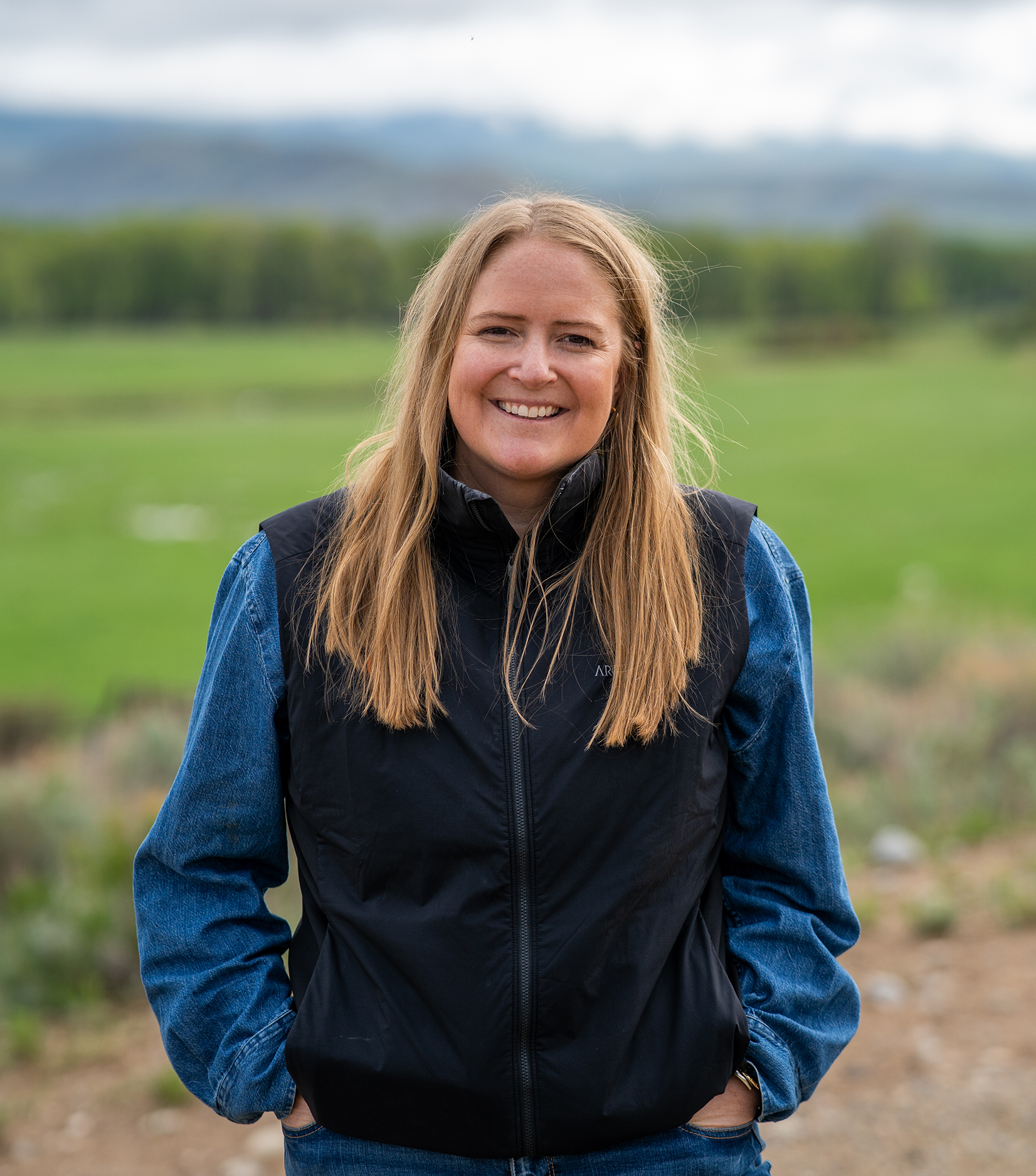


When most people think of conservation, they picture vast open spaces—but protecting plant life is just as vital. In this episode, Haley talks with Becky Hufft, Associate Director of Climate Resilience at Denver Botanic Gardens, about how urban ecology connects to rare plant conservation, ecosystem restoration, and even wildfire recovery. From surprising pollinator projects on golf courses to seed banks that help rehabilitate land, discover how city-based conservation efforts ripple across Colorado’s landscapes.
Links
Want to watch this episode? Check it out on our YouTube!
Haley Mirr (00:06):
Welcome back to the Land Bulletin podcast, where every other week we bring you experts in the field to impart their knowledge when it comes to the ranch and sporting property market, buying and selling advice, the latest, best stewardship practices, as well as topics that impact landowners every day. I’m your host, Haley Mer. Let’s jump in. Welcome back to the Land Bulletin podcast. I’m Haley Mer, and today we’re kind of looking at a different piece of conservation. When we are on this podcast, we typically look at wide open spaces and conserving big kind of landscapes, but there’s also a very important piece in kind of protecting habitat and that’s conservation of plant life. And today we are having a special guest from the Denver Botanic Gardens, Becky Hoft, she’s the Associate Director of Climate Resilience, and she’s going to talk to us a little bit about how all of this kind of connects with one another and some of the projects that they’re working on at Denver Botanic Garden. So welcome on the show. Becky, thanks for joining us today.
Becky Hufft (01:06):
Thank you for having me.
Haley Mirr (01:08):
Perfect. And I’d love to know with your title, what does that mean, climate resilience as it relates to the Denver Botanic Gardens? What is your role at the gardens itself?
Becky Hufft (01:20):
Sure. So I’m the associate director in our research and conservation department, and I oversee all of our plant ecology work related to rare plant conservation and ecosystem restoration and urban ecology. So it’s really a holistic approach to thinking about how we conserve biodiversity, how we study biodiversity, and how we communicate that out to the public. And I think the reason it’s climate resilience is because it’s wildlife, it’s habitats, it’s people are a piece of that too. And the importance we feel that climate plays in driving all of our, from social issues to political issues to all the wildlife work that we do.
Haley Mirr (02:00):
Oh gee. So you’re kind of doing everything it sounds like, and it’s all connected. And how does your conservation work shift or adapt when you’re working in the middle of the city in Denver versus out in the alpine areas with some of that type of habitat that I know you’ve worked on?
Becky Hufft (02:18):
Yeah, that’s a really good question. I mean, I think the fundamentals are the same. The way the type, the tools that we have, the gear that we take out, the type of data that we collect, the questions that we ask are actually very similar regardless of if it’s in the city or it’s up on an alpine peak. I think the differences, there’s different challenges in any situation. Certainly when we’re out in remote areas, there’s maybe challenges getting to the site and it can take a long time to get there. And you have extreme weather and there’s no facilities at those sites. And so there’s safety hazards inherent with that type of work. And it’s challenging but also beautiful and amazing in the city and the urban work we do, it’s kind of just a little bit different in the sense that we still have to get access and permissions from landowners and whoever we’re working on.
Becky Hufft (03:07):
Clearly it’s easy to get to. We are offices, I’m here in Denver right now in my office. It’s really nice when we can have a field site that’s only 10 minutes away. It means we can get there a lot more often and we can do a lot more data collection. We also, it’s this weird issue though where sometimes if you’re out in the city, finding facilities to be able to use the restroom can be challenging if you’re not on a site, right? There can be things like that and there’s still lightning, right? There’s still other issues with hail and lightning in the afternoons here that we have to take care of, but certainly it’s a lot easier and it’s not as remote so somebody gets hurt, for instance.
Becky Hufft (03:47):
It’s much more accessible to be able to get the care that people need easier than if you’re up a four hour hike in on the top of a mountain.
Haley Mirr (03:54):
And are you doing projects kind of all over the city? I’d love to know more about that. You were just talking about different sites that you’re working on in Denver. I am not as familiar with other than kind of the Botanic Gardens and what I know there.
Becky Hufft (04:09):
So most of our work, I would say happens outside of the walls of the Botanic Gardens here in our downtown location. We have staff and scientists who are involved in all sorts of projects and we really do partner with private landowners, municipalities, private organizations to work across the region here in the Denver metro area. We have several projects. One of my projects is that we’ve partnered with the Colorado Golf Association and we’re doing some wildlife habitat improvements on a golf course over on a property that’s right at the intersection of Denver in Aurora. So it’s right in the metro area. We also have a scientist on our team who’s working with the city of Denver and the Highline Canal Conservancy to do, we’ve done tree surveys both on tree work on the Highline Canal, which is a large stretch through the urban area, and also working with the city on thinking about setting trees for climate resilience. So thinking about what do urban street trees look like that survive in our changing climate where there’s not only harsh winters, but there’s also the water usage that we’re trying to attain. So we have some folks studying those aspects as well.
Haley Mirr (05:24):
That’s amazing. We do a lot of work with the Highline Canal Conservancy. Harriet’s a good friend of ours and watching, just even since I’ve been a kid in Denver, just the cottonwoods and how they’ve been affected by the change of how that system’s even been used has been pretty astonishing. So I didn’t know you guys were working with them, so that’s really amazing. And as, because people is a big component as you said, what’s the importance of your team and the Botanic Gardens and educating people about these different ecosystems that they might be experiencing locally in Denver or maybe elsewhere in some of these other kind of areas around the state and the west?
Becky Hufft (06:06):
Yeah, I think we have two parts of our job. One job is to collect the data and understand what’s happening and document that so that we can tell people about it. The other piece is the telling of it, and that is a big part of our job and we all have that as part of our job descriptions is to be able to engage with the public and share that information. We do that in lots of ways. We have over a million visitors that come to the Botanic Gardens every year. So certainly we have this opportunity when people come to our site to create interpretation and displays that can share this information. So one way is that if people can’t get out to the areas where we’re working is to share that information here. And we do that through actual displays in our various spots that we have here on site that folks can read about and see.
Becky Hufft (06:54):
We give talks a lot of the times to different public groups. And then we also have some opportunities too where folks can come out and volunteer and work with us on some of the projects. And then there’s the social media piece I would say too, we have this amazing marketing team that puts together really creative ways of sharing the work that we do that engages with people and makes it fun. So I think there’s just different ways to share the work we do, and sometimes that looks like a scientific paper that we’ve published. Sometimes it looks like an Instagram post. I think there’s really different ways that you can engage with people and find ways to connect to them, to maybe places they can’t get to on their own.
Haley Mirr (07:38):
And I feel like in my job especially, I take it for granted that maybe people don’t get to experience these kind of natural settings that I see every day. So it’s neat to educate people that might not be able to leave the city to some of these bigger projects to know what’s going on because people still care about it even if they don’t have boots on the ground. Speaking of, I’d love to know some of beyond the projects with Denver, what are some of the big projects you guys are working on outside of the city center?
Becky Hufft (08:08):
So we have, I’ll just maybe give two examples that are two different extremes of the range of things. We do have folks doing rare plant conservation. So this is for species that we know are at risk, that are maybe listed under the N Species Act. We do long-term monitoring of these species. So we have some species we’ve been studying for over 25 years. We go out every year, we have tagged plants and we track them. So we’re measuring their size and are they reproducing and how are they surviving and how long do they live and does the population seem stable and viable? And we share that information with our federal partners, so federal land managers and the Fish and Wildlife Service, and they use that information to decide how to manage these plants. So these are plants that we don’t manage. We don’t own this federal land, but we can give data to share with our federal partners and land managers to be able to better protect those plants.
Becky Hufft (09:06):
And that work has really been instrumental in both the listing and delisting of different plant species. So some plant species that we’ve shown are actually really stable and maybe resources would be spent better on other species that need the help. And so that has, this year there was a de-listing of a cactus that we helped provide data for. And then other cases the data has helped with the listing process. So that’s an example of on the rare side of some of the key work that we do. And those happen a lot of times on the west slope. A lot of our rare plants are over near Grand Junction and the Gunnison area, and so we have a lot of work all over the state. I was going to ask,
Haley Mirr (09:46):
Are a lot of those plants that you mentioned, do they tend to be, you said the Western slope, is it because of the water issue? Is it because of some of those environmental impacts or
Becky Hufft (09:56):
I think are just historical distributions? I mean, I think there’s a couple of reasons, right on the front range, the front range has had development A, it’s a different habitat, it’s the plains, right? There’s certainly are native amazing native plants and rare plants that occur on the eastern half of the state, but that is a lot of private land and it’s also a lot of land that was heavily impacted with ranching and agriculture
Haley Mirr (10:20):
Settlers.
Becky Hufft (10:20):
So it’s different in terms of how we engage in what plants are left to preserve. A lot of our rare plants naturally occur in these other areas because of the soil substrate and the type of habitat that’s there in these unique environments. And there’s also a lot of alpine plants as well that we are studying that are at threat as well when they think about climate change and temperatures changing up in alpine areas. So there are definitely rare plants throughout the state and there are both us and partners studying them. Just some of our key ones that we’ve been focusing on tend to be either between kind of Canyon City, Eagle Gut and Grand Junction and up into crumbling as well.
Haley Mirr (11:06):
Okay, awesome. And I didn’t mean to interrupt you. I know you’re going to go into the second thing you guys do. No, that’s fine.
Becky Hufft (11:11):
So then on the other end I would say I view conservation and restoration kind of a spectrum. There’s some projects where it makes sense to focus on a species what’s needed and that’s needed for that issue. And other times we focus on the ecosystem and thinking about how do we help protect and improve that ecosystem. And often that’s through restoration. So it’s a lot of the work that we’re doing right now is trying to support a better understanding of restoration practices. So we’ve been partnering with the Bureau of Land Management to not only collect seeds for restoration purposes, so in wildland areas, native seeds, and trying to collect seeds that are local to that region so that seeds are coming from the local eco region. But we’re also doing experiments at one of our sites to test out how local is local, what does that mean, and thinking about as climate shifts, what’s successful, should we be moving species around, or not species, but populations around so that we can better adapt to a clean changing climate.
Becky Hufft (12:16):
So we’re testing that and we’re trying to better understand that. And one of our newest efforts as well is also in partnership with the Bureau of Land Management is to actually grow out native species that have been wild collected to increase the seed stock. So growing out the plants specifically for doing seed increases to give back to the federal government to use for post wildfire restoration efforts so that native seed can be used for that work. So a lot of different aspects to this, but trying to just understand best practices and how can we make things more efficient, and if we have limited resources, trying to understand how do we best use those resources for the most good.
Haley Mirr (12:57):
And with that, when you create those seeds and reseeding and creating those kind of collections of things post wildfire, what does that look like? I’ve never seen that. I don’t know much about it. I’d love to know what you guys are doing to make that happen, because that benefits a lot of ranchers out there
Becky Hufft (13:15):
Out there. So the federal government has really engaged in this holistic seed process. So there’s a cycle of you need to collect the seeds in the wild research and develop the seeds to understand which ones are going to work best, increase the seed, go to commercial growers to get large enough collections that then get put back on the ground by someone, and what are the best practices for getting that seed on the ground. And there’s so many different players across the country who are doing all the different pieces of that cycle to get seed from wildland areas all the way back around the circle, back out again. And so we play a part of that. We’re partners in that with lots of folks. So we do seed collection of wild collected seed so that we can have seed available to both research as well as for restoration.
Becky Hufft (14:07):
We’re a big part of the research component of that. So understanding how do species grow best and which populations are the best here in our climate. And then now starting on the process, this is our first year of really engaging in this seed increase side. So trying to support, we have a farm already at the Botanic gardens that grows food for people. So we’re on the farm also now growing native plants for restoration in addition to the food crops that we’re growing. And I think that that’s actually one way that I do think farmers in general can diversify what they’re doing. I think the challenge is creating a stable economy for that. Just like for our food crops, trying to figure out the best way, what methods are you going to use and how do you diversify the food that you grow and what’s the market for it? It’s the same challenges on if you’re doing native plants as well,
Haley Mirr (15:06):
Have you worked with a lot of ranchers in the past? It’s kind of helping them figure out, okay, if you have these monoculture kind of single plants, it erodes. I know it’s really bad for soil to have the single crop. Is some of that research going into that or is it mostly like BLM, bigger kind of public land research?
Becky Hufft (15:27):
The work we’re doing specifically right now is in partnership with the Bureau of Land Management.
Becky Hufft (15:33):
We do have our farm team that does a lot of work thinking about regenerative agriculture in terms of soil health and best practices for that. I think that is the direction we’re going. There are definitely lots of folks who are in that world of thinking about engaging with both farmers and ranchers to understand how one might, there’s two different paths, right? There’s the growing native plants on your property for the sake of wildlife habitat as well as to preserve its for healthy water, for healthy habitat, for pollinators to keep weeds out, all sorts of reasons why you might want to grow, convert some of your land to more native habitat. But there’s also this other aspect that is available, and I don’t know that it’s widely utilized or communicated, is this idea of how to engage in the market for native plant material production too. But I think that’s an area worth expanding and engaging in.
Haley Mirr (16:36):
Yeah, as you were talking about, we’ve done, we’ve had a lot of people on the show about regenerative ag. I just wondering how that all kind of connects. That all makes a lot of sense. And with some of the research you’ve done, what are some of the biggest successes or things that you’ve done that you’ve been the most excited about or proud of?
Becky Hufft (16:53):
I’ve mentioned two projects that we’ve worked on. So I’ve been at the gardens for about 14 years now, and one of the first projects I did was actually a creek restoration project where, so I mentioned we do manage a 700 acre property that’s federal property, but we manage it. And that’s a site where we have our farm, we can do lots of experiments, but we also have a mile and a half of a creek that’s part of the South Platte watershed in our system. And we have active beavers on our property, which is really exciting. And I’ve had the opportunity to engage in that project so that we can let the beavers do their thing. So let the beavers where they’re active really improve our wetlands and our watershed. And then where the beavers are not active, we’ve been able to put in some instream structures that help reconnect the floodplain and restore the natural flow of a previously channelized creek.
Becky Hufft (17:53):
And the changes in wildlife habitat and to the feel of the creek to the depth of water that’s in the creek at different times is been really fun to watch and really fantastic over. It’s been a decade. So this has been a, we’re 10 years into the project and this year for the first time since we started the project, a second Beaver family has moved on to our site just this winter and right near the area where we had put these instream structures in. And I have no way of knowing if the structures for what invited them to stay could be all sorts of things, but it’s great. So to me, that’s been a really lovely project and still ongoing. And we’re doing monitoring and it takes long-term maintenance of those, but it’s been a pretty exciting project to be a part of and to just see how those minimal instream structures that you can put in that still keep the water flowing and still keep the integrity of the creek, but just help spread the water around a little bit improve has improved habitat so much for wildlife on our property.
Becky Hufft (19:00):
So that’s been great. The other one that’s maybe been more surprising to me that I didn’t necessarily hadn’t envisioned as a project historically is this partnership with the Colorado Golf Association. And one of the first projects we did with them on a property over in the Lowery neighborhood, so Aurora Denver area is common ground golf course. And for one of the first projects we did with them, wanted to initiate a pretty fast project. So trying to improve pollinator habitat but without much site prep ahead of time. And a lot of the restoration work that we do, especially for grassland restoration, we spend a lot of time prepping the site because one of the key pieces is to get rid of all the things that you don’t want there. You have a lot of success getting the stuff you want in if you spend the time to get rid of the stuff that you don’t want.
Becky Hufft (19:56):
There’s a lot of different methods to do that. But just because of time, we wanted to start out with a project where we didn’t do that. And so I proposed an idea where we just went in with their equipment and did some minimal soil disturbance. So literally the aeration, like how you do your turf, you come in and then we broadcast, we just scattered some wildflower seeds over all the holes that we just made into the turf. And I prefaced the whole project because it was the first project we did with them. And I was like, I didn’t think it was going to work, first of all. So I just really didn’t think I was, in theory, it’s a good idea, but I just didn’t think it was going to be very successful. And so I just wanted to lower the bar a little bit to be like, okay, can we not paint our whole future relationship on how this project goes if it’s a failure, are we okay with failure?
Haley Mirr (20:48):
Are we still good with that?
Becky Hufft (20:49):
Yeah. Are we still good? Can we still work on things together if this is a failure? And so they were great about it. They were open to this idea that not everything works. We try some new stuff and let’s try it out. And that was in December of 2022 that we seeded that property and some of those wildflowers, so we’re in season three now, this is the third season of those wildflowers popping up in this area, and they’re spreading around. It’s amazing. And we’ve done some pollinator observations and even the minimal wildflowers edition addition that we’re seeing in those areas, we’ve shown an increase in pollinators to even that small change that we made on the project because important, the pollinators needed that food source, and so they found it. And so that was surprising to me. I had this idea to do it, but I didn’t think it was going to work. And sometimes things don’t work. And so I think it’s having to be okay. And I think that is the role that Botanic Gardens can play, is that I do have that freedom to test things out and to have failures and to figure out, so what doesn’t work so we can improve it and figure out what does work.
Haley Mirr (22:03):
And with that, that brings up one of my other questions is how do you share this information that you all start to gather through all these different projects and your research and your data, and then how, once you do have that information, do you share it with other states? Do you share it? Is there a community of gardens throughout the country that you share it with? How does that kind of work with some of this research?
Becky Hufft (22:30):
Yeah, there’s lots of different venues, and I think as our time allows, we try to do it all the different ways. So one way is that we take our data collection and our data processes very seriously. We actually have a scientific data manager who was just in charge of all of our processes for collecting data. But the biggest piece of that is making sure that all the data are public. So we actually push out all of our data every year onto a public biodiversity platforms that are available. So from a researcher perspective, I mean anybody can access them, but from a sciences perspective, all these data are just available for anybody to use. We don’t kind of keep them until to publish a paper or do something else, which is a little bit different too than I would say, than maybe some of the constraints that some of our academic peers might have at a university.
Becky Hufft (23:20):
They do need to publish first. We just push all of our data out immediately, and that’s one way. But then there’s a whole layering of ways that we try to share the information. We have blog posts, we have newsletters, we have an annual report that we send out to our members or an email list that folks can sign up for. We give talks, we give tours, we help share this information through interpretation that’s here at the gardens. To your point about sharing more broadly, there is an American Public Gardens Association that we’re a member of. And so that’s all the gardens in mostly North America that engage in that, and we share that information. So we go to those meetings and we’re sharing the work that we do. And then it’s scientific organization, so we have staff who are going to botanical meetings and to restoration meetings and conservation meetings and sharing this information too.
Becky Hufft (24:16):
As we partner with other groups, we’re also trying to make sure that those we’re coming into those groups and sharing. So for instance, now working with the golf course in communication about going to their meetings and sharing information or if we’re working with federal agencies, making sure that we’re in those meetings and sharing information. So a lot of what we do is whether it’s sharing, yeah, it’s sharing, whether it’s through talking to people or writing, trying to find different ways to share it in writing. We’re always trying to find new ways to share that information.
Haley Mirr (24:51):
It sounds like there’s an incredible community out there that cares about this just as much as you do. And to be able to have that cross kind of contamination of ideas and data and all this stuff, it just makes me feel a little bit more at ease whenever I hear about scientists like you that are out there doing this work. It just makes me feel better about the state of things and making, ensuring that these spaces that we love so much will stay the way they’re or adapt to how things are changing in the world, but to still make sure that the basics are there. So I love to hear that. Has there been anything about, since you’ve been here for 14 years, and I know your career has been beyond that as well, but kind of working in this space of Colorado, has there been anything surprising about the natural plant life in this state? Maybe things that have changed over the last decade that have surprised you or,
Becky Hufft (25:56):
Oh, that’s a good question.
Haley Mirr (25:58):
What has surprised me or changed drastically that may be you changed
Becky Hufft (26:03):
Drastically drastic. I think the change drastically is certainly one. I think most of me and my colleagues, it is surprising how fast with climate changes that plant communities and insect communities have responded. I mean, it has been pretty drastic. I think one of the things that we’ve done with some of the work that we’ve shown using our barium collections, so our national history collections, is that if you look at the timing, even if plants aren’t moving, maybe don’t have data on their movement or their decline, because we don’t have data for every plant species, but we have a lot of data on just when are they flowering, when are they about? And because people take data, people take photos and people make collections of when plants are flowering, when they’re pretty right, that’s when you notice them and that’s when you can ID them for the most part. And we’ve looked at that data and it is pretty drastic that just over a 50 year period with increasing temperatures, plants have responded to that.
Haley Mirr (27:13):
Yeah, they’re blooming
Becky Hufft (27:13):
Earlier. They are blooming earlier. And it is pretty amazing. And I think that we just happen to have a lot of data for that area. And I think if you look at a lot of the data can be out insects, for instance, about their decline. And certainly that’s related a lot of the plant insect interactions. And there can be mistiming now of animals because plants and animals respond differently to climate. And so there can be mismatches in when a food source is available for an animal because the animal shows up, but the plant was two weeks earlier.
Becky Hufft (27:49):
And I think that can be hard to stay optimistic about when things are changing so rapidly and maybe not feeling like you can respond as quickly. I think the optimism for me, I think I’m generally an optimistic person, is that it’s been pretty amazing. If you look just thinking about the urban areas. So if you look, I live here in Denver, and if you just take a walk around whatever neighborhood that you live in, and I know different neighborhoods are changing at different rates, but the number of yards that don’t have turf anymore and that have more wildlife friendly yards in their yard has been pretty drastic over the past 10 years,
Haley Mirr (28:37):
Big time.
Becky Hufft (28:38):
And it’s so much more enjoyable, honestly, to walk around when you go for a walk, take the dog for a walk, whatever, go walk around. And I think that really speaks to a change in understanding a change in small steps that people can do themselves. And also aesthetic, right? There’s a difference in just what do we accept as our kind of aesthetic for what we have in our yard? And it doesn’t mean there’s not turf and that there’s not a use space and a reason for that too. But when we don’t need it and where it doesn’t have to be the dominantly landscape, what else could be there? And could the things that you’re putting in be either food that you’re growing for yourself and your family and your neighborhood or food for animals and food and health for the soil, and thinking about that. And I think that has been a pleasant, maybe not a surprise, but just an observation that I’ve really enjoyed about the community here.
Haley Mirr (29:37):
Yeah, I think that speaks to people caring about it regardless of, like we were talking about earlier, being ranchers or farmers and things like that. People still care about this object matter. So the fact that you are seeing that change and you’re seeing that understanding, it’s really me. I love, I live in Wash park and the pollinator corridor, all of the houses that have that sign on ’em, they all have this kind of just wild, amazing. My fiance and I, whenever we walk, those are our favorite houses. They’re filled with honeybees, which my dad, he has, he’s a bee keeper. So whenever I see honeybees, I get all excited, but it really is neat, and I’ve already just even seen it in our neighborhood, and we’ve only been here a couple years. So I like that the positivity of the mind shift.
Becky Hufft (30:29):
Can I add, you just made me think of one other thing in talking about the fact that even that, not only here in the city, but all over whether you’re a rancher or farmer, that you care about the land. And I also think that to me has changed at least in the perception of, I do feel like when I started in my career, there was this perception that there might be an antagonistic relationship between conservationists and let’s say ranchers. I’m not saying that all of those issues have completely gone away, but when I sit in workshops and meetings about water and about water conservation, there’s not a person in that room that doesn’t understand that we have limited water and then we all need it. We need it for all the things that we do and that it’s important and that the downstream ranchers out on the eastern plains who get the water off the PLA from us who are down, it matters what we do here in Denver to what water and the quality of the water. It’s the great downstream.
Becky Hufft (31:39):
There’s always going to be conflicting needs and wants and priorities that have to be made on any given project. But in general, I do think there’s more common ground between all of us in terms of what is good for our own health, what’s good for the environment, what’s good for the economy and peoples, and just sustainability and livelihoods. And I feel good that I’ve been able to be part of conversations over my career that have helped bridge that gap, even though it doesn’t mean all the problems are solved, but I do think we can still keep moving in that direction because I think there’s more common ground than not.
Haley Mirr (32:19):
Oh, big time. And we were even talking to a ranching family. They’ve been ranching family for generations, and we all kind of think differently on a lot of other things. But the water piece, it’s always the great equalizer. It’s something we all care about, especially as a westerner, you understand it, you get it. And even those that are moving here from the east coast and things, the minute you live here for a summer and you see any forest fire situation, it starts to affect you too. So I would agree. I think there’s been this change of how we look at lands, how we look at conservation, how we look at habitat. So I’m optimistic as well that that will just continue to be something that people care about and work together to achieve. But I’d love to know as we kind of wrap up, what are some of the things if you are an ER like myself that people can do to learn more to maybe they’re hearing about these things and these, you were saying about the neighborhoods changing how their yards look. How can people take the first step if it’s something they care about, they feel like they can’t help because they don’t have a big ranch, they don’t have this impact that maybe some other people do. What are some of the little things or tools that you would suggest people start to look into?
Becky Hufft (33:40):
Yeah, I think there’s two main ways that I think folks who are living in urban areas can just easily adapt. I think the first thing is what you just said. I think it doesn’t matter if you have a giant yard or you have an apartment with a balcony. We know that animals, and especially insects and birds respond really quickly if you plant things, if you plant native plants in your yard, we have so much evidence that it really helps support wildlife in urban areas. It can help provide habitat. So having some bare ground in your yard, but having pollinator plants having a water source in your yard, and these provide corridors. These are how these animals move through the system. So even if your yard by itself or your balcony by itself isn’t providing all of the habitat and food and for these animals, it’s providing a way that they can move through the system and get through our urban areas.
Becky Hufft (34:42):
And that’s really what they need are these wildlife corridors refuges in our urban spaces. And so I do think that’s a really simple thing people can do, and there’s a lot of great resources online to be able just to find out those small things that you can do in your own spaces to increase that. And then the other one I would say is voting and thinking about how you vote. And I think it is important to think about how the policies that we have conserve open spaces as well as the resources that we need in both people and time and money to protect them. And then I think also being thoughtful about how our policies impact holistically open spaces, but also still make life sustainable and work for ranchers and for farmers. That is, we all have to eat and we all need to, and those are the people who are really caring for large pieces of land. There’s open, that’s federal government and we have to care about those policies, but there’s also the economy that supports all of our private lands that are maintained by families who also care about the land. And I do think as an urbanite voting that it’s important to think holistically about how we shape policies and that our votes matter.
Haley Mirr (35:59):
I would agree on all fronts. And what are some of the big projects that you’re excited about that you guys are working on? I know you’ve talked about some of the things that you’re personally working on, but maybe some things that the botanic gardens you’re working on, maybe some speakers that are coming up that might be helpful for people to come listen to. I’d love to join on a few things if I can.
Becky Hufft (36:20):
So we, oh my gosh, so many things. Okay. So we are really expanding how we think about holistically about our urban landscape, designing native plant restoration and farming and trying to integrate all of those to think about, they all are just on a spectrum of scale, the amount of land that you have, but how we grow things, what we grow and how we care for our soils and the methods that we use. So I think that that’s going to be an area that we continue to expand in to really think about how we educate folks and test out different ways to incorporate these different aspects together. So they’re not separate things. You don’t just have to think that I’m just farming these crops. I’m also putting in native pollinator plants, and I’m not just putting in an urban garden, but maybe I’m also putting in food and I am thinking holistically about how we learn from each other, and we think about how we can apply that and find the simplest ways to share with people like this is an easy way to do things.
Becky Hufft (37:22):
So I think you’ll continue to see more of that from us. We also have a new four and a half acres solar garden at our Chatfield Farms location that just went online in September, and this is the first season that we are farming underneath it, so it’s completely underneath the array is all farm crops. I’d love to see that. And that’s a partnership with the city of Denver. And so stay tuned for more. There’s going to be a lot of work coming out of that to not only produce clean energy, show us a viable way to produce crops underneath it, but also share those techniques with folks. We also, every other year, we also host a science and art symposium where we really highlight this intersection of science and art.
Haley Mirr (38:07):
Oh,
Becky Hufft (38:07):
Wow. Like
Haley Mirr (38:08):
The thing behind you.
Becky Hufft (38:09):
Yes. Like the lovely botanical illustration of pollen that one of botanical our former botanical illustrators drew. And so that’s a big piece of it too, is that it’s this idea of when we talk about sharing what we are learning, I can share in certain ways. I have the ways that I know how to share that I’ve either been trained to or learn to do, but there’s lots of other people who have much more creative or different ways of sharing. And our science art symposium is really that. So they coming together to talk about different ways that you engage and connect with people. And I think that’s it. Helping people feel and helping people find the way that they can connect. And so we really value this intersection of art and science, and so that’s something we do big symposium every other year, and then I think we have some talks coming up too in September on international agriculture and thinking about how we do sustainable agriculture and engage in natural areas and people and provide people what they need in a sustainable way. So that’s also an area. And water walls always be a big area for us to think about just how we engage with water, how we use it, and how we can best manage it.
Haley Mirr (39:30):
Yeah. Well, that sounds like you’ve got a lot going on. I’m happy you took any time to talk with us today because a lot. Well, Becky, I just want to really just, again, thank you so much for being on the show. I’ve always been such a fan of the Denver Botanic Gardens, but I never understood quite the impact you guys were having on our state, so I just appreciate all the work you’re doing, and like I said, I’m happy there are people like you out there that are putting in the good work to do this and that there’s a community. So thank you so much for being on the show and for teaching us a little bit more about plant conservation and how we can all kind of be more involved and the habitats we care about.
Becky Hufft (40:07):
Thank you so much for having me.
Haley Mirr (40:08):
Thanks. See you guys next time. Thanks for joining us today. To learn more about the ranch real estate market or our ranch marketing process, make sure to subscribe to our newsletter on our [email protected], or give us a call at (855) 930-2189. See you next time.
Be the first to see the latest Ranch news and advice
 0
0
Start saving properties by clicking the + button on any property page.