
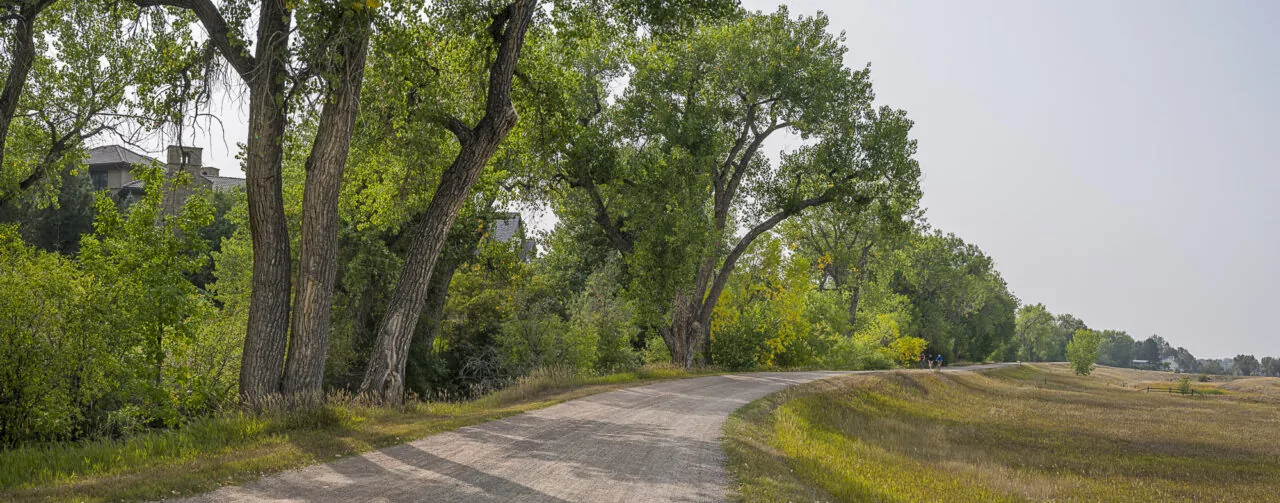
When we think about conservation, we often picture vast landscapes, working ranches, and remote forests. But some of the most meaningful stewardship efforts are happening right in our own backyards. This week, Haley is joined by Suzanna Fry-Jones, CEO of the High Line Canal Conservancy, to explore the 71-mile corridor that is enhancing the Denver region’s ecological health, recreational opportunities, and sense of community one mile at a time.
Want to watch this episode? Check it out on our YouTube Channel!
Links
High Line Canal Conservancy
Haley (00:06):
Welcome back to the Land Bulletin Podcast, where every other week we bring you experts in the field to impart their knowledge when it comes to the ranch and sporting property market, buying and selling advice, the latest best stewardship practices, as well as topics that impact landowners every day. I'm your host, Haley Mirr. Let's jump in.
Welcome back to the Land Bulletin Podcast. I'm Haley Mirr and today we're going to be looking at a different type of conservation, more of an urban locum conservation and how that can impact communities across an urban area and what better group to talk about that with than one of our favorites, the High Line Canal Conservancy, a local organization here in Denver that my whole family cares deeply about. And helping me out today is the CEO of the Highland Canal Conservancy, Suzanna Fry-Jones. So welcome to the show.
Suzanna Fry-Jones (00:54):
Thank you.
Haley (00:55):
We always look at these ranches in these rural areas and sometimes people don't even get to experience the conservation work that a lot of these ranchers do, but what you guys are doing is so cool because you're impacting so many people. So I'm so excited to kind of talk about the Highline and your role. So before we get started, what is the Highline Canal in Denver and how did this organization get started?
Suzanna Fry-Jones (01:18):
And so we define the canal as the … It's basically a hundred foot corridor across the 71 miles. So it's over 850 acres of open space. It connects actually more than 8,000 acres of adjacent open space across the region. So you can imagine that's bringing … It's home to more than 24,000 trees. I mentioned over 450 plant species. There's over 190 species of birds found along the canal, 25 mammal species and 15 reptiles. So the habitat value of the canal is incredible. And then on top of that, it sits within a mile of 350,000 residents. Within the region, there's 24 schools within a quarter mile and we track over a million visits from trail users every year. So the fact that this 71 mile corridor already exists and now has a nonprofit and governmental partners all coming together to really look after the 71 miles and involving the community in it is an incredible thing that's happening.
Haley (02:42):
Wow. And it was always interesting to me because I thought, because I grew up just running on the highline, taking our dogs on the highline, that it was always going to be there. It was always going to be something that the public could use, but was there a threat that maybe with the lack of maintenance and funding that something like this is public entity would go away if it wasn't protected accurately?
Suzanna Fry-Jones (03:07):
Yeah. I mean, you have an experience that many people have of this trail sort of in your backyard and certainly the local governments have taken pride in that those pieces of the canal as a greenway. Where I think you can look at some of the threats are the canal, there have been some pieces that have been sold off that go across private property that are owned by different entities. So as a 71 mile corridor, that's where our organization came in as a non-governmental nonprofit to look after all 71 miles and really ensure that it's viewed and managed as one corridor. Historically, it was owned by Denver Water. They purchased it in 1924 and as a water utility, as a way to get water, irrigation water to farms and properties across the plains. And to this day, they still have water customers on it, though it's quite minimal.
(04:15):
And as that water delivery and water becomes even more of a challenge and a limited resource in today's times, keeping it this beautiful greenway is a challenge. And that's where our organization has been able to help collaborate with all of the different entities that are working to enhance and protect the canal.
Haley (04:46):
Gosh, we always deal with maybe two entities at a time that are dealing with conservation easement. So I can't even imagine working with that many jurisdictions and owners and making sure, like you said, I grew up, it was like this green space recreational thing, but in other communities it's seen differently or it's used in different ways. So how have you coordinated with all these different communities, jurisdictions? I mean, 71 miles across is nearly all of Denver. So how has that kind of been an integral part in how you run your organization?
Suzanna Fry-Jones (05:19):
Sure. Collaboration and the partnerships are really at the heart of our work. None of this work happens with just one entity and we really were formed and continue our work under the premise that we can do more for the canal together than any one entity can do alone. And so a couple different things I want to highlight. One is that in 2021, we officially formed what's called the Canal Collaborative and that has 15 regional partners including the cities, counties, Denver water and other stormwater agencies that all come together in various forms for a collaborative governance model for the canal. This looks like coordinated planning and funding and improvements all along the corridor. Most recently, the collaborative has developed a natural resource management plan and a stormwater plan. And so really getting all of these entities at the same table and working together for maintenance and enhancement and standards for the canal into the future.
(06:34):
A second thing I want to highlight is our organization has been really focused on the public involvement and the community engagement side of things. So all of the projects that we're working on and leading and supporting the jurisdictions from, we have engaged with community members both broad scale across the 71 miles and then getting narrowed in on specific communities where there has been identified a need. And so we do this in various ways, everything from being out on the trail to getting into the community, going to community events, giving presentations, having walks on the canal specifically for capital improvement projects that we're working on. We've been really intentional about reaching out to communities. So we have community panels, we'll do surveys, we'll have booths out at different community events, really talking to the community members about the canal and how they use it. If they use it, if they don't use it, what would allow them to more easily use it.
(07:42):
And one of the most successful things that we've done is specifically in the northern half of the canal, which we call the Northeast. We have a Northeast community advisory group that we've put together. It started in 2021, I believe, and is a group of about 10 to 15 community members that have come together in support of the canal, really representing their communities and allowing us a deeper reach into those communities. And in these areas, we're seeing, like you mentioned, different ways of using the canal and different needs. So there are 24 schools within a quarter mile of the canal and so commuting to school, commuting to work, but also seeing it as a space for family gathering and multi-generational activity. And so things like that community advisory panel are ways that we're able to really engage with the community. The third thing I'll say about partnerships is not only are the governmental agencies a critical part of the work that we're doing, but also institutions like the Denver Botanic Gardens and we work with Craig Hospital or we've had programs in the past with environmental learning for kids.
(09:06):
And so really working with other local groups to have this sense of ownership and embrace the canal as a resource for the whole community.
Haley (09:17):
That's amazing. And since you, I like to also put a pin in, when I started at Murryange Group, we actually were sharing offices at the Highline and that's when Suzanne started too. So it's kind of this full circle moment of you being the CEO and seeing everything you guys have accomplished. But what have been some of your favorite stories of working with these communities and seeing the change that is happening on the Highline? Some smaller examples of that impact.
Suzanna Fry-Jones (09:45):
I would say one of the top things that we heard about when we … So when we were first formed, the Conservancy led a huge planning process to develop a community vision for the canal and then a framework plan for the canal. And part of that was getting out to all these communities to talk to them about the canal, what their priorities were for the canal into the future. And I would say one of the top ones was, where is the canal? Where does it go? How do we navigate it? We need more signs. And so I have been able to see and then hear from community members the impact of a significant investment in signage for the canal. And so that's everything from like mile markers to way finding signs and maps on the trail. Our organization created a map and guidebook actually, I have it right in front of me.
(10:44):
And so navigating the canal, being able to get on it and know that it's 71 miles and stretch across has just been a really wonderful thing to see evolve and come to life and hear from community members how impactful that has been. We also have programs, walking programs that help get people on all 71 miles. So that's one piece sort of on another side of things, trees, the tree canopy along the canal is one of the most beautiful things and one of the most beloved parts of the canal for many communities. And so we have worked with the Denver Botanic Gardens over the years at first they did a comprehensive study along all 71 miles of the plant species and found over 450 plant species that are actually, they've saved in their arborium at the Denver Botanic Gardens. And I think it represents 16% of all plant species found in Colorado.
Haley (11:51):
Oh, cool. I didn't know that. On the canal, yes.
Suzanna Fry-Jones (11:57):
And then since then, the botanic gardens, their research team has, as we've planted new trees along the canal, they have been researching those trees and studying, gathering data from them on how well, the health of those trees and the water consumption and all that. So that's been something that we also hear from the community over and over again as the trees. In addition to that sort of research piece, we've worked with the canal collaborative partners to do tree assessments along the canal. So really understanding the health of the trees and with that then maintaining the trees, which does involve pruning and removal of some trees, which is ultimately healthy for the full tree canopy. So planting trees, also maintaining the trees. And that also remains one of the, I think the most important pieces that trail users and community members are really focused on is the natural resources piece of the canal as we have not seen a irrigation water run in many years and likely won't given drought conditions and the transformation away from it as an irrigation channel.
Haley (13:26):
Yeah. And I think people, especially even me growing up and running on it, you always think those big cottonwoods will always be there, but when you don't have the same water resource flowing through there so easily, you have to get creative. So it's really cool that you're using community partners and experts in their field like the Botanic Gardens to be able to figure out solutions for that. So that's amazing. And I would say too, the signage, you brought that up and it might seem small, but I think we were driving to Anschutz when Alameda turns into something else and Michael and I saw the signs for the highline in Aurora and we got so excited because I never knew that that was the highline until those signs came out. I know. I know it's awesome.
Suzanna Fry-Jones (14:14):
I had a similar experience because my kids have been playing soccer over the past couple years and so when there are lots of sports fields out in Aurora and so when we're driving, I'll often be like, “We're crossing the canal. We're crossing the canal.” Oh, we're crossing it again to the point where they're like, “Mom, we get it. The canal goes all through here.”
Haley (14:38):
And I had no idea. I mean, we started, my mom has done the 71 mile, the walk that you talk about, she loves it so much, but even when we first did it, before there was a lot of signage, I think it was like six years ago or something like that and we were out by almost the airport and it was just amazing to know that like this resource and this kind of public space is available to so many people and you just … And I think educating too on the access and the use, like I have a lot of friends that have moved here that didn't know it existed and now they use it all the time and it's just like this incredible place, especially in the city where you don't have a big yard or sometimes parks are a little too crazy to have this resource is just amazing.
Suzanna Fry-Jones (15:24):
Well, and sorry to interrupt you, but that does remind me of a couple big things that have had a huge impact that I've gotten to witness over the past decade are number one. So when we first started planning for the canal, I think we estimated there were seven major gaps in the trail in the 71 miles and we are down to one or two gaps now and that is in large part thanks to the governmental partners. So on of those is the I70 overpass up by the terminus, which the city of Aurora completed a couple years ago. And so it's this big overpass over I70 connecting a Northeast Denver community of Green Valley Ranch to Aurora. And with that also is a three mile trail gap that the city of Aurora paved and completed, really formalized the trail along the canal there. Another underpass is at Hampton and Colorado and that was a significant gap in the trail between Denver and Cherry Hills Village that was completed.
(16:44):
And then just this past summer in 2025, the underpass under Santa Fe in Douglas County. So there are these huge infrastructure projects that have happened over the past decade that have really enabled the canal to be this sort of seamless 71 mile corridor. We have a few more that we're working on.
Haley (17:05):
That's amazing. And it's true. I mean, access is always, even with what we do in ranching, I mean, if you don't have access or you have to go through certain scenarios, it's not going to be used the way you want it to if it's not contiguous, but I'd be remiss at not ask with conservation easements, like I said, I thought that the highline was always going to be protected, but I know a couple years ago you all were able to conserve it in perpetuity. Can you tell me a little bit about that and maybe how it's maybe a little bit different than your typical conservation easement?
Suzanna Fry-Jones (17:43):
Sure. Yeah. Happy to talk about the conservation easement. So in 2024, like I said, Denver Water owned the majority of the canal up until 2024 and in 2024 they deeded over 45 miles of the canal to Arapahoe County and with it a conservation easement that permanently protects it with conservation values that are part of the conservation easement. So we have parts of the canal that we're still working to get a conservation easement permanent protection on, but are thrilled that two thirds of the canal is permanently protected. And prior to that, it was owned by Denver Water and the ditch, the canal side was used as an irrigation channel. And so Denver Water owned it as a water utility and the trail that we know today was the original what we call the Ditch Riders Road. So it was the maintenance road for this functioning irrigation ditch and in 1970 is when it officially opened up as a recreational trail as well.
(18:56):
The conservation easement is a permanent protection for the canal, which is incredible for the canal as both an ecological and a recreational resource into the future. And it's protecting it as a public open space. It's protecting its ecological value for the community and the region and it also is allowing for a transformation of the canal as this irrigation channel to a green infrastructure for stormwater management. So this conservation easement is unique in many, many ways. I've heard one expert say that it might be the conservation easement with the most adjacent neighbors in the US.
(19:48):
So I can see thousands of adjacent neighbors. I think probably close to 5,000 adjacent properties to the conservation easement. And so in that sense, it's really unique. It is a linear park we like to call it. So it's a very linear conservation easement as well, which also makes it unique and provides for so many adjacent neighbors. The other piece of it that's unique is the land under the conservation easement is owned by a county, it's owned by Arapahoe County and the conservancy holds the conservation easement. So we have the permanent responsibility now of monitoring and enforcing the conservation values. And so this unique nature of the conservation easement really puts us in a position where the partnership between the landowner and Denver water still too and the adjacent neighbors is critical to the success of preserving these conservation values.
Haley (20:57):
That's huge. And I think to your point, having that many landowners, adjacent landowners with different opinions and different … You just never know, but it seems like anyone who does live near it understands the importance of it and you always want to have some type of like public lands or whenever we get calls and people looking for ranches and ranches are different than homes, but like public land adjacency is huge and this is like this cool urban version of that, that you should be so lucky to live next to. So I'm sure that collaboration has been really inspiring. So I've always seen it as this very unique resource, but are there other kind of organizations or projects around the country that are doing something similar where you're able to create these linear parks or these urban environments and be protected in perpetuity, or is this kind of one of the very few?
(21:53):
I know it's probably one of the biggest, but I would love to know what else is out there.
Suzanna Fry-Jones (21:58):
Yeah. In so many ways the canal is so unique in terms of its original use and transformation to today, but we are lucky enough to be part of what's called the Highline Network. And for those that know the Highline in New York, which was a converted rail line to this beautiful elevated linear park in New York City, they created a network of projects across the nation and really across North America of infrastructure reuse projects. I think it's 35 to 50 projects as part of the network across the US and there are a lot of rail, like the rails to trails that I'm sure we've all heard of. And so that is
(22:47):
Fairly similar in there's like the Chicago 606, the Atlanta Beltline, which is a 23 mile rail line around Atlanta that was converted. But there are also projects like the Buffalo Bayou in Texas that are stormwater and park spaces. So we've been lucky enough to be part of this network because we're all doing different things and different types of projects, but for the most part there's this partnership of a nonprofit and governmental agencies and the public all coming together to protect some sort of open space or park. And so there are examples I would say in terms of the conservation easement, I think it is quite unique to have a conservation easement on it. And the other thing that's unique about the conservation easement is because it is a originally, was it irrigation channel and it is present day being used in some cases for stormwater management, it allows for water works purposes as well.
Haley (24:01):
Well, it's good to know. And you guys on your website while we're doing some research, it says you mentioned the conservative … Wait, let's see the conservancy is reaching a turning point. So can you tell us a little bit about what that is? What's that turning point? I know you guys have already done so much in just over a decade, so I'm just excited to know where you guys are headed and the things you're excited about moving forward.
Suzanna Fry-Jones (24:25):
Yeah. I think the turning point for the canal has been an evolution over years and years, but really at this point in sort of history and the legacy of the canal that the canal is for the most part really not functioning from its original as its original use as a irrigation delivery system. And it is now in first of all, two thirds of the land is owned by a county now and as a recreational and ecological resource for the public as opposed to the primary purpose being a water utility. And so that is sort of the impetus and sort of the long evolution of where the canal is today. And I think in terms of a turning point, we're at this point where it is truly a community resource and requires the community we can define that as the public entities, the nonprofit, the community members, neighbors, the trail users, really taking ownership of the canal as a trail and the incredible environmental benefits it brings to the region.
Haley (25:55):
I've been fortunate enough, and as my family has too, to be involved in the Highland, but I'm sure as people hear this episode, they'll wonder, one, how do I access these trail maps and all these things to know where to go, but two, how can I get involved? I mean, to have something that is so community driven and impacts so many people around Denver, I'm sure there's a lot of people that want to know how they can help, how they can get involved, what are some of the community events that you guys are having? I'd love to know a little bit more about that.
Suzanna Fry-Jones (26:26):
Great. So we have the Conservancy hosts a number of programs and opportunities to get community members involved in the canal involved in our work also just to get out on the trail more. And so we have a whole suite of volunteer programs. We host trash cleanups and brush removals, sometimes tree plantings and weed removals. So other types of stewardship, volunteer opportunities. We even have a program where we have volunteer leaders who commit more significant time to really help lead some of those programs and also reach out to their communities. We also have programs. We have recreational and educational programs too. So we have things like birdwalks and community science programs. We often partner with local schools and give presentations or have cleanups or walks or bike rides along the canal. So really trying to reach out in many different ways and we talk a lot about improving access to the canal in our mindsets both physically so making sure there's safe access, physical access to the trail itself, but also opening up access with programs and different ways to engage and sort of connect with your values for the canal.
(28:02):
Like we talked about, we have the map and guide, which we have a physical guidebook, but also we have officially opened up all segments on all trails. So there's a digital map as well. We did a really wonderful project with some environmental students out of Boulder and CU Boulder and who worked with Topher Downham to do an audit, an accessibility audit of the whole trail. And so we're now working to incorporate just more information about the accessibility of the canal for users of different abilities to get onto the trail. And so we're incorporating that into our digital guidebook as well. And all of this, probably the best place to find out how you can get involved is on our website at highlinecanal.org and I will just put a plug in for two signature events that are happening this year and that is Summer Scamper and that happens towards the end of June.
(29:12):
It's on a Wednesday night in Bible Park and it's a 5K and summer festival. So we get lots of folks out there walking and running the 5K, but it's also open to the community. It's a free community event to celebrate summer and the canal. And our second event, which I know the Myrrh family has been a huge part of is Dying for the High Line, which will be on Friday, September 25th and that's our fundraising gala for the year and it's a beautiful event that will be happening down on our Little Dry Creek property along the canal this year. That's
Haley (29:50):
Amazing. Well, I can attest the Highline, it's a very special almost … Yeah, I'm not religious, but that was where I would go When I needed Solace growing up and it's just thank goodness there were people with the foresight to be like, okay, we need to protect this. This is something that so many people need just to, like you were saying, get to work, get to school, but just to enjoy. So it's really neat what you guys are doing and just seeing where you guys have come in the last decade has been unbelievable. So I'm excited for the next decade partnering with you all and I can't wait to see what you guys do next. So thanks for being on the shoe.
Suzanna Fry-Jones (30:33):
Thank you. Just you saying that I've been really thinking lately how the canal is really part of our public health infrastructure in a lot of ways and plays such an important role in the environmental health of the region too. So we are so grateful for people and families like you that are so involved and care so much about the canal because that's what really drives the work that we're doing and sustains the momentum to protect this incredible resource.
Haley (31:03):
Awesome. Well, thank you for all you do, Suzanne. I think you're an incredible leader over there and I know you're super busy so thank you for being on the show and I can't wait for the scamper. I can actually run this year so I'm ready to get after it. Awesome. Thanks for coming on.
Suzanna Fry-Jones (31:18):
Thanks Hailey. Yeah, happy to be here. Thanks for having me.
Haley (31:23):
Thanks for joining us today. To learn more about the Ranch Real Estate Market or our ranch marketing process, make sure to subscribe to our newsletter on our website at murranchgroup.com or give us a call at 303-623-4545. See you next time.