
Conservation is about far more than protecting land, and few people understand that better than Justin Spring, Vice President and Colorado & Southwest Regional Director for The Conservation Fund. Justin joins us this week to discuss how conservation projects come together, the challenges landowners face, and why innovative partnerships are becoming increasingly important across the West.
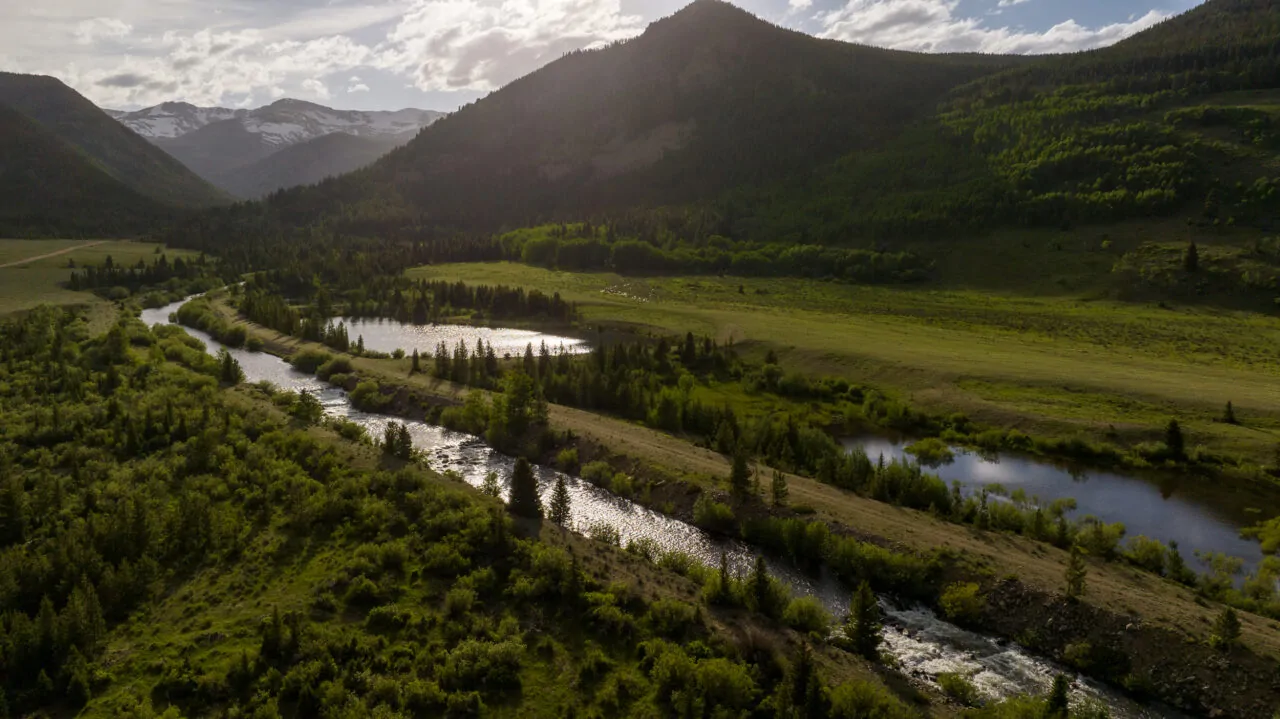
We also take a closer look at Tolland Ranch, a recent conservation success story that involved The Conservation Fund, Colorado Parks and Wildlife, and Mirr Ranch Group. Justin shares stories from the field, explains how his team helps bridge the gap between landowners and public agencies, and gives us some insight into where conservation, public access, wildlife habitat, and water resources are headed in Colorado and beyond.
Want to watch this episode? Check it out on our YouTube Channel!
Links
About Justin
The Conservation Fund
Tolland Ranch
Haley (00:06):
Welcome back to the Land Bulletin Podcast, where every other week we bring you experts in the field to impart their knowledge when it comes to the ranch and sporting property market, buying and selling advice, the latest best stewardship practices, as well as topics that impact landowners every day. I'm your host, Haley Mirr. Let's jump in.
Welcome back to The Land Bulletin. I'm Haley Mirr and today we are having a good friend of the firms on the show, Justin Spring. He's the vice president of the Southwest region and Colorado State Director of the Conservation Fund. The Conservation Fund is a buyer, a client that we have worked with, a champion on a couple transactions, but one in particular this past year. So we thought it would be great to have Justin on the show to talk about what they're doing over at the Conservation Fund, what it is and how they could potentially work with you as sellers. So thank you for being on the show, Justin. I appreciate you taking the time.
Justin Spring (01:01):
My pleasure, Haley, and it's a real treat, so thanks for having me on.
Haley (01:06):
Well, I'd love to start with you because I know you've worked with Woody Beardsley in the past, you've worked with a couple of our brokers. What is your background and how did you get involved in the Conservation Fund?
Justin Spring (01:19):
You bet. I grew up in Vermont all over New England, but mostly Vermont and came out to Colorado for college and went to Colorado College and fell in love of Colorado and the West. And once you have that taste of 300 days of sunshine and great access to the outdoors, it's really hard to go back to New England weather. So it's been fun to be out here for 30 plus years at this point and had a chance to join the Trust for Public Land in the early 2000s and worked with Woody Beardsley. And Woody was one of many project managers I got to learn the tools of the real estate trade from. And it was a great opportunity to blend my biology background and training from Colorado College with sort of the nuts and bolts of real estate business deals. I had a great run there for about 16 years and then had the opportunity to join the Conservation Fund about eight years ago.
(02:28):
So I've been running office here since about 2018.
Haley (02:33):
Yeah. And you've got a great team behind you, I can attest. I'd love to know for those listening who might not be as familiar, what is the Conservation Fund? Can you give us a brief overview and kind of the mission of what you guys are trying to accomplish?
Justin Spring (02:50):
Yeah, happy to. So the Conservation Fund is a national nonprofit and we are predominantly deal junkies. We love doing real estate deals. We work all over the country and for more than 40 years, we've been working to secure and conserve at risk lands that have exceptional environmental and in some cases economic value. What that really means is we've got 200 staff around the country and we help partners create conservation easements on working ranches and farms. We protect and add land to state parks, national parks, and even historic sites, which are a little more common in the eastern part of the country around Civil War battlefields and the like.
Haley (03:42):
Wow. I didn't know that. That's really cool. Let's start from kind of the ground up. How do you determine projects or properties that you want to work on? So it sounds like you have the economic piece, the historic piece, and then kind of the biological piece. Where do you start when determining what projects to work on?
Justin Spring (04:06):
Yeah, it's interesting. Folks are always very curious how we find our projects. And as you probably know, the brokerage field, it happens any number of ways. Sometimes you get a landowner call. Sometimes we work a lot with public agencies at every level of government. So the parks director for Castle Rock might pick up the phone and call me about a high priority acquisition they need help on. It might be parks and wildlife. It might be as simple as seeing the newest Merranch listing on the website and thinking about ways to acquire that land and protect it. And then we're really looking at a number of things. We're looking at the conservation values, what's the wildlife habitat of that particular property? Are there opportunities for public recreation access on the property and how does that overlay or mesh with some of the objectives of our public agency partners?
(05:09):
Because in many cases, we're acquiring private land and then we're turning around and selling that to a public agency partner. And so those agency priorities or goals are absolutely top priority for us to follow. And then we also have the lens of there's a lot of conservation activity in Colorado and around the country, but particularly in Colorado. So a question I always like to ask myself is, how am I or how is the conservation fund adding value to this project? Are we just another cook in the kitchen or can we bring something to the table that no one else can? Can we help get this property protected and potentially available for public use?
Haley (05:56):
That's awesome. So I guess you kind of answered my other question. Do you primarily work with public agencies to kind of help with these transactions? I know it starts with private landowners and then turns into that, but is that primarily what you guys do?
Justin Spring (06:14):
It is the majority of our work. Yeah. We certainly work on conservation easements on private lands. I would say typically we're focusing on programs like the Forest Legacy Program. So we've helped to protect about 50,000 acres of land in the Navajo River headwaters area on the southwest part of the state is a good example of that. But because in Colorado we have so many good land trust partners, they are really doing a heck of a job with the conservation easement game, particularly donated easements. And so we kind of focus on the deals where landowners are looking to sell for cash. Do they want to sell their land outright or a conservation easement and they have a need to generate cash from that sale? Those are the projects that we like to work on.
Haley (07:04):
And since you're in the state of Colorado and you bring it up, it seems like conservation is at the forefront of what a lot of public policy is trying to accomplish. Are there a lot of opportunities from even a funding perspective to get a lot of these deals done in the state versus maybe other projects that you work on around the country?
Justin Spring (07:24):
Yeah. I mean, we are very fortunate. We know we're fortunate in Colorado. We have Great Outdoors Colorado, which is the premier funding source in the country generating, taking lottery dollars and deploying those into parks, trails and open space. And building off of that, Colorado Parks and Wildlife I think as we both learned on Toll and Ranch is also a good partner and has, I would say limited funding, but funding available for really significant properties, particularly ones with great wildlife habitat or fishing access opportunities. We also are fortunate in the West to have all the major land management agencies, forest service, park service, fish and wildlife, Bureau of Land Management, and they all can tap into the Land and Water Conservation Fund, which is a national pot of money generated from offshore oil and gas royalties. So not tax money, which is important, but those offshore oil and gas royalties.
(08:28):
And that's a huge resource for all the agencies, federal agencies around the country.
Haley (08:35):
And I'd love to talk about just the time we're in now. You talk about some of these federal agencies, you talked about the conservation easements in Colorado. What are some of the challenges that landowners might be facing when trying to work with federal agencies, things like that, and then maybe why they would benefit from working with people like the Conservation Fund who know how to navigate these different scenarios and the … I know conservation easements are an incredible tool, but sometimes that's not always an option. How does the Conservation Fund fit in when sellers are trying to figure out the next step and want to have conservation as the end goal? Yeah.
Justin Spring (09:15):
So agencies, it's really about time, right? Everybody wants a quick deal. Money is always important and that's really why we exist. We exist to bridge that gap in time and funding between agencies and landowners. So we can offer landowners in many times a quicker close by tapping into our internal revolving fund. That fund is very significant. We use it all over the country, so it's always stretched thin, but it is a very good resource. So we can make an offer to a landowner rather than them waiting multiple years, two, three, maybe five years to work with a federal partner, we're able to step in as a private nonprofit, make them an offer, maybe buy their land early and then we take on the brain damage of working through those federal funding cycles, lobbying if need be in DC and trying to work hard to get that funding and the approvals in place so that we can eventually get that property into the right hands.
(10:23):
We don't have scientists on staff like some groups, and so we really rely on our partners to be those experts in natural resource management, range management, understanding how to manage the wildlife species.
Haley (10:38):
Okay. I would love to know some of your favorite projects too. I mean, it sounds like you guys are not only impacting habitat, but also a lot of these rural communities that you work in. What are some of your favorite projects that you've worked on and some of the influence some of that conservation has had on the community at large?
Justin Spring (10:58):
Yeah, you bet. I'd mentioned the Navajo Headwaters, which was something my colleagues, Tom Macy and Christine Quinlan worked on and it's private land so you can't get out there, but it is adjacent to the South San Juan wilderness and it is the ranch where the last grizzly bear was killed in Colorado in 1979. So talk about remote and wild places, this is about as remote and wild as you can get. And I always love that sort of story and knowledge that it took the conservation funds relationships and resources to help protect that massive landscape. Another fun one is really that what we're known for is Greenland Ranch and there's about 30,000 acres of protected open space in Douglas County as you drive south along I- 25 between Castle Rock and Monument. And those were deals that our office worked on really led by Sydney Macy and we had that partnership with John Malone to protect the Greenland Ranch.
(12:08):
There's a number of other easements that we worked on with private landowners, some fee acquisitions, but that whole landscape, you can take a breath when you drive between Castle Rock and Colorado Springs and sort of relax a little bit because of that work. And there are Elkhards, there's Bighorn Sheep, both of which exist east of I- 25. Not a lot of people realize that. And our more recent project there was with the town of Castle Rock and we helped them acquire their largest open space property to date. It's known as Lost Canyon and it is adjacent to Casswood Canyon State Park. It's about 700 acres and it'll be open to the public later this year. The town is working feverishly to get trails built and parking lots set up. It's going to be a really nice amenity for the public.
Haley (13:02):
That's amazing. And I know that that overpass that they just put up is probably near all that work that you all did with Greenland Ranch. So that kind of is even more connectivity between open spaces for some of that habitat.
Justin Spring (13:16):
Yeah, that is something else that wildlife passed. I think it's one of the first of its kind and I'm told they don't invest those kind of public dollars unless the land is protected. So even when we look, we talk to agencies about where is there a next big wildlife play, where is there another need for wildlife overpass? Unless they control or know that land is protected on either side of the road, they're not going to invest in that overpass.
Haley (13:44):
Oh, wow. I had no idea. So just another public service that you guys are doing inadvertently too. I mean, the fact I didn't know that that was the only reason they'd put an overpass on something. With something like Greenland Ranch, it just brings up the question, so sometimes you guys don't just work on single properties. It's kind of like a larger scope play of working with multiple parties. So how does something like that work with that many different entities as your partners?
Justin Spring (14:14):
I would say there was an era of conservation in the early 2000s where focused geographies were kind of the passion of our field and the Conservation Fund worked very closely with Douglas County's new open space director who was Brooke Fox at that point in time and the political wins were very favorable. They had passed a open space sales tax in Douglas County. GoCo was up and running and there was a lot of concern about growth and would Colorado Springs and Denver basically grow into each other at some point, which we can kind of see or feel now in 2026. I think that's the secret sauce. If you can find that partnership and that collaboration and focus on one landscape, you can have a really big impact. I think those opportunities are much rare today. It seems like what we're finding more and more is opportunities to add on to maybe those landscapes and continue building, but perhaps the foundation's already been put in place.
Haley (15:31):
Got it. Yeah, that's one of my favorite conservation stories when I tell people how important it is. So it's awesome to know that you guys were heavily involved. Now kind of switching gears to a project we've recently worked on, I would love to know, and I'm sure the people who have heard a lot about this project would love to know what was the process like from … I know you guys have been involved with the Tolland Ranch for even before we had it listed for years and years and years. So what was that process of collaborating with the state, figuring out that this was the piece that you guys were going to work on together to close? Because I know there was a lot of effort that year we were under contract. I'd love to know without the things you can't talk about, but what was that process like from the conservation fund's perspective?
Justin Spring (16:24):
Yeah. As is so often the case, what makes all these projects fun and I'm sure you experience this too, are the landowners and the Toll family is just an extraordinary group of people that had a real passion for the legacy of the place and wanting to protect the land that they had inherited. I mean, it's not too often you have a town site named after your family, right? Tolland and the Tolland Ranch. It's such an important family to the history of Colorado. And my colleague, Christine Quinlan worked with that family, as you know, roughly 10, 11 years ago to put a conservation easement on the property with funding from Forest Legacy Program and GoCo and Boulder County, which was the right tool to protect over 3000 acres. And then when the family … I think what was remarkable is we stayed in touch with the family over a decade and would have regular check-ins.
(17:28):
And so we knew they were thinking about maybe selling. And then I think I talked to your dad when Mirr Ranch posted it for sale. I said, “Hey, Ken, is there an opportunity here? Could we maybe have a chance to take the conservation a step further through public ownership by the state?” And we both were kind of intrigued by that and we had a sense that we could probably pull it off. It would take a lot of work and ultimately the family was on board, you guys were on board and as with a lot of properties, there's a lot of title exceptions, right? Title work.
(18:10):
Some of the typical things that sometimes are hard weren't as hard like the appraisal, we had a pretty good understanding of value and what could be supported out there. There was some building sites incorporated into the conservation easement. And so not only was it a chance to create a state wildlife area but also remove the potential for three additional homes that could have been built on the property and then open it up for public fishing and hunting. But yeah, I forget the number of exceptions. I think we were at, I don't know, 80 or 90 title exceptions on that property.
Haley (18:44):
It was pretty crazy.
Justin Spring (18:47):
There was a lot of things when a property's been in one family's hands for over a hundred years and you have town sites from logging and mining days. I mean, there's often title issues you've got to resolve and certainly Tolland had that in spades, but we had great partners at the state as well and we obviously were able to get through it with you guys and your help too.
Haley (19:13):
Yeah. I mean, thank gosh for Christine and her ability to organize everything because it was a lot. And when you have a town in the middle of a ranch, it was just a very unique property. We were so grateful to work with you all and with the state and continue the legacy of the tolls and have it be something that people can enjoy and those landscapes will be there forever and the history, the train going through. It's just quintessential Colorado. So it was really imperative to keep that, especially for that region as things continue to get segmented and developed and it's just a very special piece. So it was really nice to work with you all. And I would love to kind of … We talked about the conservation easement that was placed on the ranch years prior to you even being involved with the Conservation Fund.
(20:12):
I feel like that might be something that the listeners might not totally understand. Is there still a conservation play or conservation potential even after an easement has been placed on a property? So if you wouldn't mind talking a little bit about that and how the conservation fund saw that and the state, because I know it's not always regular that something that's already been protected can kind of go down this rape.
Justin Spring (20:34):
Yeah, no, it's a great observation, Haley. And I've seen it a few times in the last 20 plus years in Colorado, but it's rare. But as we saw, I think we've seen it with a Black Candy of the Gunnison National Park. There was a conservation easement on a private land that was really an in holding to the park and many years after the easement was in place, there was an opportunity to buy that property and incorporate it into the national park. Tricky to do with an encumbered property, but it worked out there. And again, with Tolland, not adjacent to national forest, but it wasn't an inholding per se. And it was really just I think in a unique circumstance where if you have a private property that has an easement but you have natural resources that are a rare commodity and the front range, it's so rare to find a property of that size with three and a half miles of frontage on South Boulder Creek, both sides of the creek.
(21:43):
And then I think there's what, 16 ponds out there, at least a few of which can support fish populations. So it was really a unique opportunity for Colorado Parks and Wildlife and again, the resources helped drive that opportunity as well as the family wanting to sell. So it doesn't work everywhere, but I would encourage landowners, just because you have an easement doesn't mean that there's not another opportunity to elevate conservation further or consider a conservation sale as another way to see the future of your property and how it would be managed.
Haley (22:19):
Well, I just think there's all these opportunities and ways to use land and there's conservation opportunity in different aspects. I just think it's nice to educate listeners, sellers, people that are looking at properties of all of the different opportunities available to them and the things that Conservation Fund can do to help with some of that. What are some of the things, especially in the state of Colorado, but with Conservation Fund at large that you're excited to work on, how do you see conservation in the state of Colorado at a larger scale? Where do you see that going? Because I know there's a lot of changes with conservation easements and allocation and things like that. I guess we'll start locally. Where do you see it going in the state of Colorado and how do you think conservation fund can help landowners navigate? What's coming up?
Justin Spring (23:16):
Yeah. I mean, I think a fundamental dynamic what many of us face is real estate values are going up. It's a great investment time and time again, it's typically a safe investment, especially large amenity-based properties. And to meet the challenge of how do you raise funds to buy a property for conservation, generally speaking, the resources are limited here, even with all the great partners we have in Colorado like OCO. So I think that looking at new ways to raise funds and some groups are looking at that right now, there's both the, excuse me, the effort underway at the state capital to extend the conservation easement tax credit program another five years. It's slated to sunset in 2026. Can you extend that another five years out? So that could be a helpful resource to folks looking at conservation easements. There's a group that we're involved with looking at ways to generate funding that might help new state parks and new state wildlife areas.
(24:31):
There's also existing funding that isn't quite available but might be to help with wildlife with wildlife habitat restoration projects and potentially new acquisitions that would add to a state wildlife area.
(24:49):
Even though we are doing a heck of a job in Colorado in terms of conservation, I'd say the industry overall is always looking to expand to innovate. I think that's great. We're seeing very recently some new interests from corporations and water. Can they make investments in Colorado in the Southwest, really in the Colorado River Basin that protects water resources, both quantity and quality? Can they invest in a conservation easement that ties water to the land? Can they help acquire properties like we recently did on Escalane Ranch in Delta and Mesa counties? 4,000 acres, I think it had 15 miles of riverfront along the Gunnison River and Escalante Creek, just a massive portfolio of water rights that will now be forever intact. They can't be spliced off and sold in the future for development. Those rights are going to stay there in the watershed and support both irrigation and native fish species.
(25:58):
So we are seeing some interest again from corporations. Sometimes it's a co-investment vehicle type of interest where they may just want to help a project move forward. Other times they're looking at donations. Can they donate money to help protect those water resources? And boy, has there never been a better time to think about protecting water than right now with the drought that we're looking at this year?
Haley (26:26):
I would say so. That's exciting to know that there's even today more innovation on how to protect these spaces, who's trying to get involved. Where do you see even the federal landscape with some of the other projects that Conservation Fund is working on nationally? Do you see some of that pausing a little bit or just like Colorado trying to be more innovative and find different avenues of funding mechanisms and things like that?
Justin Spring (26:53):
Yeah, great question. I mean, without a doubt, things have slowed down with our federal agency partners. They sustained big staff cuts last year. So a lot of the key staff are still there, thankfully. Their resources have been drastically reduced, so it is taking longer to process transactions, to process payments. Can you get title work reviewed when you've got two attorneys that there used to be 10 attorneys in a particular department. So it's still happening, but yeah, I'd say it's definitely slower and more and more we're looking at what other alternatives are there out there. One kind of unique part of the conservation fund is we have a mitigation solutions team and that is a group that it's a handful of folks. They work with energy companies, transmission lines. If Excel is looking to expand a transmission line in another state, there might be impacts to wildlife species.
(28:02):
And if there is some agreement to set aside money to buy habitat to mitigate the impacts of maybe the power line or the natural gas pipeline. And so even with a push right now away from renewables, we're seeing private companies still planning and moving forward with projects to expand the grid, like all the power lines around the country, it's critical. And so that is a good source of private money that can be used in very specific projects, targeting species that'll be impacted or maybe habitat that would be impacted by that infrastructure development.
Haley (28:48):
Is that a lot of that stuff happening kind of northern Colorado, some of those bigger power lines that are being through there?
Justin Spring (28:56):
Exactly. There were some in Northwest Colorado. I would say in general, in Colorado, you don't see as much as say Arizona, New Mexico, Texas. I think Texas produces something like 25% of the nation's power but has largely been cut off from the national grid. So there's a lot of projects now that expand how can Texas sell power outside of Texas and connect all the way to Southern California. And so they're going to have impacts to native reservations, they're going to have impacts to desert tortoise habitat, different bird species. And so we kind of work with those companies and the state and federal agencies and come to some agreement on what kind of money can be set aside and then spent to mitigate those impacts.
Haley (29:46):
So when you are going to put an offer in on a property, what are your valuation kind of mechanisms? How do you guys put value on ranches when determining the purchase price or things Like that.
Justin Spring (30:01):
Yeah, great question. We know we are competing often with developers. So we are in the competitive marketplace and so because of that, we are always looking at what is the highest and best use of a property? Whether it's rural or urban, it's going to have a highest and best use. Of course, in many cases, that's development. And so we will hire an appraiser. In many cases, it's an appraiser that we might select in a joint fashion with a landowner. Is this someone that they trust, that we trust and really work very transparently with that landowner to get to a good outcome and this is the appraised value, here's what we can offer. We're not in the business of low balling landowners. We want to put a deal together that's going to work for them in the bottom line. In some cases, we can bring a combination of cash and tax benefits to the table and that can work out well for the landowner depending on their tax circumstances.
(31:01):
So sometimes we call that a bargain sale when there's a sale of land that's maybe a little bit below fair market value. So you get both the cash and the tax benefits from that combined transaction.
Haley (31:15):
And what's great about those tax benefits too is a lot of these landowners have owned for generations or what have you and the capital gains that they're going to experience are crazy. So to have some of this be attributed to that is always a helpful mechanism that I don't think people quite understand until they're in it. And I can attest too sometimes when you get appraisers that you don't necessarily know, there's also a little bit of a chance that they might low ball you. So the fact that you guys have had these preexisting relationships, the appraisers that know what they're doing, they know land, they know ranches, I think is a benefit to anyone that's involved in a transaction. So yeah, just was wondering how you all determine your valuation. I know we kind of went through even that with you all in Tolland, but just wanted to see that behind the scenes.
Justin Spring (32:08):
That's a service we offer. When we walk into a new deal, we will in many cases pay for that appraisal. We'll kind of roll the dice, take that risk that there may or may not be a deal because we got a hunch that'll probably work out. And so we'll spend anywhere from, I think appraisers now, it's like $20,000 for an appraiser for one assignment. And if it's a big assignment, you might be looking at $100,000. So it's a significant cost that in many cases we try to save the landowners from that cost. We can bring that money to the table and it's kind of our risk capital in a new transaction.
Haley (32:48):
Oh, it's a huge benefit and it definitely does help. And to your point, that's a big risk for you all to take even before the transaction to be able to put that out there. So definitely a benefit to any client looking to go down that road. And before I let you go, Justin, I would just love to know what are you excited about with the Conservation Fund, with conservation in general? What are some of the projects you guys are working on? I know probably you can't talk about all of them, but some things that are in the pipeline that you'd like people to know about or communities to know about that might be coming up in their neck of the woods.
Justin Spring (33:27):
Yeah, happy to. My colleague, Kelly Ingabritson, has really got a great portfolio of work in the mosquito range in Park County just outside of Fairplay. So there's all those 14ers and thousands of acres of patented mining claims. And she's done a great job partnering with local groups, the Forest Service, Park County and the landowners and bit by bit picking up mining claims that are critical to ensuring permanent public access to 14ers. Places like Mount Democrat we bought the top of and conveyed that to the Forest Service a couple years ago. We just recently sold a good chunk of Mount Bross to the Forest Service and we're working on more. So that is kind of going back to your earlier point in the conversation, geography where there's just a bundle of work to do all kinds of interesting landowners and fascinating histories from the mining heritage there in Park County.
(34:31):
We recently hired a new project manager, Nick Jacobson in Montrose. So it's a great and I would say first time presence for the Conservation Fund on the West Slope. He's in his home office in Montrose and really excited about his energy and ideas and he's got really tremendous experience from his time at Colorado West. And then I would say this work has never been more important. We may not be seeing the same population growth we had a few years ago in Colorado and yet I would argue the majority of people that move here that are here want to get outdoors. And so if you are noticing crowded trailheads and crowded traffic going to I- 70, whether you're camping or skiing, we need more places to play. The wildlife needs more areas they can roam without pressure. And so I think it just speaks to the need for more of our work in the land conservation field.
(35:34):
And thankfully we've got great partners, great funders and a wealth of opportunities that are still out there.
Haley (35:45):
Well, I'm excited for what you guys are doing. I feel like you should write a book, Justin, about all the landowners you've met and the project you've worked on because it's pretty cool. I mean, even the story about the Grizzlies or Greenland and now the toll. So it's just very cool what you guys are doing. We're grateful to been a part of one of the transactions. I hope there's a lot more to come, but thank you so much for all you do for conservation and for being on the show. Appreciate it.
Justin Spring (36:12):
Oh, thank you. It was a real treat. Thanks for having me on.
Haley (36:17):
Thanks for joining us today. To learn more about the Ranch Real Estate Market or our ranch marketing process, make sure to subscribe to our newsletter on our website at Mirrranchgroup.com or give us a call at 303-623-4545. See you next time.