
This week, we’re welcoming a new broker to the crew: Davis LaMair! Growing up in Colorado and spending the last decade guiding anglers across the rivers of Wyoming and Idaho, Davis has built a deep appreciation for the landscapes, wildlife, and stewardship that define the American West. Now, he’s bringing that passion to the Mirr Ranch Group.
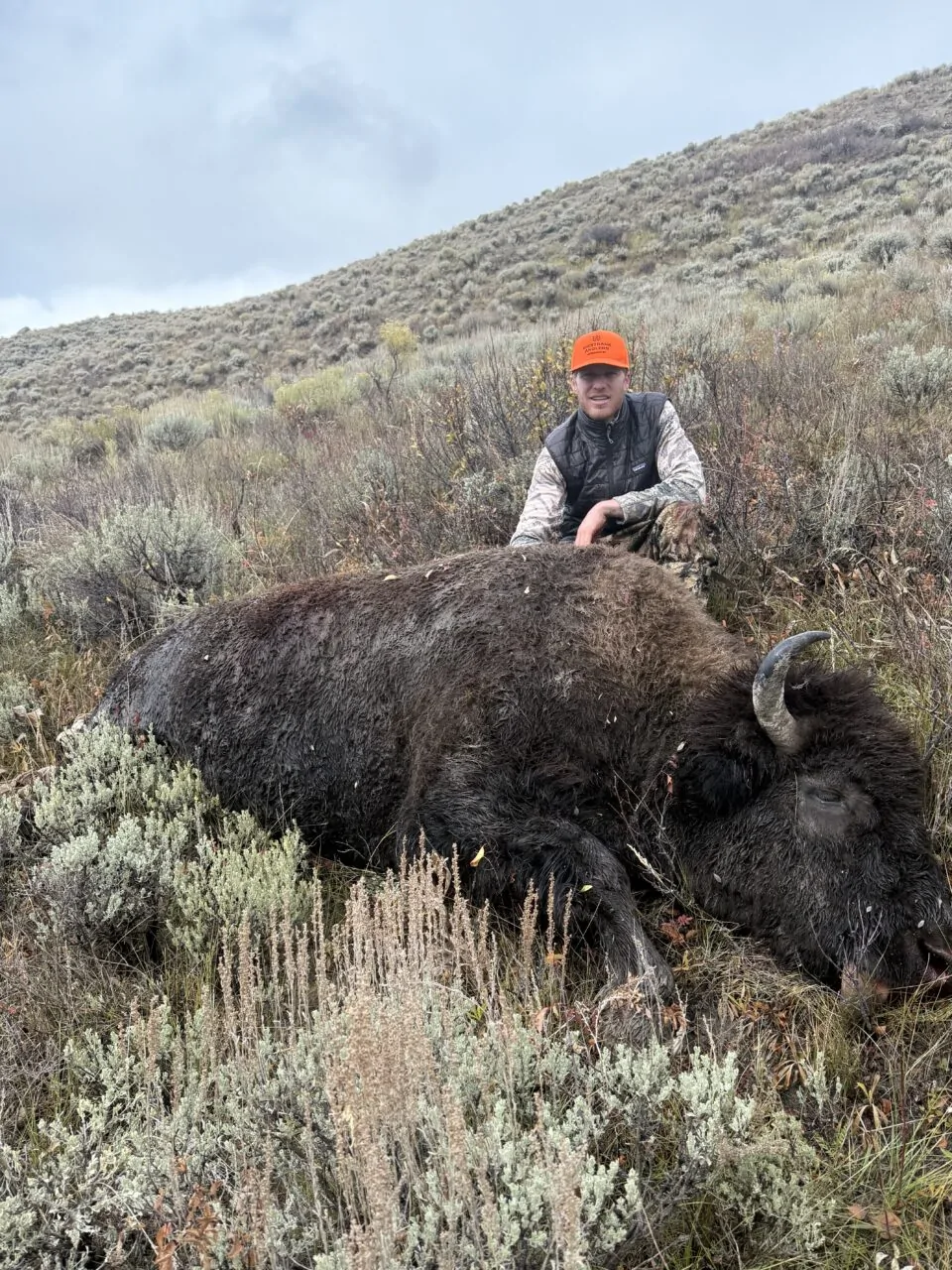
Davis joins Haley to talk about his background as an outfitter, the lessons he’s learned from life on the water, and what continues to draw people to the wide-open spaces of Wyoming. From a once-in-a-lifetime bison hunt in the Tetons to the importance of educating landowners on stewardship and conservation, Davis shares both the practical experience and evolving philosophy that shape his vision for the future of the West.
Want to watch this episode? Check it out on our YouTube Channel!
Haley (00:06):
Welcome back to the Land Bulletin Podcast, where every other week we bring you experts in the field to impart their knowledge when it comes to the ranch and sporting property market, buying and selling advice, the latest best stewardship practices, as well as topics that impact landowners every day. I'm your host, Haley Mirr. Let's jump in.
Welcome back to the Land Bulletin Podcast. I'm Haley Mirr and today we're going to be getting to know one of the newest members of the team, Davis LaMair. Davis has been a family friend for a while now. We trust him wholeheartedly, but on addition to all of that, he has an incredible background in outfitting and fishing and he lives in one of my favorite places in the world. But I am getting ahead of myself a little bit. I'd love to introduce you, Davis, to the show. Davis, welcome.
(00:55):
I would love, before we get into your experience and your knowledge of the West, what originally sparked your interest in land ranching and the American West at large?
Davis LaMair (01:08):
Well, hi, Haley. Thanks for having me. Honored to be here. Well, yeah, I grew up in Colorado, in the American West. And then I would say what really sparked my interest in Western ranches. My family, my dad's from Iowa, they've got farms back in Missouri and Iowa. So I spent a lot of time in the farming world, not necessarily ranching. You could call it ranching if you wanted to. But then a big thing in my childhood that I'd say sparked my interest in ranches was my first elk hunt with my dad and my brother. And my dad got us access on a ranch for a youth cow hunt. And I just remember it vividly. We drove through the ranch and there was two six by six bull elk fighting on the left and then there was like 40 mule deer bucks on the right and it was like driving through a safari down in Southern Colorado.
(02:14):
So just seeing the wildlife on private lands in Colorado was really eye-opening to me and wanted to get involved in it in some way. I'm not a rancher, but I sure wish I was.
Haley (02:30):
That's awesome. And I think too, experiencing what you did with animals on private land probably just evoked this sense too of how important those habitats are in addition to some of the public lands that maybe we grew up knowing a little bit more about to see how protected these things are and what ranchers can do for the animals and the fish that you care about and what you do. What lessons did guiding teach you that now carry over into ranch real estate? So I guess more broadly looking at it, I know you're just kind of starting this path, but what have you seen carry over from a knowledge space that maybe people who didn't have your background might not know and might not bring into that ranch real estate experience?
Davis LaMair (03:16):
Yeah. Well, so I've been a fishing guide for 12 years now. When I first started doing it, I thought it was just awesome to be outside, experience all these landscapes, float all these rivers, go to all these cool places. And then I realized I'm spending eight hours a day with two other people in a little boat. So really it's the relationships and guiding and I've got to meet a lot of really cool people throughout the years. So a lot of them have become friends. It's unique in that aspect. I don't know if I'd have that many 80 year old friends if I wasn't a fishing guy. But yeah, just building relationships with people and trusting them and enjoying the day is what it's really all about.
Haley (04:08):
And it sounds like you've hunted in multiple places. You have your family kind of in the Midwest. What is it about Wyoming's fishing and hunting that keeps making you come back, has made you want to live there? What sets it apart from other places that you maybe have experienced?
Davis LaMair (04:27):
Yeah. Wyoming's awesome. I would say the big wide open landscapes. I'm right at the base of two national parks, tons of wildlife coming through Jackson all the time. And then if you go to the neighboring valleys, you're more in these large valleys with big views on either side. Take for the Green River, for instance, you float down that river and you look to the left and there's the Wind River Mountain Range and it's a hundred miles of wilderness alpine terrain and it's 40 miles away. And then you look to the right and there's the Wyoming range. I think just those big wide open landscapes are what I really enjoy seeing and definitely keep people coming back to those areas for sure.
Haley (05:22):
So how long have you been living in that area and what are some of your favorite pockets without giving away your favorite fishing holes and things like that? Cause I know those are very important to people. What are some of your favorite pockets in that region and maybe some areas that you've outfitted clients in the past?
Davis LaMair (05:43):
Well, some of my favorite pockets are not, luckily they're not secrets. I spend most of my summer guiding on the South Fork of Snake in Idaho in Swan Valley. So it's a big river and it's definitely not a secret, but it is really good fishing and it can handle a lot of boats and a lot of pressure. And I like guiding it and finding the hidden pockets within the river. But yeah, I won't give out my other small creek fishing holes just yet.
Haley (06:18):
And how long have you lived up there, just for context?
Davis LaMair (06:23):
I moved here in 2016 the day after my last final in college.
Haley (06:30):
That's awesome.
Davis LaMair (06:31):
Yeah. I'm a big skier as well. And so I got here and it snowed, graduated in December and it snowed more than a foot for three days in a row and I didn't plan on leaving again after that.
Haley (06:46):
You're like, oh, noted. Okay. Not leaving. This is pretty good. I think you're definitely at the epicenter of some of my favorite ranges. So I'm jealous that that's what you get to wake up and look at every day. What is about the Western landscape and outdoor lifestyle that keeps pulling people back year after year? So your clients that you've been dealing with for the last couple years, a lot of them are probably not from Wyoming. What have you found their reasoning is? I know your reason is these wide open vistas and the national forests and the habitat and wildlife. Why do your clients keep coming back?
Davis LaMair (07:24):
I think the same thing. Yeah. They're experiencing something that you don't see on the East Coast. Just being able to see so far, having the freedom to go really wherever you want to go. All that stuff you see, you can just keep going and walk as long as you want. But yeah, I mean, I'd have to say just the freedom of it all.
Haley (07:50):
Yeah, I would agree. I think Wyoming is this untapped thing. I don't know. I love it. Every time I cross the border and I know the landscapes are very similar, but it feels like an entirely different state just mentally, emotionally, the whole thing. So I think you found a nice little pocket there and I think the people that you guide are lucky to have you. I would love to look at specifics now. I know you have done a ton of different hunts. You fished in a lot of places. You're even going to some, I think you said, where are you going, like Russia or something? The
Davis LaMair (08:24):
Yukon. Oh
Haley (08:25):
Yeah. Yeah. Doing a
Davis LaMair (08:27):
Boat trip in the Yukon to go fishing.
Haley (08:29):
I love it. But one of the things that I know you have done that is very unfamiliar to me is bison hunting. For people who aren't familiar, what does a bison hunt lottery process actually look like and what makes it different from maybe your typical elk or deer hunt that you might pull tags for?
Davis LaMair (08:51):
Yeah. Well, so very unfamiliar to me too before last year. So in Wyoming, there's a special bison hunt and it's a lottery tag draw. So let's see, last year there was 70 tags given out, I believe, and 4,000 people applied and it's just a random lottery. And then once you draw the tag, you're never allowed to draw it again. They just changed that rule. So it's a once in a lifetime hunt. It's sort of a privilege
(09:24):
For a Wyoming resident. Some non-residents do draw the tag, but it's very, very difficult for them as well. And then this herd of bison lives mostly in Grand Teton National Park and they wander around and sometimes they venture into the national forest or the National Elk Refuge, and those are the only two places that you can legally hunt them. So everybody drives through Jackson, goes up towards Yellowstone and the bison are just sitting on the side of the road right there, but they do leave the side of the road and they go up in the national forest and that's where you got to hunt them. So it's a lot of reading maps, knowing where the boundary is a lot of interesting access points. The main spot where I was hunting, I had to park on the side of the road in Grand Teton National Park and then walk through the park into the national forest and hunt them there.
Haley (10:27):
Oh, wow. How big is that herd typically?
Davis LaMair (10:31):
It's about 600. Maybe 10 or 15 years ago it was more like a thousand. So there was a lot of opportunities for people to hunt them 10 to 20 years ago and now it's right at about the management level that they want it to be at. So they're just giving out 70 tags a year and we'll kind of see how that goes.
Haley (10:56):
For those listening who might not understand why certain amounts of tags are allocated every year, who's deciding that on a larger scale? Is it Wyoming Fish and Game across the board? Is there something different for bison? How does that work from just a regulation perspective?
Davis LaMair (11:18):
Wyoming Game and Fish manages the wildlife. So they set the tag number for the year. The biologists take counts in the winter and see the population dynamics and all that. Well, they just changed it. The herd has not enough bowls. They want to harvest more cows next year. Most people want to harvest a bowl. I actually ended up harvesting a cow. Luckily with a neither sex tag, it's sort of hard to tell the difference on those ones.
Haley (11:58):
Well, no, it's super interesting. And when you think of bison, to your point, you think on the side of the road at Yellowstone or you think not wild bison, you think of bison farmers and things like that, or that the people of what is out of the lookout mountain on I- 70 on the way up. But to know that there's these wild herds out there and that there is an opportunity, a once in a lifetime opportunity to help with those populations and to help Wyoming fishing game is really interesting to me and I didn't know it existed. So I'm sorry that you don't get to ever do it again, but I'm grateful that you did get to do it at some point in your life.
Davis LaMair (12:38):
Yeah, it's cool. I think I looked up a bunch of information on it, but there's something like only 30,000 wild bison in the US.
Haley (12:48):
Oh, wow.
Davis LaMair (12:49):
Yeah. There's a lot of opportunities to hunt them on big ranches and you can go find a hunt like that. But the wild ones, it's only a couple hundred people a year that get to hunt them. So I feel really lucky to have done it.
Haley (13:04):
And what was your first impression stepping into that experience? I know you've done a lot of hunts in your life. What made this different than some of the others and how did you know which bull you could hunt or which cow? I forget which one you said that you hunted, but how is that different? Did you have a guide? Were you the guide? I'd love to just know how that all worked.
Davis LaMair (13:28):
Yeah. So I was my own guide, did it all on my own. But the first impression was the first day I went hunting was like early September and I went out there and there was two big bowls and they were only 50 yards from the park boundary. So I thought it was going to happen that day and it got to like 11:00 AM and it was 80 degrees out. And that was my first impression of the hunt is, “Oh no, I can't shoot that animal at 11:00 AM at 80 degrees.”
(13:58):
And I had created a big list of all my friends and everyone I knew in Jackson that might be able to help me if I got one. So when I did get one, luckily it was a Sunday and a lot of my friends were not working and I texted just about everybody I knew and called them all and luckily I got seven friends to come out and help me carry it out. Holy cow. So that was the biggest difference between an elk or a deer hunt or really anything. I mean, elk's a really big animal, but a bison is just so much bigger. We carried the hide out too. The hide must have been 90, 100 pounds, something like that But just the amount of work was the first impression I thought of. And yeah, it was a lot of work. Luckily, I had a lot of really good friends that helped me get
Haley (14:56):
It out. You earned your stripes there. How far away from the closest road or things like that did you end up getting the L or getting the bison?
Davis LaMair (15:10):
We had to carry it out about two and a half miles.
Haley (15:14):
Okay. So not horrible, but nothing.
Davis LaMair (15:18):
Yeah. And it was slightly uphill too. A lot of times you are packing downhill, but this time it was slightly uphill and it was the first snowstorm of the year. So they came in and was a muddy mess, but we got it out of there right at sunset. And then I had to guide the next day, row boat down in South Fork. And so I remember I had to call … I called my clients while I was hiking out and got serviced and told them I might be a little tired the next day, but they were hunters themselves so they were pretty excited to hear that.
Haley (15:58):
Yeah. Just bring me a litle bit more coffee, but also just be proud that your guide was able to do this. What did you pay your friends with once you got it all out?
Davis LaMair (16:10):
Meat and a big dinner. Yeah.
Haley (16:13):
Good. I was going to say.
Davis LaMair (16:15):
One of my friends kept part of the hide and he's going to make a little hat out of it.
Haley (16:20):
That's awesome. Well, that's what's so great is with an animal like that there's so many things that you can do with everything with the hide, with the meat. It's incredible how many people it can feed and how long did that meat last you once you-
Davis LaMair (16:37):
Oh, I still have a bunch of it. Yeah. A good amount. We ate a lot of it. I've given a lot away. Yeah, it's really, really good meat. I also kept a bunch of the fat. I kept all the kidney fat and made tallow out of it.
Haley (16:53):
Wow, cool.
Davis LaMair (16:54):
Hallow balm for your hands and you can cook with it as well. So that's a little different than an elk and a deer. The fat on a bison tastes really good and you can make tallow out of it too.
Haley (17:07):
Maybe that's a follow-up from this. We'll get your tallow recipe for the listeners and maybe that's a good client gift once you sell your first ranch. Yeah. Lifetime supply.
Davis LaMair (17:20):
A jar of tallow. Say thank you
Haley (17:23):
For buying this. Yeah. Thank you for your payment. Here's a jar of tallow. Did your experience hunting bison deepen your appreciation for the people that came before that hunted these on a daily basis? I mean, the size alone and the amount of people that you need to help you, how did that kind of impact your view on things?
Davis LaMair (17:49):
Yeah, absolutely. It was sort of a surreal experience to hunt them. And the day that it happened, it was really cool. Like I said, it was the first snowstorm of the year and it started raining and I wasn't hunting with a muzzle loader out of a train or anything, but I saw the bison just start moving and these two big herds, probably one of them that was 150 and another one was 200 and they just must have moved
(18:17):
Two or three miles. They were down in the park and we were watching them and then they just got a wild hair and came straight up the mountain towards us and they were grunting and coming over the hill stampeding almost. It felt like I was in the 1800s. It was really cool. And then like you've mentioned, the fact that I got to do it with that big of a group of people was really cool and that's-
Haley (18:45):
Yeah, that's really special. I
Davis LaMair (18:47):
Guess what it used to be like, right? Everybody comes out and helps out and you got meat for the whole family.
Haley (18:54):
Yeah. There's a communal aspect to hunting something that big. Were you on foot when they started stampeding or what did that look like?
Davis LaMair (19:04):
Yeah, they were running. Maybe I shouldn't go back on the stampeding.
Haley (19:09):
I'm thinking like Lion King. I'm like, “Oh my God, Davis is like …”
Davis LaMair (19:13):
Yeah. So I was actually hunting with a friend of mine and then there was another guy who drew the tag and I had been seeing him in the same area since there's not all that many areas to hunt it
(19:27):
Every day. Every day I went hunting, he was there. He put in a lot of work. He ended up getting one too, just so we have that for reference. But he was a bow hunter. And so I have the rifle and he's got the bow and we're standing there and the bison are coming over the hills and they're about to cross the boundary and all of a sudden we look over to the left and there's another herd of 20 that had come up into the pine trees and they were in the national forest and we look at each other and I've got a rifle and he's got a bow and I was like, “I'm going to have to shoot one.” And he goes, “Yeah, me too.” And so he crept down the hill with the bow and then I stood up on the hill with the rifle and eventually they got wind of him and turned and headed back towards the park and that's when I got mine.
(20:16):
But yeah, they're cool. It was a cool hunt.
Haley (20:20):
God, that's a once in a lifetime. Well, very cool. Thank you for imparting some of that. In your opinion, what does being a good steward of the land look like in 20s, 26? So you've experienced being an outfitter, you've experienced appreciation for these landscapes that mean so much to you. I think the word conservation and stewardship has changed over the years, but with what you're studying with land management with everything that you're kind of learning up there, what does that look like, especially in the valley you live in stewardship?
Davis LaMair (20:53):
Yeah, there's a lot of great land stewards in Jackson Hole, right?
Haley (20:57):
Yeah, lots of money up there.
Davis LaMair (21:01):
I think in my opinion, somebody who works with nature or even mimics the natural systems. And if we go back to the bison stuff, the Great Plains sort of evolved with the bison and so they formed the soils of the Great Plains and all the grasses grew and evolved with them and the grasses sustain the bison and the bison sustained the grasses. So today bison might be pretty hard to manage, but cattle, if you can run cattle, they're really the best way that I've seen to improve the land and manage the land with livestock. I've learned in my master's degree a lot about soil. So I've focused a lot on soil and when you work to improve the soil, it helps you manage your land in return. So especially on a year like this year with minimal snow melt or water, if we get a little bit of rain, the ranchers or the landowners who have focused on rebuilding their soil over the last 10 years, they're the ones that'll see the benefits this year because that soil will be able to absorb more water so the grass
(22:28):
will grow and they'll see the benefits in a year with little to no precipitation if it ever happens. We'll see.
Haley (22:36):
It's so true. And I think that's a common misconception people have about the degradation of land. And obviously if you do it wrong, there's always chances of overgrazing and all these things, but how important and crucial cattle are to the soil health of different ranches and landscapes. I know you're doing a lot of work with riparian areas. Can you tell us a little bit about the importance of those areas to the west and the part that ranchers do play in protecting some of those really important landscapes?
Davis LaMair (23:09):
Yeah, absolutely. I mean, the riparian areas, a lot of the ranches in the west are along the valley floors, the vast majority of them, I would say, where the water is. So back to the land stewardship comment we were talking or the land stewardship question you asked, for instance, that ranch that we were on a month ago, if you care for your waterways, then you'll see the benefits in a tough year like this year. So if you spend the time to restore your creek or your waterway or your riparian area, then when you have little water, you'll see the benefits from trout surviving in a low water scenario.
Haley (24:02):
That's a great point. So for the listeners, we were at Reeder Creek Ranch a couple weeks ago, Davis and I with casting for recovery and we had a great day and one would think with the water as low as it is and the lack of moisture, which we're getting more now, so hopefully we come in a better place this summer. But these guys were still catching fish. There was still the partnerships along the river because everyone had taken care of their stretch, it was healthy when compared to maybe some other areas. But even in our hardest years, ranchers, I think the ones that have taken care of those areas, it helps sustain not only the ranches they have, but things downstream that might be having these massive impacts from the lack of water. So yeah, thank you for bringing that up Despite all of the challenges facing the West overpopulation or drought, some of these things, what gives you hope and optimism about the future of ranching and conservation?
(25:05):
You just had this life-changing experience with the bison, your appreciation of these river corridors with your clients and educating some of those 80-year-olds that are now your friends, where does your optimism lie when it comes to the future of the West and landowners that are coming through the fold, I think?
Davis LaMair (25:28):
Yeah. Well, I think what we just talked about. If you work with nature and you give it a chance, then you'll see the benefits and not only ecological benefits but financial ones as well. So seeing ranchers implement these things that are good for the wildlife or the fish that also venture up into public land for the public's benefit and seeing them also have better financial returns, then I think that's what gives me hope and optimism for the next generation is seeing that it can all work together. And when you give it a chance, it'll work.
Haley (26:18):
Yeah. And I think people like you with your master's program that you're learning and you're educating yourself on all these different ways of managing land, I don't think you're the only one. I think there's a lot of people, especially new landowners that we work with and that your clients that you're fishing with who are educating themselves and there's so much more science available and data and I think in a lot of ways that can help us kind of steward these lands different than maybe they have in the past, especially when you have these impending things that we've never experienced before, like the drought and stuff like that. So I'm just grateful that there are people like you, Davis, that are learning how to do it better. Well, I'm excited to come up there and get to know the landscape. You know the market up there, you've been there I think after 10 years they call you kind of, at least my husband says that about Colorado a native, but yeah, can't wait to come up there.
(27:19):
But no, thank you so much, Davis, for telling us about your experience. That bison hunt sounds unbelievable and how cool that you got to experience that while living up there and then your kind of knowledge space on land management and the thing you're learning through your master's program and just with boots on the ground leading the team up there in Western Wyoming. But thank you so much for being on the show. I'm so excited to have you on the team and while I don't think I'll ever experience a bison hunt, I would love to see pictures and shadow you on a hunt someday. So thanks for coming on the show today and taking time out of your day, Davis.
Davis LaMair (28:02):
Yeah, thanks for having me.
Haley (28:05):
Thanks for joining us today. To learn more about the Ranch Real Estate Market or our ranch marketing process, make sure to subscribe to our newsletter on our website at murranchgroup.com or give us a call at 303-623-4545. See you next time.