
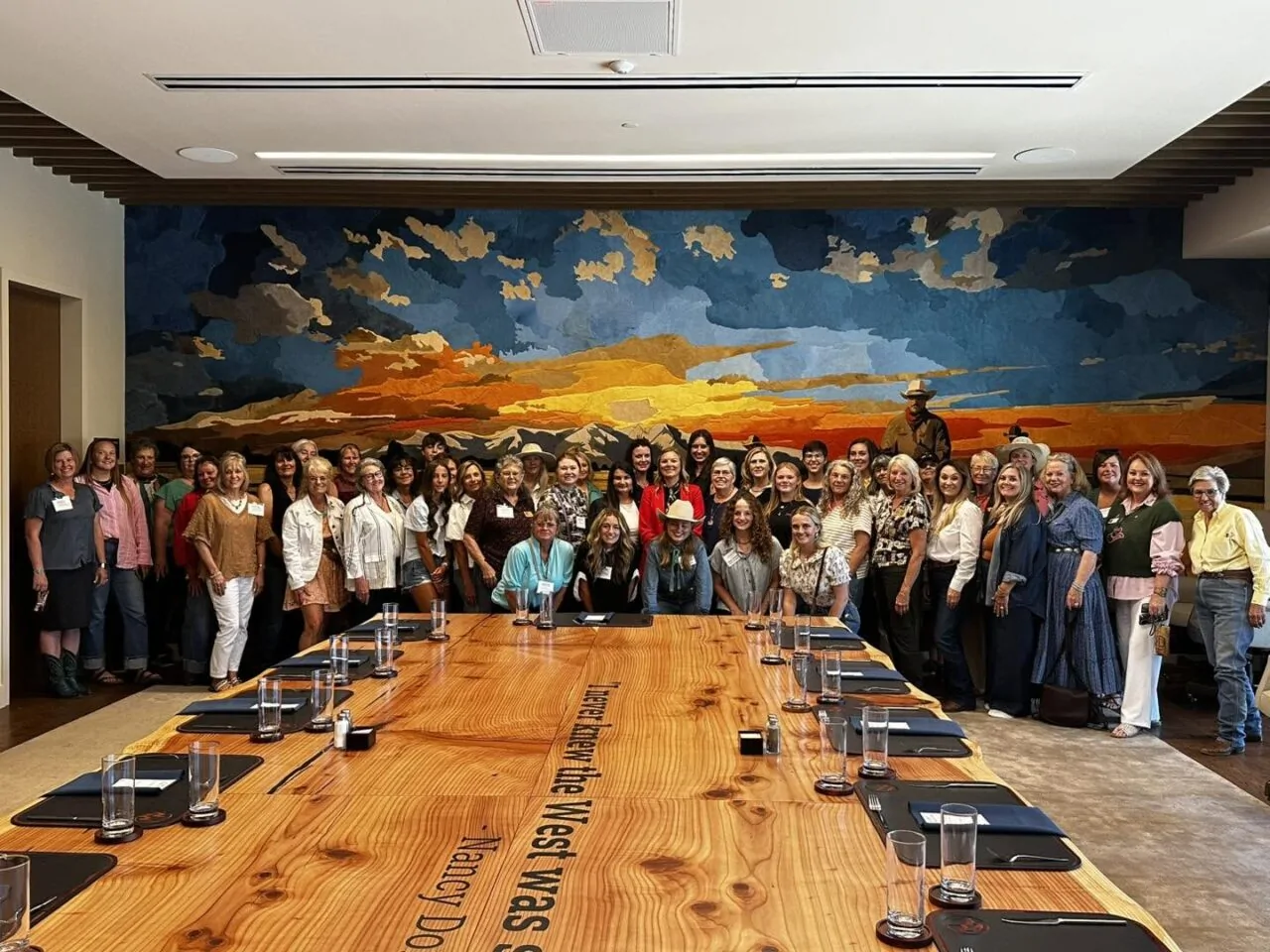
The American National CattleWomen have spent decades educating consumers, advocating for producers, and creating opportunities for women across the beef industry. This week, Haley sits down with ANCW President Casey Matzke and Director of Communications & Operations Ashley Hughes to explore how the organization has grown from a small educational group into a national voice for cattle producers.
From the ranches of Hawaii to the halls of Congress, Casey and Ashley discuss how ANCW is helping women build confidence, find community, and advocate for the future of agriculture. They also break down some of the biggest misconceptions surrounding the beef industry, explain why telling agriculture's story matters more than ever, and share where they see ANCW headed in the years ahead.
Want to watch this episode? Check it out on our YouTube Channel!
Links
American National Cattlewomen
Haley (00:06):
Welcome back to the Land Bulletin Podcast, where every other week we bring you experts in the field to impart their knowledge when it comes to the ranch and sporting property market, buying and selling advice, the latest best stewardship practices, as well as topics that impact landowners every day. I'm your host, Hailey Mirr. Let's jump in.
Welcome back to the Land Bulletin. I'm Haley Mirr and today we are interviewing two very impressive women who are a part of the American National Cattle Women Inc. Casey Matsky and Ashley Hughes. We're going to be going over what the organization does, what the advocacy looks like, and where it started and where it's headed. So without further ado, thank you Casey and Ashley for coming on the Land Bulletin today.
Casey Matzke (00:48):
Thanks for having us.
Ashley Hughes (00:49):
Yeah, thank you.
Haley (00:50):
Well, I'm really excited to learn more about what you guys do because I'm always about advocacy for women in different very male dominated industries because I feel it here every day. So I'm excited to get to know what you guys are doing. So before we get into ANCW and the mission and where you guys are going and what you do for women around the industry, I'd love to know about each of your backgrounds and what brought you into the beef industry and then into ANCW. I'll start with you, Casey.
Casey Matzke (01:18):
Sure. So I didn't grow up in the traditional ag background. My grandparents had some call, but I didn't grow up. I played sports. And so I went to A&M to finish out my college degree and I happened to take an animal science elective. And I said, “Oh, this is where I want to be. ” So I quickly added animal science as a double major to my degree. And then I went back to school when I was a little bit older. I had a two-year-old, so I was a little older. So it was very intimidating for me, but I got the courage up to attend an Aggie Cattlewoman Collegiate chapter meeting at A&M and I sat in the very back, but I stuck with it. And so I joined the collegiate level and that collegiate chapter was really good about going to state meetings and national meetings and that's how I got involved.
(02:09):
So I started going to the different meetings and then there was a lady there, her name's Debbie Gill. She kind of took me under her wing and helped me progress through the state and made sure I stayed active and stayed involved too at the national level. So it's been a 12-year run or so, but it's been so much fun. So that's how I got involved. I tell people I got there as soon as I could. I didn't start there, but I got there as soon as I could.
Haley (02:33):
I love it. Some of my favorite classes in college, I sat in the back and I learned the most. So it opened the paved way. Ashley, how about yourself?
Ashley Hughes (02:42):
So similar to Casey, I was not from a ranching family originally. My dad ended up becoming a ranch manager. And so I grew up in Florida, Central Florida. We moved there, I don't know, I was probably middle school. And so that's where I learned to love cattle, love ranching. Ended up getting my degrees at the University of Florida in ag econ and then did a master's in ruminant nutrition. And then I just wanted to stay in the industry. So I've worked all over. I've worked across the United States. I've worked for a lot of different people, cattlemen's associations, obviously cattlewomen now. I've worked for backgrounders, stockers, feedlots, cow-calf operations. So I've had a really cool career being able to experience a lot of different things. I've traveled the world on behalf of some of the companies I've worked with on behalf of cattle. And so it really is a neat opportunity to be able to work with cattle women, kind of share what I know, and then help this incredible group of women as they're trying to expand the reach about cattle, trying to educate others.
(03:49):
And I know we're going to talk all about that, but it's really neat where your career goes and how it takes you to the point where you're supposed to be. So I'm happy to be here today.
Haley (03:59):
Awesome. And did Cattlemans, did they bring you to Hawaii where you are today or was that for fun?
Ashley Hughes (04:08):
So this is actually for work. I am here with American National Cattlewomen. We have a women in ranching event with a joint Region six meeting. So there's about a hundred cattlewomen on their way to Hawaii right now. We're on the big island going to tour some incredible ranches, just have some really cool networking and social opportunities. But yeah, you can see the tropical behind me and I've got a gorgeous view of the Pacific Ocean in front of me.
Haley (04:35):
That's awesome. Well, I can't wait to get into it because if anything can bring you to Hawaii. I mean, the scope of what you guys are doing is really impressive. I'm excited to learn more about that. Looking a little bit closer at the organization itself, what was missing in the industry and why was ANCW created? What was the thing that pushed ANCW to create to where it is today? I'll start with you, Casey.
Casey Matzke (05:00):
Yeah, sure. So I think the first thing that comes to mind is we're the boots on the ground. So we're the ones that are going into the grocery stores. We're the ones going into the classrooms. We're the ones doing the educational work on that side. And I was thinking about this answer some and I don't know if the men's organization would do that. I mean, I'm sure they have their educational programs and they do their stuff, but I don't know if… I just feel like the women have a better… I don't know if advantage is the right word, but I think we're able to connect with people at a different level and relate to them more. And I think that's what makes ANCW important. Or that's kind of how we got started is that we were that missing piece, the boots on the ground to educate the people and the women and different things like that.
Ashley Hughes (05:48):
Yeah. So at Cattlewoman, it's such a cool organization in that it was started in 1952 as an extension of the men's organization. And what it's become today is just amazing. And it's this incredible group of like – minded women and we are the boots on the ground and we are the ones talking with people and educating people. And it started as such a neat, maybe smaller organization of let's just talk about beef. And now we are literal boots on the hill working in DC, or not working in DC, but legislating in DC, doing all of these incredible things. And so now it's grown into such a great organization of women. What started as it's interesting, our articles of incorporation, it's not Ashley Hughes and Casey Matsky, it's Mrs. Willard Smomack and Mrs. Jacob Butler and whatever it is. And they were known as their husband's wives, which is such an incredible thing.
(06:45):
But now we have these powerful, impressive women doing such amazing things on behalf of cattlewomen.
Haley (06:52):
Wow, I love that. I love just the trajectory of where that was headed and where it is today. When you talk about boots on the ground and being in the grocery stores, can you tell me a little bit about what that means? I know you're educating people and you're doing things, but what is ANCW doing when you're, as you said, Ashley, boots on the hill and things like that? I'll start with you, Casey.
Casey Matzke (07:15):
Yeah, sure. So I know some of the programs, initiatives that we've done is like beef for Father's Day. And so we've collaborated with different grocery stores and stuff, getting people into the store, giving away beef, educating them. We've done different things like that. I kind of Ashley said on the hill, so the cattlewomen go to DC every September, October, and we take a group of women with us and we go legislate on behalf of all the different regions across the United States. And they've always told me that when the cattlewomen come to town, the men get scared because they know we moved business. So just being in the classroom too, educating the littles just about where beef comes from. Most people just think it shows up in the grocery store and they have no idea how it got there. So helping educate those little ones like, “Hey, this is where it actually came from.” And different things like that I think really helps us get the message across.
Haley (08:16):
That's awesome. Yeah, I was just wondering just the educational piece. And to both of your points, I think women do a much better job at connecting. And I can say that because I feel that way. But I think it's important to educate. I feel like you do strongly about beef and what it means for our country. And I don't think people quite understand where it comes from and the toils that have to happen to even get it on the shelf. So it's very neat that you guys are educating and at a young age with the littles and working your way up. So you find yourself in Hawaii, you guys talk about your national reach and locally. How do you strike that balance between the two so that the right voices are heard and you're uplifting everyone across the industry?
Casey Matzke (09:04):
Yeah. So I think it comes to listening to what our cattlewomen need. So it starts at the local level, listening to what they need from us and what we can provide for them, and then transitioning to the state level and taking the needs of the ones at the local level and making sure they're heard on the national level. So we have a voice at the national level related to policy and anything like that so we can listen to what our local cattlewomen are needing or struggling with all across the regions. We have seven different regions. We can listen to what they need and then go take that message to the policymakers and translate that message to them so that it is heard. Because if you think about it, the women at the local level, some of them may not have the ability to go to the national level or to even get to their state to legislate.
(09:50):
And so that's one of the big things that we can do. I know I'm from Texas, so my state cattlewoman doesn't do any legislative work. And so that's one of my selling points for ANCW anytime anybody asks is like, “Hey, they can be your boots on the ground on the hill. Take whatever you need and let them handle it at the national level for you. ” And it goes back down the other way. So we have educational programs I think that at the national level that we can help distribute down to the local levels. Just last night we had a webinar on vaccines, just going over all different types of vaccines, wormers, different things. And we promoted it across our platforms, but it was also open to people who weren't members so that we're educating people and giving them an opportunity to learn too as well.
(10:38):
So I think it comes down to listening to both sides and helping blend the message and mesh it all together.
Haley (10:45):
Have either of you, this might sound silly, but I'm sure you both have been to DC or in some capacity. What are some of the projects or things that you guys have advocated for on the Hill or at a local level?
Casey Matzke (10:58):
So last year when I went to DC, we talked about screw worm. That's the big thing. And the death tax, I know they call it this probably has a different word, but the death tax is one of the big things that we discussed. And then I think the great thing about when American National Cattlemen goes is that each region has specific issues related to their region and they get to go talk to those specific people. So in the West, it's always the wolf, right? That's a big issue out there. Prop 12 in California, those are some issues on that side of the state. And then you have the east side of the US who has their own different issues and different things like that. So I think we get to pull those issues from different areas and talk about them. But yes, screw worm was a big one because we were coming.
(11:45):
It was a big deal when I went last year. Actually, did you go last year? Did y'all?
Ashley Hughes (11:51):
I didn't go last year. I was there the year before. And yeah, it really is year specific. I mean, things change so quickly, but exactly like Casey said, it's really neat that we can make it specific. Our California ladies are always very concerned about wolves. Our Nevada ladies are concerned about federal lands. East Coast, they're always worried about water. So whatever those issues are, we can come together as a group, get different perspectives depending on where people are in the country or from in the country, and then meet together to be able to go talk to the actual policymakers about what affects us.
Haley (12:23):
A lot of anyone out there, I mean, cattlewomen have so much going on. They don't have time to go fight for the things that they deserve. So they need people like you all to be able to advocate for them and get things done.
Casey Matzke (12:39):
And we have a few cattlewomen who love to go to DC, who go every year. So we always make sure they're lined up with all the issues they need to discuss because they hit the ground running when they get there.
Haley (12:49):
So on an annual basis, how often are you all meeting? Are there meetings regionally all the time? How often are the cattlewomen coming together for these thought leadership kind of events where you're talking about what actually matters to cattlewomen?
Casey Matzke (13:06):
Sure. Yeah. So we have an annual meeting that normally is in conjunction with National Cattlemen's Beef Association. So normally at the end of January, beginning of February, then we have a summer business meeting that happens in July, also in conjunction with NCBA. And in every region, we have seven regions, they have a region meeting every year. So that region meets specifically, but anybody can go to any region meeting, doesn't matter. And then we're made up of state affiliates across the United States. I want to say we're at 28, close to 28. 28.
(13:40):
28. Yep. And so every state has, normally they have their state meeting. And we as officers or whoever can go represent ANCW there, we go and talk to the ladies there too as well. So while we may not see everybody at every single meeting, we try to get… There is, I would say, a select group that come every year to the meetings. Our annual meeting in the spring, well, I say spring, but January is, I would say we probably get close to 125, 150 people there. And then summer meeting is more business meetings, so you don't have the trade show and stuff, but I would say between 50, 75 we normally have there. And then region meetings, it just varies. It just depends on what time of year we come on and stuff. And then we also have our women in ranching events that Ashley was talking about.
(14:32):
So we have a lot of ladies that show up to those too. And those are normally three or four a year.
Ashley Hughes (14:38):
If you come to Hawaii, we have a hundred people registered for this event. 102. Wow. That's so cool. And we get people from all over, people from Texas, people from Florida, Montana. So it's not just region six, which is California, Nevada, Arizona, and New Mexico. We have all kinds of people who said, “I want to go to Hawaii, let's go. ” So it's neat that it's open.
Haley (14:59):
Can you tell the listeners a little bit, and this is a side note, but when people think of Hawaii, they might not think of cows. So what makes Hawaii, and I've spoken to a lot of ranchers, so I kind of know why, but why does it make a good place to have an operation or to have cattle? Because
Ashley Hughes (15:19):
You might not know it. Yeah, we have not gone on the trip yet, but I do know some people. So we're going to the Ponohola Ranch and Parker Ranch while we're here. The meeting starts in a couple of days. And so being from Florida, what I have heard and having talked with other people from Hawaii, I mean, you make do with the resources you have. So there's a lot of land here. We're on the big island of Hawaii, and so there's a lot of volcanic activity if you've seen that in the news lately. And so cattle are able to make use of land that wouldn't otherwise be utilized. So just like if we're talking about the mountains of Utah, they're able to run cattle on the mountains of Hawaii. And even though it's green and it's lush and there's a lot of grass in some places, it's not typically high quality grass.
(16:05):
So I know that just in Florida, we've got subtropical grasses that grow like it's their job, but they're not high quality. So cattle can make use of a lot of that. So stay tuned. If we were doing this interview in a few days, I've got a lot more information, but the little bit I do know – We'll do a part too. They make it work.
Haley (16:21):
So I'm always interested too of educating people that don't grow up in this industry or understand the importance of land and cattle and ranches. But how do you guys connect with people? And it obviously worked because you two are involved and I know you didn't have as strong as some of these cattlewomen, but how do you work to teach people who may not have grown up in the ag environment about the industry? How is that outreach?
Casey Matzke (16:51):
I think one of the things that I always start out with is, hey, everybody that comes to American National Cattlewoman, they always say, “Well, you have to own cattle.” And the first thing that I say is, “No, you don't because guess what? I don't own cattle. As much as I love to own cattle, I don't have any. But I think just one way to connect with people is tell our story, which I try to tell all the cattlewomen, you have to tell your story.” And I think me and Ashley have a story to tell too. And it may be a little bit different than others, but we still share our story as well. And then I like to share our other cattlewomen's stories just so that people can understand that, hey, these ranchers and cattlewomen, they actually love the land. They love the cattle, they take care of everything or they treat them like they're kids because that's how much they're invested and that's how much they care.
(17:39):
And I think that's one way. And then another way is just connecting with those consumers, educating them. And I think you kind of have to go that direction with telling somebody about your story first and showing how much you care. And then they'll open up and listen to you.
(17:56):
It's kind of finesse because if you just start harping on them and telling them, people don't like to listen to that. So you got to open the door and leave it a little bit open and wait till they make a step forward and then you can continue on with educating different people.
Ashley Hughes (18:09):
I worked for the Florida Beef Council for a long time and I like science. I like to present numbers. This why you should eat beef. This why it's good for you. This is what we're doing for the land. And most people don't care about numbers per se, but they care about exactly what Casey said, the connection because it's emotional. Food is an emotional decision. How we are living on this earth, whether you live in New York City, you live in LA, you live in Hawaii, or you live on a ranch somewhere, we're all concerned about the future of the world, about what sustainability means to each person. And being able to tell that story in a way of we are also concerned about the food that we feed our families and the land that we are leaving for future generations. Being able to connect on that personal level, it changes the conversation instead of just, “I'm a rancher, let me tell you about me.
(19:02):
Hey, we are concerned about the same exact things, so let's connect over that because I guarantee that we can find some common ground. I had a friend in college, vegan, has never touched me. It's a whole conversation. And she thought we would just battle. And we went to coffee one day and she's like, ” Well, I care about the environment. “I said,” I also care about the environment.
(19:26):
“But I care about animal welfare. I said,” Yep, big fan. We also want to take care of our animals. “And at the end of the, I don't know, hour or two that we were together, she's like, ” I didn't realize we had so much in common. “And that right there is one of my favorite instances of literally… She's never going to eat meat. I don't need her to eat meat, but I want her to be okay with the process of what we're doing because what we're trying to achieve is exactly the same thing.
Haley (19:50):
Yeah, it's huge. My friend works for the National Beef Council and we both live in Denver and so a lot of my friends do not understand the importance of these things. So having her advocate and talk about it is always educational I think for a lot of people. Can you tell us, in addition to the education, the advocacy and going to the hill and getting things through Congress and all these different things you guys are doing for Cattlewomen, what are some of the programs that you guys run? Any workshops, support groups that women might want to learn about? And why were these created and what kind of gaps were you guys trying to fill?
Casey Matzke (20:25):
Sure. So I was just going to add this to the other question too, but I'm glad that we transitioned to it. I think the programs and the workshops help too as well. So we have the Women in Ranching Education Development, also known as Wired program that we do across the nation. We try to do four a year depending, maybe five. But one of the cool things about it is that it's a hands-on program. So the ladies get to break out into breakout sessions and do hands-on stuff. So that can be anywhere from giving vaccines to working the shoot, different things like that. And the cool thing about that I think is that it creates a space for women to ask questions where they may or may not have been comfortable asking questions in a male-dominated space. And so we get a lot of people who are brand new to ranching who may not have felt comfortable or who just want to learn more.
(21:20):
And maybe they only have one head of cattle, maybe they have no cattle, but they come and they learn more. So I think that's a really cool program. And even my daughter has gone to a couple of them with me and she's a horse girl through and throuh. But let me tell you what, and you can put those cows in the chute. She wants to get up there and work the shoot and she'll give injections and all the things. So I think it's a great program that helps teach women to empower them and let them know like, “Hey, you can do this too as well.” And I think I would say we highlight for people who are coming back home to the ranch or kind of beginner ranches, but then there's some sessions in there for more advanced cattlewomen that they could still learn something.
(22:00):
We've done different types of DNA stuff and that type of thing where there's programs in that wired program or classes, I guess educational sessions in that wired program where they could still learn different things. Another program that we just started this year, well, I say we just started, it's a toolkit that we brought. It's the grilling 101 program. And this is something that we did in Texas from the Texas Beef Council, the Texas Cattlewomen do it. And I normally run the program. And so I wanted to get it to the national level just so that the other states could potentially have it in their home state. But basically we're just teaching women how to grow. Mostly women, anybody who shows up really. The men sometimes can be a little intimidating because they cook their state.
Ashley Hughes (22:43):
Yeah.
Casey Matzke (22:45):
But it's great because you are empowering those women, those kids. I've done high school. So I just did one on Wednesday. It was high school kids, college kids, and then some adults. And it was so great because it was just a $20 grill from Walmart and a flat iron steak and they get to learn how to set it all up, cook their own steak, and they eat a whole meal afterwards. And it teaches them like, “Hey, you can buy beef on a budget and have a really great meal and still it'll be okay.” It helps the younger ones go home and help their parents cook steaks. And so it just kind of builds confidence in them too. So that's one of my favorite things that I like about that is just the empowerment of the people doing the class. And then they're always so excited at the end.
(23:27):
They're like, “Oh, my steak tasted so good.” And sometimes I'm like, “Are you sure? Because I saw how you cooked it, but they always have so much fun. And then the last thing that we kind of implemented this year, one of our newer programs is the webinar series I kind of talked about earlier. It's just a monthly webinar series that we're doing with some educational topics. So the one we did this week was on vaccinations and we'll have some various topics throughout the year, but I think it's exciting. We've had a lot of registrants that I was surprised about. Not everybody gets on the Zoom whenever or the link whenever you have the webinar, but the cool thing is that we're going to take that and put it up on our YouTube channel and link it to our website so that we can still impact people through that way too as well.
(24:14):
But Ashley, did you want to talk about any of the other programs we have?
Ashley Hughes (24:17):
Yeah. And I have to compliment Casey. She's done such an amazing job. She's been president since, was it February 2nd? 3rd. And she's been bowling. Oh, I'm just way longer than that.
(24:29):
Yeah, she's killing it. And this webinar series, we've been talking about it for a while. And just to add onto that, this is not just about cattle ranching and vaccines. I think it's the next one is about mental health. Mental health. And I think we are expanding in a new way. Casey has mentioned empowerment a few times and that really is the new vibe of who we are and what we're doing. We've always been there. We're such an incredible community of women coming together, but we want people to walk away from our events, our webinars, whatever interaction they have with ANCW, we want them to walk away feeling better, feeling bolder, that feeling of comfortable and empowerment. And it's so refreshing. I've been with ANCW for three years now as a staff person. I've been involved with them since I was baby Ashley fresh out of college 15 years ago.
(25:28):
And it's such a great organization and it's why I've been involved for a long time, but we're in a new chapter. And some of the leadership that has come up, our president last year, Nikki Weston, Casey now, we're taking ANCW in such a really neat direction. And we're just growing and being able to expose ourselves to different groups of people through the webinar, through different operations. One thing we have another one of our huge programs is the Beef Ambassador Program. It was previously called the Collegiate Beef Advocacy Program. We just changed it to the National Beef Ambassador Program. Lots of states have a beef ambassador program, so we're kind of realigning with our state goals. And this is a great opportunity for kids. It can be guys or girls, 18 to 24. And it gives them an opportunity to learn more, to get exposed on a national level to advocacy efforts, educational programs.
(26:28):
We've had girls, I think for the last handful of years, but I know there's been a couple of guys in there, but the three women that we have involved right now are just incredible. I think two of them actually are on their way to Hawaii right now. And
Casey Matzke (26:41):
So- Sorry, that's the one I did. Me and Kara did the grilling Wednesday. And she's flying out to Hawaii.
Ashley Hughes (26:50):
So I'd say all of that to say from young women to… I mean, we've got members. I mean, Jean Barton in California, I think she's mid – 90s, late 90s, still involved, still going to meetings. We run the gamut of interests, whatever you could possibly be interested in, whatever your age is, we are here for you and we want to be a part of your life and vice versa. I'm just so proud of where ANCW has gone.
Haley (27:20):
No, it sounds like it. Everyone's connected to beef and cattle in some capacity. So the fact that you guys were able to create these workshops and these seminars and things like that to fit every kind of mold of those people speaks volumes to your organization and I think women in general because you see the importance. Okay, we have to be able to educate and access these people at every stage of their journey with beef and call and wherever they might be with that. So kudos to you and your team for making ANCW what it is today. You guys have both spoken at length about these workshops and these support groups and all these things. And so I can kind of now know why you think this work is important, but I'd love to know just kind of overarchingly why do you believe ANCW's work is so important to the people that are already members and then beyond?
Casey Matzke (28:25):
I think that like I kind of said earlier, that we're one of the missing components that's needed in the industry just because we have a little bit more finesse, I think, and we can reach those consumers, we can reach those women and sometimes men who may not necessarily want to be involved in the men's organizations or may not be able to get there, but we can have the boots on the ground to get to them. So I know the men's that have the national and the state, I don't know how many of them have local chapters. And so for us in our state, we have a lot of different local chapters and same as other states, whether they're local chapters or county chapters. But I think that gives us an advantage to be able to reach the people at the local level and really get to know people and introduce them and educate them.
(29:14):
And like I said, I think we just have a little bit more finesse and can do it in a good way. So in a world without ANCW, sure, I think it's possible, but I do think that we provide something that not everybody else can provide.
Ashley Hughes (29:29):
Yeah, that actually was exactly what I was thinking is that we're able to provide kind of that personalized view of things. And I mean, if anybody's involved with a national, whether it's NCBA or other national cattlemen's organizations, they're big. They're big and they can be intimidating and not everybody wants to be bold and wants to go be involved and stand in front of a room of 5,000 people. We provide the opportunity for people to get involved and to network and make friends. I mean, it's Such a community here. And I think that's the neat thing about ANCW. I mean, we have some of our older ladies, they'll be the first to tell you that when their husbands passed and when their kids moved out of the house, that ANCW was a home for them. And it was a place where they have friends who now travel the world together.
(30:19):
And one of our greatest, Susie Magnuson, she's a past president, has been involved for a long time. And when she lost her husband, she said that is absolutely why she continued to lean into ANCW. And I think that you don't want to talk about the morbidity of life, but from that community of people who get you and we provide that opportunity, that missing piece that Casey mentioned, we are the connectors, we are the people. And there is someone here at whatever meeting you go to who probably has a similar opinion to you. And it's really nice, especially if we're talking about women on ranches or women not in ranching, but just in general, finding people who are like you and being in person, it's not a digital connection. You actually get to hug these people and see them. And it's just a neat opportunity to be able to relate to others and be able to have more of an intimate conversation about what's important to you, what do you need?
(31:18):
And then how do we translate that on a national stage?
Haley (31:21):
Yeah. You're building community while also driving things that make your lives better. And again, I know I've said it a lot, but I think it's the only thing women…
Haley (31:34):
Just love women, so it's very cool. We're
Casey Matzke (31:36):
Good at it. One of the things I tell everybody when I talk about ANCW is if I were traveling somewhere and something happened to me, I could make two phone calls probably, maybe even only one, and there would be a cat of women coming to rescue me from wherever I needed or wherever I was stuck or whatever. I think that's how great this, we call it sisterhood too, but I think that's how great the sisterhood community is within the organization is that if you needed help, somebody needed help, literally a phone call and no matter where you were and you would find somebody to come and help you.
Haley (32:11):
That's amazing.
Casey Matzke (32:11):
That's kind of rare these days.
Haley (32:13):
And I will say with these rural communities too, your closest neighbor sometimes miles away. So to have a community you feel is right nearby speaks volumes for a lot of these women, I'm sure. So just kind of looking at it, this is why NCW's work is important. In addition to supporting your members and the people that make your organization what it is, what are some of the misconceptions surrounding the beef industry that you guys are trying to debunk or help educate people on the truth, if you will?
Casey Matzke (32:48):
Yeah. So I kind of mentioned one earlier, but I hear a lot of the times you hear or you see beef just shows up in the store. And so trying to explain that obviously people think that the carbon footprint, the methane gas, having to explain people that. And then just the fact that people think that they mistreat that ranchers mistreat their cattle. So explaining that like, “Hey, no, we actually love our cattle. We actually love the land. We care about the industry. We care about the environment and everything too.” Sometimes I think if people would just stop and look at the big picture and take a moment and take a step back, maybe we would all get along a lot more. Not just the ranchers, but the other people who, like PETA or other people who get upset with us. I think if people just took a step back and looked at both sides of the story, then maybe they would see some common interests kind of like Ashley said with her vegan friend earlier.
(33:52):
I think sometimes we're so stuck in our ways that we're like, “No, this is what I know. ” And they don't pay attention to what's being taught or they're not interested in education or learning more or anything like that. So I think those are a couple of the big ones. Sustainability is a huge buzzword that gets thrown around a lot. So I don't know. Ashley, do you have –
Ashley Hughes (34:13):
No, I think Casey is exactly right. There are a lot of generalizations about how cattle are raised
(34:22):
And by and large, they're mostly incorrect. And so being able to provide, again, I keep going back to that personalized story. Being able to say, “Yeah, I was there when our calf was born and I had to help pull the calf and be there in Montana in negative 20 degrees.” I mean, providing a personal story that there's not just cows. We're not just doing bad things as a very general statement because I feel like there's just bad misconceptions, but putting a personal spin on, no, this is not just our bottom line. Yes, we have to be able to make an income in order to survive and to live in this world, but it means something to us. And you meet these people who are fifth, sixth, seventh generation cattle ranchers because they love it. Because yeah, they could go somewhere else and it doesn't mean they don't have respect for the ranch, but they stayed and they picked the hard job that starts at sunup and goes to way after sundown.
(35:21):
And they picked the thing that gives them meaning. I mean, we all want to find meaning in this life and for by and large a lot of cattlemen and cattlewomen out there, they get it from their job and what they do and by being able to provide food for the world. And I think that's just a neat story to be able to tell people that they may not understand.
Haley (35:43):
I love that. Yeah. It's like meet these people and meet the people that work the land and bring you food and then you'll maybe think differently about maybe some of these misconceptions that you might have. My last kind of question for you guys, it seems like since ANCW was founded to today, it's already done a lot and you've changed and you've come with the times and you've grown and you've brought new people in. Where do you guys see ANCW in the next five to 10 years? And what are some of the maybe sectors you feel like there's opportunity, I guess?
Casey Matzke (36:19):
Yeah, so I'm going to say that we're going to keep growing. Obviously I think we keep growing and I feel like Ashley, like Ashley said earlier, we have this new feel, this new momentum behind us. And I think that we keep pushing forward and we keep growing and we keep using that. I feel like there's going to be some additional national programs that are put into place that helps elevate ANCW to another level. And then I feel like we're going to be an even more united voice. So a lot of the times we are pretty united within the organization, but I think we're going to get more and more people that have a voice that come to us. And so we're able to take that voice and actually make a huge impact at the national level, on the policy side and different things like that.
(37:08):
So that's kind of what I'm foreseeing and what I'm hoping for is that more national programs across the nation to help impact everybody, not just particular ranchers or not just new cattlewomen or just additional programs to help educate and then a more united voice too.
Ashley Hughes (37:31):
Yeah, I think that's exactly it. And if you had asked me five years ago where I though Cattlewoman would be, I would have no idea. And that's the really neat thing because we have such incredible people. We have a lot of younger people that are involved. Casey, I believe you are our youngest president to date, right?
Casey Matzke (37:47):
Yes ma'am.
Ashley Hughes (37:49):
And so we've got, I mean, this is not discounting anybody, but we have a lot of young innovation coming and they're getting so much more involved. And that's where I have no idea where we're going to go in the next five years, but I'm excited to see it because of the really cohesive, really incredible team that we have. And our president-elect Debbie Schutz, she's from Minnesota. I mean, she's going to come with an entirely different perspective. And then we have our vice president Cheyenne Sparks, she's from Oklahoma, she's young as well. There's just so many new ideas, things that I would've never considered. And as Casey mentioned, that unified voice really coming together. ANCW has been obviously a great organization for a long time. We're in a new chapter where we really are starting to speak one language and starting to work together as such a great team.
(38:41):
They brought on Brandi Mills as executive director last year, and she's done a great job of continuing to bring everything together. And I think having her in place will only continue to help ANCW as they keep going. But I know I'm excited to see whatever it is that they end up becoming.
Haley (38:59):
Well, I was going to say with you two as leadership already, I'm like, you guys are fine. We need a couple of you guys at our company.
Casey Matzke (39:09):
To get one year and then you're done. And then you're like, well, I guess technically you get three years, but you do start out as a vice president.
Haley (39:18):
You like, okay, let me try to get all these things done. I can get done. Yeah.
Casey Matzke (39:22):
So as soon as you get it, you're like, okay, I got to get this, this, this, this. You start planning. They
Haley (39:26):
Kept you on your toes. It's smart.
Casey Matzke (39:29):
Fast and serious.
Haley (39:30):
Can you tell me about a story where a cattlewoman was affected by ANCW in a positive way or one of these programs helped a cattlewoman out in the field?
Casey Matzke (39:42):
One of the cool things about, I guess you would say, being a single mom is that my mom has been there to help me along the way. So my mom's watched me grow up through Cattlewoman from the very beginning. So she's been there. Of course, when my daughter was little, she would watch her for me. But now that my daughter's older, she's started coming to meetings, she started getting involved. She would go to the women in ranching programs and she actually bought her own herd of cattle. So he and my uncle now own their own herd of cattle. They go out there, they vaccinate, they do all the things, they're all hands-on. And it's super exciting for me to watch her growth over the last 12 years. And she's a part of our local chapter in Texas. She's the secretary, so she's involved hugely at the local level.
(40:25):
She goes to state meetings. She came to the last couple of national meetings with me. Obviously I always try to bring her along as much as I can, but I think there's plenty of stories like that. But for that one, that hits home for me just a little bit to watch her get involved over the years and find her passion and give her some… She's all excited about Cattlewomen too now. So it makes it a little special for me.
Haley (40:48):
I love that. It's a multi-generational organization where all these powerful women can come together and learn and get empowered to do things. And so yeah, I love that story. I'm actually sitting at my mom's house right now. I'm also a big mom fan.
(41:05):
Awesome. Well, it was such a pleasure meeting you both. I would love to go next time you guys are in the Colorado area to meet up with you and hear about what ANCW is doing in our local level, but good job on what you're doing. I think it's incredible advocacy work. And I think more and more cattlewomen will probably join just to have community and have something like this where they can learn, but also become friends with a lifelong community. So I think what you guys are doing is awesome. So thank you for taking time out of your busy day and your Hawaii trip to speak with me today.
Ashley Hughes (41:41):
Absolutely. Can I add one more little thing?
Haley (41:45):
Yeah.
Ashley Hughes (41:47):
Because one of the other kind of opportunities that we provide to people is leadership development. And we talk about powerful women and being bold and all of that. And there's so many people in this world who are soft spoken, who are happy to sit there and be quiet and sit in the corner. And that is great. And we want everybody involved. And I didn't want it to just come off that we are… I mean, Casey and I have lots of energy. I didn't want it always.
(42:16):
Yeah. And so we've seen some incredible development from people, just personal development. And that's something that we really try to work with, especially our executive committee and some of our leaders. But as people are getting involved, helping them to just learn more about themselves. We are helping them to learn more about how to communicate better, how to manage conflict better, not just about standing up on the podium at the front of the stage, but how do you have better personal relationships? And that's another segment of what ANCW does and just something that I'm really proud of the group as a whole as we've been moving forward that we've talked about not just leadership development and being this big, bold, great leader, but how do you develop yourself? How do you learn your family better? How do you learn your community dynamics better? And how can we help you throughout your life?
(43:12):
I mean, this is not just about call, this is about mental health, this is about personal development. It's about so much more than cows and beef. And that's what ANCW really stands for is being there for the person themselves.
Haley (43:24):
That's awesome. Impact doesn't always have to be loud.
Ashley Hughes (43:27):
Exactly.
Haley (43:28):
It's always nice to find different avenues to help out with things that matter to you. Well, I appreciate you guys so much for what you're doing. Thank you again for being on the show. And I look forward to just seeing where you guys go and hopefully come int a chapter meeting one day. I think it'd be fun.
Ashley Hughes (43:46):
Perfect. Hopefully we'll see you in Denver. We'll be there this summer.
Haley (43:50):
Well, aloha, nice to meet you guys. Aloha. Have fun out there.
Ashley Hughes (43:54):
Thank you.
Casey Matzke (43:55):
Thank you.
Haley (43:58):
Thanks for joining us today. To learn more about the ranch real estate market or our ranch marketing process, make sure to subscribe to our newsletter on our website at myrranchgroup.com or give us a call at 303-623-4545. See you next time.