
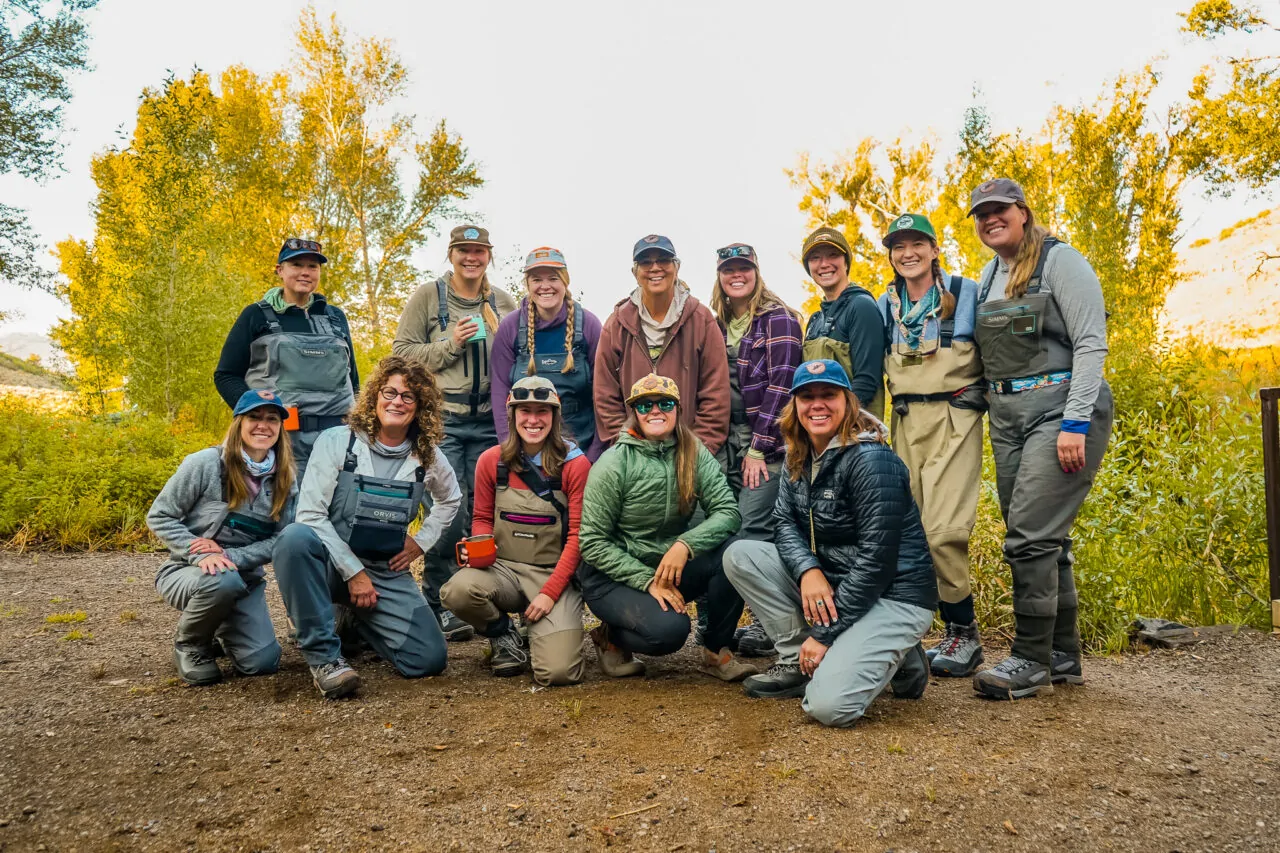
Summer is here, and outdoor recreation is on the rise, particularly among women. This week, Haley chats with Emily Jacobs of Uncharted Outdoorswomen about how the group helps women build confidence in the outdoors through hands-on education, mentorship, and community.
Offering everything from fly fishing to hunting, Uncharted Outdoorswomen is helping more women find their place outdoors. Through education, community, and a shared passion for conservation, the organization is breaking down barriers and creating lifelong connections to the land.
Want to watch this episode? Check it out on our YouTube Channel!
Links
Uncharted Outdoorswomen
Events
Register Now!
Haley (00:06):
Welcome back to the Land Bulletin Podcast, where every other week we bring you experts in the field to impart their knowledge when it comes to the ranch and sporting property market, buying and selling advice, the latest best stewardship practices, as well as topics that impact landowners every day. I'm your host, Haley Mirr. Let's jump in.
Welcome back to the Land Bulletin podcast. I'm Haley Mirr and today we're having some friends back onto the show. Our friends over at Uncharted Outdoorswomen and today helping me out is Emily Jacob. She's a guide and also runs all the operations over there. So I know you're a very busy woman, so thank you for being on the show today, Emily.
Emily Jacobs (00:43):
Yeah, thanks for having me.
Haley (00:45):
Like I said, we've spoken with you guys before with Erin and I'm excited to know it's always good to revisit and see what you guys are up to and continue this friendship. And so I'm excited to speak about some of that, but I'd love to know because we haven't met yet. How did you get involved in Uncharted Outdoorswomen? What was the path that led you here? A brief search on your LinkedIn just shows this is a very different kind of space than where you were before. So I'd love to know what kind of drew you to Uncharted Outdoorswomen.
Emily Jacobs (01:18):
Yeah. So I have been in a financial investment background in real estate and several years ago I had started fly fishing with my husband. We would go on these camping trips and he was basically like, “I'm going to fish so you can come with me or you can stay at camp and do whatever you want. ” And I was like, “Okay, I'll give it a go. ” But fishing with your husband is very different than fishing with your friends. I had found this group of women that fished, Uncharted Outdoorswomen and I joined their team in 2023. And after I left my corporate position in 2024, I was like, “All right, let's do this. Let's go full swing on it. ” So that's really kind of my trajectory at Uncharted Outdoorswomen. I started just kind of helping out a little bit and then was like, “Oh, I really love this and I'm going to keep going with it how prouder I can.
Haley (02:09):
That's awesome. And I'd love to know, I'm sure there's a lot of women like you who saw that there was kind of this gap to your point. Fishing with your husband is very different than fishing with a ton of women. So where was this gap and how do you feel this organization has been able to compete with maybe some other things out there and maybe brought new women into the fold of this type of recreation?
Emily Jacobs (02:33):
Yeah. So I think something that we offer that's a little bit different is we have all female guides and we're really catering to females going through this. So there's a lot of classes out there that can teach you how to hunt and how to fish and do all these things, but having a close knit group of women in your classes teaching this just kind of aids to a different feel for it. I think that's what we're really helping to provide is that safe space where women can come together, they can do this without feeling judged and have that opportunity to do it with their girlfriends or people that are very similar to where they're at.
Haley (03:18):
I'd love to give an example. I just did a hut trip with a combination of boys and girls and I went on a very similar one a couple years back and I felt a lot safer the one with just women because I felt like, okay, I can advocate for myself. I can ask questions without feeling a certain way. So it's nice to have this safe space where women can learn, they can put themselves out there and learn these different techniques and things without feeling like, I don't know, a little guarded.
Emily Jacobs (03:51):
Yes. Yeah. And not having that fear of judgment like, “Oh, I don't know what I'm doing.” Everybody's got to start somewhere and I feel like having a group of women that are in that same beginner phase and they don't have all the answers, that's the perfect place to go and just try it and feel vulnerable and not have to worry like, “Oh my gosh, this guy is mansplaining all this to me and I don't know what I'm doing and I don't want to ask a question because I'm scared.” I think it just is a great way to eliminate that judgment and make it a little bit more comfortable and not everybody feels that way, but we found that it does ring true for a lot of women.
Haley (04:30):
Yeah, I would agree. It would ring true for me. That's all I'm saying.
Emily Jacobs (04:35):
It's personal for me.
Haley (04:37):
Yeah. I'm like, okay. So fishing obviously drew you into the organization. What are some of the other experiences and things that women can learn through Uncharted?
Emily Jacobs (04:48):
Yeah, we have so many great things and I'm even taking advantage of that. Not only do we have fly fishing, we have learned to hunt, so different types of hunting experiences, whether it's pheasant or goose hunting, turkey hunting, or even big game. We have an elk that we do once a year and then we also have foraging experiences and like herbalism walks. And we also have archery and a couple things like that that we're offering a couple times a year.
Haley (05:18):
And beyond just like the recreation and the skillset learning there, what are you all kind of teaching or bringing to the forefront with some of these women when it comes to conservation and taking care of the landscape? Because in our line of work, it rings true across the board that recreationalists are definitely the biggest conservationists because they rely on these herds and these landscapes and this wildlife to be managed and maintained to do what they want to do. So I'd love to know what you guys are doing on that forefront.
Emily Jacobs (05:51):
Yeah. So not only are we teaching women these experiences, but we're getting them out there so they can see it firsthand. I think about our fly fishing excursions where we're going out, we're on the water, we're on the rivers and really getting them to see what that looks like in its natural form and kind of training them in their brains to say, “Okay, we're going to leave this better than we found it. We're going to make sure we're not throwing our tipet in the water. We're cleaning up after ourselves. We're picking up trash if we see it on the way.” And not only that, but our hunting and fishing license are going towards that conservation. So we're kind of getting them fully in the industry of why does it matter to do that stuff? Where does the money from your fishing license go? And just kind of getting them to understand what that looks like in the terms of conservation.
(06:43):
It's not just fly fishing, it's, “Oh, we're respecting the land, safe handling techniques with fish.” We're really kind of getting them fully submerged in the industry and what that looks like. And then we also do free community meetups. So we're getting these women to meet other like- minded women. Maybe they just like hiking, maybe they fish, maybe they do other outdoor activities and maybe it's river cleanups or some other sort of like conservation activity. But for us, it's a full outdoor experience. Maybe you decide fishing isn't right for you, but being outside or going to a river or doing a river cleanup might be something that you would still love to take part of.
Haley (07:28):
And that kind of brings up my next question. Part of this is people being able to access places maybe normally they wouldn't go to. I'd love to know, are you all leasing kind of your fishing and your hunting rights to bring these women to different places? Are you using public lands? How does that work from an operational perspective?
Emily Jacobs (07:50):
Yeah. So we do have a few places that are like private leases. We've done that in the past for hunting, but a lot of what we're doing is on public lands. As a registered business, we are going through the permit process. We're an outfitter. We have the licensing and insurance and we're working with CPW and state parks in different places to get permits to operate on those public lands, which is also great because then anybody that takes our classes, we're not gatekeeping these areas. We're saying, “Hey, this is a public place and you can go back here as much as you want. ” So I think that's another awesome thing that I've seen is we take some girls out and they're like, “Oh my gosh, I love this spot. I didn't know it was here.” And then they've gone back multiple times after. So it also really ingrains that, “Hey, these public lands are important and I want them because I want to be able to go out and visit them and do this.
(08:46):
And I think also just reiterating to them that they have public lands that they're using and these are available to everybody.
Haley (08:56):
Are you seeing, I guess in your line of work, any pressure on some of those spaces that you guys are fishing or hunting or have you found like these good secret spots that are not, there's not too much of that pressure from like the public standpoint
Emily Jacobs (09:13):
Here and there. I would say a lot of Colorado is pressured from hunting and fishing, but finding different times of day or finding areas that they might have higher pressure, but you'll notice that a lot of people in the industry are willing to share, “Hey, they understand there's other hunters out here, there's other anglers and just everybody being respectful of each other.” I wouldn't say that we found any secret holes or anything like that, but I think just getting people more opportunities to go out, feel comfortable going out, finding these places on public land and realizing that there may be a lot of people that venture there at some point, but you can still use it or you can go nearby them and you're still going to be able to hunt, you're still going to catch fish, even if it's not like this specific honey hole that somebody else might be in, there's plenty of space for everybody.
Haley (10:14):
And what states are you in? Are you all over the west? Are you all over the country? I didn't have the chance to kind of see where you guys do business.
Emily Jacobs (10:23):
Yeah. So right now we're just operating in Colorado this year. We have been in other states for some events, but we kind of drew it back in just to really focus on working Colorado, doing as much as we can here and then kind of growing. I think that's huge with a small business is just really making it to where you can easily duplicate for other states, but other states have different rules, different permit process. So right now we're in Colorado effectively, but it would be great to be able to expand and do more.
Haley (10:59):
I can attest. That's kind of why I asked because there's so many different rules and regulations from state to state, I mean, let alone keeping Ken's license active in five different states is difficult. So I can't imagine
(11:11):
Actually getting permitting and things for hunting and fishing. So no, it's great. And Colorado, I mean, what's neat is there's so many different topographies and landscapes in this state that you can kind of access every range of thing that you guys are doing from pheasant to fishing to ungulates, things like that. So I think you guys are in a good spot for that. What kind of guidings do you guys do? It sounds like you're fishing. What other guides are available to people who are looking for an experience with Uncharted Outdoorswomen?
Emily Jacobs (11:44):
Yeah. So we have fishing, hunting, foraging, and we kind of have a few different guides with each of those areas. We predominantly do educational classes, but we also do some traditional guiding too. So if you're like, “Hey, I just want to go out, have that traditional experience, catch a bunch of fish.” We've got girls for that. We've also got a lot more of the educational classes. So if you're like, “I really want to learn what I'm doing and be able to do it by myself,” we've got a lot of guides for that too.
Haley (12:14):
That's huge. I was looking at your website. There were some things about fly tying and things like that stuff people, I don't think recognize how hard that is and to not have to buy everything every time and to start to have a little bit of ownership in what you're doing. It's stuff like that that I
(12:30):
Think is so cool. And what I love is whenever it's women owned, there's a lot more kind of fun things to it. I saw you had this burrito recipe that came out using certain … I appreciate that there's a little bit more creativity beyond just like the tactful stuff. The community piece I think is big too.
Emily Jacobs (12:49):
I was always interested in crafts as a kid and growing up. So I feel like it just kind of came naturally. I was like, “Oh, this is crafting for adults. This is perfect.”
Haley (13:00):
Yeah. We were just at the F3 Film Festival that was coming through and there was all obviously all these avid flyfisher women and men and everyone got really excited for all the fly tying kits that were being put out there. My husband ended up winning oars, which we really don't need. So if you guys have a boat, float boat needs some oars, we have these huge ones in our garage. But yeah, I think people don't know what goes into it I think necessarily. So having those kind of classes to get started is huge. What have been some of your favorite stories as a guide taking women out there on the river or teaching kind of those preliminary classes? What have been some of your favorite stories since joining Uncharted Outdoorswomen?
Emily Jacobs (13:49):
Oh my gosh. I have met so many great women and I feel like when you're out on the water or you're just out in nature with some other women, it kind of like makes you want to be vulnerable. And so women just telling me some of their stories about like, “Oh, my dad got me into fishing or my grandfather or I want to do this to be able to teach to my children.” It's just so cool that they want to share that with you. But I really think that watching women catch their first fish, go on their first hunt and be successful, be able to put meat in their freezer, all those firsts and being privy to that is just so cool because I remember my first and thinking of how excited I was and how much accomplishment you feel like you had. And for me, it's been able to see it go beyond the class.
(14:46):
There's been a lot of clients that will follow up and they'll send us pictures and they're like, “Oh my gosh, look at this. I got this. ” And they continue with it and they're just so proud and feel so accomplished that they did something and they did it successfully and just the success of being able to catch their first fish or we have one client that I always think about, she came to our retreat, continued to fish, has been to like seven different bodies of water, caught 15 different species and just talks about it and does it all the time and it's like a new passion for her. So I really think being able to follow the client's success has been really rewarding for me because I'm like, “Oh my God, I helped them on their journey.” And that's been really, it's just fun to watch.
(15:37):
It's not often you get to see somebody do their first anything and be a part of that and witness it is just super cool.
Haley (15:45):
I love that. And I mean, it's not easy like hooking fish and being able to finish it. I don't know. It's the part of getting the fish and the net. That piece right there, once you hook it to getting in the net is one of the hardest things on
(16:00):
The planet to me. So the fact that these women are starting to feel a little bit more confident in that, even that degree is huge. I would love to know since you've started, since you started even going, have you seen a significant change in the amount of women getting involved in the program over the last couple of years?
Emily Jacobs (16:20):
So I've been with the company going on three years now, but I do feel like we're seeing more women just in the industries in general. I can't really tell if it's me seeing more of them because of what I'm doing and what I'm talking about or if it's genuinely more. I like to think it is genuinely more because I do see these companies putting out more women's clothing, more women equipment gearing more towards that stuff. So I like to think that there is an uptick. We do about the same number of clients generally year over year. We're about four to 500 clients a year. So for me, it's been great to see this constant stream of women coming through and that constant demand. I hope that it is true that there are more women getting into these industries.
Haley (17:11):
I think that it's because of organizations like this that make the barrier of entry seem a little less scary because I think before it seems very overwhelming and daunting and to your point, you don't want to just go out there with experts already, you want that lead up. So maybe it's, I don't know, the barrier of entry is lowering. There's things that are more localized so people can access things a litle bit easier. And then the knowledge space, I think of accessing public lands, accessing different areas is a lot more available to people instead of this like, “I don't know what to do, I don't know where to go, so I'm not even going to do it. ” So maybe some of those things will help and continue to grow what you guys are doing and then the industry at large. In your opinion, what are some of the barriers that still exist for women in this space?
Emily Jacobs (18:01):
I think definitely it's still just being underrepresented. In the last couple years, we have seen more of these companies coming out with fly fishing clothes for women, waders for women, boots for women, same thing on the hunting apparel, but it's still predominantly men. If you look at fly fishing waders for women, there's maybe a third of the selection that men have. So I really feel like it's just getting more women into it and having us represented in those industries. But aside from that, everything we've kind of talked about, it's having these organizations that cater to women, even just the cost can sometimes be a barrier. Hunting and fishing aren't the most affordable spaces in terms of that you have to have equipment, you have to have a rod or maybe a shotgun or these different pieces and you want them to fit you. So my husband's shotgun does not fit me.
(19:07):
I am five foot two so his shotgun isn't super easy for me, but I really feel like we're moving in that direction, but we're just not there yet.
Haley (19:20):
Okay, that makes sense. I feel like maybe 10 years ago it was hard to even find boots that fit or waiters that fit women's body size where they didn't think it was flat like a man. I feel like yeah, day by day it's getting better. Since you've started, what are some of the things that have changed or that you're excited about changing some initiatives that you guys are doing that you want the listeners to know more about? Like I said, we've talked to you guys before, but I would love to know what are some of the things on the horizon for Uncharted?
Emily Jacobs (20:00):
Yeah. So we are constantly looking at growing our classes offering even more variety. So we added the fly tying back in within the last year, so that's been great. This year I'm also doing an entomology class. So looking more at the insects and fly selection revolving around fly fishing, are going a little bit more into like the hunting. So we have a private land that we're doing an elk hunt on this year and it's in November and it's already sold out. So I think we're really listening to kind of what our clients want, what they need and we're constantly trying to expand that. We're also looking at like a membership option for our clients that have already taken classes with us but still want to find a way to be involved and what we can offer them that still benefits somebody in these industries but maybe that don't need classes anymore.
(21:00):
So we're working a lot on that and I think just using our platform to continue the fight for public lands conservation and kind of telling people what these industries do that make them important to keep around. I
Haley (21:16):
Would agree. And is there anything coming up? I know we kind of follow some of the policies and if you don't know, don't worry. Is there anything that you guys are charting or looking at that you think people should know about or that you're teaching some of your clients, especially when it comes to fishing?
Emily Jacobs (21:33):
I have some answers, but I don't know all of it, but we are working with like CPW to keep an eye on what things are coming up, what needs to be important to us and people that follow us and just making sure that we're educated and we're educating people on not only our stance, but why that stance makes sense. I think about like the fur ban and different parts of that that are coming up. Right now, Colorado is going through a drought, so that's certainly going to affect fishing and how we're handling fish if we even can fish. And so just keeping all those things in mind so that we are keeping the environment, the rivers, the fish as best as we can and make sure that we're not leaving that trace, make sure that we're not handling them in inappropriate ways or we're fishing areas when it's too hot.
(22:28):
I think just being mindful about all of that.
Haley (22:31):
I think that's huge and you hit it perfectly, especially with the drought and everything. I think when people listen, maybe they don't know what we mean by pressure, but a lot of those things are variables when talking about habitat and wildlife and what affects them. So it's awesome that you guys are educating and making an entirely new subset of people that do these things know what's happening and be aware of their impact. So thank you for doing all of that. And we're entering spring, so I'm sure as a fly fisherwoman you're getting excited. What are you excited about this spring? Where are you fishing? Where are you headed? And then I guess how do you think it's going to change with some of the drought that we're experiencing right now?
Emily Jacobs (23:18):
I'm scared. I have been fishing all winter admittedly because it really hasn't felt like winter. It's been so strangely warm, which is great for fishing in winter, but not so great for everything else. We have some retreats coming up that I'm really excited to teach. They are going to be at a private property. So again, it's just so great for us to have our own space and be able to get out there. But aside from that, I am actually going to Montana in June. Had to think about it for a minute. Okay. You're good.
(23:58):
So I'm hoping to kind of combat some of the water issues we're having here, although I think they're everywhere, but yeah, I'm really just excited to get back out there. I think with these water conditions, it's going to be important to get out early and to check flows so that the water isn't getting too hot. But honestly, if there's no water, there's no flow or it's too hot, it may just mean that we can't fish or we're going to have to go to other locations to fish. So it is really scary. I know Denver and areas around Denver have already put on water restrictions for the drought. So I think it is coming and probably earlier than we all expected. So yeah, it'll be interesting to see how it goes, but I think just getting out there, I'd love to explore more of Colorado. I fished in a couple different states, but I'm really excited just to get back out there, try the western slope, try south, and just see what water we can find.
Haley (25:01):
That's what's cool about rivers is they flow everywhere. So there's always a new patch to hit. But yeah, I think with anything we do and everything we talk about in the pod, the environmental impacts, they range and they differ every year and some years are good. I don't think it'll be consistently what it is right now, but it's just good to stay informed. And I'd love to just give a shout out. What are some of the resources and things that people can access from you guys and how can they acces them?
Emily Jacobs (25:33):
Yeah. So we actually have some blogs on our website, different news updates or different stances on there, tips for how to buy things on a budget to get started in hunting or fishing. We do blogs of the month pertaining to like different flies you can use, different herbal remedies that you can use. So we've kind of got like an array of things on our blog on our website. And then we're also really active on social media. So we've got Instagram and Facebook that we're constantly giving updates about what's going on, things that we're supporting or things that we think people should know about.
Haley (26:14):
That's awesome. Yeah. Again, I don't mean to say, but I love women because the blog is so it's so interesting and it's stuff that actually is pertinent, like what you said, how to get started on a budget. A lot of this is kind of intimidating to get into because of all the stuff. So to have things like that is huge. Well, we will be sure to link all of that on the show notes for today's episode because I do think it's a valuable resource and for people who want to get out and start taking classes, maybe one from Emily, maybe a foraging class sounds really cool too. I was like, “That's something I've never done.” But yeah, it was just really great to meet you. I want to take a class one day. I think it would be really fun because again, it's just fun to be on the outside with a ton of like- minded women who are just trying to learn and get after it as someone say.
(27:07):
Yeah. So okay, before I let you go, what are some of the upcoming classes and is there a time when people need to sign up for the upcoming summer classes?
Emily Jacobs (27:20):
Yeah. So we actually have a lot of our schedule online right now and classes are open. They are filling up. I really recommend our 101 class. It is literally A to Z on getting you into fly fishing. And we also have like a next level up to a 201 that gets a little bit more intricate, a little bit more detail. So we've got pretty much our year scheduled and open and ready.
Haley (27:48):
Awesome. Well, thanks for being on the show, Emily. I hope you find some good waters out thereacross the country if you can.
Emily Jacobs (27:56):
I'll go wherever I need to.
Haley (27:58):
Awesome. See you next time.
Emily Jacobs (28:00):
Awesome. Thank you.
Haley (28:03):
Thanks for joining us today. To learn more about the Ranch Real Estate Market or our ranch marketing process, make sure to subscribe to our newsletter on our website at murranchgroup.com or give us a call at 303-623-4545. See you next time.