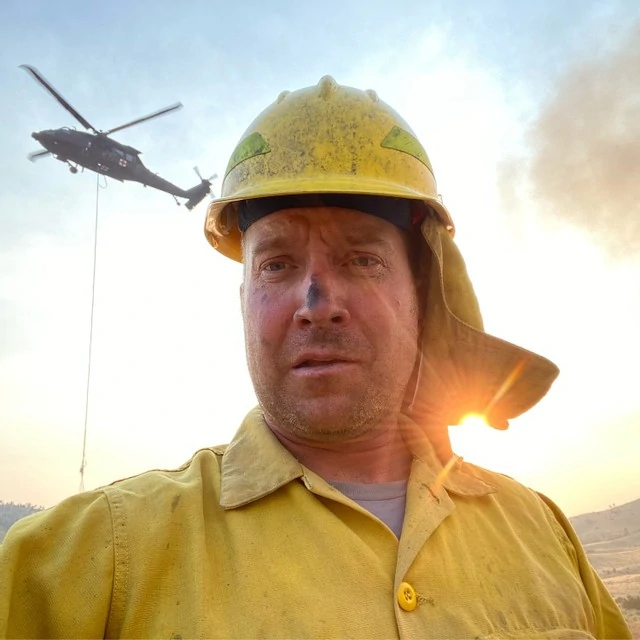
Wildfire season is heating up out West, and this week, we’re diving into a crucial conversation about fire prevention and mitigation with Jared Souza of Mirr Ranch Group and Jerod DeLay from the Wyoming Forestry Division.
First, Haley chats with Jared Souza, who brings his boots-on-the-ground perspective on how ranchers can prepare for wildfire season. Jared offers practical advice on safeguarding properties and reducing fire risks across the American West. Then, Jerod DeLay steps in with a broader view on fire prevention strategies, breaking down the essential steps ranchers must take to protect both their lands and livelihoods. From proactive defense to smart mitigation, this episode equips you with the tools to face wildfire season with confidence.
Tune in for this must-hear episode packed with insights to help you stay safe, resilient, and ready on the land!
Topics
[0:00] Introduction: Wildfire Season
[1:36] Jared Souza and the current wildfire season
[7:55] Fire mitigation strategies for private landowners
[15:40] Causes of forest fires
[21:12] Volunteering for the Wyoming State Forestry Division
[27:36] Jerod DeLay and the WSFD
[30:02] Cross-state communication
[34:22] Current environmental factors impacting the season
[41:52] Determining the source of a wildfire
[47:08] Community involvement and public outreach
Haley (00:06):
Welcome back to the Land Bulletin Podcast, where every other week we bring you experts in the field to impart their knowledge when it comes to the ranch and sporting property market, buying and selling advice, the latest best stewardship practices, as well as topics that impact landowners every day. I’m your host, Haley Mirr. Let’s jump in.
Wildfire prevention has been a crucial topic for years, but recently the frequency and severity of wildfires have brought even more attention to this growing issue threatening the West. Today, we’re diving into what we can do to tackle this challenge from both a governmental and a ranching perspective. Joining me is Jared, a Mirr Ranch Group broker with hands-on experience in wildfire mitigation and response, who will share the practical strategies and insights from the field. We’ll also hear from Jared Delay from the Wyoming State Forestry Division, who will provide expert advice on prevention and preparedness.
(00:59):
Together, they’ll offer a comprehensive look at how we can protect our lands and communities from the threat of wildfires. Welcome, Jared, to the Land Bulletin. Thanks for taking the time out of your very busy schedule. I know you have a breather right now in between fires, but we just wanted to have a conversation about what you’re seeing as a volunteer firefighter, as a broker, as a manager, as a landowner yourself, and kind of go into the specifics of what private landowners can be doing when mitigating forest fire risks. So before we get into the specifics, what has wildfire season been like this year for you?
Jared Souza (01:37):
Yeah, so it’s been incredibly dry, especially in southeastern Wyoming. The last few days we’ve caught a little reprieve and been getting some moisture, so it’s kind of knocked the danger down for the time being anyways. But we’re coming off a really good season from last year, so there’s a lot of residual feed left, especially on the countryside. There just wasn’t enough cattle for as much moisture that we had on a lot of our ranches in southeastern Wyoming. So we got carryover from last year and then we turned off dry this year. So we got anything that grew this year’s dry and then the carryover. So there’s just a lot of extra fuel load out there, a lot of dry cheat grass. So what fires we’ve had in southeastern Wyoming have grown pretty rapidly. We had a fire a couple weekends ago in the Hartville, Guernsey area that burnt basically 25,000 acres in two days time.
(02:37):
I think actually it ended up burning about 30,000 acres. It swapped over the line for a couple of days there and they got control of it again. And then we had another one down by Chugwater and heck, I think that thing burnt like 5,000 acres in a couple hours. It’s just cheat grass and CRP countries just really, really dry. It’s been kind of a rough summer so far.
Haley (03:02):
So when you’re talking about cheat grass and loaded fuel from years past, is that because we had a really wet kind of couple years, a lot of growth came in and now it’s just all drying out and fires are just drawn to that?
Jared Souza (03:14):
Yeah. Luckily, last year we had just an exceptional year and we had almost double the annual rainfall in Southeastern Wyoming that we typically do. And then followed up by this season, we had about a third our typical rainfall for the season. So it’s just 180 degrees swap in a single year. But last year, most of these ranches, they stock kind of accordingly to where they can ride the highs and lows. So they were probably understocked last year and then we had double the rainfall. And so you just have a lot of residual feed out there, which is great because that’s what’s getting a lot of the ranchers through this season. But it’s also increases the fire danger just because it’s dried and dry, hot and windy.
Haley (04:08):
And what fires have you been working on? Have you just stayed local or as a volunteer firefighter? Are you kind of called up to a lot of different areas around Wyoming?
Jared Souza (04:17):
Yeah, so as a volunteer, my position now is I just try to stay local and just help friends and neighbors, but you can get dispatched and you can take your resource and go get on a federally managed fire and get paid to go fight something elsewhere in the state or even elsewhere in the country if you want to. But I try to stay close to home. Strategically, we joined the fire department so we would get a fire truck allotted to us so we had protection for our own ranch. Obviously with that, there’s kind of a responsibility is if you have the resource, you’re kind of expected to go help your neighbor. The resource isn’t available just to protect your own stuff. It’s to go across the fence and help the neighbors out. And the interesting thing is most of Wyoming, especially in rural Wyoming, firefighters, fire resources are all volunteer basis only.
(05:21):
So all of our trucks, a lot of our trucks are all paid for by the feds or the county, and then all your personnel for the most part is all just on a volunteer basis.
Haley (05:34):
So to your point as a landowner, tell me a little bit more about that. If you decide to help as a volunteer, things like that, then you’re given a firetruck or is it just kind of the allotted resources as a landowner with that?
Jared Souza (05:48):
Yeah, I mean if you volunteer enough time and you commit enough time as a volunteer, there’s a lot of times there’s resource available for them to hand out to you. So you’ve got a truck sitting on your property, which is incredibly beneficial. But also it helps your resource. So if you have a fire truck right in the middle of your ranch, that’s handy. If you see a lightning strike, your initial response is pretty rapid, but also they like to hand out them trucks and resources to volunteers. That way we get resources spread around the county to where your initial attack launch time goes down. Otherwise, if you got a ranch 30 miles from town, for example, and all your resources coming from town, that’s 30 minutes. In fire, that makes the difference between rolling up on a fire that’s a hundred acres or it might be a couple hundred acres.
(06:48):
So response time, especially on wildland fire situations is incredibly important. I mean, it’s almost like they always talk about the golden hour on emergency response for EMTs. It’s very important. The quicker someone gets to the fire, the better off you’re going to be more than likely.
Haley (07:08):
Well, what other resources are out there for landowners who maybe they don’t have the funds or the time to create a huge management change to their ranch, but they want to know more about these resources available to them, maybe this volunteer stuff. What are the little things that ranchers can do right now to help mitigate some of this risk that might be what we’re seeing across the west right now?
Jared Souza (07:32):
Yeah, I mean I think obviously that’s kind of a loaded question and it kind of depends on the diversity or the type of ranch you own. A timbered up ranch is a totally different management practice than just a grazing ranch and what you can be doing. A lot of timbered ranches, especially in the Laramie range, there’s not much logging anymore. So you got a lot of mature growth, probably a lot of overgrown trees where you can do as an owner, the best thing you could do is you can go in there and you can pull out some of that timber and do something with it. They’ll do a lot of timber thinning and they call it, I think the terminology now still is, it’s called Firewise where they can do some fuel load management. And that’s what, at the end of the day, basically it all comes down to fuel load management because that’s what determines how big a fire is or how devastating a fire is.
(08:34):
And that’s why across the west we’ve seen more and more fires get more and more devastating and more and more larger fires is because of the fuel load across the west because of our timber. We’re not utilizing all that timber like we have in the past. We got just a huge amount of fuel load. And then fuel load on most of your ranches is because a rancher, and especially a year like this year, he can’t afford to lose any amount of ground to fire. Fire’s good, right? I mean, fire’s good for ecologically and biologically, it’s very good for the systems and we need it in our landscape. But a rancher that’s already in a drought situation, he can’t afford to let a thousand acres of his 10,000 acre ranch burn because he’s already out of feed. Even though it’s probably doing some good for the ranch, he can’t afford to do it.
(09:29):
So that’s why we’ve been so aggressive on the private land landscape, putting out fires for the last 50 years to where now it’s catching up to us. We got a huge amount of fuel load and we got a lot of landscapes that need fire, but we can’t afford to let them burn. But luckily, the last few years we’ve had a lot of landscapes that have burnt, especially in the Forest Service, the public landscape. But on the private end of it, it’s very hard for a guy to give up a piece of his ground because he might have to defer grazing on it for a couple of years, especially if let’s say you got a 10,000 acre ranch and 5,000 acres of it burns and it doesn’t rain next year, he still only has a 5,000 acre ranch. A lot of these guys, they just can’t afford to let anything go.
Haley (10:20):
Yeah. Is that why some of those prescribed burnings and things like that happen on ranches? So it’s maybe not as widespread, but you can burn a little bit here and there to make sure the management continues as is?
Jared Souza (10:31):
Yeah, there’s a lot of prescribed burns where they’re trying to reduce the fuel load or they’re trying to reinvigorate the landscape because obviously fire’s important to the landscape. So we don’t like seeing it. It’s unsightly and it can be devastating. And especially in a timber landscape where the Ponderosa pine might be a hundred years old, we’re never going to see that again in my lifetime. So people hate to see it, but it unfortunately needs it in some aspects.
Haley (11:04):
So how does that connection with some of those larger forests and fuel loads, how does the connection between private and public work for some of that kind of management and mitigation? Because even if a landowner’s doing X, Y, and Z to not have a lot of his land burn, there is going to be a connection if you’re adjoining some public land and they’re not managing it that way. So how does that kind of connection come together?
Jared Souza (11:29):
Yeah, that’s a good question. I mean, certain Forest Service or BLM owned lands, they have done some things in the last few years, and I mean the last several decades I guess, to reduce fuel loads. Obviously it’s not a perfect system. There’s damn sure some Forest Service lands out there that the fuel loads were just ridiculous and they ended up burning. I mean, the snowy range is a good example where a lot of them forests needed thin well before they started on fire, and that’s why that fire was in the magnitude that it ended up being. It was uncontrollable. The fuel load was just too great. So in them instances, regardless of what a private owner did, more than likely he still got burnt because the fuel load was so high that it ended up burning them. But regardless, you can still do some mitigation regardless of who your neighbor is.
(12:28):
It’ll help. Your ranch might end up burning, but you’ll at least help the magnitude of the fire that comes across you.
Haley (12:35):
And for buyers who are considering purchasing a property, you’re starting your management from the beginning, what are some of the things that they should take into account when considering purchasing a property and having that forest fire mitigation technique in mind?
Jared Souza (12:52):
Yeah, I got one prime example that I’ve done a lot of consulting work on the last couple of years, and this guy, he inherited this beautiful chunk of ground in the Laramie range, and it’s got a lot of fuel on it, a lot of timber on it. And they had done some pretty aggressive timber management back in the ’50s and ’60s, and now it’s kind of overgrew again. And he’s the first time he took me on this ranch and it’s just beautiful, and he’s like, “What should be my biggest concern?” I was like, “Well, it’s not if it’ll burn, it’s when it will burn.” I was like, “And it would be devastating if your 10,000 acre ranch, the entire thing burnt and you lost all this timber.” I was like, “If I had any money to spend, I would bring in a forester and I would start thinning some of this timber, and I would start thinning the roads, and I would start thinning some other stands of timber to hopefully when it does burn, you limit yourself and you don’t lose all of your timber.” Things like timber thinning, access, if we can’t get a firetruck in there, we can’t fight the fire very well.
(14:04):
If it’s a backpack and hike in there with a shovel, the chances of us getting it shut down are slim to none. We might have to fight it differently. The fire might grow to a point that it’s uncontrollable by the time we get up there. But if it’s easy and you’ve got a really good road in there and there’s a lightning strike and we can drive a six by six right up to the fire with 1200 gallons of water, we could probably put that thing out before it burns a couple thousand acres. Access, thinning, having the ability to get into the ranch. I mean, there’s a lot of ranches that are locked up so tight that a firefighter shows up to this big pipe locked gate, we can’t get in there. So it takes us an hour and a half to track down the manager, the one guy that has the combo, and then you can’t get ahold of him, so you end up having to cut the combo off.
(14:52):
Meanwhile, the fire’s growing every second we’re wasting trying to get through a locked gate. So it’s real important, all the ranches I take care of, I make sure I communicate with the fire departments like, “Hey guys, here’s the combos.” Some areas, fire department’s got special keys, they can get into stuff, but in a lot of these rural areas, it’s a simple padlock, master lock or a combo lock, and they can’t get through it. And if they can’t cut the fence and drive around it, they can’t get in. So the fire just grows, grows, grows. Why they’re wasting time.
Haley (15:27):
That’s a huge thing that I didn’t even think of, and there’s a lot of gates that are really hard to get through when it comes to
Jared Souza (15:33):
Ranches.
Haley (15:34):
So access, fuel load mitigation, being able to access it as a fire department, those are all crucial. And in terms of, I know this is kind of a loaded question, but as a firefighter, as a manager, as an owner, do you see certain things cause forest fires more than others? Does it tend to be man-created or is it lightning? What are you seeing out there right now?
Jared Souza (15:58):
Yeah, interestingly enough, I think there’s more fires that are manmade across the US than there are naturally caused. I mean, obviously there’s still plenty that are naturally caused. Most of the dispatches I go out on a yearly basis are all lightning strikes, but there’s a good amount of folks throwing out cigarettes or dragging chains on the interstate or the railroad hitting the rock and starting fires. There’s all that stuff. But I think mostly in a rural setting, a private land aspect, most of your concern is lightning. On the public aspect, Forest Service, most of it’s manmade. I mean, most of these folks are leaving campfires unattended or shooting bottle rockets off or roaming candles or whatever. That’s where most of your fires come from on the public landscape. And
Haley (16:52):
It makes sense just because private, obviously, there’s less people that are going to have access to it. It has better management than a lot of these kind of public areas. So it makes sense that those two would be so different. I was just wondering, I know that’s off of some of the questions I was going to ask you, but I was just interested on how those are all started. And in terms of just the future and maybe how things have changed, are there other new ranch management techniques or technologies or GIS or even resources available out there to ranchers that maybe have changed in the last 10 or 20 years when it comes to fire?
Jared Souza (17:30):
Yeah, that is kind of a loaded question. I mean, the biggest thing is just making sure, and obviously there’s two different situations going on there, but ranchers, typically, they don’t have as big a fire concern because they’re utilizing that fuel, they’re grazing it. So your fuel load’s going to be eliminated through grazing opportunities. Where it gets real scary is on some of these ranches that are bought with the sole intent of hunting and they’re worried that grazing might chase off some elk. So then they’re not doing any grazing and there’s not doing any fuel management. And them are the ranches that are very, very difficult to fight fires on. A lot of times them fires get extreme. That approach is wrong for two different reasons. One is grazing cattle or grazing anything, as long as you have some proper management behind it, you’re not going to reduce your animals on the ranch.
(18:29):
And two, you’re helping mitigate some of the fire danger. I mean, that’s one of the easiest things to do to help with the fuel load in some aspects. Obviously, cattle aren’t doing anything for your timber ground. They’re not doing anything for your Mount Mahogany ground, but your light fuels, your grass fires is like just put cows on it and start grazing it and you reduce your fuel load. And more than likely, if you do get a fire, we could probably control it pretty easily and we could probably contain it just because the fuel loads reduce. And that’s kind of something, one of the ranches I take care of, that was one of our concerns is we were probably a little understocked last year. We didn’t know we were going to get so much rain and we had just incredible fuel load. And then about April, I was like, I think it’s going to get dry and it’s not looking real good.
(19:23):
So we kind of developed some strategies and we started to get cattle moved around probably a little quicker than we would have. And we were just trying to knock down some of that feed before it got super dry. And then we went back through and we took some equipment in there and we did a bunch of road maintenance this year on all our two tracks. And with the sole intent, it was we’re killing two birds with one stone. We got a really smooth road, but we also built in some firebreaks on the same bill. So we put in 42 miles of fire break that was basically on our two track roads. And hopefully if we get a lightning strike there in the next couple of months, hopefully we isolate that fire to a specific area on the ranch. We don’t burn 40,000 acres, we burn 3,000 acres because now we got a place that the fire crews can tie into our existing fire breaks that we put in.
(20:25):
They got good access and it’s already built. So now if there’s a lightning strike, we got it kind of isolated. And then if we don’t get a lightning strike, who cares because we got some really good roads around the ranch now that it’s a really cheap insurance in my opinion.
Haley (20:42):
Yeah, that’s huge. And that’s a whole other kind of conversation we won’t get in today, but property insurance and ensuring that you have some of that ready to go when you’re even thinking of listing with Murray Ranch Group, if you’re considering buying, it’s a huge thing that some people are struggling to even get right now. So working with a ranch broker like Jared to figure out what the best options are, because I’m sure you’ve seen that, Jared, as forest fires become more and more of a reality, property insurance just becomes more and more important.
Jared Souza (21:12):
Yeah. And
Haley (21:12):
Then my last little thing I wanted to talk about is we did have another guest on recently that you connected us with, Jared DeLay of the Wyoming State Forestry Division. Tell us a little bit about how you know him and how as a volunteer firefighter, as an owner, as a manager, you’ve worked with the Wyoming State Forestry Division when it comes to forest fires. I
Jared Souza (21:32):
Guess they’re an incredible resource if you need anything regarding forestry work or wildfire stuff. There’s a bunch of programs and a bunch of trainings that you can go through, but we obviously rely on them more as a volunteer because the state forestry is kind of the one that they run everything related to the forest and fires a lot of times. That’s the organization that’s funded. And I don’t know the tiers necessarily, but we have to reach out to them quite a bit for our equipment and different stuff. In fact, if our firetruck breaks down, we need special parts, that’s who we call as a state forester and get parts for our firetruck. Got it. But the great thing, them guys are the ones that are going around and monitoring fire conditions, fuel load, different fuel types got different moisture contents in them. So they’re out there.
(22:32):
They’re the ones that start when you go into the forest service and there’s always them signs when you go into a community and it says your fire danger and it’s what level it’s at. That’s because they’re out there on the ground monitoring that stuff. And then that’s what helps a county, for example, like Platte County, we’ve had a fire ban in effect for basically all summer, but that’s how they’re able to do that is because they’ll come back to the commissioners and say, look, your fuel loads look like this. This is the dangers. This is what could potentially happen if you start a fire. I would recommend you outlaw fireworks in the next few days.
Haley (23:15):
Even though there’s signs for fireworks the whole way you’re down the highway. Yeah. And what dictates, Jared, just since you brought it up, how do they dictate when it’s low, medium, high, those different ranges of fire danger? Is that the state forest or is that someone else kind of dictating that?
Jared Souza (23:34):
Yeah, I believe it might be the forest service, but I believe it’s the state forestry for the area. But what they’re doing is they’re going and measuring moisture contents in the different fuels, right? Got it. And I should know all this, but there’s several different fuel types and your grass obviously gets dry pretty rapidly. It takes a couple weeks, it’s ready to burn versus your heavy fuels, like your standing timber. It has to be a prolonged drought before that stuff’s capable of burning. So they’re measuring moisture contents. And now when the moisture content’s down and everything, then obviously that’s when you’re in your high fire dangers. And then nowadays you’ll see them red flag events show up on your phone and they warn you because it’s high fire danger. And the reason why that is because it’s usually hot, you got relatively low humidity, and then you got probably winds on there.
(24:36):
So if you have a fire that starts, it’s going to be a catastrophic event because there’s not a lot that you can do with it. It’s a perfect fire weather conditions.
Haley (24:47):
And I know there’s been some kind of red flag warnings as of late this summer. Are you seeing a little bit of reprieve for Wyoming in the next couple weeks? It seems like you guys have been getting some moisture, so just a positive outlook before I let you go. Yeah.
Jared Souza (25:03):
The great thing is we have been catching some moisture. I was out one of my places I take care of just two days ago and it’s starting to green up a little bit, which is great. But every time the rain quits and then we got a couple hot days, our fire danger doesn’t really go away until we get fire season. So we got all the way up until the snow starts flying. Geez.
Haley (25:31):
Excuse
Jared Souza (25:31):
Me, we’re up. And
Haley (25:32):
For you, hunting season starts. Yeah.
Jared Souza (25:35):
Yeah. And the downside is we can still get with dry feed and dry grass and stuff out there. I mean, I’ve seen fires in November and in December, but the great thing is the likelihood of one of them events coming and that late in the season goes down because you eliminate lightning from the equation. We normally don’t have lightning in November and December, but if you have an unattended campfire in December on the side of the mountain with some big wind, it could still burn, but hopefully start catching some more moisture. And every little bit helps. And every time it rains, when it’s lightning, it’s a good scenario because that means we’re probably not going to get dispatched that night. Well,
Haley (26:20):
For all those listening, take care of your fires when you go out there so that Jared can spend some more time with his family and get a little reprieve from all this smoke that he’s been having to handle. And like Jared said, I mean, fire is good. Fire is a way of life. It really does help regenerate a lot of the vegetation and fuels that we need on these landscapes, but it is just about mitigating the risk to your property so that the whole thing isn’t affected at the same time. So we appreciate you, Jared, taking the time to walk us through some of that. And if people do have questions, Jared, like you’ve heard on this podcast today, knows a lot about this subject matter, so give him a call or call our office. But thanks so much, Jared, for taking the time. We appreciate it.
Jared Souza (27:02):
Yeah, thank you.
Haley (27:12):
Welcome, Jared. I know you have a lot going on. It’s mid-forest fire season, so we really appreciate you taking the time to chat today.
Jerod DeLay (27:20):
Certainly, no problem.
Haley (27:22):
Awesome. And before we go into all the things that are happening in the news, how we can prevent these things, what you guys are doing with the Wyoming State Forestry Division, I’d love to know your background and how you got involved in what you’re doing today over there.
Jerod DeLay (27:36):
Oh, I got involved in wildland fire after college. I started with the US Forest Service in Laramie, Wyoming on the Madisonville route, Thunder Basin, National Grasslands. And I started in timber and then did that for about Four Seasons, then rolled into fire on one of the engines that we have that they had over there. And I did that in various different positions for 25 years and applied to the assistant state forester fire management job here with the state of Wyoming and was able to secure that job. And I was able to had enough time in with the Forest Service and retired from the Forest Service and started this one
Haley (28:21):
Here in
Jerod DeLay (28:21):
Cheyenne. So
Haley (28:22):
You’ve kind of seen every facet of the forest and how different things react and the vegetation, all of that. So it’s good that you’re in the position you are today. And I’d love to know, we’ve had a lot of different guests on to talk about forest fire mitigation when it comes to private land, but I’d love to know about how the response is different when public land fires erupt. Maybe it’s not someone necessarily is living nearby, it’s in the middle of the forest. How do you guys react differently from a public land perspective? The
Jerod DeLay (28:54):
Response is pretty much the same whether it’s private land or public land. It just depends on number of resources really. On private land, state and private lands, really in Wyoming, it’s a pretty heavily county cooperator response. If it’s more out in the forest proper, you may not have that level of response. In both sides, you’ll have a federal response. A lot of times in Wyoming, it’s close to public land, federal public land, and then just state ground and private. So we kind of operate under a closest forces concept that we don’t really care what the color of the ground is on a map, everybody responds. Right.
Haley (29:46):
It’s kind of like when it’s happening, you guys are there. Certainly. Does Wyoming, Colorado, do all the kind of different departments talk about how to update their response time? How different systems that they’re using that might be helpful. Do you guys talk across state lines too?
Jerod DeLay (30:06):
Yeah, we do. All the states have some type of fire response and we try to get together. Lately it’s been every year we have a national type meeting and then each one’s kind of broke up in region. So in the 17 Western states, we get together at least once a year. Then we have a conference call or so or meeting once a month and just
(30:31):
Talk about issues, see how things are going. If we need to move resources from state to state, we can. Right now with heavily Washington, Oregon, Northern California, Idaho and Montana for a little bit of a time, there was a heavy need for resources. So there’s resources from all over the country kind of migrating out to the western states to help press fire. We’ve had here in Wyoming, just on the Pleasant Valley Fire, we’ve had resources from Pennsylvania, Maryland, Iowa.
Haley (31:07):
Wow.
Jerod DeLay (31:08):
They come from all over.
Haley (31:09):
That’s cool. Yeah, I know Jared, one of our brokers, he’s a volunteer firefighter and he’s been out there quite a bit. We had a conference call with him earlier today and he’s just beat. But in addition to the resources coming from other states, do you get a lot of help from private landowners when these different fires are up from time to time?
Jerod DeLay (31:26):
Oh, definitely. A lot of our cooperators, county cooperators in Wyoming are volunteers.
Haley (31:32):
That’s awesome.
Jerod DeLay (31:33):
And they’re landowners. And a lot of times they have some of the suppression equipment, like the engine stuff out on their ranches. I know. Yeah, no, it’s a huge, I mean the private landowners, the volunteers are a huge aspect of suppression in Wyoming.
Haley (31:50):
So when a fire erupts, what’s kind of the system in place that happens? Who’s notified? How do those reaction times work? I’d love to know the background of how you guys react to these things.
Jerod DeLay (32:04):
When there’s a reported fire, depending on how it is received through a 911 or one of the inter-agency dispatch centers, if it’s a 911 county dispatch, they start dispatching their own resources around. If there’s fire districts in that county, they call the districts and get them going or a county fire warden and have those respond. And a lot of times they may call the inter-agency dispatch centers in Wyoming. There’s three in Wyoming, but then part of a small chunk of the Northeast part works out of the Great Plains dispatch out of Rapid City, South Dakota. And then they can ask for resources and those other places reach out. The counties can reach out to other counties and ask for mutual aid help. Or they can call the inter-agency dispatch centers and they start dispatching closest forces, whether they may be federal or state or cooperator.
(33:06):
It just depends on what they know is close and the State of Wyoming, we have a contract helicopter and then we have two contract seats that are usually based out of Duncan, south of Glenrock for the helicopter and then the seats in Casper. So we can launch those if requested at any time.
Haley (33:28):
Wow. And when you deal with big, I mean, I was watching the news earlier about some of the ones in Colorado, even big mammals of these ranchers like cattle and livestock and different things, how are those being handled? I don’t know if that’s your department or someone else, good neighbors, private landowners.
Jerod DeLay (33:45):
Yeah, it really doesn’t fall to us, but we can help coordinate some stuff if needed. But a lot of times there’s enough of a communication chain out there between the landowners that neighbors help neighbors or they know something where their cattle are and where the fire is and they usually get out there and start moving their own cattle and sometimes they can’t find them in time. We help, we’ll open gates and just leave gates open so that cattle can wherever livestock is can keep moving. Got to hit a fence and can’t move anymore.
Haley (34:22):
And I mentioned it earlier, but for those listening who might not live in the west and not understand that this is peak forest fire season, how has the drought in Wyoming been affecting this forest fire season? Have you seen a lot more fires? Are they more spread out? What are you seeing up there?
Jerod DeLay (34:41):
Really, it’s a little bit of twofold. The last two winters have been average or above average in snow pack. And then last year was a rather wet year all the way around. So that allowed a lot of the fine fuels, a lot of growth in vegetation. And then this year we didn’t, in some parts of the states, especially on the east side where we didn’t have as much of the snow pack, well didn’t really get to compress those fine fuels down and compress them down. So when it warmed up this spring, we started having fires in February. We had a pretty good couple fires that had an impact on Cheyenne. They all ran right to the edge of town. Wow. We started in end of February and have been going ever since, especially on the east side. The west side of the state has had a little bit more of a snow pack, a little wetter winter and spring.
(35:37):
So I wouldn’t say it’s delayed too much, but it’s starting to dry out and pick up over in that part of the state as well.
Haley (35:45):
And when you talk about, for listeners, the two very wet winters that you had up there and then followed by a dry where all of that lower vegetation starts to grow because you had those wet years, how is that a bigger problem for fires than one might think? Because you’re thinking, oh, we have all this new forest growth, but sometimes it can lead to bigger issues.
Jerod DeLay (36:06):
We have a lot of exceptional grass growth. That stuff cures out in the fall and now then that’s available for fire. And then depending on how the storms track across the state, we may get a lot of moisture or we may just miss it and get a lot of lighting too. And that starts quite a few fires here in Wyoming.
Haley (36:29):
And with that, what are some of the preventative measures that you as the State Forestry Service, what are you guys doing to prevent some of these things with that undergrowth, with the management of the forest in general?
Jerod DeLay (36:43):
With state land, we try to manage the state ground with timber sales or fuels treatments, removing some of the smaller trees underneath the mature trees. Same with landowners. We can help landowners out that way too through various grants that we offer of doing some fuels breaks, timber harvesting, just depends on the area. And also we partner with the federal agencies quite a bit to do cross boundary work too on both sides of the fence. So it’s just not a lot of fuel on one side and a lot of work done on the other side. We try to do it on both sides of the fence just to widen that buffer area.
Haley (37:29):
Yeah, that makes a lot of sense. And to have some of that cross with the national forest too. Correct. And those grants that you were mentioning, what are those grants? What are the things that are available to some landowners if they’re willing to.
Jerod DeLay (37:44):
Landowner directly, I’m not quite sure on that, but we partner with a lot of counties that do countywide protection plans and usually that has some type of mitigation work in there and then that can be followed up with some other grants and stuff with some mitigation work as well. There’s CAFA grants. There’s a variety of different grants we can work with landowners in general or groups. It’s better if there’s a small community in the timber or whatever or in the intermix stuff that we can work with several homeowners or groups at one point in time to help reduce and mitigate fuels.
Haley (38:25):
Awesome. And how have the systems over the year, you’ve been involved with the forestry for a time now, how have systems and responses changed over the years to some of these different weather patterns that have started to happen, different developments, neighborhoods popping up in places that they used to not be? Has that affected the systems in place?
Jerod DeLay (38:45):
I’d say yeah, fire seasons have probably come a little bit longer than what we’ve typically been used to over the last 40 or 50 years. But I don’t know, I guess I’ve done it long enough to where that’s fire season. Some years it starts really early and next year it may have a wet spring and it may not really start picking up till July or so. It’s all ebbs and flows a little bit.
Haley (39:20):
Yeah, no, it happens with the seasons just like our
Jerod DeLay (39:24):
Snow does. We’re a little more aware of what we’re out there trying to do and we just don’t put our head down and go forth into stuff. Hopefully we think about some things, putting the line in the right spot to have the greatest amount of success.
Haley (39:40):
And where do you see improvements in forest fire mitigation working in any technology that’s out there and any of, I don’t know if you guys are using different GIS things in your different technologies, but where do you see some of this improving the response times and things like that?
Jerod DeLay (39:58):
I guess from my standpoint, I’m kind of open to all of it because we know it’s changed and we should keep an open mind and try to look at all of it realistically. I guess drones weren’t big thing 15, 20 years ago, but there are a lot of use nowadays. GIS is huge too. Could we still operate without all that stuff and everything that’s new? Yeah, we could. We could still go back and do old school firefighting, which sometimes that is the best decision, just get on the edge and just keep going. But you kind of let conditions dictate what you need and what you can do. But aircraft, the advances in aircraft have helped a lot. Everybody likes to use them. So now once you get one, you never really want to let it go too bad because if you let it go, you may never get it back to where you need it on the next fire.
(41:00):
So when you get them in your area, you keep them around and keep them busy on stuff. But no, there’s been a lot of advances and different stuff and everybody’s coming up with new ideas and some are pie in the sky type stuff where people are really reaching and they may make a lot of sense, but cost effectively, they may not be valuable to a small department that may not have the wherewithal to spend a lot of money to gather some of this new stuff. But we should all look at it, keep an open mind on stuff.
Haley (41:39):
And where do you guys get your funding? Is it from the state or who’s funding the fire stuff there?
Jerod DeLay (41:46):
From the state. And then we also get grant funding from the Forest Service as well.
Haley (41:53):
Okay, that’s great. And one thing I was wondering, as I continue to see some of these fires pop up all over the west, is how do you guys determine how these fires were started? Do you have to wait till it’s kind of all finished and then see where it began or do you know pretty quickly how these things start?
Jerod DeLay (42:13):
A lot of times you know if it was lightning or if it starts right off the side of a road, whether it was hot breaks or a chain just sounded to be dragging, but we can always ask for a fire investigator to come to the scene and they’ll look at it and be able to probably narrow it down to where it started and have a very good general idea of how.
Haley (42:40):
And what are some of the systems in place that you guys have that the public can use to understand when the fires are happening, where they’re happening, maybe where you foresee the movement of the fires going, what’s kind of available out there for the public to use?
Jerod DeLay (42:57):
Hopefully, and depending on the situation and the management that is overseeing the fire, there should be some public bulletins, public information out there, community meetings. Social media is sometimes some of the easiest, the easy button kind of hit. State Forestry has a Facebook website that we try to keep updated with conditions and information about the fires.
Haley (43:29):
Okay. And do you guys –
Jerod DeLay (43:30):
So there’s a part of ways.
Haley (43:33):
One I’ve used before is NCWeb, is that –
Jerod DeLay (43:37):
NCWeb, yep.
Haley (43:38):
That kind of –
Jerod DeLay (43:39):
And usually that’s just another avenue out there that takes somebody to operate it. And right now we don’t have really a fire information or a public information person in our office. We just haven’t got that position refilled. So NCWEB from the state side is a little, that’s something we could improve on, but the federal agencies do a pretty good job of it. And especially if there’s any ongoing incident, we try to work with some people that at least get some information on that as well.
Haley (44:17):
Okay. And what is the biggest challenge that, you talk about the difference between the national forest system, the state, private lands, what’s the biggest challenge that you as a state department are facing when it comes to mitigating fire?
Jerod DeLay (44:33):
It probably comes down to communication
(44:36):
And making sure in Wyoming between the state, the private cooperators, the counties and the federal agencies, we’re all pretty small, so we all have to work together to help each other out. And that’s just keeping those open lines of communication. And in Wyoming, I’d say we do a fairly good job of that. At times, things get dropped or you get busy and you forget to contact somebody about some information, but everybody understands everybody gets busy from time to time. But no, probably communication is probably the biggest hurdle and just making sure everybody’s in the loop and a lot of times just passing on information and it may not concern anybody or some of the other people you’re trying to reach, but they can delete an email just as easy as anybody else if it doesn’t concern. But at least you reached out to them and shared some information.
Haley (45:36):
No, that’s huge. I think to your point, a breakdown in communication is the failure of all major institutions. So I can see that, especially when it’s an event like a fire, a lot of things probably there’s a lot of energy in the room and things do get lost in translation.
Jerod DeLay (45:54):
Yeah. And also in Wyoming, from the Wyoming state side, we’d always like to have a few more people around and we’re trying to fill some needs that probably weren’t there 15, 20 years ago, but we just realized that as things have changed, we could try to beef some people up or rearrange or reclassify and change people’s role to help out more. And if we get lucky and we can hire some more people to fill and put them in different positions and stuff or create new positions, we’re looking at that and seeing how we can beef up the state side to help both the federals and our cooperators.
Haley (46:41):
And you have your department working on it, you have the official people that are working on it, you have the volunteer firefighters, the private landowners. What can the public do to help with some of this mitigation, but even helping people that might be down and out from the fires or people who have their horses that need to be taken out from where they are, how can the public help and get that information?
Jerod DeLay (47:09):
From the mitigation standpoint, it’s mitigating the fuels around your property. Don’t have a lot of wood piles or trees going right next to your house. Keep the grass mowed down around your structures. If you can water it, water it’s great. And then from the livestock, yeah, that’s a tough one. When there’s a fire, if you had a way to help people out or you had a place to go or a place for people to bring their livestock that gets evacuated, reaching out to your Emergency Management Association and your agency in your county and let them know. Or the local Red Cross or something that harbors some of that information, they can get it out to people and help people.
Haley (47:59):
That’s huge. And where do you personally see the rest of this year going now that it’s started, we’re in it? Do you foresee any kind of, I know fires happen whenever they want to happen, but do you foresee a bigger forest fire season this year or rains on the way?
Jerod DeLay (48:18):
Well, I hope rains are on the way. Hopefully it cools off. It’s supposed to cool off and maybe get a little moisture into this week, into the weekend. But no, we’re going into August kind of a drier month in September or drier months in Wyoming, especially if you go out into October sometimes. The fuel, the grasses and other stuff just can continue to dry and cure out, so it’s all available kind of. There’s a lot of grass that people have grown through the summer, they start mowing.That’s probably one of the biggest things people can do is just be aware of when you’re outside doing something, whether it’s mowing or grinding on something, welding on equipment or something, is just be aware of what the conditions are and where you’re at. If you’re in a dry patch pasture land or it’s hot and windy, which happens quite a bit in the summer, Wyoming, but just be aware of the situation and your conditions that you’re around, and maybe you have to put some of that stuff off till later in the day when it cools off and hopefully the humidity kind of comes back up and recovers or do it early in the morning before it gets too hot and windy.
(49:33):
That’s some of the biggest things. As far as the rest of the area, like you said, I think we’re in it. We’re probably in it for a while now, and we may get ebbs and flows of it where we get a little reprieve from some of the hot, dry weather, but sometimes that reprieve can bring lightning too. And then once it warms back up, we’re back off to the races again.
Haley (49:57):
And lastly, Jared, I’d love to just talk about, okay, we’re in it. We’ve talked about probably in it for August and September. How can we help with some of these things? Is there ways that the public can give money, institutions that we can look at?
Jerod DeLay (50:11):
You can always support your local emergency management, the Red Cross, your local fire districts when they have a benefit. Go out to them, help support those guys. They do a lot of work. They’re volunteers mostly, and they have other day jobs and they’ve been running pretty hard the last two weeks, if not the last month. So they’re pretty worn out too, and anything, they probably would never ask for anything themselves, but anything you can give to help them out, attend their benefit.
Haley (50:44):
Well, we really just are so appreciative of everything you’re doing up there in Wyoming. Like I said, Jared’s a volunteer firefighter. We just talked with him the other day and he’s hard of breathing and things like that. So there’s just so many people on the ground making sure the West stays safe and we can mitigate this and suppress it as much as we can. So we just appreciate you taking the time in this very busy season to talk with us today, Jared.
Jerod DeLay (51:09):
Certainly. No problem.
Haley (51:10):
Awesome. I’ll talk to you soon.
Jerod DeLay (51:12):
Thank you.
Haley (51:13):
See ya.
Thanks for joining us today. To learn more about the ranch real estate market or our ranch marketing process, make sure to subscribe to our newsletter on our website at mirrranchgroup.com or give us a call at 303-623-4545. See you next time.