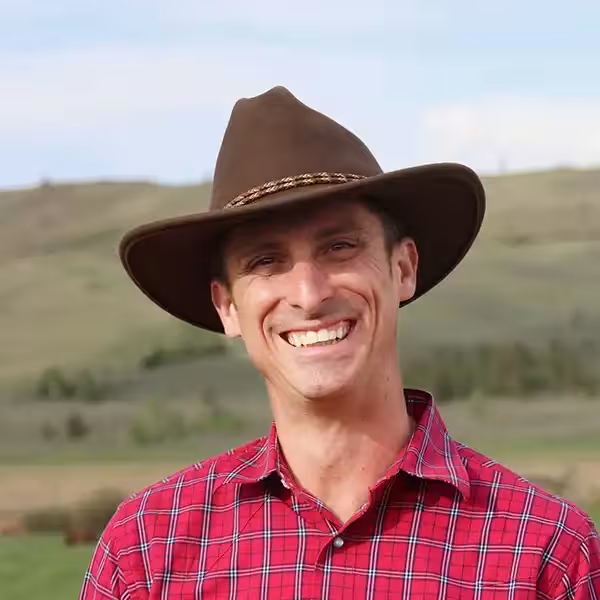
C Lazy U is a historic guest ranch in Colorado, and this week, we’re chatting with General Manager Jeremy Belnap to explore what makes this century-old ranch a living legacy of the American West. Haley sits down with Jeremy to uncover how C Lazy U seamlessly blends luxury hospitality with an authentic ranch experience—and the magic formula that transforms a one-time visit into a cherished family tradition.
Listen in to learn how C Lazy U balances modern tourism with conservation and thoughtful land stewardship. From unexpected wildfires and creative recovery efforts to daily practices that keep the ranch sustainable, discover all the little things that make ranch life accessible—and unforgettable—for generations of city slickers and seasoned riders alike.
Topics
[0:00] Introduction: Jeremy Belnap’s Journey to Guest Ranching
[4:55] C Lazy U: A History of Guest Ranching
[7:20] Guests Transformations
[12:30] The East Troublesome Fire
[18:40] Balancing Tourism with Conservation and Sustainability
[24:50] Why C Lazy U Works
[26:25] Experiences and Special Events
[27:15] Final Thoughts: What Guests Take Home
Haley Mirr (00:06):
Welcome back to the Land Bulletin podcast, where every other week we bring you experts in the field to impart their knowledge when it comes to the ranch and sporting property market, buying and selling advice, the latest, best stewardship practices, as well as topics that impact landowners every day. I’m your host, Haley Mirr. Let’s jump in.
Welcome back to the Land Bulletin podcast. It’s Haley Mirr here, and today we’re going to be looking at a different type of ranch, one that we haven’t really looked at in a while, but it’s a different way of kind of looking at operating a property and one that a lot of people, it’s the only way they really experience the west, so we think it’s a really important thing to talk about. And one of our favorite ranches out there in the guest ranch realm is C Lazy U. So what better person to have us on? But Jeremy Belnap, the general manager of C Lazy U. So welcome Jeremy to the show.
Jeremy Belnap (00:58):
Hi Haley. Thank you so much for having me. I appreciate it.
Haley Mirr (01:02):
And explain to the audience, some are listening audio via podcast, but some are actually watching. But for those listening I had love to know kind of what you’re looking at. Where are you standing right now? Are you at the ranch? Give us a little landscape.
Jeremy Belnap (01:16):
Yeah, so I’m actually on the lodge deck here and I have a great view of the ranch and the hills and the mountains behind us and some pastures as well. So great views and they’re pretty big.
Haley Mirr (01:32):
Yeah, not a bad place to be having a podcast, I will say. And tell us a little bit what’s going on up there? Are there guests up there? I know this is probably your busy season, so we’re very appreciative of you taking the time.
Jeremy Belnap (01:47):
Absolutely. We’re in the middle of it. So summer season for us is in full swing. We’re around halfway through maybe our summer season and it’s rocking out here, lots of folks running around, lots of kids, lots of horseback riding, and we just had our July 4th guests leave on Sunday and we’ve got a whole new group coming in that arrived Sunday and we’re about halfway through the week with them. So having lots of fun, doing lots of riding fishing.
Haley Mirr (02:18):
That’s awesome. Well, I am very jealous of where you’re at right now. Hopefully I can get up there soon. And before we get into C Lazy U, I’d love to know your background. I’m sure a lot of people who are listening are like, man, that sounds like a pretty cool gig to be the general manager of a guest ranch. Can you give us a background of your involvement and how you got involved with C LA U?
Jeremy Belnap (02:39):
Sure. So I’ve been in hotels, conference, city center hotels and traditional hospitality and what led me into guest ranches, I had worked for a company that also owned a guest ranch out ironically in Colorado. And so about 15 years ago I think I started a list of guest ranches because the concept of a little bit longer of stays experiential, activity driven hospitality really spoke to me more than the traditional welcome to the hotel, here’s your room key, there’s your elevator behind you, and the same on checkout. And I grew a little bit bored of that and didn’t have the connection with guests really. And so guest ranches, the concept of it just kind of got implanted in me and I really started to love the idea of it and started a list of guest ranches that I would want to work at. And C Lazy U is one of them.
(03:47):
And so I’ve been here for almost two years now and came from Montana and Wyoming most recently where I ran a couple of guest ranches there as well that were really remote and about an hour and a half to a grocery store or a hospital for example. So very isolated and I loved that when it was my wife and I, but the kids were getting to an age that there’s not much else for them to do and plug into. So Granby Colorado is an amazing rotation and pretty close to Denver and they’re loving life and I get the guest ranch for work, so I love it.
Haley Mirr (04:28):
That’s amazing. Yeah, Granby has turned into quite the community I feel like over the last couple years, so it’s neat that your family gets to grow up there. And I know, so we have a couple friends who are owners up at C Lazy U and we can get into that a little bit, the difference between the guest piece and then kind of the ownership piece. But I don’t really know a lot about the history of the ranch. Has it been a guest ranch forever? Was it kind of something before and then materialized into this? I’d love to know a little bit about that.
Jeremy Belnap (04:59):
Sure. So I think what makes C Lazy U so special is I’ve always felt being at multiple guest ranches that there’s always a heart and soul to the ranch and you begin to feel it after longer periods of time on ranch, and I think that’s what draws people in. But what makes C Lazy U’s so special is that it’s been a guest ranch for over a hundred years. We turned 106 years old this year. So it was started in 1919 and since that time I think we’re on our sixth set of owners, it’s been passed from the Smileys who originally started it to Schoenberg’s and each owner has such a passion and desire and has been a guest at the ranch and has fallen in love with the ranch, which is why they have become owners. And so since 1919 we’ve been a guest ranch and we’ve achieved so much.
(06:04):
And I think there’s so many great stories that come from the ranch that I’m surprised about all the time because I, I’ve run into guests now being here almost two years. I’ve run into so many guests that come here every year that came here that maybe in their fifties or sixties and they came here with their grandparents and it’s generational return. So it’s really neat to see not just a return rate that is 40, 50, 60% throughout the summer sometimes, but it’s generational return of folks that have come with three, four generations ago, three generations on the ranch at the same time for family reunions, which is really neat to see and starts to show the history behind the ranch.
Haley Mirr (06:58):
What’s really neat about what you guys are doing too is you’re giving this opportunity, A lot of people might not ever be able to own a ranch, but they’d love to feel it and get dirty for a Sunday to Sunday visit or what have you. So the opportunity to have some of these city slickers like myself come up to the ranch and kind of experience that is neat. Do you see quite a bit of a transformation of guests when they get to the ranch and then when they leave?
Jeremy Belnap (07:26):
Absolutely. I think I’ve always described that’s my favorite part of my job and what I do is one of my favorite parts, which is seeing folks that are from New York or LA from the city are high powered CEOs maybe and have a lot of stress in their life and they’re go, go, go and seeing them drive down the driveway and engage in the arrival experience, they get out of the car and you can see the whites of their eyes just big eyes and looking around like, I’ve never seen this much land. Maybe I’ve never even seen a horse run into that a number of times, just so much wide open space here that they are absolutely astounded by it and their phone is in their hand and they’re just so connected to their life and everything that’s going on and the stresses of life that they maybe aren’t even engaging in conversation at dinner the first night. Their heads are down in the phone, they’re not interacting with their kids maybe or it’s not that meaningful, but by the second or third night you get to see that transformation where phones are forgotten in the cabin maybe, and there’s no TVs in the cabins and you’re around the dinner table sharing stories, meeting other guests, interacting in a meaningful way in storytelling and really connecting with friends and family. Again, I think that’s probably one of the biggest transformations that people go through on ranch. And my favorite part of the job is seeing that happen.
Haley Mirr (09:10):
That’s huge. And that’s kind of one of the things that we do this podcast for is to really immerse people and get people to understand the importance of land ownership and ranching and how difficult it can be, but how it can really be an engaging piece of your life and all these things. So I feel like you guys are doing that at a much larger scale, but it’s really neat. I’d love to go into, because some of the people listening are potentially going to be landowners one day, and one of the things we really focus on this podcast is about just kind of management practices and conservation. Is conservation a big piece of C Lazy U, I don’t really know kind the makeup of the ranch, but I’d love to know if that’s something that you guys hold dear and learn about some of the management practices that you guys have up there.
Jeremy Belnap (10:01):
Sure. I mean I think how our owners right now, Don and Leslie and Dean have they bought the ranch back in 2008 and they actually consider themselves stewards. They don’t even care to be called owners. They are stewards of the ranch and quite simply were stewards for the next generation and they got involved with the ownership of the land and the ranch for reasons nothing other than to protect, preserve, create a sustainable model that is around for the next generation because it was a really transformative experience for them being guests here that when the ranch became for sale in 2008, they took the opportunity to say, we don’t want to look out on this horizon and landscape out here and see condos built one day and the land changing in such a great way that you lose the guest ranch and what people come here for.
(11:11):
And so I think that’s the biggest way we have grown into conserving this and protecting it for the next generation. We’ve put 2,600 acres into conservation easements so that it ensures that no matter what, we can still use the land, we can still ride on it, we can still hike on it, but we will not be able to and no one will be able to build on it in the future and detract from what this guest ranch really is. And it’s meant for people to disconnect and experience the land experience horses a simpler way of life maybe.
Haley Mirr (11:50):
That’s great. And Don’s a good friend of ours, so that’s neat to hear. He likes to be seen as a steward and not an owner and it’s neat. I think one of the other things beyond the conservation and kind of the spirit of Sea U is the community aspect and talking about the people that you just were mentioning and your staff like the Brennaman have always been good family friends and I think the community really showed up a couple years ago with some of those wildfires. And I’d love to know how that has impacted you guys. And then I know this was before you started at C Lazy U, but what was kind of the community piece of what helped you guys with your horses and helping the ranch and all of that when that all kind of went through?
Jeremy Belnap (12:39):
Sure. The East Troublesome fire was pretty devastating to the ranch and to a lot of neighbors and a lot of folks in the area of course. And with the East Troublesome fire in 2020. Personally I was two hours north of here in Wyoming and I remember the outreach and what was going on at the time with this ranch because there’s more than 200 horses here on ranch, some have never seen anything other than the ranch. We don’t trailer horses around. We ride the land that we’re on, and so we have one trailer that could fit a couple horses. And so there was an immediate outreach when it was realized that evacuation was needed and within hours, social media and everything has its advantages I guess. And within hours there was more than 35 trailers I think lining our driveway and pouring of an outreach to load up horses, no major injuries. And even someone that brought in an A TV trailer, what are we going to do with this? Allowed us to save all of our tack where an A TV trailer serve the purpose of let’s load up all of our tack and save that as well. So pretty amazing outreach within hours. Being able to evacuate, get more than 200 horses off ranch is pretty spectacular when you realize that it all came from the community surrounding us.
Haley Mirr (14:26):
Yeah, it’s really special and it’s probably one of the reasons you guys have been able to be a guest ranch for over a hundred years and continue to bring the people that are there. We’ve always found that some of these landowners who go in buy a ranch and they don’t involve the community as much, they’re not as successful. So it’s neat that C Lazy U has always had a stronghold with not only the ranch itself but like Granby and the surrounding areas. And did that wildfire that happened, did that change any of your management techniques or approach?
Jeremy Belnap (14:59):
Well luckily I think we had done some forest management and clearing of fuel in the area around the ranch right before the fire in the years before it. So I think it was probably a lot better for us than it would have been had we not. And I think moving forward we continue to look at any ways we can protect and preserve because it obviously hit home pretty close and impacted us in a big way. So it’s definitely something that is more front of mind and when we’re talking about open fires and things like that, we definitely are more protective and shut those things down sooner than we probably had in the past. I think a neat way of just bouncing back from it all though is I’m always amazed by the story of our partnership with a lock and co distillery and rye whiskey that is aged with the aspens that were burnt in the fire on ranch and they actually cut down Aspen trees that are dead standing and they aged the rye whiskey from Lock and Co and we partnered with them to create our own little brand of rye whiskey.
Haley Mirr (16:21):
Oh wow. I love that. So what was the name of it again, just so I can buy that after this call?
Jeremy Belnap (16:27):
It’s the Lock and Code Distillery out of Denver and we had always wanted to partner with them and found the perfect opportunity to do so and make something out of such a tragic event. And what better way than to make a whiskey that’s got some character of the land on it.
Haley Mirr (16:48):
I just looked up the name. So I went to a camp just full disclosure, and Owen Lock, he’s another friend of ours, so I love just how small the community is, small
Jeremy Belnap (16:58):
Community. Well that’s how the partner we’re talking about. It began as our director of sales and marketing. Brady and Owen went to high school together, I believe.
Haley Mirr (17:10):
Okay, cool. Sorry, not to keep name dropping, but I’m like, oh, this is why C Lazy U just makes sense.
Jeremy Belnap (17:15):
Small C Loop for sure.
Haley Mirr (17:17):
Yeah, it’s funny
Jeremy Belnap (17:18):
Was actually That’s neat. We had Lock and Co up for a tasting actually it was funny. And their national sales rep, Joe, who I had never met at the time until that day, shook my hand and he says, I came here when I was a boy and he was probably in his forties I think, and he came here when he was a boy with his grandfather and he’s like, by the way, he shows me a picture on his phone of our a hundred year book, which it was a book that we had put together when we turned a hundred years old, so six years ago. And he was in the book as a kid and he says, that’s me. That little blonde-haired boy in the middle on the donkey was me.
Haley Mirr (18:04):
That’s awesome. Yeah, I love that. Yeah, maybe I’m in that book somewhere when I was a white-haired little kid. Well, I’d love to know too, as conservation is one of kind of the things you guys think about, how do you balance tourism and having people on the ranch and experiencing the ranch and going to different pieces of the ranch while also having conservation in mind? I know when we think of conservation it’s obviously development and impeding some of that growth, but is that kind of a piece of making sure leave it the way you found it kind of thing when guests are up there?
Jeremy Belnap (18:47):
Absolutely, and I think that’s a great question and like I mentioned, the conservation easement certainly maintain the land forever to say that it’ll look the way it does, it won’t be developed. That’s one way. And I think other ways that we try to balance it with tourism, refillable water bottles and waste audits to understand what waste are we producing and how can we improve and lessen that. We do talk a lot in our kids program, which is one of probably the biggest reason folks come to ranch is the kids program. But we talk about it often with kids of just what you said, leave it the way you found it and cleaning up behind ourselves. And if you see a piece of trash, pick it up in the summer. We run Sunday to Sunday, so guests will stay for one week and everybody checks out and checks in on a Sunday and it’s an all hands on deck experience for the team to flip it for the next set of guests coming in.
(19:56):
And it really allows us to pick up everything, all trash, anything that’s been left behind in the last week, really try to reset and do the right thing for the land as well and balance how many horses we have on ranch, how we rotate the pastures. If you can imagine if you have 200 horses out and one of these pastures in front of me, they will burn that out within a matter of days a week. So we need to constantly be rotating, doing the right thing for the land. And I think we have our own waste water treatment facility as well as a spring fed well up the hill that supplies all of our drinking water for the ranch as well.
Haley Mirr (20:46):
Got it. So it’s of kind of all a piece of it. And is there any kind of educational piece with people that come through?
Jeremy Belnap (20:54):
Sure. I think we’re always working to educate guests and understand how the ranch works. A lot of folks come in are just curious. They see so much going on. They booked this not knowing what a guest ranch is, and then they get here maybe, and typically they’re folks that are more well off in their career, maybe they’re business-minded folks, they’ve gone into big careers maybe and they understand how businesses run and they get here and see that it’s a lot bigger than they may be anticipated and how it all works behind the scenes. So a lot of fun conversations and education through just conversation with guests.
Haley Mirr (21:37):
That’s huge. And I’d love to know your model has worked for so long, the educational piece, probably the day-to-day agenda and that’s why people keep coming back. It’s your staff, it’s all the things. What do you think some of these other guest ranches could learn from C Lazy U’s model? I know everyone is different, but what you think set you guys apart for success to be something that has lasted for this long?
Jeremy Belnap (22:07):
Sure. I don’t know that I would be comfortable saying we’ve got it all figured out because we’re flying the plane as we build it every day. And I think that’s what I love so much about hospitality is its organized chaos. But I think other ranches and what we do, we do operate year round. Some ranches don’t operate all year round, but we have found that it does allow us to shrink our team and half we’re able to keep a core group that are really high performing and able to onboard another 80 folks in the summer. So our bread and butter though is summer and we run Sunday to Sunday and we’ve got our programming in the horse and the kids program are really the cornerstones of our operation. And what we were really built on is the folks that come out to ride and they love the kids program.
(23:10):
And I think what’s so special about our kids program is the ability for parents and kids to go in different directions, experience things maybe that they’ve never experienced in their life and they’re able to come back together or weave back and forth and crossed paths with one another throughout the day. And then when they do reconnect at the end of the day maybe or during lunch, the conversation there is so meaningful and full of storytelling and you wouldn’t believe what I did. Well, let me tell you about what I did today. And the stories are just amazing because these are things that people have never done in their life before. And I think that’s what all ranches and guest ranches in particular can provide is really just a way to connect with friends and family, a way to connect with the land and appreciate what we have out here on a different manner.
Haley Mirr (24:09):
That’s awesome. Yeah, and I think to your point, the horse piece of CU is definitely a differentiator. I don’t think as many people really focus on that and the kids piece because like I said, the last time I was there I was 12 and I know some of these places you only, it’s really kind of the upper high end guest ranch for just like adults. So I think that definitely is something that sets you guys apart a lot. And then I’d love to know, you guys do work year round. Are there any exciting events that are coming up or things you’d like to share? I know you’re in your busy season, so it’s probably just churning and burning at this point. But yeah, what are some of the things that you guys are working on that you’re excited about?
Jeremy Belnap (24:55):
Well, I think we’re always excited about and working the summer runs. It’s the busiest time of year. It runs Sunday to Sunday. It’s got great programming and that’s what folks know most about. But I think what we really look at the more challenging timeframes to keep us busy and bring people under the ranch is the shoulders in winter. And we’re always excited to work with someone like Julie Goodnight, for example, horsemanship clinic and more horse focused events for example. And where we can really dive deeper into different topics of horsemanship. We really get into a lot more wine and D type events where we bring in wineries and wine makers or our guest chefs maybe and have some fun on the food and beverage side of things, which is another big part of what we do here is folks that are more well traveled, which our guests are very well traveled, they know what luxury is and they want an authentic experience when coming here to a ranch. And we’re rustic and we’re Western, but they also want a great culinary experience and they want great food. And so that’s a big part of our program as well. And we do a lot more events in the winter and spring and fall that are centered around those components.
Haley Mirr (26:25):
That’s so fun. And I’m sure you guys do weddings too. I think I looked.
Jeremy Belnap (26:29):
Yes, we do a little bit. Yeah, not too many. We do a few a year typically, but we do a few. Yes,
Haley Mirr (26:38):
It’s a
Jeremy Belnap (26:38):
Good place to get married
Haley Mirr (26:40):
I would say. So it’s my favorite. We used to have a ranch. Our family ranch was one of the horns. I don’t know if they still own land by you guys, but it’s the old Horn Ranch. We owned like 160 acres off of there. So I just love that piece of the world so much. It’s like the last piece of Colorado in my mind is like Grand County. And lastly, Jeremy, because I know I can hear you’ve got guests there, there’s a lot going on at the ranch, so I won’t keep you for much longer, but I’d love to know one thing before I let you go. What do you hope guests take home with them beyond great memories when they leave C Lazy U
Jeremy Belnap (27:16):
When guests come here? Our goal is definitely to create indelible memories that will last a lifetime and things that will be passed from generation to generation. And what my real goal though is, is to expose folks to a different way of life and not just a vacation and a meaningful disconnection from everyday life, but to come and experience something that you’ve never done before in your lifetime maybe. And challenge yourself to experience and learn something new that you’ve never learned before. And I think that’s what is so special about all guest ranches is that you’re exposed and challenged in ways that maybe you aren’t in your everyday life and you’re able to potentially change a lifestyle or a modified viewpoint of what life is really all about. And I think it’s more than just a vacation, but it’s a deep appreciation for the great American West.
Haley Mirr (28:19):
That’s awesome. Perfectly said, and I think what you guys are doing is amazing. Like I said before, it’s hard for a lot of people to really understand what the West is and places like C Lazy U really allow that to happen. So thanks for everything that you’re doing and I hope that I can come up there sometime. I’m planning a wedding this summer, so I’ve had zero free time, but next summer I will be up there with bells on. So thank you so Muchly for taking the time.
Jeremy Belnap (28:49):
Alright, thank you Haley, I appreciate it.
Haley Mirr (28:52):
Thanks for joining us today. To learn more about the ranch real estate market or our ranch marketing process, make sure to subscribe to our newsletter on our [email protected] or give us a call at (303) 623-4545. See you next time.