
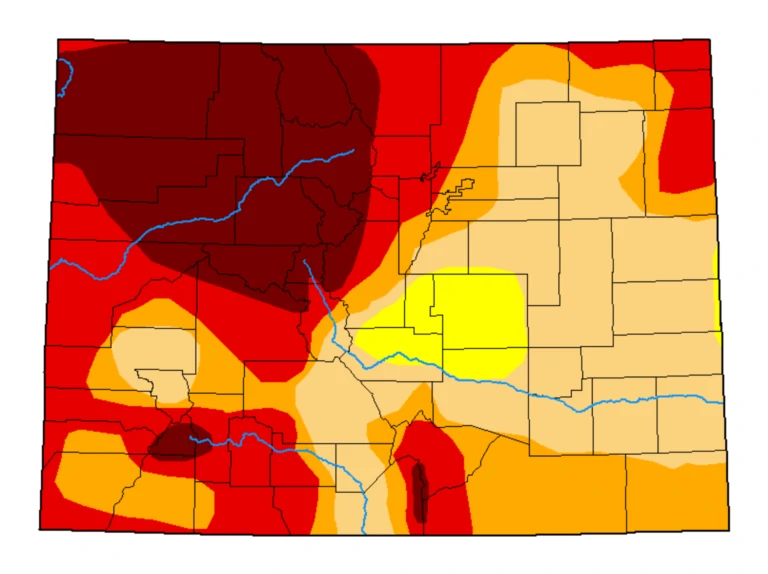
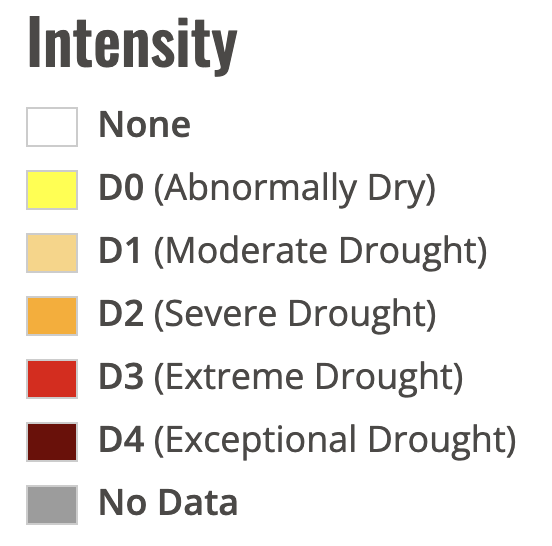
Unusually warm weather and low snowfall all winter across Colorado have had residents wondering: Is 2025-2026 the worst season for snowfall ever?
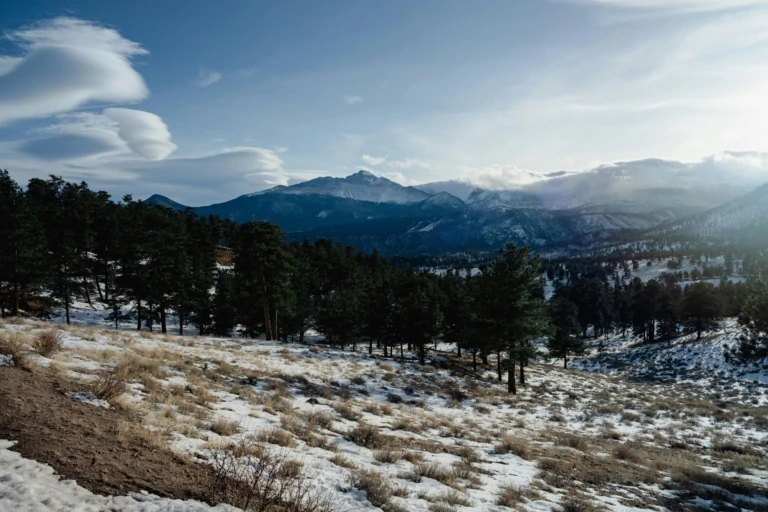
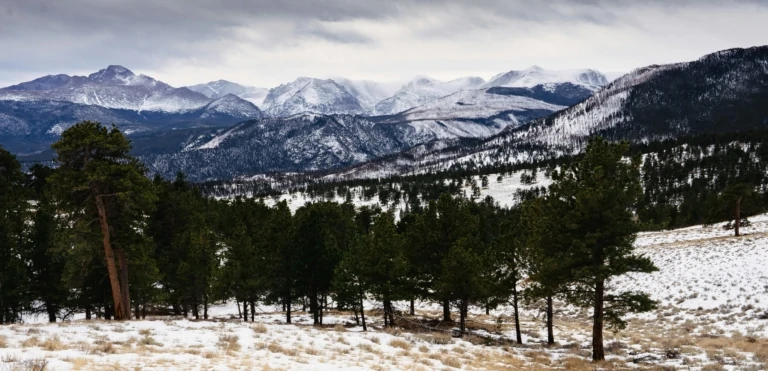
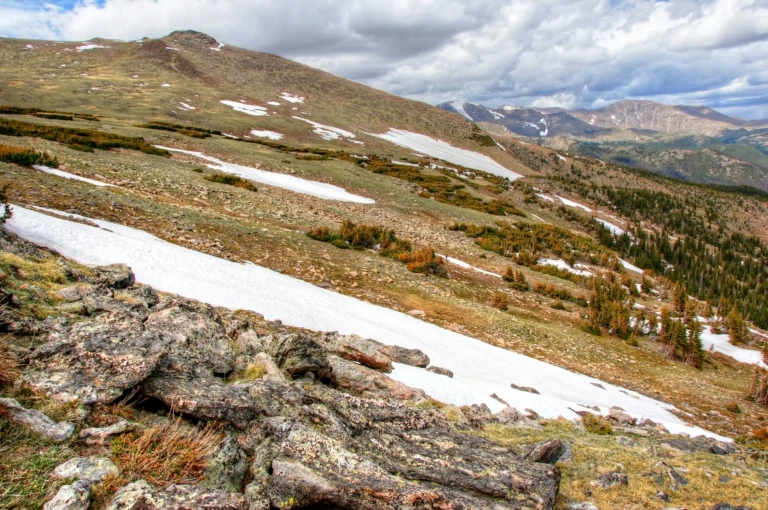
Question answered: The Colorado Climate Center just reported that 60 of the 64 sites across the state, where it manually collects and measures snow, are at their lowest levels in more than 50 years. “There’s no sugar-coating the data: After the record-smashing heat in March, the mountain snowpack is in historically bad shape for April 1,” Colorado State Climatologist Russ Schumacher posted in a blog.
A Summit Daily story on snowpack shared other startling numbers from the Climate Center: More than 25% of the locations it measured had no snow — and that had never happened at any of the 18 locations during the past half-century plus. (The Daily notes that the state’s high-tech SNOTEL system wasn’t in place until the mid-1980s, so it doesn’t have stats from 1976-77 and 1980-81, two other dismal Colorado snowpack seasons.)
Want more sobering news? A Colorado Sun story noted that the “average liquid water stored in Colorado’s snow was down to 3.1 inches on April 1. That’s less than 40% of what remained on that date in the previous lowest year, 2012, when 9.1 inches of water equivalent was still left in the pack.” The Colorado River Basin snowpack is just 55% of normal, and the South Platte River Basin is hovering near 40% of normal.
Schumacher cited “record-shattering” heat as the major contributor, noting the state had more than 7 days with high temperatures that exceeded any March temperature from 1951-2025. “There’s no question that this will go down as the warmest March on record for Colorado — around 3-4 (degrees) warmer than any other March in the last 132 years,” he wrote.
Clearly, this is a difficult situation for the state of Colorado, which is facing a heightened risk of wildfires and drought conditions. Denver Water – which also serves customers in Adams, Arapahoe, and Jefferson counties — declared a Stage 1 drought for its customers on March 25 that limited lawn watering to a “maximum” of two days a week and low levels of watering for gardens and trees. Colorado Gov. Jared Polis activated the state’s Drought Task Force and Phase 2 of Colorado’s Drought Response Plan on March 16.
It’s not just a statewide problem. Colorado is a headwater state that delivers water to downstream states and Mexico, so this is a regional problem that only exacerbates preceding decades of low flow.
You might say it’s a problem that’s been a long time coming. When the Colorado River Compact, crafted by Colorado lawyer Delph Carpenter, was agreed to in Santa Fe in 1922 under the supervision of then-Secretary of Commerce Herbert Hoover, the weather had been historically wet, generating annual flows of about 20 million acre-feet. The planners opted for a more conservative 16 million acre-feet per year as the amount that would be shared with the seven states along the river, divided into the Upper Basin (CO, UT, WY, NM) and a Lower Basin (CA, AZ, NV). Later, a treaty promised 1.5 million acre-feet to Mexico.
Of course, few, if anyone, in 1922 could anticipate the massive development in the Lower Basin states that increasingly put pressure on the water supply. Add that to the basin’s current prolonged drought, along with a current forecast from federal officials for Colorado River flows to Lake Powell to be about 46% of normal, and there’s good reason for concern.
The impact on agriculture, one of Colorado’s biggest economic drivers, is coming into view. Denver’s 7 reported in late March that some Denver-area farmers have reduced their plantings in anticipation of water shortages. Joe Petrocco said water supply isn’t the only thing under stress at Petrocco Farms, the fourth-generation family operation he runs in Brighton. “We're not making any profits,” he said. “It's been some time, so we just go right back into debt.”
Summer tourism could also take a hit due to a shortened whitewater rafting season, and low river levels could negatively impact fishing. And should the dry conditions result in wildfires, that could impact camping and hiking. As a result, Coloradans are looking to the skies for help, a little of which recently arrived.
“The one bit of good news is that April has started off like April, rather than whatever the March-June hybrid was that we just went through,” wrote Schumacher of the Climate Center. “Widespread precipitation fell in Western Colorado, with snow in the mountains and rain at lower elevations.”
And while that snow can’t solve the problem, Schumacher noted “any water from the sky is very welcome at this point.”