
The Colorado River: When the Numbers Don’t Add Up
Read more
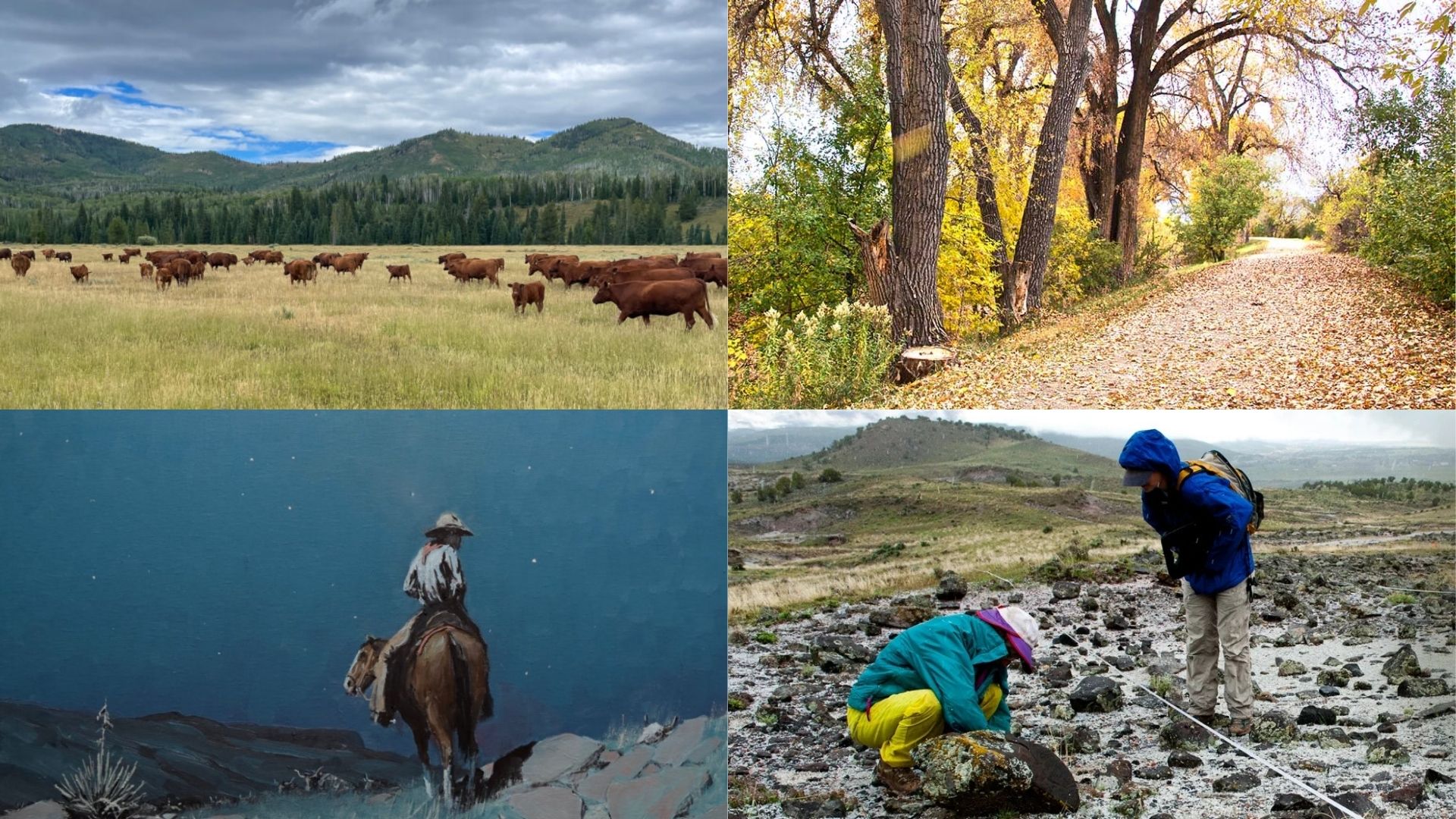


Fresh off Thanksgiving, Haley gives you a solo-sode this week featuring another way you can give thanks this year: Colorado Gives Day. This year, we’re highlighting four nonprofits that play an important role in the future of Colorado’s land, culture, and communities. From statewide conservation to urban green spaces, Western art, education, and research, we revisit some of our past conversations and partners to showcase why these organizations matter, and what you can do to show your support.
Colorado Gives Day is happening this year on December 9th. If you’re passionate about working lands, Western heritage, or just simply conservation across the state, this episode can serve as your guide to meaningful giving in Colorado.
Want to watch this episode? Check it out on our YouTube Channel!
Links
Colorado Gives Day
Growing Conservation in Colorado with Denver Botanic Gardens
Protecting Colorado’s Legacy: A Conversation with CCALT’s Erik Glenn
From Cattle to Canvas – The Art of GL Richardson
The Picturesque Narrative of the West Through Art
Haley (00:06):
Welcome back to the Land Bulletin podcast, where every other week we bring you experts in the field to impart their knowledge when it comes to the ranch and sporting property market, buying and selling advice, the latest, best stewardship practices, as well as topics that impact landowners every day. I’m your host, Haley Mirr. Let’s jump in.
Welcome back to the Land Bulletin podcast, Haley Mirr here. And today we are going to be going over one of our favorite days of the year. It’s Colorado Gives Day. It’s a day where we’re able to give to all of the different organizations that hold a special place in our heart here at my ranch group. And then on a personal level as well. So today we’re going over what Colorado Gives Day is, and then we’re going to look over some of our favorite nonprofits across the state.
(00:54):
So Colorado Gives Day is a day usually in December in Colorado, where individuals are able to give to all nonprofits that speak to them, whether that be education, locally, land trusts, conservation efforts, you name it. Colorado Gives Day is this platform where all nonprofits that are registered with the state of Colorado are listed and you can donate. And then what’s great about that day is that there’s an incentive fund that actually matches all of those donations. So that’s why that day in particular is super important to give to the organizations you guys care about because it will be matched to a certain level. While there are over 4,500 nonprofits, maybe a little bit more in the state of Colorado, we wanted to just kind of siphon that down to four that we really care about and go into a little bit deeper about why. Here at MER Ranch Group, we work with these organizations.
(01:53):
So the first organization that we’re going to talk about today will be of no surprise to most of you because they’ve been on our podcast multiple times since we started, and they are our annual partners almost every year. And Ken has served on the board for many, many years, and that is the Colorado Cattleman’s Agricultural Land Trust, Colorado Cattleman’s Agricultural Land Trust or CCALT is a land trust that is statewide. When we usually look at land Trust, sometimes we’re looking at locally sourced land trusts that focus on a certain region, but what’s neat about CCALT is that they work throughout the state of Colorado. This is their 30th year. So we are both celebrating big years for both my ranch group and CCALT. And since 1995, they’ve helped over 400 families conserve more than 820,000 acres in Colorado. So what they’re doing is incredible. And what we really love about Colorado Cattleman’s Agricultural Land Trust is that they work with farmers and ranchers to really meet what their needs are so that they can still work the land, they can still have a viable operation while also protecting the habitat, the wildlife, and the things that make the land what it is,
Erik Glenn (03:09):
In 1995, there was a lot of pressures on AG producers that are not unlike the pressures that are there today. They were slightly different. And the biggest reason that the members of the Colorado Cattlemen’s Association looked at starting a land trust was related to generational transfer of farms and ranches. And it was specifically tied to the estate tax exemptions, which were much lower than they are today, back in 1995. In fact, I think if I recall correctly, they were less than a million dollars at that time. So as properties were appreciated, property values were appreciating particularly ranch properties and particularly ranch properties around resort communities. There was a real crisis for a lot of our traditional families in a lot of cases had been in these communities working these properties for 50, 60, 70 years, sometimes longer, and there was a transition about to happen, and they were facing these really challenging estate tax and estate planning issues.
(04:28):
And easements have been a tool for estate planning for a long, long time. I think outside of the conservation benefit, the primary utilization of conservation easements has been for estate planning. And so the membership of the Cattleman’s Association took a really, I think brave made a really brave decision in going out and creating the first of its kind conservation organization in the country, an organization that was stood up by members of the association to serve the members of the association first and foremost. And I know that those that were around took some grief from some folks who didn’t think it was the right thing to do. But I think if you look back on 30 years, we’ve worked with more than 500 families across the state, which is the key. That’s the key metric for me is how many families are we impacting? We’ve helped conserve and I say helped because it’s really the landowners that have done the conservation.
(05:42):
We just helped facilitate the transaction. More than 800,000 acres working lands that will remain in agricultural production will remain open for wildlife, will remain these beautiful scenic views that we all get to enjoy as we travel around Colorado forever. And I think that’s a really remarkable story and it’s a story of success for the Cattlemen’s Association. I think it’s, again, just another testament to the old adage that the American ranchers a true steward of the natural resources of our country, and they do a really, really good job of that. And like I said, I’m just really proud to have had the opportunity to serve the ag industry, to serve Colorado, to serve the Cattlemen’s Association in the way that have through CCALT.
Haley (06:35):
Another thing that kind of connects MER Ranch groups to CCALT is their core values and core goals At CCALT, their goal is to keep working ranches intact, preserving traditional agricultural natural beauty and local history. And that’s exactly like what we’re trying to do by connecting the next stewards to the lands that they purchased. Another thing that’s great about CCALT is the view of multi-generational stewardship. So at Mirr Ranch Group, we’re constantly trying to find the next stewards of these great ranches and CCALT is there to deliver tools to help those ranchers meet those goals so that next generations can also protect these landscapes and work the lands the way they once did. What is one of the coolest projects that just really made it clear why you’re doing what you’re doing? I know all of them have their own unique kind of thing, but I know even with ranch sales and working with conservation buyers and sellers, we have the same kind of story. So which one stands out for you about something that kind of changed your perspective on things?
Erik Glenn (07:41):
Well, it changed my perspective, but each of our projects was unique and special in different ways. But there’s a property just to the north of the town of Ed Borders, the town of Bertha, and it’s been a family farm for a long, long time, right along the little tops and river. And it’s in this area, it’s quickly changing, right? I mean I think it’s like 10 minutes from the Bucky’s gas station, so you can imagine what this landscape looks like. And the family that owned it didn’t have any errors and they were trying to figure out what they were going to do with it and as they aged and they ultimately decided that they wanted to ensure it remained a farm. But beyond that, they wanted to find a way to have that property serve agriculture in a different way, meaning that they wanted to find ways to get kids more engaged with agriculture.
(08:54):
And particularly they had an interest of like, can we get front range youth who may not necessarily always have these opportunities to look and explore careers in agriculture? So think about that. And so they worked with us and they worked with the Future Farmers of America Foundation and a number of other partners to ultimately sell the property to the FFA foundation. So they’re now the owners of the property. We put a conservation easement on it so that it would remain so that there was the legal protections, but that easement also enabled FA foundation to be able to afford the property as well. And the goal ultimately is to create an educational learning facility on that property where kids can come out and engage with an active working agricultural property and learn what it is to be an ag producer. And I think that’s such an important thing for agriculture in the future, is to create more opportunities for young people to be inspired to get involved in agriculture as a career, even if they’re not from a farm or ranch family.
(10:15):
And secondly, as a place that we can bring folks from the city who may not be looking to have a career in agriculture, but they can better understand what it means to live next to a farm, what’s next to a ranch. And my hope is that places like that, a national Western campus and the CSU Spur Center, that we can utilize those places as these living educational laboratories that help us inspire sort of a return of people to our historical agricultural roots. And I’m not saying everybody should be a farmer or rancher, that’s just not feasible, but we need to understand why it’s important. We need to understand we need farms and ranches to feed the growing populations, and we need to understand what it takes to run an agricultural operation so that we don’t make bad choices at the ballot box. We don’t end up with bad statutes and other laws that make it harder and harder for us to grow food, and it makes it harder and harder for wildlife to thrive. So that project to me, while very unique to what we do, is I think this really exciting opportunity for us to engage in a different way that furthers our mission and furthers a future for Colorado agriculture.
Haley (11:49):
On top of it all, we have a lot of friends over at CCALT and one of which is the executive director Erik Glenn, if you want to learn more about what CCALT does and what a conservation easement even is for those listening, that conversation with Eric Glenn that we did on the lamb bulletin a couple of years ago is a great resource.
(12:10):
Denver Botanic Gardens is an incredible organization. They exist here where we are located, which is in Denver, Colorado, but they do a lot of work, not just locally but across the state as well. Their main mission is to connect the people with the plants, especially plants from the Rocky Mountain region and similar regions around the world. They work with other botanic gardens across the country to really learn from each other and put a lot of that science into protecting the plant life that is native to these landscapes in these areas that we do a lot of work with. Beyond the incredible programming that they have at the Denver Botanic Gardens locally, their work spans to plant conservation as well, research education, sustainable landscape practices and community access to some of that knowledge. And I’d love to know with your title, what does that mean, climate resilience as it relates to the Denver Botanic Gardens? What is your role at the gardens itself?
Becky Hufft (13:15):
Sure. So I’m the associate director in our research and conservation department, and I oversee all of our plant ecology work related to rare plant conservation and ecosystem restoration and urban ecology. So it’s really a holistic approach to thinking about how we conserve biodiversity, how we study biodiversity, and how we communicate that out to the public. And I think the reason it’s climate resilience is because it’s wildlife, it’s habitats, it’s people. People are a piece of that too. And the importance we feel that climate plays in driving all of our from social issues to political issues to all the wildlife work that we do.
Haley (13:55):
Oh geez. So you’re kind of doing everything it sounds like, and it’s all connected. And how does your conservation work shift or adapt when you’re working in kind of the middle of the city in Denver versus kind of out in the alpine areas with some of that type of habitat that I know you’ve worked on?
Becky Hufft (14:14):
Yeah, that’s a really good question. I think the fundamentals are the same. The way the type of the tools that we have, the gear that we take out, the type of data that we collect, the questions that we ask are actually very similar, regardless of if it’s in the city or it’s up on an alpine peak
Haley (14:31):
For landowners, organizations like Denver Botanic Gardens can provide useful information and assistance in how they should interact with native vegetation, implement waterwise practices and learn more about conservation landscaping.
Becky Hufft (14:43):
Most of our work, I would say happens outside of the walls of the Botanic Gardens here in our downtown location. We have staff and scientists who are involved in all sorts of projects, and we really do partner with private landowners, municipalities, private organizations to work across the region here in the Denver metro area, we have several projects. One we are, one of my projects is that we’ve partnered with the Colorado Golf Association and we’re doing some wildlife habitat improvements on a golf course over on a property that’s right at the intersection of Denver and Aurora, so it’s right in the metro area. We also have a scientist on our team who’s working with the city of Denver and the Highline Canal Conservancy to do, we’ve done tree surveys both on tree work on the Highline Canal, which is a large stretch through the urban area, and also working with the city on thinking about setting trees for climate resilience. So thinking about what do urban street trees look like that survive in our changing climate where there’s not only harsh winters, but there’s also the water usage that we’re trying to attain. So we have some folks studying those aspects as well.
Haley (15:58):
I encourage anyone listening, if you have not been to the Botanic Gardens in a while, go check it out. It’s incredible what they’ve done to really make sure that the plants that they have there are native to this area. I’ve learned a ton walking there almost every Friday morning. It’s a really great place to go. But on top of that, if you want even more resources from a landowner’s perspective, we had a great episode on the Land bulletin with Becky Hoft, the Associate Director of Climate Resilience at Denver Botanic Gardens, and she went over all of the different programming and research that they’re doing across the state to ensure that this vegetation and this habitat is sustained throughout the next couple generations.
(16:42):
One of the next organizations that we’re going to go through, and one that holds a very special place in my heart because I happen to be very involved with their younger professional group, is the Coors Western Art Show and the Young Guns. All of the money that happens with these two big events actually siphon up to the National Western Scholarship Trust, the National Western Scholarship Trust is an incredible organization. It promotes research in the future of agriculture, rural medicine, and veterinary science. It has helped numerous students reach those goals of really entering into these different spaces of ag and is one of the most important trusts, I think, if we’re really going to get the next generation to care about agriculture and all the science and medicine that goes into it.
Kate Hlavin (17:26):
The Coors Western Art Show is one of the most important western art shows in the country. It was founded in 1993, and Ann Daley, who was an incredible leader and voice in Western Art, was the first curator of the Coors Western art show. And later Rose Frederick became the curator, and I would say Rose is really the one that really gave the show legs and really built it into something. She did an incredible job giving the show a national reputation, building a roster of artists from all over the United States, both photography, sculpture, paintings, and all different mediums, and really turned the show into something. And the show every year has about 70 to 80 artists from all across the United States that are depicting the West in different forms, whether it be through bronze sculptures, through plexiglass sculptures, through oil paintings, through water colors. It’s a whole story of the West told by many different artists kind of working in different mediums. And I’m really proud to be. There’s been some incredible women, women at the helm leading the show and to kind of build on their legacy. I’m really proud of that and really excited to kind of see what is to come.
Haley (18:47):
The Coors Western Art Show and the Young Gun Show are incredible events. One because they’re super fun, but the other portion is because they have really introduced Western heritage and culture to Denver and the surrounding areas. This city continues to grow, and it becomes even more imperative that we educate those that are moving into our state about the history, about the heritage, about how it’s changing where we’re going, and one of the most palpable ways to really do this is through art. So Coors, Western Art and Young Guns has done an incredible job of really spearheading this knowledge base. And then all of that money that is generated through those events goes towards what we talked about the National Western Scholarship Trust, which is the organization that you can give to on Colorado gives day this December 9th.
Kate Hlavin (19:36):
So the Coors Western Art Exhibit and Sale is up for the entire duration of the stock show. Anybody that comes to attend the stock show is welcome to go up to the galleries and walk through, and we really encourage people to come see the art because it is truly amazing. In addition to that, as you just mentioned, every single year, the Coors Western Art show acquires one piece of art from the featured artist, and we have assembled a collection of over 30 paintings and sculptures in our permanent collection from the featured artists every single year since the show started. All of those paintings and sculptures right now are hanging in the executive offices of the National Western Stock Show, and when we move into the new building in 2026, they will be on display for the public to see, and it’s really, really neat because they depict, because they’re from every single year, obviously genres kind of change a little bit, styles change, so it’s really neat to kind of walk through all of the paintings and sculptures and just see how Western art has evolved since we started collecting.
(20:48):
This is a really unique show in the fact that there’s a huge philanthropic component to it. Coors Western Art gives a percentage of our proceeds to the National Western Scholarship Trust, and that for me is just such an incredible feeling to know that the art that we are selling is directly benefiting and making a huge difference in students’ lives. And part of Core’s Western art show is we actually have several scholarship recipients work for us during the month of January, and to hear them tell us how this changed their lives and the fact that they are able to go to school because of what we’re doing is really, really amazing. So I think this is what makes the show so unique and different from many other museum shows is the impact that it has on young students from all over the West that come and can feel the direct benefit of the money that we raise.
Haley (21:53):
If you want to learn more about the actual events of Coors Westerner and Young Guns, we have two incredible episodes. One is with the curator and a very good friend of mine, Kate Lavin. Kate goes over the different things that they’re doing at Coors Western to bring it into this next generation and some of the exciting things that they’re working on at the National Western. And then the other episode goes with GL Richardson, who was the featured artist at the Young Gun Show last year about his technique, his inspiration, one of which is our good friend Youth Beardsley, who has another episode that you can listen to if you want to with Woody Beardsley. But it really just goes into both episodes about Western art and its importance to our heritage and our culture.
(22:43):
The last of the four that we’re going to highlight, even though there’s numerous other nonprofits we care about here at Mirr Ranch Group, is the Highline Canal Conservancy. The Highline Canal Conservancy is an organization that has protected and preserved 71 miles of the Highline Canal in partnership with both public and local jurisdictions. When we talk about land trusts and we talk about conservation easements, we typically talk about a single deeded piece that is owned by one sole proprietor, and none of them are easy, but they’re much easier than 71 miles going through all these different jurisdictions. It almost starts at the Denver airport and goes all the way to the foothills. So the fact that the Highline Canal Conservancy has been able to protect those 71 miles while working with all those public and private institutions is absolutely incredible. For those of you who don’t know what the Highline Canal is, the canal is a major urban regional greenway.
(23:39):
It connects multiple communities, like I said, from the airport all the way to the Foothills by Chatfield. It’s a place where different communities in the urban stretch can really experience green space, which is sometimes lacking in some of these urban environments and learn about conservation and all of the different practices that go into managing these places. So while Highline Canal Conservancy might not exist in these spaces that we sell land in, it is one of the only green spaces in conserved areas in an urban area that will really get people to care about green spaces in public lands, and sometimes is the only time people are able to see these things. So while it might not be a ranch, it might not be these private landscapes we care so much about. It’s really educating and getting people to care about these spaces that hopefully will then materialize into caring about these other larger landscapes around the West.
(24:43):
So just to wrap it up, Colorado Gives Day is December 9th this year. You can always give to these organizations, but again, what’s so important and crucial about Colorado Gives Day is that match. So go on the website, look at these nonprofits you care about. There’s even a way to kind of siphon different types and what those look like from urban regional conservation, education, all those different things. Really choose the things that matter to you. These are just four that hold a special place in Bur Ranch Group’s heart. In a personal note of mine, one that I truly care about is Grow House. It’s a way for these underserved communities to be able to access cheaper and free sometimes vegetables and what we call food desert. So that’s just a little note and just shows you the scope of what these nonprofits can do around the state.
(25:35):
The website, if those of you who are interested is Coloradogives.org. Again, December 9th is the day to give, but give to any of your organizations and nonprofits are what make this world go round, and it’s a small duty of ours just to kind of educate you on not just the ones we care about, but all of the ones that exist in our state. Thanks again for listening, and if you have any questions about the ones we mentioned, feel free to reach out directly or listen to any of those episodes that we mentioned earlier. And for all of you who just celebrated Thanksgiving, I hope you had a great time with your family, and I hope you have some other fun holiday celebrations ahead. Thanks so much. See you guys next time.
Thanks for joining us today. To learn more about the ranch real estate market or our ranch marketing process, make sure to subscribe to our newsletter on our website @mirranchgroup.com or give us a call at (855) 859-5207. See you next time.
Be the first to see the latest Ranch news and advice
 0
0
Start saving properties by clicking the + button on any property page.