
In the conclusion of our cheatgrass deep dive, Haley sits down with terrestrial habitat biologist Ryan Amundson from the Wyoming Game and Fish Department to unpack the very real and often overlooked impacts this invasive annual is having on western rangelands, wildlife habitat, and ranch operations. But this isn’t a doom-and-gloom conversation.
From herbicide strategies and post-fire restoration to smarter grazing management and large-scale partnerships, Haley and Ryan focus on practical, boots-on-the-ground solutions that are already making a difference. Along the way, they share actionable tips landowners can implement right now to strengthen their landscapes and stay ahead of cheatgrass for the long haul.
Links
Wyoming Game and Fish Dept
Wyoming Weed Pest Council
Want to watch this episode? Check it out on our YouTube Channel!
Haley (00:06):
Welcome back to the Land Bulletin podcast, where every other week we bring you experts in the field to impart their knowledge when it comes to the ranch and sporting property market, buying and selling advice, the latest, best stewardship practices, as well as topics that impact landowners every day. I'm your host, Haley Mirr. Let's jump in.
Welcome back to the Land Bulletin podcast. I'm Haley Mirr, and we've had a couple different episodes looking at habitat and all the things that are happening from a ranching perspective, but also on the state level. What we're doing for some of the issues that we're seeing on a habitat level. Helping me out today with our second part of our Cheatgrass kind of educational podcast episodes is Ryan Amundson of the Wyoming Game and Fish. He's actually a terrestrial habitat biologist, so he's definitely the man with the plan. He understands what's going on, and we're going to learn a lot about what Wyoming Game and Fish is doing at a larger scale to combat Cheatgrass. So welcome to the show, Ryan. We're happy to have you on.
Ryan Amundson (01:09):
Thank you for having me today.
Haley (01:11):
Well, in our part one of this series, looking at Cheatgrass, we looked at really kind of what Cheatgrass is, where it came from, but I'd love to kind of jump into more of a biological standpoint. How does Cheatgrass change a landscape from a biological, biological piece?
Ryan Amundson (01:31):
Yeah, so this has been a fairly recent phenomenon even during my career span of 30 years. We've just slowly seen Cheatgrass get more of a foothold in our rangeland environments in Wyoming, and I'm focused here in southeast Wyoming. But as it's increased in prevalence, we've noticed that we've lost diversity for sure of native ecosystems. We've watched fire risk increase with Cheatgrass being on the landscape we see definitely impacts to game birds as far as cover qualities for non-game birds as well. Structure is really important on that landscape, vertical and horizontal structure. Those are lost when you have these monocultures of cheatgrass take over. We see the nutritional quality of rangeland deteriorate when Cheatgrass is present, especially when it becomes dominant. It has a very short window of palatability, and when it has any real nutritive content in the rest of the year, it has the nutritional quality of popcorn. If we were to eat popcorn every day, it just doesn't do anything for wild ungulates or livestock, either one. So it's a real threat out there, and we are definitely concerned with the foothold that is taken on our rangelands.
Haley (02:58):
It seems like it's impacting things that from birds that fly to ungulates, that kind of herd on these landscapes to even probably creatures that rely on the soil and the nutrients of the soil. So it sounds like from a habitat perspective, it's across the board.
Ryan Amundson (03:15):
Yeah, it's very interconnected, like you said, the animals or insects that are part of those systems too. I mean, when you lose plant species, diversity, diversity of other species goes by the wayside as well. Whether that's insects that are extremely important for young birds, pulses, things like that in their early stages of their life cycles to big game, that's a lot of my focus and that's where a lot of interest is for private landowners and of course for our agency as well. Pronghorn and mule deer habitats in southeast Wyoming can absolutely be affected by this presence of this invasive annual.
Haley (03:56):
Since you've been working at Fish and Game and even before, what have you guys seen be the biggest impact on larger ungulates when it comes to Cheatgrass? I know that's a broad question, but what have you guys been seeing over the past couple decades?
Ryan Amundson (04:12):
Yeah, I think as it takes hold, the main thing that we see is Cheatgrass, and the name is perfect for that plant cheatgrass. It's cheating that landscape from moisture and nutrients, and it's pulling that away from those native perennial plants. So we see an overall decrease in forge production on that landscape, and we see a decrease in forage quality and being able to meet the nutritional demands of wildlife and livestock. And whether that's, you think about those times of year when a big game animal has a big nutritional demand and one is lactation a mule deer dough trying to produce enough milk to raise a fawn and wean a healthy fawn. And if her summer range diets are extremely poor, she's going to have a hard time getting there, or we're going to see a fawn that's underweight and maybe won't even make it through the winter because it's just malnourished and isn't going to be able to make it.
(05:07):
So I think there's some real risks out there If we see it become a predominant plant on the landscape, that we're going to see reduced carrying capacities not only of wildlife but of livestock as well in the areas that are intact. We're going to see added grazing pressure on those areas that are still intact. So kind of a shrinking landscape of stuff that's suitable for wildlife and livestock to use, and a lot of areas that may be simply avoided. And I was thinking as Cheatgrass becomes more dominant on the landscape, we see wildlife's home ranges potentially need to get larger to accommodate all of their nutritional requirements and demands throughout the year. So when those increase in size, we can see animals expending additional energies to go travel to find these more suitable habitats. And when that happens, the risk of predation obviously can increase the risk for accidents such as a dough mule deer pack and her two fawns across Highway 34 in Seville Canyon to go to another slope that has better forage. They can be hit by cars, things like that. But there's definitely energy expenditure with searching for adequate forages and habitats for those animals so they can get into an actual deficit trying to go search and find adequate forage for the time of year that they need it. So
Haley (06:42):
Wow, that's kind of like an unseen consequence that people probably really don't even think about. Obviously it's if the certain food isn't there, obviously that is an impact, but the fact that they're now having to expand this energy, and we haven't talked about in this podcast, but winter grazing in Wyoming is already in jeopardy for some of these herds. So to add that other piece about having to travel even further for forage just doesn't help the other things that are impacting our ungulate herds across the rocky mountains,
Ryan Amundson (07:18):
Right? Yeah. And we have Wyoming, we definitely have migratory populations of mule deer pronghorn, and then other parts of the state they, they're much more just resident herds. You could use a Goshen rim, mule deer, for instance. They might live on an individual ranch for their entire life, but a deer in the Wyoming range in western Wyoming may have a migrational path of 50 miles from summer range, winter range. And in those cases, migration is a benefit to those animals moving, and we call it kind of surf from the green wave. They're able to gain elevation and chase the green as they go up in higher elevations versus living at 4,800 feet on Goshen Rim. A lot of those plants are greening up and then they're going dormant all at the same time, and those animals don't have the ability to go up another 5,000 feet to find something green. So there's a big difference there between migrational animals and those that are just residents on ranches as well.
Haley (08:24):
Some of 'em are, listeners might hear you and be like, well, ungulates and for those listening ungulates are hoofed animals, right? That's kind of the best way to put it. But some might say, well, it's grass, that's what they eat. But from biology standpoint, the nutrients level, what does an ungulate or even a cow really need in order to have these things satiate their hunger and what they need?
Ryan Amundson (08:51):
Sure. Yeah. I mean, we're talking about crude protein levels in plants should be in that six to 8% level just for basic body maintenance. And then we're probably talking crew protein levels in the teens, 12, 14%. When you start adding things like late gestation, lactation periods, even antler development in the antler segment of that population too, there's more nutritional requirement there. And when you have cured out cheatgrass, you're talking low single digits for curd protein levels in those plants. Besides the fact that it's just not palatable, it produces these large seed heads with these terrible ons on it that end up, they can provide injury in an animal's mouth, in their eye, orbits, in their ears, nostrils cause abscesses, things like that if they're trying to graze that or graze around those kinds of plants. So that plant has a very, very short window when it is palatable and nutritious to wildlife and livestock.
(09:53):
It's a winter annual, so it starts at germination in the fall. If there's adequate moisture, it goes into a shallow dormancy. If it has come up a little bit, there'll be some use by wildlife and livestock in the fall. And then as it breaks dormancy very quickly in the spring and it already has a jumpstart on the native perennial plants that are out there, it can be palatable for a little bit of time, but then it's a rapid decline. So from a vegetative state to what they call an early dose stage, it can be ingested by ungulates, but after that time when those seed heads really emerge and you have those sharp ons, that plant is done, it doesn't have any forage value on the landscape any longer. So if I had to give window in southeast Wyoming, I'd say from mid April to maybe 1st of June, it has some utility a little bit, but after that, there's really nothing.
Haley (10:50):
So you're talking, there's these waves of the grass comes out, it's green, it's deceptively green. Is these moments in time where ungulates can eat it and there's a little bit more nutrients? What does that kind of going from greening to drying and all these patterns, what impact is that kind of inconsistency having on these herds that you guys study?
Ryan Amundson (11:17):
So again, as I mentioned, cheat grass cheating that environment of moisture and nutrients. So we're watching not only that cheatgrass dry up and desiccate, but it causes earlier desiccation of those native perennial plants as well, whether that's grasses, Forbes or even shrubs. And we're seeing decreased production of grasses, Forbes and shrubs. You wouldn't think a woody plant could be affected by cheatgrass in the understory. But time and time again, we've documented that annual leader lengths on key shrubs that mule deer and pronghorn, for instance, really key in on even those shrub annual leaders can be decreased by the presence of cheatgrass. And the big concern that we have too is we have these summer thunder boomers, we get a little bit of moisture with 'em, but there's a lot of lightning sometimes, and all of a sudden we've got this flashy fine fuel and we could see a real change in fire return intervals in this country if cheat grass really gets a foothold.
(12:14):
And we had a really wildfire season in 2024. We burned close to 50,000 acres in southeast Wyoming that summer. If you looked at the ground wrong, it caught on fire. It was a very, very volatile year. And cheat grass was one of those fuels that carried those fires and made those things bigger and batter than they needed to be. And when you talk to people that worked on volunteer fire departments and stuff, they just talked about seeing fire behaviors they'd never seen before, and we hear that all the time, whether that's in big timber country where maybe forests had been mismanaged, maybe there hasn't been active logging, whatever the case may be, even into these rangeland environments, we hear that time and time again. We've never seen fire behavior like this before, but Cheatgrass has become one of the culprits that's causing that really erratic fire behavior and rapid fire spread.
Haley (13:06):
I'm sure, and I've read a little bit about this, but I'm sure after fires occur, that's even more of an invitation for Cheatgrass to take the place of what used to be there.
Ryan Amundson (13:18):
Absolutely, and that's where most of our treatment interventions have happened have been after a large scale disturbances happen such as a wildfire for a couple of reasons. We want to assess that site based on the fire severity, how hot that fire was, the resonance time, how long it sat there, and really burned and kind of cooked into that soil profile. We want to be able to go out there and assess what kind of native plants were there and is there going to be species there that can respond if we take cheatgrass out of the equation. And in most cases we do. We have some native perennials that remain on the landscape, but we know that they're going to respond favorably when you free up moisture and nutrients form. So yeah, post wildfire has been an opportune time to do some of these treatments, and if we don't get ahold of cheat grass at that point in time, it's going to be really difficult for native perennials to get a foothold.
Haley (14:19):
So what are the strongest, I know a little bit more about Colorado, where I'm from, but what are some of the stronger perennials that combat some of the cheatgrass or, I know Sagebrush is very important to Wyoming. What are some of the other kind of bigger perennials that you guys focus on as a tool to combat against some of this cheatgrass?
Ryan Amundson (14:39):
Yeah, so one thing we have not done to any real extent is done any plantings. We're just relying on that native peral component to respond favorably those treatments. So I'll give you a couple grasses, needle and thread, blue bunch wheat grass, western wheat grass, Indian rice grass, or a few of those that are kind of favorable responders and can really put on some pounds of forage out there. If we can control Cheatgrass, Forbes are really important. The wildflowers out there, it might be a better word to use than Forbes for people, but there's a lot of those that are just packed with a lot of nutrients in 'em, and they can stay green and succulent longer than some of the grasses. So certain times of the year we see diets shift in those big game animals. And livestock too are keying in on some of those.
(15:35):
So they're important. And shrubs can be classified into two categories. One would be Sprouters Reese Sprouters following fire and others that don't. And you brought up Wyoming. Big Sagebrush is not a sprout following fire, one that is would be antelope bitterbrush, a very, very important crucial shrub species for mule deer in southeast Wyoming and the Laramie range, in particular in the snowy range areas, that one does resprout following fire. As long as there's not a lot of resonance time, high heat, high intensity, if it's a quicker moving fire like a head fire versus a backing fire, those species can pull out of it and they can resprout really respond favorably and put on a lot of new lush, palatable regrowth that can be keyed into by big game.
Haley (16:30):
That's amazing. You talked about some of the treatments you guys do after fires or treatments in general. What are some of the things that Wyoming Game of Fish is doing? I know there's obviously a lot of other organizations that are helping out in combating this, but what are some of the things that you guys are doing in order to go against Cheatgrass?
Ryan Amundson (16:53):
Yeah, I'd like to give our departments some real credit. I think that we're leading the way in the Western states as far as being really proactive on this cheat grass situation. And thankfully we have lots of partners, agencies and nonprofit conservation groups that are willing to step up and help fund this stuff as well as private landowners and the federal land management agencies to get this work done. I started doing herbicide applications from the ground and air back in 2001 in Seil Canyon west of Wheatland, which is an epicenter for some cheatgrass issues that we have in southeast Wyoming. We started out using a product called Amaz apic, and we saw some good results.
(17:40):
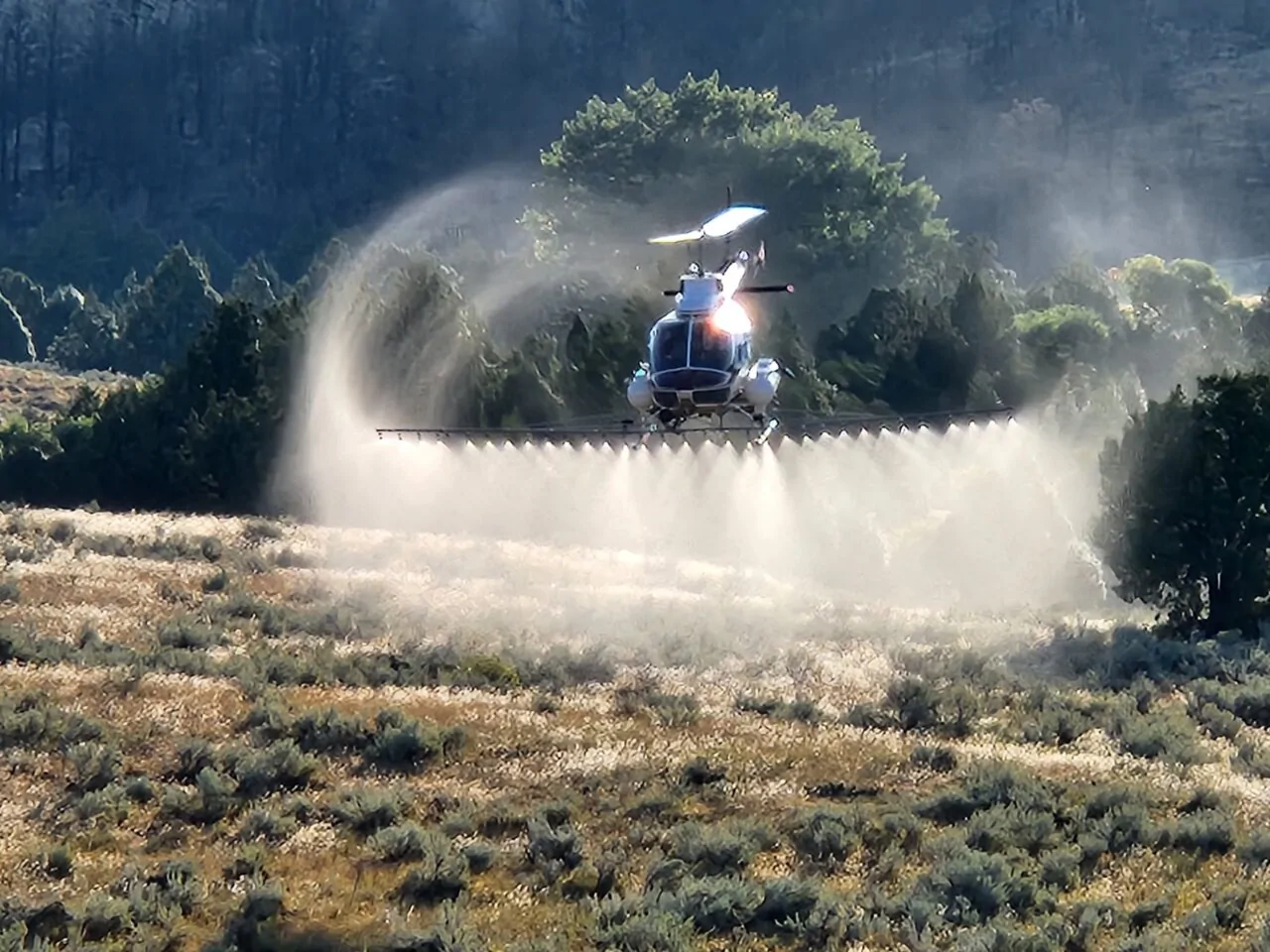
We could get two to three years of control, and then we noticed the wheels just fell off. And the problem with our country, it's so arid that if you don't have a good year or two following your treatment where you have favorable moisture, you don't get a lot of recovery in your native plant species. So it's a real roll of the dice with that product that you're going to get a year or two immediately following that they're going to be pretty favorable for recovery. Another thing we saw with that particular herbicide is we did see some injury to some non-targeted plants. For instance, the antelope bitterbrush, I brought up earlier very important shrub species, but when we applied a maza picked to that shrub, we could see some serious burn and in some cases mortality of that shrub, which was alarming, very concerning. So we had to be really careful and we had to really watch our rates of application and our timing early on. We used surfactants in our mixes to make sure we got that stuff on the ground where we needed it, and we took those surfactants out. We found that was causing that herbicide to stay on the leaf too long and was causing some of that plant injury to non-targeted plants. Now we move forward 20 years in 20 16, 20 18, we started to use this product called DIF flam. Same thing, we're applying it from the ground, but mostly from the air fixed wing aircraft where the terrain allows for that. But in most cases, we're using helicopters for application.
(19:15):
And this product, I won't say it's a silver bullet, I call a maza, picked the silver bullet in 2001. So it hasn't been, but I think what we're getting out of that one is more years of control.
(19:31):
One thing we'll see within DAZ flam is it can be a little, there's a little delay in seeing some activity. So in year one, it may not look like you're doing much good, but by year two it's fully incorporated and it's doing a really good job. And we can see upwards of five years of control. I've got some things that are six years plus and still holding very, very well. And so I'm going to go take a step back. Sometimes we use a tank mix of iPic with inza flam and the amaz APIC at a reduced rate. So we don't have that non-targeted plant injury, but much more rapid uptake in the soil. We see better year one control with a little bit iPic in the mix, but we count on that endif flam to really do the job from years two through five plus.
(20:24):
So that's been a great tank mix for us, and we're seeing less damage to non-targeted plants, really with the Enda flam, no damage. It's been very eye-opening to see that we've monitored this stuff extensively. The Mullen fire in the snowy range burned 176,000 acres. 2021. We treated about 17,000 acres within that fire scar that we thought was at real risk for Cheatgrass invasion. Just knowing those soils, knowing its presence on the landscape prior to it burning, and we have monitored the heck out of it, we've got well over a hundred monitoring sites on the ground, and we go look at those on an annual basis, not only to look at percent control of cheat grass, but what's going on with those native perennial plant communities? Are they coming back? Are we seeing the amount of bare ground shrink over time? We get better ground cover and we need that so that we have a natural defense against Cheatgrass going forward. Bare ground is the enemy, right? We need to get that ground covered with something. A perennial plant is going to be the best mechanism going forward to keep Cheatgrass out in the long term.
Haley (21:43):
How did the monitoring go at the snowy range or some of the other sites that you all are monitoring? Have you seen a lot of success kind of combating that bare ground like you guys are interested in doing?
Ryan Amundson (21:54):
Yeah, we sure have. Yeah, we're seeing good control of cheat grass, and we're seeing native peral, plant response grasses, Forbes, as well as even shrubs. And with that particular fire, it took a couple years for some of those shrubs to pull out of it. Fire intensity was very high. We thought we had really high mortality and just complete loss of shrubs, but it was a delayed response. And by year two, we started to see more small seedling shrubs coming back. We have to have really good livestock grazing management to accompany these treatments when we're talking about the long haul and not having to retreat these acres over and over and over again. We learned our lesson. We can't treat this one time in walk away from it. That doesn't work with any weed management program, and it sure doesn't work with Cheatgrass. So we have to be really diligent and continue to monitor after we've done these treatments, especially in that year four and five that I'm talking about when we think the wheels might fall off a little bit, we got to be ready and poised for re-treatment, and I don't expect every acre to need retreatment, but there could be some slopes, some really steep, rugged south facing aspects, areas maybe where there's been some soil movement that's occurred, erosion.
(23:12):
I see it at the base of rock Tice slopes or in some drainages where there's been maybe some water soil erosion movement of soils like that. I'll see a little bit of cheatgrass pop up in places like that. So I would expect future treatments to be more a spot treatment, spot application versus just broadcast re-treatment of all acres out there. But I was going to mention, livestock grazing management is so important. Native perennial plants have to have the ability to recover and be restored during that active growing season. Resting those areas after those plants have gone dormant doesn't do any good. It needs to occur in that really crucial active growing season. So in southeast Wyoming, I'm talking about May 1st through mid-July is probably kind of the real key window there where we have to be very delicate with those areas and allow those native perennial plants to recover.
(24:14):
And again, we've given them everything they want. We took Cheatgrass out of the equation and now moisture and nutrients are available for those native perennial plants that we're trying to manage for. We got to give 'em all they want, especially after these expensive treatments, and they are expensive. So managing the timing, the duration, the intensity of grazing and allowing for some opportunity for regrowth and recovery is absolutely critical in that growing season. So it's something I preach to every private landowner I work with to our federal agency partners that have active grazing allotments, we've got to really consider that to make sure we're setting things up for success longterm.
Haley (25:00):
Well, I have a question just to continue this conversation about private landowners. How do they know, obviously BLM allotments, state allotments, things like that, those can be monitored at a federal level, but how can ranchers kind of access knowledge about even on their own deeded ground, what they should and should not be doing? Is that something they can find on your website? Is that something that they should ask their regional offices what they should be doing? How do ranchers know how to change their management practices in order to combat this?
Ryan Amundson (25:36):
Yeah, so I have a very close working relationship with our Platte County Wheated and Pest control district here in Wheatland. They're a great resource to talk to. Private landowners often reach out to our regional offices around the state of Wyoming to contact a terrestrial habitat biologist like myself. And I can tell you that all of our personnel around the state are pretty well versed in cheatgrass management and herbicide applications, livestock grazing management at companies that it's in our wheelhouse. We've been doing it for a long time and with some real success. And we're working with the University of Wyoming as well, and the UW Imagine team and those folks to help us with large scale mapping efforts to identify hotspots, areas that we should be focusing our efforts in. We're doing outreach, we're trying to meet with landowners when and where we can. I can tell you there's a lot of interest in this.
(26:31):
And when the word gets out that maybe there's some grant money available, things like that, the phone starts ringing. And yeah, this time of year I'm taking quite a few phone calls from people that are interested. Last year we treated close to 50,000 acres in southeast Wyoming, and I think that was about 80 different private landowners that were involved in those treatments. So it was a lot of coordination with individuals and talking about rates of application, timing of application, those important grazing management principles. If you want to keep this out long term, here's some things we got to consider. And I can tell you most private landowners have been very favorable to making those changes and trying to make it work, and they understand the expenses of it. And we were fortunate this past year, we had some legislatively approved monies to work with, which was great. That's not always the case, but we do have a host of partners. Our game and fish department has an invasive annual grass program. The Wyoming Wildlife and Natural Resource Trust account has been very favorable to doing treatments. And then our conservation partners such as Rocky Mountain Elk Foundation, Wyoming Wild Sheep Foundation, Mule Deer Foundation, Muley Fanatics, that's just a few that have been involved in doing cheat grass treatments on private and public lands both throughout the entire state.
Haley (27:59):
It's amazing. Yeah, part of our podcast is really educating landowners, new landowners, what tools are at their disposal and how they can access some of this. So that's kind of why I just wanted to know what's the first step that landowners should take when trying to combat this? Because it's obviously a growing issue. And like we've said before, land doesn't stop at the fence line. So it's important to know how to kind of impact regionally
Ryan Amundson (28:25):
For sure. And we want to work on landscapes and watersheds and not stop these projects at the property lines. That doesn't make any sense at all to do that. So we do rely on these private landowners to work with their neighbors, and the better that we can build these nucleuses that we're not leaving areas that can be sources of reinfestation, that's where we really need to get. And these bigger blocks that we treated this past summer, I think are going to set us up for success. And it'll be really interesting to watch. They aren't these small 100 acre, 200 acre type projects. They're multiple thousands of acres, large block treatments, and we should not see those. A small 50 acre infestation all of a sudden rein several hundred acres or several thousand acres, but it's going to be really reliant upon us to continue to monitor those sites from the ground, from a horse's back, whatever we get out there. And we've got to be diligent about doing that. We've got photo points out there. We've got permanent transects on the ground, looking at vegetation again, how much bare ground is there percent control of cheatgrass and then the perennial plant response, native plant response, what's going on out there? And are those things all clicking and firing together and are we making long-term gains?
Haley (29:47):
Well, I'd love to know, you've been doing this for over 20 years and this being specific in these areas, what are some of the things that give you the biggest hope that a lot of these areas will recover, can recover from the science, the new pesticides? You guys are learning about all these things. What gives you the most hope in this recovery process of these systems?
Ryan Amundson (30:11):
Yeah, I think the positives come out in our monitoring, our pre-treatment and post-treatment monitoring. And we see some successes and like, yep, this is trending in the right direction. As I mentioned years ago, we did a lot of these one and dones. We went out and sprayed it, looked like it was cleaned up, looks beautiful, and we walked away from it. Then the wheels fell off. We maybe didn't have favorable moisture regimes following some of those treatments, and we saw reinfestation of those areas. And that was really, really disappointing. And I think now we've learned from those mistakes. We're staying with it if it was worth treating once, it's worth treating twice, and we need to prioritize on the landscape where we treat first and second based on, in my case, wildlife values is a big part of that. But there's lots of other factors that play into that too.
(31:01):
Wildfire risk to communities or to individual ranches or those kinds of properties. But wildlife habitats, for instance, like sage grouse core areas and stuff, we want to protect that sagebrush community like it's gold. So doing progressive proactive treatments in those areas is going to be really important to protect some of the best of the best out there on the landscape. So yeah, there's lots of wins out there that we can point to. A picture's worth a thousand words, take lots of photos either flying down the road or in some of our permanent vegetation transects, we've got good before and after photos that say, Hey, this is really working and we need to continue to prove that to our private landowners in particular, that it does make economic sense to treat cheat grass, that it is a formidable opponent, but we can't let that plant dominate these landscapes and because we are going to see carrying capacities for wildlife and livestock both decrease if it's left untreated.
Haley (32:10):
Well, just like in any investment, the more money you put up front, the bigger of a return you're going to have. So while it may seem overwhelming from a landowner to change management or apply for these grants or spend more money on pesticides at the end goal is to really have those production numbers be higher operational costs at a better place. So it does pay off to take advantage of the things that are at their disposal right now, it sounds like.
Ryan Amundson (32:38):
I agree. Yeah. I think there's lots of partnership opportunities out there and private landowners willing to work with someone like myself or county wheated and pest districts or potentially USDA offices. I think we can look for some of those partnership opportunities and do things and maybe share in the costs to get some of this work done. I've been very fortunate in my career. We've been able to fund a lot of this work without a lot of out of pocket investment by private landowners, but it has required their commitment to some livestock grazing management to make sure that we get some longevity out of these projects. And willingness to change, make slight modifications in their grazing management, grazing rotations, things like that can really open a lot of doors and private lands house a lot of wildlife, and there's a lot of value there on private lands. And we recognize that as a department and we're willing to work with private landowners to tackle these issues that affect wildlife and their livestock operations. Both
Haley (33:42):
If we look at the bigger picture and look down the road, if we don't take the steps we are now to control this. What are some of the things that could happen to not just Wyoming, but the Rocky Mountain region at large?
Ryan Amundson (33:58):
Yeah. One thing that comes to mind for me is we mentioned sagegrass, briefly sagegrass core areas. If cheatgrass were to become a predominant understory species in those kind of communities, it's going to really impact nesting success, nesting cover qualities, things like that. I mean, that species been talked about for threatening and endangered species listing for quite some time an invasive species. It could play a really critical role in tilting the scale in that direction, that listing might be necessary. And we know the ripple effect that that can have and really tie the hands of managers and potential reductions in livestock grazing on public lands, things like that. Those threats are real and we need to consider that.
Haley (34:49):
Well, it's even more of a reason, I was going to say for ranchers, spend the money now, get this under control. Because if that kind of getting those animals on the endangered species list, just that can have an even bigger impact on how you manage your ranch. So take advantage of the things at your disposal now.
Ryan Amundson (35:13):
Absolutely. And I think that the big thing for me as a habitat manager is that when Cheatgrass becomes predominant on the landscape, it now becomes very management limiting. And I'll give you an example of that. Prescribed fire used to be a very, very important tool for me to use to regenerate mixed mountain shrub stands for the benefit of mule deer primarily. And with Cheatgrass now part of the equation, I'm scared to death to throw matches in a lot of places because I'm scared I'm going to wake up that beast called Cheatgrass. And if we are going to continue down that road with future prescribed fire, we now have to make sure that we have cheatgrass management as part of that follow-up to that treatment and herbicide applications immediately following wildfire or prescribed fire. Either one has to be part of the equation. So those are really concerning things to me that invasives are going to really limit what tools I can use to do further enhancement.
(36:13):
I mean, we're just trying to hold on to what we got and conserve those native perennial plant communities and keep 'em intact the best we can. So that's really concerning to me. And I don't like to just throw out herbicides everywhere either. I mean, that's concerning too, that we're just blanketing the earth with herbicides. We have to be selective where we do that. We have to think about things like herbicide resistance. We hear about that with glyphosate products and stuff that these plants build these resistances and they're no longer effective or have definitely lost some effectiveness over time because of reapplication. So we have to be very calculated and strategic about where we apply herbicides and again, using other biological tools like good grazing management to make sure we get some real longevity and the benefits out of these treatments that we're planted.
Haley (37:06):
Well, I always have a lot of faith, even in our conversation today, you mentioned almost every five years there being a new pesticide, something that learned something from the one that happened before. So that always gives me faith too, that these new silver bullets, as you called them, will continue to kind of pop up and we will learn degradates the soil, what we need to learn from X, Y, and Z. So that also gives me faith. But to your point, you do not want to cover the earth in that. So how do we kind of work in tandem?
Ryan Amundson (37:41):
Yeah, and Mother Nature has to work with us too. We were talking before we got on the podcast about drought conditions. We are in a really tough spot right now in southeast Wyoming. We are very, very D droughty and not much snowpack in the mountains. That's concerning. I've sprayed a lot of acres last year, and we had a great fall for moisture that incorporation into the soil. I think we had excellent control this fall on that winter annual that's trying to germinate in the fall it's doing its job, but now we're going to need some spring summer moisture to carry that on and allow those native perennial plants to recover. If we don't get that again using a product like Inza flam, it's going to give us several years of control. So all is not lost if we don't get moisture in 2026. But it's concerning. It's concerning. And we have to be at average or above average at least a couple times in the next five years to really have to move things in a positive direction. We have to.
Haley (38:47):
Wouldn't that be nice? We just need a couple years. So I guess to sign off, I think we'll look forward for the spring. We'll look forward to this moisture. Like you said, there are all these tools at our disposal, but Mother Nature is one of the greatest tools that we have. So I'm hoping for you and your team and all the people that are working on this invasive species and figuring it out. You guys the best of luck this year and into the next year, and I think it would be great to continue having these conversations, bringing this knowledge out, seeing where we're finding new ways of handling this situation. But I really appreciate you taking the time today to chat with us and to help our landowners and our public know a little bit more about how we can help. So thank you for coming on the show today.
Ryan Amundson (39:37):
Yeah, glad to be here. And again, contact our staff around the state. We're willing to talk to people about this stuff. We're willing to go out and make site visits and plan some of this stuff, whether a private landowner wants to do it all on their own with just some technical assistance from us, or to go a step further and maybe get into a partnership with some other groups to get some of this work done and work with neighbors and get something bigger scale done on the landscape.
Haley (40:04):
Awesome. Well, thank you so much, Ryan, and for those listening, we will put his information and his staff and things like that so you guys can reach out if this is of interest or if you want to help out. But thank you for coming on the show, and I will spread the word as much as I can about what we talked about today. Thank you, Ryan.
Ryan Amundson (40:25):
Great. Thank you.
Haley (40:27):
Thanks for joining us today. To learn more about the ranch real estate market or our ranch marketing process, make sure to subscribe to our newsletter on our website at mirrranchgroup.com or give us a call at (303) 623-4545. See you next time.