
Cheatgrass has quietly become one of the biggest threats to western rangelands — crowding out native forage, increasing wildfire risk, and costing ranchers valuable time, grass, and money. But there’s reason for hope.
This week, Haley sits down with Jaycie Arndt of IMAGINE (Institute for Managing Annual Grasses Invading Natural Ecosystems) to unpack the good, the bad, and the ugly of this fast-spreading invasive. From its origins and aggressive growth habits to practical management strategies and emerging research, Jaycie shares real-world solutions landowners can put to work today.
Links
IMAGINE
Cheatgrass Handbook
Want to watch this episode? Check it out on our YouTube Channel!
Hayley (00:06):
Welcome back to the Land Bulletin podcast, where every other week we bring you experts in the field to impart their knowledge when it comes to the ranch and sporting property market, buying and selling advice, the latest, best stewardship practices, as well as topics that impact landowners every day. I'm your host, Haley Mirr. Let's jump in.
Welcome back to the Land Bulletin podcast. I'm your host, Haley Mer, and today we'll be talking about something that I've heard about since I started working here 12 years ago, but never really understood why it's such a problem. We're going to be looking at Cheatgrass and helping eat me out today to learn more about that species of grass and why it's a problem to a lot of our ranchers is the interim director of Imagine JC Arn. Welcome JC to the show.
Jaycie Arndt (00:50):
Thanks. Thank you so much,
Hayley (00:53):
And like I said, I've heard about Cheatgrass forever and I understand it is a big problem, but I would love to know just before we get into what you guys are doing over at Imagine and what we can do for ranchers. What is Cheatgrass? How does it spread? How does it impact the West? Where does it come from? I'd love to know the specifics.
Jaycie Arndt (01:13):
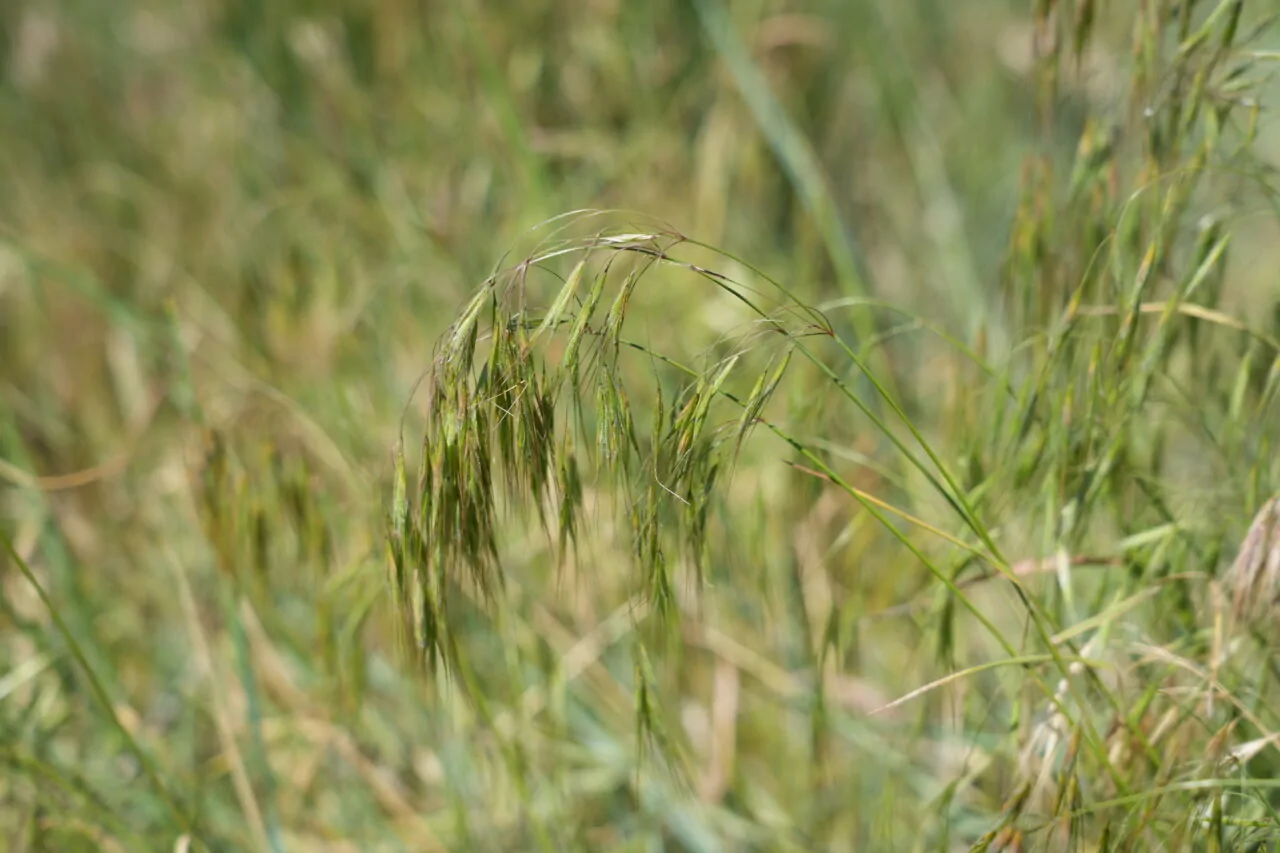
Yeah, absolutely. Cheatgrass 1 0 1, I will start with there. So it originally comes from Europe, Asia area, and interestingly enough, it has become a problem in the US Originally it was brought over in boats as shipping material basically to protect things. And then it has spread throughout the United States pretty widely since in its home country it's not quite as competitive, but here the climate and the vegetation that we have here just competes really well with it. So it has just kind of spread throughout the west and other parts of the us. But why is it a problem? It's obviously invasive winter annual grass, so that means that it emerges really early in the fall. So while our perennial grasses are starting to SSE for the year, our cheat grass is coming up at that point in time, and then it actually over winters as these very small seedlings, and then it usually returns gross very early in the spring, and that means it's able to utilize nutrients and precipitation and everything really early in the spring before our perennial grasses or Forbes, any of the good guys have resumed growth and started growing again. So it just sneaks it cheats. That's the joke. I mean, it's also known as Danny Brown, but the Cheatgrass in my mind, it cheats the system by utilizing those resources before our good guys have a chance to use them. And that's why it's so good at taking over.
Hayley (02:47):
It's the bully of the wildlife habitat of the open prairies, it sounds like. Exactly. Pretty much. So how long has this type of grasp been an issue? I guess you said it came over
Jaycie Arndt (03:00):
Years, like 18 hundreds
Hayley (03:02):
Is the
Jaycie Arndt (03:03):
Guess. And then I would say it's funny. I mean California thinking more like West Coast, you have California annual grasslands where it's actually been around so long that some folks just, it's the normal and they accept it there. But for the rest of the Western United States, the Sagebrush step, great Plains, it's just continued to spread more and more. It's actually very interesting. There's a book written by University of Wyoming professor years ago, mountains and Plains, and the first edition of it, he says explicitly that Cheatgrass isn't in Wyoming and it's not ever going to be a problem. And then when the second edition came out, there's an entire chapter just on Cheatgrass management. So as it spreads further, and there's still places even in Wyoming that don't have cheat cross, but trying to keep it from invading those areas and completely taking over ecosystems is of, I guess, high concern and a big priority.
Hayley (04:09):
And how did you get involved in all of this? I mean, it's obviously really important research, and I'd just love to know what's your connection to Wyoming? How did you get involved in Cheatgrass? Where did this all start?
Jaycie Arndt (04:20):
Yeah, absolutely. I'm from Wyoming. I grew up on a commercial beef sheep and goat operation in northeast Wyoming, and I actually started working for the University of Wyoming as a summer intern when I was in my undergrad, which has now been nine years ago. So I started as an intern actually at a research station that the director of the station was just really heavily focused in range land, weed science, and a lot of annual grass work. At that point in time, we found two new invasive annual grasses. So Cheatgrass was already here, but we actually found two new ones in the area that NADA and Medusa head. And actually when I graduated, I got basically a coordinator position to help manage those grasses. So I basically started on annual grasses and I haven't left. So yeah, did my master's work on it. I'm working on a PhD that has to do with invasive grasses, and then imagine became a thing in 2020, so the institute managing annual grasses invading actual ecosystems, and that was basically kind of a priority from the state level. Even Governor Gordon's Invasive Species Initiative calling out that we needed a collaborative group that could focus on just invasive species, and that's where we come in. So imagine kind of helps streamline research monitoring efforts, helping folks like actual land managers prioritize treatments and then improve education and outreach pertaining to invasive grasses. So
Hayley (06:01):
Wow, I'm so happy that people like you exist!
Jaycie Arndt (06:06):
I've been, I don't know if it's the best, but I've been called the Cheat Grass girl, so I guess
Hayley (06:14):
I We'll take it as a compliment.
Jaycie Arndt (06:15):
Yeah.
Hayley (06:17):
Well, I'd love to know, in your opinion, since you've been researching this for a couple of years now, what really caused this to spread as much as it has recently? Do vehicles like fire tend to have an impact? What is the thing that's really driving these grasses other than the fact that to your point, they cheat the system and they come in the fall and then early spring? Are there other factors that are creating these setbacks?
Jaycie Arndt (06:46):
Yeah, I'd say so Cheat Grass is also really great at dispersal methods. So that feeds like six into equipment, livestock people, it just can easily be spread around for one. And then it does great in disturbed areas. So anywhere that you're building things or you're overgrazing, natural resource extraction, those are all great places for Cheatgrass to get its foot in the door and then it produces a lot of seed, it grows very quickly and we'll just slowly take those areas over. So yeah, kind of a little bit of everything that helps it spread a West Westline.
Hayley (07:30):
What, I guess shifting to the positives, so with Imagine, what are some of the things that you guys have been researching where you found maybe some success in overall management? It sounds like you guys have been studying it for a while now you understand how it spreads. What are the things that cause it? Is there anything that seems to be working when it comes to management?
Jaycie Arndt (07:54):
Yeah, there's a few things I think, and there's a mix of effectively getting rid of it or finding a way to use it. So the nice thing about cheat grass is even compared to some of our other invasive annual grasses, it does provide a little bit of forage late in the fall, early in the spring when it's still green. It's fairly palatable at that point in time, so you can graze it. And we have seen some producers that can effectively graze in that late fall, early spring window and utilize it, or at least kind of slow down the growth, I guess. Well, it's growing naturally, but slow down how much cheatgrass there is and prevent sea production on it, and then get off of those areas so that your perenio grasses have a chance to grow throughout the rest of the
Hayley (08:45):
Season. Okay, so it's amazing. So ranchers have found a way to take advantage of different seasons where maybe they're not usually grazing because this exists, so that's good. There's a way to manage that's still using it to your advantage. Are there pesticides, things that people are spraying that are still okay for the soil and things like that that you guys have found that works?
Jaycie Arndt (09:10):
Yes, absolutely. So I will say chemical control is probably the most effective for longer driven control and actually reducing the population significantly. So there's been herbicides around for years, like sulur on or maze that are pretty effective at getting rid of invasive grasses while not damaging the other vegetation too much. The timing for those treatments is a little bit trickier, but it does have pretty effective control for one or two years at a time, but then we usually see it come back. So the new chemical that is kind of, I think maybe giving everybody hope right now because it actually does work pretty well is in dLAN or Reju is the trade name for that. And that one, it was released for Rangeland, or the Rangeland label was released in 2020. So folks have been using in dLAN Alan Landscape Scale since about 2020. The interesting thing with our crew is we actually had an emergency exemption to start using it landscape scale back in 2018, and we've been doing a lot more research with it than some of the other groups throughout the west.
(10:28):
But yeah, it shows really effective control. It's a root inhibiting herbicide, so basically acts on those seedlings as they germinate, which means, I mean, it's acting on any seedling as it's germinating and basically kills it and it's soil active, so it remains in the first one to two centimeters of the soil. And that matters because if you have existing perennial vegetation and you spray in those areas, that perennial vegetation is going to be fine. So it's rooted beneath that herbicide layer, and you're going to continue growing just fine while controlling all of your annual grasses as they emerge every fall, if that makes sense.
Hayley (11:10):
Okay. Yeah, I mean that's exciting. It always gives you a little bit of hope that this type of research is happening and that science can take you to even that killing at the root and making sure that doesn't germinate to the point of growing the way it is. Are there any kind case studies you can give that you guys have worked on with certain ranchers where different techniques were done and you saw a bigger change or impact that you can talk about?
Jaycie Arndt (11:38):
Yeah, I can try to encompass some of it. I'll say of Wyoming probably has maybe the most invasive annual grass treatments compared to all of the states in the west, just in northeast Wyoming, there's a group that we work with that's treated about 300,000 acres of invasive annual grasses in the past 10 years. So a lot of producers, I mean a majority of that are private landowners. Part of that we've been helping, they're doing landscape scale treatments while we are trying to learn from them as much as possible. And part of that is the flame was new to rangeland use and there were so many things we didn't know about it. So along the way we've started learning these different things, is it better to apply? Early on, they were applying with fixed wing airplanes, and it's so specific in where it falls on the ground and where it works that we found that helicopter applications are better.
(12:37):
We've looked at the timing of applications. So basically from April to November, we've done different trials or actual applications for land managers across all those times, and we just monitor them. It's been a really great opportunity to combine science and actual management strategies and try to pull information from that. So usually in the research world, you talk to ranchers and you figure out what their problem is, and then you come over here and try to answer that. You conduct your research on a smaller scale, try to answer it, and then come back to them in two or three years and tell 'em what worked. And in our experience, we're just flying the plane while we build it, so they're putting treatments out and we're trying to learn as we go. So every year we learn something new to help improve that long-term control.
Hayley (13:39):
That's amazing. I know anytime you change your management and you update things as a rancher, there's costs that are incurred, things change management, change costs are incurred. Are there any programs or grants or anything like that available to ranchers or if ranchers are wanting to figure out how to mitigate some of this cheatgrass, what are some of the things you should consider before jumping into those new management techniques?
Jaycie Arndt (14:07):
Absolutely. I will say some of the chemical invasive grass treatments are very expensive, and frankly, it doesn't make sense. Even though cattle prices are doing great right now, still is pretty hard to justify that much of a treatment on rangelands. So yeah, there are opportunities, and I don't know if it's a blanket statement, but some of the things that we've done in the past, agency partners are usually pretty willing to help out. So NRCS, national Resource Conservation Service, I mean that's part of their job is to help producers with noxious weed control. So we've done a lot of projects with NRCS helping landowners cover those treatments. In Wyoming, we have game fish if there's important state lands that need managed for annual grasses. Some of our more state agencies have come in and helped a little bit on private land or neighboring public land to help with that. There's Fish and Wildlife Service. Some of our federal partners actually, I mean I was looking at the Department of Ag Secretary has released their priorities and invasive species is one of the priorities for agriculture this year. Now, there may be out like avian flu for poultry and the Mexican screw worm, but I mean, annual grasses are a pretty big problem for livestock production throughout the west.
(15:43):
So the fact that invasive species are being called out at a national level, I think is pretty important. And that means when they call that out, there's also funding behind it. So for a rancher, before I just cut the check myself and pay for a treatment of reju r, I would reach out to agency partners, ask if there's help to do some of these treatments.
Hayley (16:06):
Yeah, I was going to say, because the west, what makes the west, what it is is public lands too. And you answered one of my questions, which, okay, there's these grants ranches. Landowners obviously have the desire to do these things on their lands, but they're always adjacent to public land. So making sure that everyone's on the same page. To your point, cheat grass likes to spread and they spread easily. So land, it doesn't just stop, it keeps going. So it's good to know that there are grants and things like that out there that federal kind of programs exist and that you're seeing even more of an emphasis on some of these invasive species, like you were saying.
Jaycie Arndt (16:50):
Yeah, that's say maybe the biggest challenge we see is just if you want complete control, then you have to get rid of all of it. And that means you don't have, you treat your whole property, but there's public land next door. That means you have a seed source for it to just come straight back in. So I'll say maybe the trickiest part is getting that collaboration and having everybody have a seat at the table to really get large projects completed for more effective work.
Hayley (17:21):
Yeah, it's like anything with wildlife habitats, it's big picture stuff. You can't really segment yourself off just because it's your land. You have to be partners with everyone around you. So when a rancher decides to kind of start to handle this or start to manage this, what are the things they should know or what are some of the mistakes that you've seen landowners go through before when trying to handle this cheatgrass and mitigate this in their own management?
Jaycie Arndt (17:54):
One thing that I usually find pretty interesting, and it's kind of hard to wrap your head around sometimes, but a lot of times you don't want to manage something until it's a big problem. Folks don't want to cheat or treat cheatgrass until it's so bad that you have to because you're seeing those losses. But sometimes for the most effective work, you have to do it earlier. So when those populations are smaller, being much more proactive and management I think is important. So not waiting until you start to see diminished grazing or those big losses, but acting early when you can. And then also just the safeguarding from it, making sure that you're reducing the chance for it to spread if you don't already have it, if you do, just trying to slow down, that means grazing so that your perennial vegetation is really healthy and able to maintain competition with Cheatgrass, doing these things that kind of just slow it down so that it doesn't become as big of a problem, I'll say. So those things I try to help landowners think through before they start throwing money at the problem right away.
Hayley (19:08):
Yeah, it's very smart. It's like, okay, run the ranch for a bit, know how the management works, especially for new landowners, and then really taking a step back and seeing what the real issue is. But I also agree, being proactive when you see these things happening, start to think of a plan, talk to people who know what they're talking about. It's great back for landowners to really figure out, okay, look at the big picture and kind of figure these things out before they get out of hand where you really have an issue and probably the wildlife. And if you are an operator and producer, that's where it becomes a problem. Other than seeing that invasive species are now on the list for these federal efforts, what are some other recent developments that have given you hope, especially in your field and your research that you're doing?
Jaycie Arndt (19:58):
And dlam is kind of a win on its own. The fact that we have a much more effective management option, it makes things move forward when you know that the money you're putting in is actually working. That alone is a win. And then I'll say also West Wind, there's the Sagebrush conservation design. So it's largely based around the sagebrush step, basically protecting it from losing the sagebrush step. I mean, we lose close to a million acres of that ecosystem every year for the last 20 years. So of high concern, right? Sagebrush is simple of the west, and part one of the main drivers for that is the fact that we have invasive annual grass invasion, cheat grass invasion that leads to increased wildfires, which leads to increased annual grasses. And then it just kind of keeps cycling through that. And then pretty soon we have, I mean, the Sagebrush step ecosystem doesn't exist anymore, and all we're left with are these invasive annual grasses. So just the whole concept of sagebrush conservation design, I think has started to really drive, if we don't do something, we're going to lose an important ecosystem of the United States, and a main driver of that is annual grasses, so we have to work to control them.
Hayley (21:21):
So who's really doing the Sagebrush conservation efforts? Who's spearheading that?
Jaycie Arndt (21:26):
That's such a good question. So there's a bunch of different folks. I mean, the original paper for it has over 20 different authors. I think technically USGS is kind of lead where it's housed, but then NRCS working Lands for Wildlife is part of that. I'm trying to think if it has a list of all of the agencies that are actually part of it.
Hayley (21:50):
It's so interesting. I spent my honeymoon down in Chile and we were in the Patagonia step and they were talking about something very similar, but because they're so far away, they don't have to deal with as many invasives as we do. But just the idea that that sage brush could be gone in the next couple of years, and you're driving down I 80, and you take that for granted that you'll always see something, those views. Or if you go up to Saratoga and you see the sage brush fields for miles, that could go away. So it's good to know that there's some national interest and desire to help protect some of this stuff.
Jaycie Arndt (22:30):
Yeah, exactly. And that's, here I was just looking USGS prepared and cooperation with the Western Association of Fish and Wildlife Agencies and the US Fish and Wildlife Service, but also Department of Interior, department of Ag, lots of different folks that were all involved in that, but really drawing focus to restoring and conserving the sage rush biome.
Hayley (22:56):
That's so cool. And I would love to know too, so beyond the federal, again, land state, there's state lines and boundaries and all these things, but it always, like we said, just the land keeps going. Do you do a lot of work with other Western states and exchange ideas and create strategies together?
Jaycie Arndt (23:18):
Yeah, absolutely. So I guess I should say my boss, Dr. Brian Meer. So he does maybe a little bit more tied to some of the West Wide efforts, but we're part of an invasive annual Grass Tech transfer partnership, which is kind of like, it seems a little bit like a rebranding on extension, but just a more focused effort towards sharing invasive annual grass resources. So we're part of that. And that again, is West wide. There's working lines for wildlife and US Fish and Wildlife Service, BLM, national Park Service is part of it. And then the University of Wyoming with Imagine and a team member with Montana State, Jan Main Gold, and then a team member from University of Nevada.
(24:11):
So they're all working together to basically develop workshops west wide. So they're actually going to have their third online webinar this spring. So we've done webinars in the past with recordings that are on our websites, and then they also do these workshops in the fields. So the first one was held in Wyoming last year. They held one in Nevada, and then this summer it's supposed to be in Idaho. And the plan is to keep spreading these across different states. And then we also do working group workshops. So if there are a bunch of land managers interested in managing Cheatgrass or other invasive annual grasses, we actually come in and help them strategize who needs to be at the table, how do you get funding, how do you prioritize where to treat? What do those treatments look like? What do you do after the fact? So yeah, the West wide thing, absolutely. Not only do we try to share research and present in other states, but actually going to their partners and working and trying to prioritize across those state boundaries.
Hayley (25:19):
That's awesome. And beyond, just to kind of close out, I'm sure everyone who has land and wants to protect against some of these grasses wants to help. They just dunno how to start. What are some great materials or resources available to landowners if they want to learn more and kind of figure out what the next steps are to start helping mitigate some of this?
Jaycie Arndt (25:44):
Absolutely. I mean, this is going to be a plug for Imagine right now we have a website, it's invasive grasses.com, so lots of different resources available on that. The Cheatgrass Management Handbook, which actually goes back to 2013, so a little more outdated, but we try to have updated research papers that have been published since then. And then the webinars that I talked about, all of those recordings are available online if you want. I mean, the first one was a two day event of Cheatgrass ecology management options, like a full dive into, if you want, eight hours of cheatgrass basically. And then the second webinar was more focused on those treatments, kind of in conjunction with Sagebrush Conservation Design. And then the group is also, they're working on developing modules so that you can be a self-paced step through this education. Those aren't live yet, but will be a good resource for producers here soon. And they have a film project, so they just did the Cheatgrass film and then they're going to release in the upcoming months individual chapters on some groups throughout the west that are doing really good invasive annual grass work. So there's quite a bit available already, and there's more to come at invasivegrasses.com.
Hayley (27:16):
Awesome. That's great. No part of this is to plug, I think people dunno where to start. They don't know where the resources are. There's so much to know about owning land. So the fact that there's a one-stop shop for some of that is more than helpful. So thank you for not only plugging but educating us. I just wanted to thank you, jc. I mean, you've been doing this for almost a decade and it's amazing just to know what you guys have researched and found. Like I said, I've noticed about Cheatgrass since I was a kid. So to know that there are people out there trying to find a solution and help producers and landowners figure out how to mitigate some of these issues is amazing. So thank you for taking the time out of your busy day on a Friday. No less to chat with us about Cheatgrass and to educate our listeners on what you guys are doing.
Jaycie Arndt (27:59):
Absolutely. Thank you for the opportunity. And I think, I don't know, we have a really cool opportunity with some advancements recently to I think make a bigger difference in controlling cheatgrass and maintaining kind of the western way of life. So thank you for the opportunity and we'll do that.
Hayley (28:20):
Perfect. Thanks jc. We'll chat soon. Okay.
Thanks for joining us today. To learn more about the ranch real estate market or our ranch marketing process, make sure to subscribe to our newsletter on our website mirrranchgroup.com or give us a call at 855-930-2189. See you next time.