
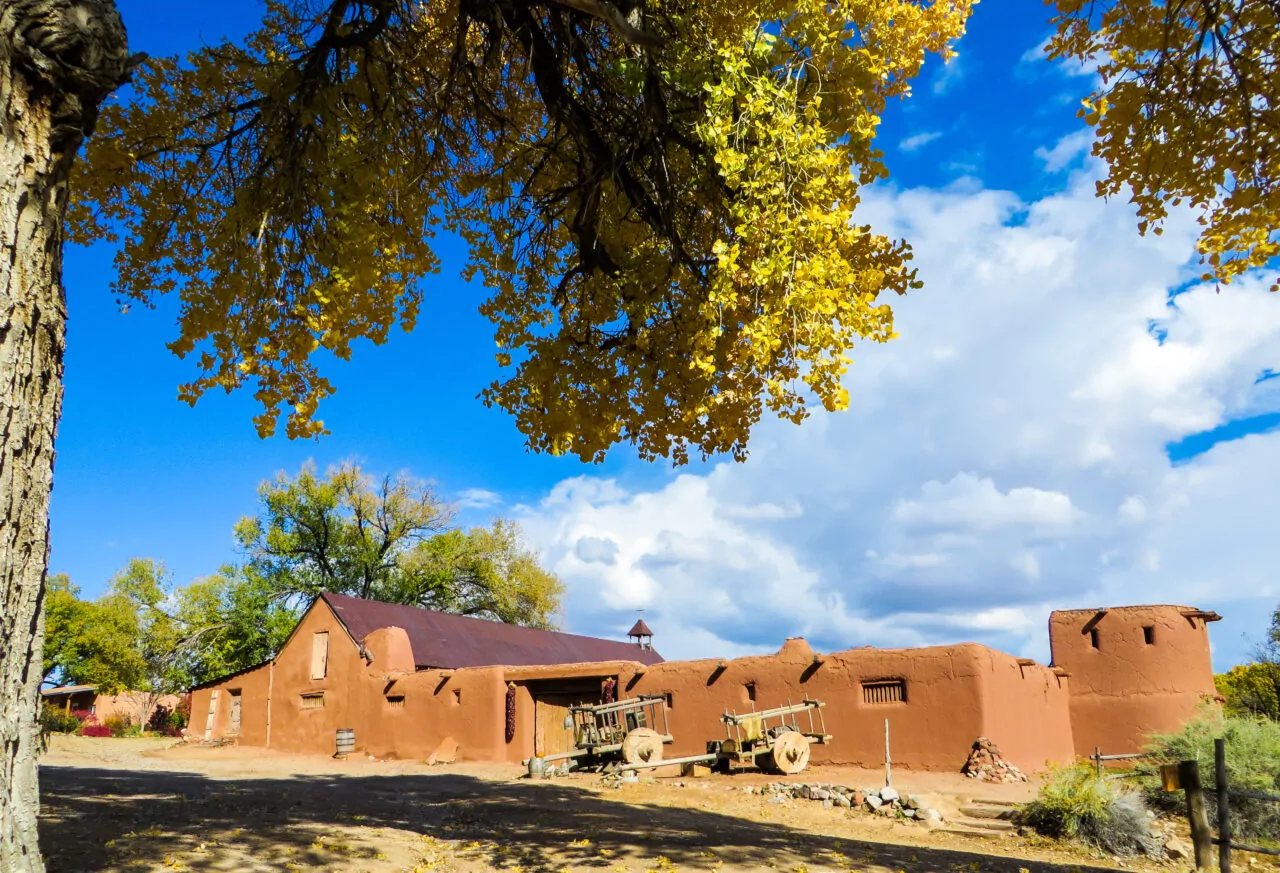
This week, Haley is taking a trip back in time with Daniel Goodman, the director of El Rancho de las Golondrinas, a living history museum in New Mexico that is bringing the history of America’s first ranches back to life. They discuss the ranch’s deep history in Spanish-Mexico, the challenges of maintaining historic structures, the benefits (and difficulties!) of using traditional land and water management methods, and the future of this cultural gem.
Check out El Rancho de Las Golondrinas here
Want to watch along? Check out the full video on YouTube!
Haley Mirr (00:06):
Welcome back to the Land Bulletin podcast, where every other week we bring you experts in the field to impart their knowledge when it comes to the ranch and sporting property market, buying and selling advice, the latest, best stewardship practices, as well as topics that impact landowners every day. I'm your host, Haley Mer. Let's jump in. Welcome back to the Land Bulletin podcast. I'm Haley Mer and I'm the host here of the show. A lot of times we've looked at conservation when it comes to conservation easements and preserving the landscape itself, but today we're going to be looking at a different type of conservation. We're going to be looking at a historic ranch down in New Mexico called El Rancho de Las, and helping me out today is Daniel Goodman. Welcome to the show, Daniel, to talk about this historic ranch down in New Mexico.
Daniel Goodman (00:56):
Hey, thanks, Haley. I'm happy to be here.
Haley Mirr (00:58):
Before we get into it, I would love to know about your history and what brought you to this ranch and what does it take to actually run something like this?
Daniel Goodman (01:09):
So I'm a museum person and my background's primarily in curation. I'm originally from St. Louis, Missouri, and I went to school for anthropology and sociology and did a little archeology and got my master's in history and museum studies and actually focused on American decorative arts and made my way through various museums there in Missouri, in St. Louis, and then was working for the Indiana State Museum and was the curator of historic sites for them for a while, and got a lot of background in site management and historic preservation while I was in Indiana and then made my way out to New Mexico and was working for the Department of Cultural Affairs. I was working for the New Mexico Museum of Art and Museum of Indian Arts and Culture as well before making my way out to las School, Andrina as the curator, and then now the director. So I've been the director now for nine years.
Haley Mirr (02:17):
Okay, wow. I love the connection between art and the west and ranching. So this is a neat place where it feels like they all kind of come together at as one.
Daniel Goodman (02:28):
Yeah, I mean they all belong together. They're all connected, certainly for a reason. And Luco Andrina was a natural fit just from working at other historic sites in the Midwest, having been at other living history museums and in the state historic site system in Indiana, it completely made sense. And then getting a good foundation with the Department of Cultural Affairs, it all kind of worked out
Haley Mirr (02:56):
Well. I'd love to know about the history of Las Go Andrina, and I'm sorry, I'm going to keep saying it wrong, but Los Go and it's,
Daniel Goodman (03:03):
Yeah, I mean it wasn't Marketing I'm sure as your people will tell you is a thing, and go Andrina isn't exactly the greatest, easiest name to say, but it is a historic name. So we do, we go with it,
Daniel Goodman (03:19):
And so everybody gets a free pass on the name. So Lasko Andrina is, well, first of all, it's a real place. It's not made up. Some living history. Museums sort of try to betray history and that's great and it works, and that's a whole discipline within ology. But law school Andrina is a real place. It was really called Law School Inness, the Middle de Las School Andrina, and you see that name law school Andrina show up in Spanish archive documents early 17, mid 17 hundreds. It was originally a place name. So a Go Andrina is a barn swallow, and so we are the Ranch of the Swallows, and they come back every year. They're beautiful. They fly around, they're fly catchers, they make their mud nests and they make a mess everywhere. But we do love them and it's a part of the history here. Then we see El RIAs first show up in a will or property disposition in the 1740s from a man, Jose Ano Tagle, one of the wealthiest men or the wealthiest man in New Mexico at that time, 1740. And he left by name El Rancho de Los to his ranch foreman, a man named Antonio Sandal. So then we're able to trace the history from there all the way, all the up through. Oh,
Haley Mirr (04:51):
Wow.
Daniel Goodman (04:52):
And the property has been a working agricultural ranch site ever since. Even at one point over the years, it was through the family history, it was broken up into pieces as property often is, especially along a waterway, which we are. And then it was sort of brought back together by the Pinot family, a man named Vego Pinot. And then in the 1920s, thirties, it was purchased by the Curtain family, which was actually a family of women, grandmother, mother, granddaughter who were, they were bosses. Okay. They're known as the three wise women, and they're from a wealthy publishing family back in New York, and they'd been traveling out to Santa Fe since the 1880s, had moved here permanently in the twenties and then tough times the twenties and thirties on folks. And they purchased the property and they were running it as a dairy cow ranch farm.
Haley Mirr (05:54):
Oh wow.
Daniel Goodman (05:55):
Some agriculture as well. They had a ranch foreman and everything, and at that time, the youngest of the three wise women, Leonora, she was involved in this early, if we get back to the intersection of right of the southwest and art and ranching and everything, she was heavily involved in the Spanish Colonial Arts Society. Her grandmother was bringing artists out here very early on. They were a part of that whole Santa Fe art group.
Daniel Goodman (06:28):
They were constantly intersecting with all of those people. And so she's very much aware of the history of the material culture of the art. The whole family is all that's happening in the background. They have the ranch going, and then Leon Nora gets married to this guy from Finland, and he's just known as ya. George PMO is his name, but he is known as Ya and Ya is very familiar with, of course, with ranching. His family has a farm in Finland and they're married in 1948 if memory serves. Correct. And he's also familiar with, at that time it was called an open air museum, and that place was called Wisconsin, and that is in Sweden.
Daniel Goodman (07:19):
So he comes out to Santa Fe for the first time, sees Las Colin Andrina, he knows what his wife is, very knowledgeable about what's happening out here in the history. And over the years they developed the idea of creating what today we call a living history museum, which is what Las Colin Andreina is today. So we are 500 acres, we have 34 historic buildings, 10 modern museum structures, our own wastewater, freshwater drinking system, electrical infrastructure out here. We specialize in creating immersive environments so people feel like they can step back in time and really understand or try to get an understanding of what life was like in a different time period. And we really specialize in taking history out of lot cases and putting it in the hands of guests. So we try to get them hands-on with history. So it's really about doing and experiencing, we want you to smell the blacksmith forge and we want you to hear the gristmill running and we want you to smell the sheep and all that kind of stuff.
Daniel Goodman (08:36):
And that's all a part of it. So that's what the Kurt Pal Hamos we're trying to do, especially with Leonardo's background, with the Spanish Colonial Arts Society, the resurgence of East Spinal Arts through Native Market. Not to be confused with Indian market, that's what Go Andrina is all about. And they did the work on the property. They had out here reconstructed some historic buildings. They did save and bring in some log structures that were from the mountains, which we still have here. And I still say that we have the largest collection of east Bono built log structures in the country, and they opened their doors in 1972. So we've been a living history museum educating new Mexicans and 20,000 school aged children every year for over 50 years.
Haley Mirr (09:22):
That's amazing. Well, congrats on doing an incredible job and keeping it running for this long. I mean, there's something to be said for that
Daniel Goodman (09:30):
And
Haley Mirr (09:30):
To be managing all of those things.
Daniel Goodman (09:33):
Yeah, I appreciate you saying that. It's a beast. Lesco Andrina is one of the largest, most complex cultural institutions in the state of New Mexico, but we are very hat in hand and we just do our job and try to stay out of everybody else's way, but do what we can to raise the profile of the history and the cultures of New Mexico, which is underrepresented severely on a national scale.
Haley Mirr (09:59):
I would agree a hundred percent. And to say that you guys are one of the largest kind of living history down there. I mean, New Mexico is so rich with history and the culture down there. It's amazing that this is the ultimate, I would say then of the state and behind the scenes. I'd love to know beyond the programming, which I think is probably the most important part, because it really does give the historical relevance and education to all the students that you said are coming through there. What behind the scenes from management of the land is happening? Are you guys trying to manage the same way that all these past landowners have done or have you changed it to keep up with the modern ways of managing ranches?
Daniel Goodman (10:42):
Yeah, sure. And I can really only speak from a living history museum perspective. I'm by no means a rancher or a land management expert, but in a lot of ways, land management is the same that it's always been in a lot of ways. I think some of the big changes are access to more information and also with a growing population and industrialization of some farm ag techniques, there's probably a chance for greater impact on the land in a shorter amount of time. But we're still trying to do sustainable farming, water management, regulate the use of our land, all that kind of stuff, controlling invasive species, all those kinds of things. So those are some of the things that we do. We are a working farm and ranch. We do grow crops, which for us is an exhibit, but we do it the way that it was done before.
Daniel Goodman (11:41):
It's primarily flood furrow and we have to follow Spanish water law. So all that water that comes and we water off of an ascia. And for those of you who watching the show, that is a Spanish word for an irrigation ditch. But it also comes with it a very specific set of rules, regulations, and laws that make it specifically a, what we would call a seia culture here in New Mexico. And everything's a community regulated. It's considered its own sort of governed water management system that's maintained by Meyer, the head of the Ditch Association, regulating the water on this day. You get this this day, you get that this day, you get this and you better follow the rules, otherwise you're in big trouble.
Haley Mirr (12:30):
Yeah, I would
Daniel Goodman (12:30):
Say, yeah. So we have the as Madre de Laga that runs along the, so we're in a valley, we're in the Laga Valley, Laga is the marsh. So we are a series of wetlands in this valley as well. And we maintain a number of wetlands on this property, which is, if you want to get into that, that's a whole other part of what we do, riparian pathways and all that kind of stuff.
Haley Mirr (12:58):
Well, you were just talking about the importance of water, and especially where you guys are being in wetlands and having those kind of SEC as right nearby, it's a little bit different than other parts of New Mexico, I would say.
Daniel Goodman (13:10):
It is. It is. And all of that water, if you're talking about pulling water off of a waterway or an acequia, if it's traveling, it has to find its way back to a water source back into the water source for everybody else downstream. So all of our flood furrow goes, whatever doesn't seep into the ground or evaporate, which is a whole other issue, goes into the Laga Creek and then goes back, makes its way back into the aquifer in some shape or form. And of course, we have a certain number of days that we're allowed to water. We have over the years, we have shrunk the size of the fields that we water. So now we have a couple acres under cultivation that is an exhibit for us. We want people to see this. And just over the years, the amount of water, it's like however, whatever the measurement is, however many gallons per foot or per second that the ASI is producing for us, we don't want to be big users of water, especially because there's people in the valley and their livelihood depends on it. There's people that are trying to grow alfalfa. There's a vineyard here in the valley and other things. So we try to just use just enough and then let everybody else have what they need and where possible. We've put in things like trip irrigation, we grow hops here as well.
Haley Mirr (14:34):
Oh, wow. Okay.
Daniel Goodman (14:35):
That was a project born out of the dark twenties, and we partner with a local brewery here who is on a mission to produce 100% New Mexico ingredient beers. That's Beer Creek on highway. And they use our hops, all of our hops that we produce, they use, plus they have sources for hops elsewhere. But all that, for example, is on drip irrigation because we don't want to waste the water. We only do the old technique where people can see it and understand it and appreciate it. And then everywhere else we try to be creative and hide,
Haley Mirr (15:15):
Conserve it a little bit. Yeah,
Daniel Goodman (15:16):
That's right. Yeah, exactly.
Haley Mirr (15:18):
And it sounds like this valley, from what you're saying is it's very community based. Are you working with your neighbors a lot from the hops thing that you're doing with the breweries to letting your neighbors use the water for their alfalfa fields? It feels like it's kind of this communal impact, even from preserving the history of that area.
Daniel Goodman (15:37):
Oh, it is. And you're either trying to work with that community or work against the community, which is crazy to think that, yeah, we have to work with everybody that's here. We have a joke that any meeting in La Cienega turns into a meeting about water. It doesn't matter what it is. It always does. So there's the La Cienega Valley Association. We are an agricultural community, and there are people who make their livelihoods off of that here in the valley as well. So we all have to work together and we all have to fight together. Whenever maybe there's a new neighborhood going in and there's questions about, well, they're going to be on well or city water well, if they could be on city water, that'd probably be better than more straws going into the aquifer. And then how do we regulate that? How do we manage that? Because there's a lot of people that want to live here in Santa Fe and we want people to live here and everything, but how do we match the resources to the population and everything else?
Haley Mirr (16:40):
And what have been the biggest challenges other than the water and that kind of arid climate that you find in New Mexico? What have some of the challenges been over time of protecting these historic buildings, protecting these management practices, protecting kind of this landscape? What are some of the challenges you guys faced in your capacity? I know ranchers in general face a lot, but you guys have a lot more that you're trying to preserve.
Daniel Goodman (17:06):
Yeah, and we don't have a conservation easement for us. It's not really necessary. We're a private nonprofit, 5 0 1 C3. And so the very existence of the museum, the whole purpose is to conserve the 500 acres that we have. Challenges. Well, I mean probably like anybody else, I couldn't tell you how many inquiries I get a year about people who would like to buy property, who would like us to put solar arrays on the property or to rent or use the property in some way, which we're not interested in any way really shape or form. We're here to try to something special for people to see and for generations to come. And we certainly can't foresee what some of those issues could be in the future. So we're very conservative in that respect. I think erosion is certainly an ongoing issue, and it's something that we're always fighting and we do plant cover crops and that kind of stuff, and we try to maintain certain areas as well. I mean, historically there's all kinds of over the property. Also, we've talked a lot about the water issues as well. But also when it comes to the historic buildings, that's another thing
Daniel Goodman (18:33):
Entirely. And we maintain old techniques of majority of these buildings are adobe and their mud plastered, and we don't use any of the traditional amendments to that adobe that some folks might use. The craziest we get is we'll use an animal hoof glue, especially for floors,
Daniel Goodman (18:59):
But we will mix that in with the mud plaster, both for exteriors and for interiors to an extent. There's actually a lot of morale morales here in New Mexico. Okay. That's a whole other conversation. So there's another traditional practice of, a lot of people have heard of bees. So this is a lay order of the Catholic church, and they maintain a lot of their own historic church structures, which are known as Moradas. And a lot of the brothers that we talked to, they use the same technique. So a long time ago, you would mix in animal blood with your mud plaster as like a binding agent floors would. There's a lot of historic examples in various other historic properties where the floor takes almost a leather like finish. But for us, if we have 50,000 people who are coming through here, we can't maintain a floor short of concrete.
Daniel Goodman (20:02):
We can't maintain a floor. So we're constantly redoing floors all the time. People have asked us to, why don't you just put concrete and make it look like a ox blood floor? And we're like, well, that's not the real deal. We need people to understand and see the real deal. So that's one of the things that we're constantly trying to do, but we do all our own lead plastering. It's an annual thing that we have to do because the parapets are going to crumble, but sort of that amendment that gets us a little bit of extra life out of it, but we don't do anything else because then it's good for the public to come out and see us repairing things. And
Haley Mirr (20:37):
It shows that's kind of historic in itself, just seeing the process of it all.
Daniel Goodman (20:41):
Right. Again, it's about the experiential. So they have to see it, they have to smell it, they got to touch it, get their hands dirty if they want to help out. And people always ask us, well, even with the interiors, sometimes we'll get some rainwater that comes in. I mean, historically, these roofs are all going to be dirt. And I can tell you one of the things, the other things that we've done is a lot of our roofs now are foam or TPO, and we try to hide them so people can't see them. But sometimes with parapets, as they crumble, you'll still get some water seepage in and then you'll get you the adobe streaking down our whitewash walls. And people will say, well, why don't you guys fix that immediately? And well, for one thing, it's the squeakiest wheel gets the grease. It's 500 acres and 34 historic buildings, and we have the crew that we have, there's only so much that they can do.
Daniel Goodman (21:33):
But if you go back and look at the photographic record, as soon as folks were taking photographs of interiors, especially in New Mexico, you see this come up time and time again. So this is in the early 19 hundreds, especially in the twenties, the interiors where there's someone proudly posing in their home streaks down the wall because that's just what happens. And you fix it when you can fix it. So it's a part of the life cycle of a building, and it's also a part of the repair cycle. And again, is one of those sort of immersive environment things for people that we want them to ask the question and then we can answer it.
Haley Mirr (22:12):
And how many staff do you have? It sounds like there's a lot going on, or do you contract a lot of your management out?
Daniel Goodman (22:21):
No, everything is done. We have 14 full-time staff.
Haley Mirr (22:26):
Oh wow,
Daniel Goodman (22:26):
Okay. And then we have 25 part-time seasonal, and then we have a hundred plus volunteers. The volunteers are primarily our costume interpreters. So think
Daniel Goodman (22:39):
Most people know Williamsburg back east. Okay. Now we don't have, and so while we don't have Williamsburg level money, we're doing a lot of the same things, costume interpreters, you hear the blacksmith thing and on the anvil and all that kind of stuff. So that's what a lot of those volunteers are doing. And they'll get involved in other things as well, wetland work or some operations. A lot of our seasonal people are our tour guides and our demonstrators. So some of those folks get paid summer volunteers. It depends on what they're doing. And then that staff of 14 are the ones who are primarily doing the work that we're talking about. And so that's everything from a traditional, what you would think of in a traditional museum. So we have a curator and a educator and someone who oversees a tour coordinator for all the school kids and all this kind of stuff. And then we have someone who oversees our water. We also have a public drinking water system on property. So someone who oversees our water and who does all the planting and the irrigating and the fixing of the buildings and the fixing of the trucks on the property too, and the feeding of the animals and the mixing of our manure so we can do soil amendments. So that's all handled in some shape or form with that staff of 14 people.
Haley Mirr (24:05):
Wow. I mean, there's a lot of people to manage though once it gets to that a hundred. So well done. And then from a programming perspective, I know Las Colin Andreina has had a rich history going back decades if not centuries. What is the programming kind of focusing on? I know there's a lot of landowners that have owned this property. What's kind of the era that you guys are trying to go back to?
Daniel Goodman (24:32):
Sure. So we are focused on everyday life. Your everyday person in the Spanish, Mexican, and territorial periods of New Mexico's history.
Daniel Goodman (24:43):
That is the, and so we have 500 acres and all these buildings. So we have, whenever I was the curator, I kind of broke them up spatially because we're trying to show 300 years of history and three different time periods and get someone from Keokuk, Iowa who's never been here to understand that and take that in and then take that information back with them and tell everybody else, Hey, by the way, New Mexico is a state, and here's the history that's going on there. So we have a group of buildings that are the Spanish period, a group of buildings that are the Mexican period, and then a group of buildings that are American territorial. And then a lot of the buildings in between. Those are vignettes of life in northern New Mexico in the abiba kind of area, which again is its own cultural, culturally different in many ways, and historically different from bottom half of the state and much more traditional as well.
Daniel Goodman (25:41):
So there's those three different time periods and those various things that we're trying to share with people through the interpretation and the costume interpreters and the hands-on activities. And the other part of that is going to be the agricultural component and animal husbandry component. So you can't have people coming out here and talk to them about a historic ranch and agricultural historical traditions and not have animals and crops and fields. So we have a flock of churro sheep, which historically is one of the breeds of sheep that was here with the Spanish settlers. And we also have things you could expect. We have goats and we also have burrows, and they're the laziest least work burrows of all time. They do work primarily once a year when we hook one of them up to our sorghum mill, and they just walk in a circle and get to eat sorghum all day or sorghum socks, and they love it.
Daniel Goodman (26:46):
So every now and then we'll pull 'em out and we'll do packing demonstrations on them as well. And historically, a whole other fascinating part of history talking about animals. There was a group of eros and they were the ones historically in Spain and in New Mexico in parts of the vice royalty of Spain that they were the mule tier, I guess. And so this group of people, they ran all the pack animal trains, and there's this very special way of packing them. And the pack saddles were called arejo. And so anyway, so it's just another thing that we try to show people. How do you pack an animal? How do you protect the animal and take care of it? You don't just load a bunch of stuff on it and walk it till it dies. So there's the animal component of all that that we're trying to educate people about.
Daniel Goodman (27:46):
And also the fact that ranchers will be the first one to tell you we're not cruel people. You can't take care of an animal and not also understand the needs of the animal and what it feels, but at some point it's obviously also not a pet. So there's that whole complexity. And then also the agriculture. So the agriculture is you got to get into, and we do all heirloom varieties of corn, beans, squash, chilies, melons, kaita. And then we also, on top of that, which is not super historic, is we do pumpkins because we have a harvest festival that was voted the number three harvest festival in the country by USA today, and it is very new Mexican, but we do a pumpkin patch, so kids come out. So that's our way because it's really difficult from a museum perspective, 50,000 plus people a year to get people into the field and the field not get destroyed. It's
Haley Mirr (28:49):
Just, I'm sure, yeah,
Daniel Goodman (28:50):
How are you going to do that? So it's a way at the end of the year, everything else has been harvested. There's the pumpkins, the kids go in there, they get to feel the leaves and the vines, see everything else, see what we haven't tilled under of the vegetable material talking about soil conservation and pick their pumpkin and go home with it. So that's
Haley Mirr (29:12):
Perfect,
Daniel Goodman (29:13):
The idea of that. So that's sort of all the interpretation in a nutshell that we're trying to do. And then on top of that, we have, like I was saying before, we have a number of wetlands. The most notable is the Leonor curtain wetland preserve. We are on a Rotarian pathway, meaning migratory birds fly through, so there's Apache down south, and then there's all points north through Las Vegas, New Mexico, and up into Colorado. So we will get sandhill cranes that come through and ducks and all that kind of stuff. Blue herons are around year round for the most part, but maintaining those wetlands are a whole other issue because you're going to have lots of invasive species that are water hogs. So that's another big part of land management that we're trying to do in conservation efforts. Those wetlands gets into wildlife conservation issues by maintaining those wetlands and also surface water that we have on the property that may not be a wetland, but we do have a number of ponds that are here as well.
Daniel Goodman (30:16):
And wetlands have a whole number of things that can go wrong with them, including channeling, because over time, all the water wants to go to one place. So you have to make sure that it's being spread out over the property and that you're helping to maintain the wetland because we've done so many other things to various other parts of the environment around us that now we're in this full blown human management of the landscape. And in the case of Las Colin Andrina, a historic cultural landscape that's been touched by human hands over thousands of years. So it's not like it just started happening whenever Europeans came. I mean, plus the site is one large archeological site, and probably any rancher in especially New Mexico or the San Luis Valley, they are fiercely protective from my experience of cultural sites, archeological sites, a lot of ranchers that just won't tell people what's on their site. They don't want people snooping around and messing with it because they know it's there and it needs to be protected. So it's the same kind of thing here where we have, it's one big archeological site, and we have check dams that were put in by ancestral puebloans where they're sprinkling seeds for any water that might come around and other foundations and things that are around the property as well.
Haley Mirr (31:40):
Yeah, that's so cool. It is true. A lot of our ranchers, they have different archeological sites. We're working on a listing up currently right now, and they almost don't want anyone to know about it when we put it on the market because it is so culturally relevant to the area. And I would just love to know, because it's so important to preserve the management techniques, the history, all these things, but how do you handle these changing climates and environmental impacts and things like that when it comes to managing the land? Do you guys have a ranch manager that I feel like it's probably a balancing act of protecting the way that it used to be managed while also enhancing it with the changing climate, everything.
Daniel Goodman (32:27):
Yeah, I think the biggest impact for us has been water. That's really been the biggest one, I'm sure. And so we've manipulated what we've grown and how big of an area we grow over the years and trying to get ahead of things like drip irrigation in whenever we can, just so we don't have to deal with issues of wasting water and evaporation. There's also parts of the property where we harvest rainwater as well, if we will see issues with, do we get fruit? We have tons of fruit trees all over the property too. Some are very historic as well, so we try to graft and maintain them. But growing seasons can be interesting sometimes, but that's actually always been an issue I think in New Mexico. And depending on what elevation you're at and whether or not you happen to get that hard freeze, we would probably, we'd have to get one of our operations people in here to really dive deep into that one for everybody that's listening. But it does present. It is an ongoing issue. I don't think there's anyone who's involved in agriculture or ranching or anything that could tell you that it isn't an issue.
Haley Mirr (33:46):
I'd love to know too, we've dealt with a lot of properties in the San Luis Valley. We've also dealt with a lot of things in New Mexico, and looking back at the deeds and the ownership, was this property a part of the Spanish land grant? Was this a part of that transfer of ownership? What did that look like back in the day when you were talking about all these different owners?
Daniel Goodman (34:08):
And I don't have the full chain here pulled up in front me.
Haley Mirr (34:13):
That's a lot.
Daniel Goodman (34:14):
But yeah, so the property here in Las Cienega, it is a part of what was originally a specific grant to a specific person, which was then passed on and broken up over the years. Yeah.
Haley Mirr (34:24):
Okay, got it. That's pretty looking back at title and everything for some of these properties and San Luis, and they have these Yves where old owners, they still have access to the bigger ranches if they're descendants of the people that used to own it, it gets very convoluted. So I just didn't know if you've ever had to handle any of those things.
Daniel Goodman (34:47):
We haven't. Everything is fairly clear for us, but you've got all these layers, especially here in New Mexico and other areas in southern Colorado where it's like there's the native sovereignty and historic and currently existing pueblos. Everybody needs to know Native Americans don't exist in history book their real living culture that's thriving today. And then there's the Spanish and their property, and then there's the in New Mexico Anglos, which would be Eastern Americans coming in, and then how kind of whatever they did. And people are losing rights and trying to figure out, well, what's the Spanish grant? And who has right to this property? Then here we are today. I know that there are some issues in certain areas about who has access to this and how does this work, and it can get very complicated. Ours, thankfully is pretty straightforward, cut and dry, I think for the most part.
Haley Mirr (35:47):
That's
Daniel Goodman (35:47):
Good. Yeah. But yeah, you do see that kind of all over. But yeah, for us it was one of those things where the property just then started passing on from hands and then got around the Civil War after the Battle of Vul Verity in Rietta, the furthest West Civil War battles in the Civil War where in New Mexico. If you don't know about it, check it out. It's super fascinating history. Some of the landowners here were in the first new Mexican volunteers that helped to guide people and win the battle of Rietta, otherwise they wouldn't have known how to make it over Ro Mesa and back down into the past, they were the owners of this property, and during that time period, property was left to other family members, and it was split up over time, but thankfully it was all kind of brought back together later. So
Haley Mirr (36:49):
Awesome. And this is kind of another side note, I just love New Mexico so much. There's this really awesome museum, and we were talking about the three ladies that owned the ranch at one point made me think of this woman. She might've been a little later. There's in Taos, there's the Millicent Rogers Museum.
Haley Mirr (37:10):
Don't know if she was connected at all to, I know it's a little bit more north, but there seems to be an influence of these wealthier people from the East coast coming in and wanting to preserve the art and the history and these things. And I didn't know if that was connected at all to what you guys are doing.
Daniel Goodman (37:29):
I think as an American preservation movement, you could say, yes, Millicent Rogers is another fascinating person. If anybody doesn't know about her, you should check her out. She's like a boss times three, right up there on the three wise women level, just an incredible, incredible person. So fascinating. But the whole preservation movement in America is primarily a women's movement. This is being started by, and that is not to say men weren't involved, but this is being done primarily started by groups like the Colonial Dames and Daughters of the American Revolution. Those are two organizations that are, I believe still two of the largest historic property holding groups in the country. They own and maintain so many historic properties. But I mean, let's face it, men traditionally are like, well, who was the general and what was the battle and what was this big event? And the women were like, well, we need maintain this house and this history and this story and this property.
Daniel Goodman (38:38):
And then the preservation out of those two organizations and others and other people like the three Wise women, which again, they're super early on in the whole thing we're doing. And all this is sort of building at first on its own organically, but then it picks up steam building up to the bicentennial in 1976, right, of preserving American history and historic sites in for the 1976 bicentennial. And that's when you see this huge influx of all these historic sites and living history museums and historic house museums sort of popping up. And then now over the years, that community has been in the fight to preserve them because I mean, I'll be the first to tell you that museums, historic sites, historic house museums, living history museums, they are not a great business plan. So it's a slog. It's really, really hard. So I mean, trying to find someone who wants to help you keep a roof on a house, in our case, historic traditional dirt roofs. But that's not to mention some of these incredible Victorian house museums, which I work a lot with Indiana, where they have very expensive slate roofs and all of these other intricate, intricate ways that roofs come together. And I mean, it's like a joke. It's like, I want to be paid in roof repair money and crusher fines. We would be totally fine if that's how we got paid, but that's not how we get paid.
Daniel Goodman (40:24):
So it's really difficult. Yeah, it's really difficult. But to that preservation movement in America, yes, there's a reason why a lot of the leaders in that are within.
Haley Mirr (40:36):
Awesome. And I just love looking ahead, since we've looked at the past a lot. I would love to know what your vision is for the ranch as years go by and all these things. Are there new projects you guys are working on? Are there things that you're really focusing on in the next couple of years?
Daniel Goodman (40:55):
So we just recently celebrated in 2022. We celebrated our 50th anniversary of being a living history museum, and it was around that time that we completed our facilities master plan. And we are currently in the process of securing the museum for the next 50 years. That's really the focus of the master plan. So it's not about a new wing or a new whatever. So right now, we are wrapping up our new wastewater system. Our old wastewater system was end of life. And out of that master plan, we sort of identified, oh God, what are the top projects we've got to get done right now? So we're wrapping it up right now, all of our buildings and everything are now tied into a central wastewater treatment system. So all that wastewater gets turned into gray water that we can reuse as well as a part of our green campus initiative that is all bought and paid for and getting wrapped up here, it'll be ready to go for our season.
Daniel Goodman (41:54):
We finished the design work on a new trails and wayfinding system. I know that's very insider museumy type stuff. So basically it's how do we get people around the museum on the trails and the signs that you see, there is a whole sort of, people specialize in that way finding it's important and it's difficult. And so we are opening up new trails on the property so people can see more of the property, but we're also creating an a trail system so people can get all the way to the other side. Awesome. We do want everyone to be able to experience it. I mean, the worst thing is seeing an elderly person in a wheelchair or someone who's differently abled trying to get around, and it's just a struggle because it's all dirt and gravel and everything else. So how do we maintain the integrity of the cultural landscape and then get them over there?
Daniel Goodman (42:46):
So that was a part of this project. We got it, figure it out. And we're going to break ground on the first phase of that here in March. We are a cultural institution here in Santa Fe. We have people who come from all over the world to visit the city and then by extension this museum and others. So it needs to be a good representation of Santa Fe County, Santa Fe City, and the history and cultures here that we're trying to show. And right now it's just not, I mean, the front of our museum is not at the level that it should be for what we're doing. And so that sets the tone, especially for people who are seeing New Mexico from somewhere else. We want them to leave with a really good impression of our state and our history and our cultures, and it starts with the moment they see you. And so there's no shortage of work out here, so it's job security
Haley Mirr (43:33):
Was going to, it's like you got a lot going on. I complain about my day, but there's a lot. And All right. So Daniel, I would love to know if I want to get involved, maybe I can't visit or maybe I can, what are some of the ways I can get involved and make sure you guys can be sustained for the next 50 years?
Daniel Goodman (43:52):
Yeah, I mean, I would say the easiest way to help support us is to visit anybody goes to golden greenness.org. You can see all of our slate of festival activities that we do. We're also open for general admission, but admissions do really help support and sustain this historic cultural landscape that we're trying to maintain here. But you can also give, and on the homepage of our website at the very top, there are ways to give as well. And if anybody wants to know more about the projects that we're trying to do with the master plan, which includes things like new stage, new education center, some other very practical things we do need help on, they can certainly find more information about that on our website or they can always reach out to me.
Haley Mirr (44:37):
It's crazy because we've interviewed a lot of ranchers and owners on this podcast, but what your product is is completely different than a lot of our ranchers, but all kind of the same because you're working on your program, you're working on your operations, you're trying to make these landscapes kind of be sustained. So it's just an interesting way to see a different way of managing a ranch as a living history museum. So I just think it's really awesome what you guys are doing down there, but I can't wait to visit. I'm headed down there in July, so I'll make sure that I stop by at Pascals.
Daniel Goodman (45:12):
That'd be great. Make sure you reach out to us and let us know.
Haley Mirr (45:15):
Awesome. Well, thanks so much for coming on the show. It was really awesome to hear about what you guys are doing down there, and good luck at the next 50 years. I'm excited to see what you guys do.
Daniel Goodman (45:24):
Absolutely. Thanks Haley, appreciate it.
Haley Mirr (45:25):
Thanks for joining us today. To learn more about the ranch real estate market or our ranch marketing process, make sure to subscribe to our newsletter on our website@merranchgroup.com or give us a call at (303) 623-4545. See you next time.