
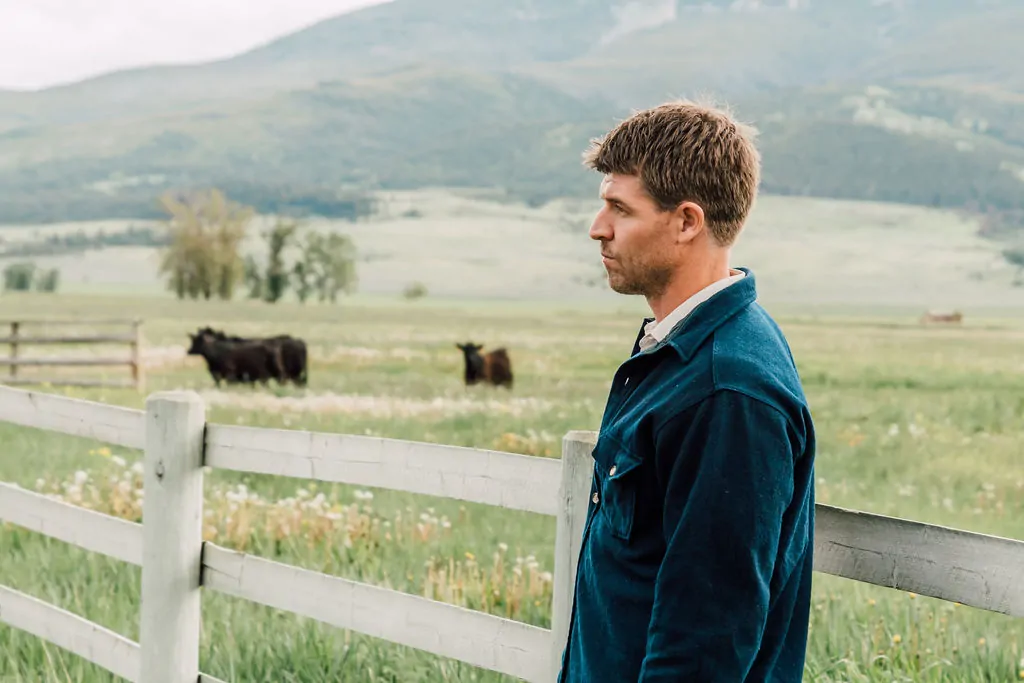
We hope you’re hungry this week as Haley sits down with Cole Mannix, co-founder of Old Salt Co-op, to dig into the intersection of ranching, food systems, and community in the modern West. Raised in a multi-generation ranching family, Cole shares how Old Salt emerged as a response to a broken food system and the widening gap between producers and consumers.
From producer-owned food models to the unexpected benefits of vertical integration, Haley and Cole break down what it really takes to support working lands today. They touch on meat processing, market access, policy barriers, and the Old Salt Festival all while exploring where opportunity still exists for landowners and what the future of working lands could look like.
Links
Old Salt Co-Op
Old Salt Festival
Want to watch this episode? Check it out on our YouTube Channel!
Haley Mirr (00:06):
Welcome back to the Land Bulletin Podcast, where every other week we bring you experts in the field to impart their knowledge when it comes to the ranch and sporting property market, buying and selling advice, the latest best stewardship practices, as well as topics that impact landowners every day. I'm your host, Haley Mirr. Let's jump in.
Welcome back to the Land Bulletin podcast. This is Haley Mirr. And today we have a very special guest, Cole Mannix. He's the co-founder of Old Salt Co-op and a friend of both Ken's and some other people in the industry. And he's done a lot of work with WLA, but we wanted to get him on the show to hear about what his work is with Old Salt Co-op, how his relationship with ranching has kind of changed over time and what that has done to his community up in Montana.
(00:53):
So without further ado, welcome to the show, Cole.
Cole Mannix (00:56):
Thanks for having me, Haley. Nice to meet you.
Haley Mirr (00:58):
Nice to meet you too, officially. So before we get into Old Salt Co-op and what you guys are doing up there, I'd love to know a little bit more about your background with ranching, what drew you to what you're doing to now, and if there were some paths along the way that drew you away from ranching at any point.
Cole Mannix (01:18):
Yeah. Well, I grew up in it in Helmville, Montana. My family came out there in the 1880s. One generation removed from coming from Ireland from the potato famine. So we've ranched as a family there since then. I don't ranch, but I'm the oldest of the … My mom and dad and my aunts and uncles, two sets of aunts and uncles. So there's kind of six of that generation, my grandma. And then of my generation, I've got three siblings back on the ranch. There's another three first cousins, some have spouses and their own kids now, but I'm kind of the oldest of the fifth generation. And I live in Helena I'm about an hour away. But I grew up there, grew up working on it. Can't call myself a rancher, but I'm kind of ranching adjacent because I care a lot about it. And I care a lot about it because of meat, but I also care a lot about it because I think livestock are a pretty elegant way, can be a pretty elegant way to manage land.
(02:23):
And those have kind of gotten more passionate about those things over time. And so as a kid growing up, I worked the ranch and followed dad and my uncles and aunts around changing waterter and fencing and doing AIing and prank checking and all the hand season was … With my uncle Brent, I was usually on the cutting crew. We put up round bales and we cut with sickle bar mowers. And so it was a really good … Helmville's tiny. If you blank, you'll miss it. There's a post office and a bar.
Haley Mirr (03:02):
Those are two important things. Yeah.
Cole Mannix (03:04):
So there's a K through eight school there. When I was there, it was maybe 30 some kids. And so anyways, it's just a really good place to grow up. And then we were kind of required at that time to leave the ranch for a certain amount of time. I think it was five years, kind of no matter what you wanted to do. And I thought maybe I'd be a rancher, but I went to Euro school at this place called Montana Tech School of Mines, Metallurgy. From there, I decided I wasn't quite sure about the mining industry for me. So I went to Carroll College and I entered a pre-med program and I did a biology degree in that program. And in the meantime, I got interested in philosophy and I did a degree in philosophy. And then I went to the East Coast to Boston, and I did a master's degree in theology that I might be a Jesuit priest.
(03:53):
And the whole journey was just me exploring, I guess, first health from the pre-med perspective and then health from why are we here and what's worth doing perspective. And while I was in Boston, a lot of people were interested in ranching. They were interested in the West. They're interested in me. And so it's part of what started to get me looking at the industry I had grown up in a different light and asking questions about the food system.
Haley Mirr (04:24):
So that's kind of where this started was you went as far away as you could from home, and that's where it kind of brought you back to why the West is so important. And these food sources and things like that have become even more, I would say, important in the past couple years today. So very cool. So when you were out in Boston, you decided, okay, I got to start rethinking about how we look at food, how we look at production. What then kind of created the old salt co-op? Where was this need that you saw and where was the kind of breakdown where that all kind of happened?
Cole Mannix (05:01):
Well, I had grown up following mom and dad to meetings and the meetings were a lot of times holistic management, international. There was a program like a school you went to called Ranching for Profit. And then once a lot of the family has been through that school, including me. And once you get done with the school, then there's this thing called Executive Link where they pair your ranch business with four other businesses from different parts of the country and you kind of coach each other, you kind of share, compare notes. And so I've gone up growing to those meetings. And when I got back from grad school, I was working at my alma mater, my undergrad in Helena called Carroll College and trying to figure out the next step. And meanwhile, dad and some of his, our family's ranch and some of their executive link colleagues on this ranching for profit, post-ranching for profit board, a bunch of people kind of in that community, some from Kansas, I believe Wyoming, Colorado, Nebraska, Montana, they decided they wanted to form a meat brand.
(06:12):
And it was called, that was a business called Salt of the Earth, Ranchers Cooperative. And the idea was to diversify outside of commodity industry, find better market alternatives for coal cows and bulls, breeding stock that either doesn't breed up or is not fertile anymore, about 20% of the US beef supply. So I went to work for essentially a startup meat company. They got, I think, over a hundred ranches into this cooperative
(06:46):
And that thing got some traction. The premise was to provide lean domestic grass-fed trim to various applications. And we actually got some traction and then in a pile in 2016 in a hurry, several things fell apart. Packer had a heart attack and died, had to sell part of the facility. Country of origin labeling is a kind of a controversial thing in the meat industry, and it was repealed at that time. And our main buyer was actually, they were buying semi-loads of trim to add animal protein to a veggie burger company. They were creating this omnivore product. And anyway, that person kind of lost, she was the founder and she got a new board and that board was like, “Look, the winds are blowing in a plant-based direction.” So we closed up that business and that's kind of when I got to know Ken and Western Landowners Alliance and went to work for them more on the policy side and the communication side and Farm Bill and Endangered Species Act and all the things that kind of affect your ability to be profitable while taking good care of land or not.
(08:10):
And then Old Salt came along after that.
Haley Mirr (08:15):
Okay. And I guess is your own experience probably is what created the old salt because there's this breakdown that occurs when you had all these different things that happened and then where are the ranchers at when all those kind of breakdown? Is that kind of where this co-op came to be because of what you were seeing between the relationship of producers and consumers and that middle ground?
Cole Mannix (08:40):
Yeah, I think there was a few things about that experience. One, first of all, it was great to get kind of a bath and business, which I didn't really have and in the meat industry, but I realized how much the food industry is set up with the goal of geopolitical stability and with the goal of if you're in the food industry, being able to make money, kind of primary goals, not those two things are not good goals, but they really didn't set out to create nutrient density. It lost its way, in my opinion, over the years in terms of ensuring that the producer has enough power in the system. And so it really, we basically have allowed as a society, the food system to consolidate a lot and that it makes producers vulnerable essentially. And so the other thing I didn't like about it was that we didn't own anything.
(09:44):
The premise of the brand was that it was just a digital … We were a website, we had a supply chain, but we own nothing. We didn't have trucks. We didn't have a processing plant. We didn't really have a relationship with customers outside of a US domestic grass-fed, no hormones claim.
(10:05):
And I think I've come to … I'm not sure I saw it exactly this way originally, but I've come to feel that the difference is not so much in commodity products and regenerative products. I'm not sure if there's such a thing as a regenerative product. I think there's only regenerative systems. You either have a food system that nourishes the people who manage land and the land itself or you don't. And so I think it's the system, the process that really needs to differentiate a better food system from a worse food system, not hairsplitting over attributes of grass-fed beef versus grain-fed beef for Wagyu versus Angus, right?
Haley Mirr (10:49):
Right. Yeah. So that's kind of where that kind of came to be. And then I'd love to know, because you mentioned WLA and interconnectivity between what Western Landowners Alliance is and what Old Selt Co-op is with that stewardship and grazing practices and all these things. How did those two become symbiotic with one another? I know you guys have your big festival every summer, but I'd love to know, is there anything beyond just that main event where you guys work together to create educational kind of things, help ranchers out when they need advice? I'd love to dive a little more into
Cole Mannix (11:26):
That too. Yeah. Well, specifically with Western landowners, they were a westwide group that was saying loudly, “We own private land, but we don't care any lesson you do about endangered species and about intact connected habitat, et cetera.” In fact, we deal with the daily realities, and so we're kind of well placed to have input on policies that affect us, whether those are state or federal. And so I really appreciated, like many people, I was amazed by Leslie Allison and her knowledge of the enabling conditions of stewardship. And just everybody from the staff to the board, I was like, “Man, I would love to learn.”
(12:13):
And at the same time, you get going on the policy side of things. And I think I'm somebody who … I want to make a difference. I think we all do. And certainly policy you can, but we went into COVID and it just felt like we were about to be very even more remote than we already were as a Westwide group. So for me- Rural communities. Yeah. For me, I needed to work within my sphere of influence. And instead of working on this kind of five-year farm bill cycle, I was like, what can I do at home in my sphere of influence, the people I know that somehow when we were in DC or at the statehouse talking about policy, we were always being asked, well, what do you want from us? Can you point to any examples of a better way? And in the meat industry, in the food system, old salt is my attempt to say, “Hey, what if we roll up our sleeves just here in my kind of little network and try to build a model, not just of a brand, but of a little economy for meat
(13:31):
That produces a good product and basically empowers the producer and the customer, does a good thing for the customer and the producer at the same time, which I think the big meat industry isn't doing very well.” And this one, instead of being just a brand on a website, we decided, okay, producers are going to be the majority of our governance, they're going to be the primary beneficiary in this meat company. We're going to own brick and mortar. So we're going to own processing and we're going to take that risk. We're going to own some trucks, some distribution, we're going to own some restaurants and we're going to run a big festival and we're going to try to just connect from supply all the way to the customer, a
(14:18):
Group of people around an ethic and around a real, not just a widget like something you don't need, like a vacuum cleaner maybe, but meat, I'm really passionate about here's a really nourishing product that isn't a new kid on the block from the perspective of the human diet.
(14:37):
I've certainly seen livestock operations where that's getting more fertile, more ecological function over time and being very productive. And that's kind of the holy grail.
Haley Mirr (14:52):
Yeah, I would say.
Cole Mannix (14:53):
Lots going right on the production end, in my opinion, but kind of the problem is we've got to make the rest of the parts of the supply chain regenerative too if you're actually going to see rural communities do better and see producers basically be able to incentivize talent back on the land because really stewardship, calling stewardship a practice like you would go grab a practice off of the shelf at Ace Hardware and pour it like concrete. It's like Tom Brady implementing the practice of being the best quarterback ever. It's like you have to hone these skillsets and this knowledge of land and grazing and horses and cattle and dogs and a place over so long and commit your life to it and fail through it and stick with it if you're going to provide this, what I see as a pretty important service to society.
Haley Mirr (15:52):
So when you look back at those conversations in DC about, okay, what do you want? Where does this work? How would this look if it was perfect? Do you foresee what you guys are doing with old salt materializing into maybe other communities and maybe making some change nationally and kind of affecting those policies that you were working on before? Or are you- or is that too lofty?
Cole Mannix (16:20):
There's plenty that's lofty about the nonsense that comes out of my mouth.
(16:26):
We're a tiny little business. We have a shot at a stable business. We're still kind of a startup, but we've been around for five years. We're growing. We didn't really set out to compete with the big guys. We just set out to demonstrate that kind of a different way of doing things could work and be in the black and do a good job for producers and customers. I think that it certainly can inform, there's some elements of state policy already that I think what we're doing could inform. I certainly have maybe stronger opinions as I go about how federal policies, whether that has to do with the way the grain is subsidized so heavily through crop insurance premium subsidies or whether it has to do with the way that meat processing regulation is carried out
(17:15):
Or whether it has to do with our lack of antitrust enforcement. I certainly have policy opinions that right now to solve problems for the small and medium sized producers during COVID it was, well, let's put a billion dollars into medium sized meat packers. So with that billion dollars, you do something good for medium size, but with way more than that, you keep the status quo going. And so basically they poured a bunch of money into meat processing, but they did nothing for market access for the products that go through those processors. I think probably what I think that this little model shows is that you can have producer ownership and governance in a fairly complex business. This is where we started out as a cooperative, but then we reformed as basically an LLC parent company with cooperative principles that then has a bunch of subsidiary LLCs and we were able to make the producers 51% of the board and we were able to make them the largest beneficiary class in that parent company based on the livestock they moved through the company each year without making them the primary risk taker.
(18:33):
So we were able to bring in quite a bit of capital that did not mostly come. And certainly the producers have put up capital, but mostly we were able to raise it from outside and get others to share that risk, could afford to share it. There's about 35 different people, entities, families in our capitalization table. We were able to find the kind of debt that did not require the ranches to use their own ranches to personally guarantee loans.
(19:00):
And so I think some of the lessons we've been able to learn so far that might be applicable to other structures is how we made the operating agreement, how we shared risk, if we are making distributions, how they will be made. I think maybe that some of those are learning experiences that could be replicated or built on.
(19:24):
I also think the bit of the vertical integration, vertical integration, I don't think it's built into the nature of things that it's better, but I think in a really consolidated marketplace where it's hard to control the elements you need to control, I think in our time and in our circumstance, it may be necessary and it sort of allows us to just build our own demand where it's really hard to get into mainstream grocery for lots of reasons. It's really hard to get into mainstream anything, and so you kind of have to just go meet your own customers.
Haley Mirr (20:02):
Yeah. Well, and I think you guys have created, it's kind of, not to bring back WLA, but it's another resource for ranchers to have this access, this parent company that kind of takes care of all these things instead of always feeling like you're a lone ranger out there,
(20:20):
Trying to fight and figure out how, to your point, get to the consumer the best way, how to deal with the middleman. It's another tool to help producers be able to continue running their ranches and to be ranchers because that's what we see in our industry is a lot of these fifth, fourth generation ranching families, they can't do it anymore because of all these different outside pressures. But to have something like old salt be there to really kind of lead the way and help these guys continue to be producers without making it as confusing as sometimes it can get. I think it's very cool what you guys are doing.You
Cole Mannix (20:58):
Guys are in a unique position to see that play out in a lot of different circumstances. And it's definitely been one of the most rewarding things I think is we went to producers that I had gotten to know, our family had gotten to know through things like Western Landowners Alliance and like I mentioned, the Holistic Management International and the Hibbard family, they're one of our members. I just tremendously respected the way they had figured out grazing on that landscape near Cascade, Montana where they are. And the Andersons, I really respected their approach to kind of ranching with wild things and wild places and their commitment to kind of change themselves and their operation to work within that context. And the same with all the LF Ranch and Cordova Farms that are part of our membership. We learn a lot from each other and we had come, my family had come from 20 years.
(22:01):
So this is different than Salt of the Earth Ranchers Cooperative that I went to work for in 2012 out of grad school. But my family had a brand, a meat brand called Manix Beef for 20 years. We still have it. And we had this experience of building up a client base and probably in 2020, we were probably moving about 300 animals per year locally. It was still a small percentage of what we raised overall. We still mostly sold calves and yearlings to the commodity market. Well, we had my brother, by the time 2020, came around, my brother was running the family meat program with help from my cousins and aunts and uncles, but they had gotten to a place where they kind of exceeded the ability of the small processor that we had near us to process and kind of the low hanging fruit in the market, kind of the Missoula flathead market had been picked.
(22:54):
And it was taking a lot of time away from changing water and moving cattle. And it was like, do we think that the future of the meat industry in Montana, like with these relatively large ranches that operate at scale where we're not talking about 40 acres and 50 acres, this is more like big Western ranch context Does it really make sense for everybody to have their own brand? There is some real nice things about the commodity market where you can bring animals to auction when you're ready to get them gone. And all of those conveniences and all those nice things at work, that's what makes them nice. But our perspective as producers was that they've been working and they're still working and we're still selling them to them, but we think in the long run they might not be going in the right tack and it threatens the viability of our operations and we're losing power, basically options, margin, but just options.
(24:01):
Options are pretty valuable. We're losing that as we go along and we all kind of looked at a generation and said, “The trajectory isn't good. So let's see what we can do to create our own little marketplace.” And it's been really incredibly hard but fun and we have a shop.
Haley Mirr (24:20):
Yeah, I think it's huge. I mean, to your point, there's so many other things ranchers have to worry about on a daily basis than the business side. So how nice to have something in place where you can worry about the headgates. You can worry about the infestations that happen from time to … It's like there's so many other things out there. So it's very cool that you guys have created this structure, especially for your community. I'd love to know about some of the other things that Old Salt is doing. You said it's the parent company and there's all these subsidiaries. What are some of the other things available to ranchers and producers in your community that you guys have created?
Cole Mannix (24:57):
Well, at the moment, there's these five businesses. And so we own and operate a couple of restaurants and we're working to do more. We're trying to create this critical mass that kind of fits the … There's certain number of cuts and a certain type of cuts that can build up an inventory. And so it's really nice to have your own outlets to
(25:19):
Go to. Ideally, those restaurants create a little bit of profit. They're notoriously hard, but create a little bit of profit, build some awareness and provide an outlet for your meat so that anytime you have a processing plant, which we now have one in Butte, Montana, it needs to stay as full as it can to kind of maximize labor efficiency. And so it's just really important for a certain baseline amount of throughput and the restaurants help us do that. And so that's part of the restaurant thing. And then we sell wholesale to, for the first time just the last three months, we have a wholesale program to food service mostly, venture into small mom and pop grocery. Like I said, we run a couple of our own trucks and then work with distributors as well. And then we have an e-comm business online, individual cuts, a little bit higher margin, but a gradual growth unless you want to spend a whole bunch of ad dollars, which I don't.
Haley Mirr (26:23):
Yeah, it's okay. You don't need
Cole Mannix (26:24):
To. But a good way as awareness builds to sell things at a little higher margin that you can control and to kind of just diversify your revenue streams. And then the festival is, last year, I think we had about 3,000 people and it's just wood-fired cooking and talks about conservation, about wildlife, about agriculture. Some of them are more like inspirational talks and some of them are more like hard won lessons and some of them are panels on mental health and some of them are panels about how do you figure out how to get the right investment? And some of them are, how do you redefine the goal of the economy, like a wellbeing economy, economy that does a little bit more holistic justice to wealth rather than just dollars and cents. Yes,
Haley Mirr (27:17):
Big Time.
Cole Mannix (27:18):
So anyway, music, wood-fired cooking, three days in a pasture with no infrastructure. It's outside of the … You don't have the conference room setting and the kids are running around and playing. And there's a lot of fun and mischief. We blow an anvil like 300 feet into the air with black powder.
Haley Mirr (27:36):
That's so fun.
Cole Mannix (27:37):
It's about 80% urban. And so Merr helped out with that last year, which I very much appreciate. And there's let's say 600 people that are deep in the industry. They're ranchers or they're working for TNC or they're working for the state, or let's say they're working for BLM or Forest Service, and they touch land in some way. And then there's all these urban people with their families learning about how people are trying to reapply fire to the landscape and
(28:11):
Learn about the importance of that. And then learning something about where the food comes from and just connecting to each other and networking and being inspired and maybe finding the next business partner.
Haley Mirr (28:25):
That's amazing. Yeah, that open dialogue. Yeah. Connor Coleman is a good friend of ours and Ed Roberson and
(28:30):
I know they both have … I've learned about Oldstalk through those guys, but it's just very neat. And in one way, that's what we're trying to do with the podcast is just educating people that might not be ranchers. I mean, a lot of the people that listen to this probably aren't out there every day ranching. It's people that want to learn more and know where their food is coming from, know how important landscapes are that they're looking at that might not realize that's a ranch. So it's cool. One year I do want to come up … I got married last summer, so I was a little overwhelmed with things, but it sounds like a really awesome time for people to come together and learn from one another. So what kind of made you think of adding that to the four verticals you already have going on?
(29:17):
I mean, that's a lot to take on. I've only planned smaller events locally, but that sounds like a big undertaking.
Cole Mannix (29:29):
I had thought about it for some time and I had organized a conference or two when I was at WLA in a conference room and I'd gone to things like Regenerate and been inspired and really enjoyed it. But just thinking about how Montana's changing a lot and our politics is more polarized than it has been. And a tour, if it's sort of a in and out tour, it's just only so much kind of connection that's possible in that format, only so much connection that's possible in a conference difference room, only so much connection that's possible in a restaurant and very little connection, frankly, that I think that is possible online.
Haley Mirr (30:08):
Yeah, I would agree.
Cole Mannix (30:09):
And so a multi-day festival is a way to do that. And it's a way to do it in the place. And the Blackfoot Valley is a very special little area. There's been a lot of collaboration led by the Blackfoot Challenge, which is almost like a mini WLA in some ways. It's a place-based watershed group that has landowners and conservation groups and agencies involved, all thinking about the future of that landscape. So they're thinking about the river and how much water's in it and how cold is that water late in the season. And they're thinking about wolves and grizzly bears and zoning and conservation easements and soil health, all this stuff. So it's pretty special to be able to engage people in such an ecologically intact place. It's just right, Glacier National Park is to the north and immediately way to the north, and then immediately south of Glacier, but still north of the ranch is the Bob Marshall Wilderness.
(31:10):
And then we're the first little kind of mountain valley that's a mix of private and public lands that is south of the wilderness. And so there's a lot of grizzly bears down in the bottoms. And there's probably 60 adult wolves in the valley, maybe, I don't know, 12 packs or something like that. And it's just a very unique context to get people in touch with the land.
Haley Mirr (31:35):
Yeah, that's very special. Well, I love that you're doing that because I live in Denver. You live in Helena, we're city dwellers, but it's important to educate people about the West and what matters to us. And I think doing it in the place so that they can feel the ground and all that. It's the only thing that won't be taken away from AI is to physically be somewhere. So it's cool that you guys are doing that. I'd love to know, because I just love how your trajectory has kind of occurred and what you're doing today from where you started, but how do you see ranching and the future of the West going? I know one of your big things has been obviously how the consumer producer relationship is going to change and how we can't really be as self-reliant on these big corporations anymore. We need to look granular, but where do you see this headed?
Cole Mannix (32:30):
Well, I don't know where I see it headed exactly, but where I'd like to see it headed. And to me, that's the only thing we're doing is where the wind is blown is one thing and where your energy goes that gives you energy that inspires you and makes you feel like this is worth doing no matter what. I think we need to go from 50 big packers to 500 medium-sized ones and thousands of small ones. And I think there's a lot of resiliency in that mid-scale. And that means that we've got to find the kind of debt and the kind of equity mechanisms to fund that middle market infrastructure that a lot of investors don't like because it's messy. It's brick and mortar, it's machines, it's labor, and yet it's really important for the timber industry. It's really important for the meat industry. It's really important for food. And
(33:36):
So I think if you care about working lands, because working lands, for many reasons, we depend on them and they keep wildlife debt intact. I think you really have to care about the middle market infrastructure and you really have to care about more brands that are owned by more people, not fewer brands that are owned by fewer. And that means you got to create opportunity in the system. And that sounds kind of abstract, but I'm going to give a really specific example. So in Montana, because I wanted to run restaurants, I had to learn how Montana liquor law works. And the way Montana liquor law works is that 20 minutes north of town north of Helena, I can buy a full beverage license for $400, but in town, it'll cost 800,000. In Bozeman, it would cost 1.7 million. And in Missoula, 1.3 million. And you need a liquor license if you're going to do food for the public.
Haley Mirr (34:37):
And make money.
Cole Mannix (34:38):
And pay for your lease and make
Haley Mirr (34:40):
Money.
Cole Mannix (34:42):
And so why does it cost that much? For no other reason than the people who had them formed an association that made it hard to get them and they built them out and they raised the bar behind them. There's no reason for that rule. And it would be way more competitive way people could compete on the quality of the experience and the food if you could just lower that bar and it's an artificial bar. And I think that liquor law analogy in Montana is a pretty good way of thinking about the food system isn't really broken. It's working kind of as it designed and evolved
(35:27):
It can be remade. It's just really hard and you're not going to remake it unless you can show some little right spots, some little examples of how it's possible to do it different.
Haley Mirr (35:37):
And how would you, for those little bright spots, how would you measure that success in your opinion?
Cole Mannix (35:44):
How's it going?
Haley Mirr (35:46):
Yeah. Yeah. With old salt, we've been able to do X, Y, and Z and that we see that as a success. And it might not be numerical. It might not be something that has to do with making more money, but how do you see success in the catalyst that might change these ways of doing … That's kind of where I'm …
Cole Mannix (36:12):
Well, in terms of, I mean, promising things going on, we're just seeing the building of what I think of as huge, but is actually a tiny new mill in Pendleton, Oregon with Karen Spring for grains that are being raised real well by farmers who know what they're doing. And bringing that $70 million together that it took was an act of God. And it took new finance mechanisms like steward lending, which is basically crowdfunding for regenerative agriculture. That mechanism, they're also a bank for us, that's pretty encouraging. It's a bright spot. In terms of old salt itself, I don't think we can go trumpet success. We can say that we've built some awareness and we can say that I have a trajectory to the black and I think I have a … The goal when we set out is that I thought that we could return $800 more per average beef equivalent within 10 years than the best commodity alternative to our members.
(37:22):
And I still think that, but it's crazy for me to say that it's success while we're still not in the black, we have to continue to grow and prove it. And basically we started a meat company probably at the worst economic times to do it. Lifestock prices got real high and that's fine for ranchers. It's really good for ranchers. But for a meat company that needs to buy that expensive animal and then have a margin, it's really challenging. So
(37:52):
It's going to prove to be a really good thing for them if we can survive now in the hardest time for a meat company, because then when the prices drop for the ranchers, now they're part of the meat company too.
Haley Mirr (38:02):
Right. So you have that backbone.
Cole Mannix (38:04):
Yeah. So I think there's certainly some successes, but I can't quantify and say, yeah, Old Salt works and I'm going to go show you how we can make 10 more.
Haley Mirr (38:14):
Yeah. It's day by day. And I mean, after five years, the fact that you guys are doing what you're doing, I mean, that's amazing. Five years is not a long time and you've created something pretty incredible. So it's very cool to see. And I think for people who are considering becoming ranchers who haven't been ranching, I think alternative models that make it a little less stressful with the idea of starting that I think will help. And it'll bring more ranchers, I think, into the mix. What would you give advice-wise? I know you're not a rancher yourself, but you've been around it your whole life. For people who are maybe looking at buying a ranch or they've studied regenerative ag their whole lives and now they actually want to go in and do it, what would be a piece of advice that you would give them when looking at what type of models are out there and how to get started?
Cole Mannix (39:09):
Yeah. I mean, the first thing is to find a couple of good networks to plug into. And certainly Western Landowners Alliance we've talked to and if there's place-based groups all across the west. And so in your neck of the woods, if you already have a place in mind or if you're already newly in a place, whether it's the Malpies or the Altar Valley or the Cottonwood Groups or the Blackwood Challenges or the Wined Aces or the Ranches Stewardship Alliance, find a network of people that are going to be your allies and the people you can learn from and the places where agencies and NGOs are also there because it's not just your neighbors, but it's those groups that sometimes they've got some resources and some tools and some knowledge, but no matter what, they're stakeholders at the table. And so it's good to know, get the lay of the land.
(40:03):
And depending on whether you are trying to become a person that is able to manage land at scale or whether you can afford that land, it's pretty hard to afford that land. But if you already can, then plug it into the network, I think is the first thing. And that I also mentioned ranching for profit. It's a really useful school.
(40:29):
If you don't already own land, then I think there's more and more opportunities to find a landowner who wants somebody with the right skills, everything from the people management skills to land and livestock to the business side of things, to how do we monitor our management with the various different transect tools and the various different geospatial tools. If you make yourself into a good manager, then there's kind of more and more opportunities really to go work for somebody else, but to be able to put your skills to work and live that life basically.
(41:07):
And then I would say in terms of the agricultural products in the marketplace, you want options and we're all probably to some degree going to use the commodity system, but it's really good to be aware of increasing your options and your resiliency whenever you can. And so Country Natural Beef comes to mind as a cooperative that has been around for beef anyway, for 30 or 40 years and has learned a lot. And basically just by selling your livestock through that cooperative, because of the way they communicate and the way their annual meeting is structured, you learn a lot about the meat industry. And so kind of participating in those organizations that are actually selling the product is a good way. And an old salt itself is built to add members as we go. If we can prove the ability to move meat, then we add members as we go and you can find little brands that are whatever scale, they might be just literally based around one town or they might be trying to be regional, but just yeah, roll up your sleeves.
(42:18):
And in the world of meat, the Niche Meat Processing Network is a very good educational tool run out of, I think it's Portland State,
(42:29):
Oregon State, Oregon State. And so we utilize that resource a lot.
Haley Mirr (42:35):
Yeah. I think it's helpful for people to know that you're not an island. It might feel that way because the closest town is three hours away, but the fact that there are these networks out there, and I like to think of it, ranching is an education for life because it keeps evolving, it keeps changing. You're always kind of learning something new every day, but the fact that these networks have started to exist more and more frequently and these different communities are at a national scale is what gets me excited about the future of ranching because I think we're more and more connected, which I think is a good thing for
Cole Mannix (43:13):
Some of us. Yeah. Women in ranching is a great example of a group that's spanning pretty broadly and just is really filling a gap, I think. So yeah, another good way is to come to Old Salt Festival.
Haley Mirr (43:31):
Heck yeah. I'll be there one of these days.
Cole Mannix (43:36):
Well, I'd just invite people to come to Old Salt Festival and it always happens over in the range of the summer solstice. So this year it's the 19th through the 21st, and it's in the Blackfoot Valley near Helmville, Montana. It's about an hour from Missoula or the Helena Airports and come just see what it's all about. It's a fun way to plug into … There's plenty of people from Montana, but people are kind of coming from all over the west, and so it's a really good way to kind of get the lay of the land and a fun time. You can go to oldsalcoop.com and there's a festival page. And if anybody's interested in buying meats, we sell meats online and visit us sometime at the restaurants in Helena if you pass through.
Haley Mirr (44:22):
Awesome. Well, I'll be sure the next time I'm in Montana to stop at your restaurants, but I know we'll be ordering some meat while my husband is recovering from this knee injury because I heard protein is needed.
Cole Mannix (44:35):
God speed in that recovery. That's no fun.
Haley Mirr (44:37):
Thank you. Well, thank you, Cole, for coming on the show. Like I said, I've heard about you for years. It's so nice to actually meet you in person to hear about your family's heritage and kind of where you guys are headed with Old Salt. So thank you so much for taking time from your busy day to be on The Land Bulletin with me today.
Cole Mannix (44:54):
Thanks for having me.
Haley Mirr (44:56):
Thanks for joining us today. To learn more about the Ranch Real Estate Market or our ranch marketing process, make sure to subscribe to our newsletter on our website at mirranchgroup.com or give us a call at 303-623-4545. See you next time.