
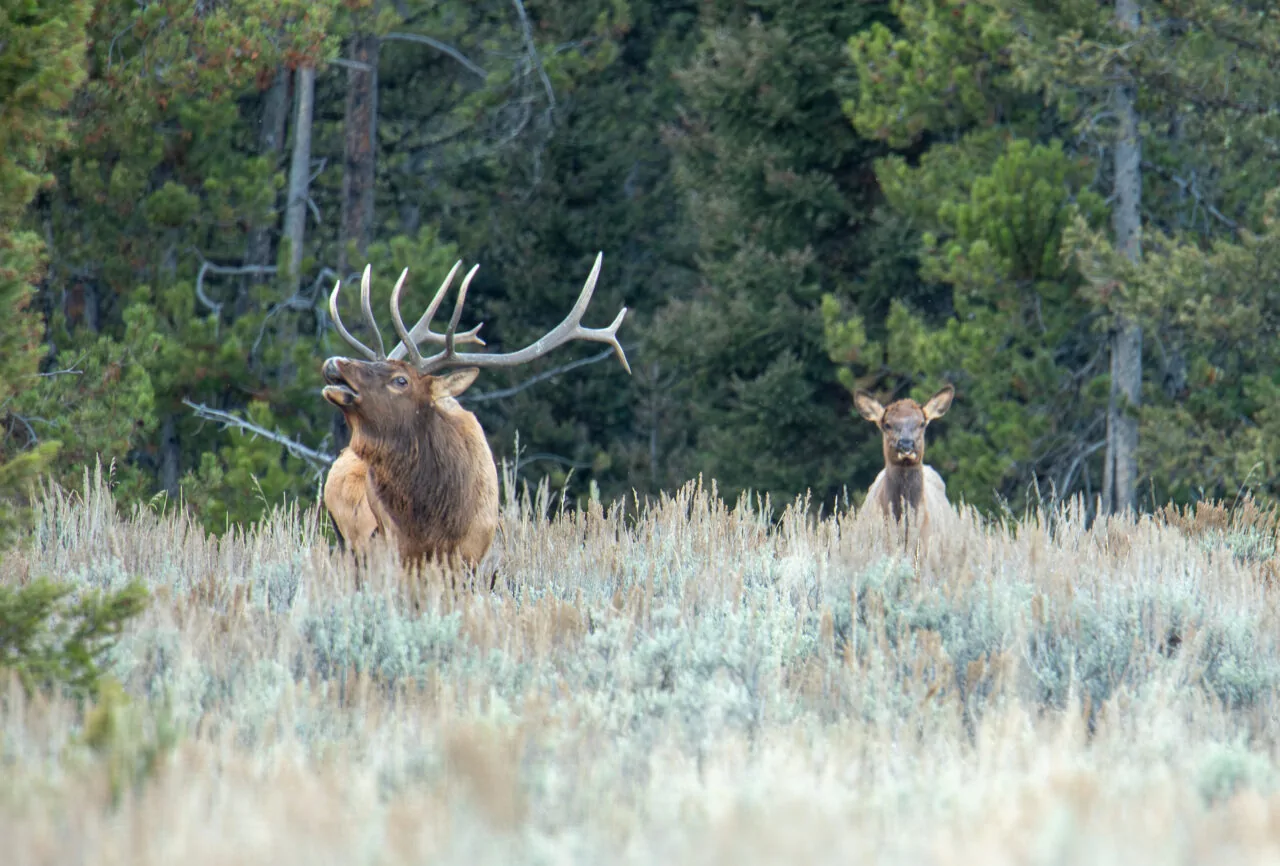
This week, we’re going big — big game and even bigger stories from Wyoming. Haley is joined by Angi Bruce – the Director of Wyoming Game and Fish, for a peek into the current state of Wyoming’s big game populations and the ever-evolving landscape of wildlife management. Expect updates on all the recent news Wyoming has on elk, antelope, and mule herds following some harsh winters, plus a sneak peak into some new hunting opportunities.
Want to watch along? Check out this episode on our YouTube Channel!
Haley (00:06):
Welcome back to the Land Bulletin podcast, where every other week we bring you experts in the field to impart their knowledge when it comes to the ranch and sporting property market, buying and selling advice, the latest, best stewardship practices, as well as topics that impact landowners every day. I'm your host, Haley Mirr. Let's jump in. Welcome back to the Land Bulletin podcast. It's Haley Mirr here again, and today we have a very special guest. It's the director of Wyoming Game and Fish. Angie Bruce. Angie, welcome to the show. Today, we just wanted to have you on, we love to educate our listeners on new legislation, new things happening in the real of hunting and fishing, and Wyoming is one of our favorite states that we work in, so we are excited to have you on the show. So welcome to the Land Bulletin.
Angi (00:56):
Oh, well Haley, thank you for having me. Obviously, Wyoming's my favorite as well, so I chose to move here eight years ago for that specific reason. Truly a wildlife biologist dream to work in this state and I'm fortunate to get to represent them. So it's a pleasure to be on with you today.
Haley (01:15):
Awesome, thank you. Well, I'd love to know, you said you moved to Wyoming eight years ago. What's your background and what brought you to this role with the Wyoming Fish and game?
Angi (01:25):
Yeah, so yeah, I grew up on a farm in southwest Iowa. Spent a lot of time growing up outside in a variety of ways and after getting a degree in wildlife management, worked about 20 years for the Iowa DNR. Loved Iowa. I always will a bunch of friends and family there. It will always be home in a way, but really fell in love with the west and the big open landscapes. And about eight years ago, decided just to jump. Wyoming's been extremely welcoming to me. This is my third position within Wyoming GI and Fish I'm happy to represent. And it's very interesting going from one state to another in a lot of people in Wyoming like to have native Wyomings represent them, but at the same time we have a lot of people from across the nation here in Wyoming. And I think I bring a different perspective. I'm very grateful to be here every day and a lot of us like to say is I'm not native, but I got here as soon as I could.
Haley (02:34):
I love that. That's a really good way of putting it. Yeah, we frequent Saratoga, that's our favorite part of Wyoming. And with what you're doing ungulates and all these different things, it's not like they stay in one place. So anything that you've learned in other states, you bring a wealth of knowledge to Wyoming. So it's awesome to hear your background and I'd love to know any kind of big updates before we go into some of the specific things we should be knowing about populations in Wyoming and things like that. Were there any big updates in 2025 or things that we should be expecting in 2026?
Angi (03:12):
Good question. Not a lot. Pretty minor tweaks here and there between antelope, mule, deer and elk, we have over 400 different hunt areas, so we are very detailed and orientated trying to get them just right to serve our customers and a lot of minor changes but not a lot of new now. However, I want to mention something that's new for the second year is a new opportunity for elk hunting, cow calf elk. We call it a type eight license just for those cow calfs on private lands and in the parts of states where we're over objective. So it's where we want to get those numbers back into the social tolerance acceptance in that area. We have offered this opportunity last year we had about 5,000 people take advantage of it and I'm hoping to see something similar this year and it seems to have really, really been working.
Haley (04:08):
That's great. And where in particular, you said there's certain areas, are there any bigger areas in Wyoming that you're really focused on?
Angi (04:16):
They seem to be somewhat scattered off the state, so not any just particular say a section of the state again where they're over objective, where we have more private land and that we need to really focus to get the numbers lower there. So good opportunity for folks.
Haley (04:36):
That's great. And we have spoken with people in your department in the past, and one of the things we looked at when looking at herd numbers and things was the harsh winters that occurred in the last couple years. How have those populations looked since I guess we've had a couple winners that were a little less intense. I was just wondering if they bounced back at all.
Angi (04:59):
Absolutely. So antelope, we saw more of a quicker bounce back, no surprise probably to you that is definitely in line with antelope behavior. Mule deer, as we all know, takes a few more years. I like to call them the sensitive ones out of the big game. They definitely take a little bit more time and our hunters have been out there for several weeks now with mule deer hunting, especially in the western part of the state. And we're getting some really good reports. We are still pretty conservative on how many licensure tags we put out there. However the reports are coming in, they're seeing yield deer, they're seeing big bucks. And so far this year I'm getting just all positive reports. So I think as anticipated we're seeing that bounce back just as planned.
Haley (05:51):
That's amazing. That's great to hear you. We've had the Mully Fanatic Foundation and things like that on, so we look a lot at Mule Deer, but that's really great to hear that things are bouncing back. Are there any other pressures you've seen that have kind of been expanding in this year or previous years that you'd like to chat about?
Angi (06:11):
Yeah, one of where my history is is in habitat management. So I can't leave this podcast without talking just a little bit about those pressures that are on our habitat, which then in turn affect our populations greatly. And there's all sorts of stressors on the habitat and what we're really seeing over the years. We're still Wyoming. We still have what I call the largest landscape, intact landscape in the lower 48. However, is it starting to be a quality of habitat issue with more invasive grasses on the landscape? Is that weighing into it? Very concerned about that, especially with deer, also with antelope. Of course elk seemed to be more resilient to that and more adaptable. But definitely those pressures anywhere from barriers that prevent their movements to get to habitat such as roades or fences, opening that up to have less stress on the animal when it's moving is key.
(07:17):
That's where you'll see us do a lot of projects focused on converting fences either to geo-fencing or wildlife friendly fencing and doing big large scale wildlife crossing projects over and under highways to provide less stress on the mule deer at that time. There's a lot going on. Do we have just one thing that we can just, one lever we can pull and make the mule deer population bounce back to historical levels? I sure wish we could. I'm still waiting for somebody to tell me that. But what we are doing here in the state is we're trying to develop a Wyoming plan for mule deer and it's bigger than game and fish, it is for the state of Wyoming because we know that some of those things are within our control and some of them are not within our control. For instance, is it a county planning and zoning issue? Is it invasive species where it takes a whole bunch of us to attack that problem disease, whether we know wish we could control that. But this conservation plan is really to look at all those factors that are applied to deer, all those stressors, and then paint the picture of all the things that can be done so everybody can see their role and their place and helping us get those population numbers back
Haley (08:47):
Because we deal with ranches and in our work. I'd love to know, in your opinion, what is the of private landowners and how does Wyoming game and fish collaborate with private landowners in the state of Wyoming?
Angi (09:02):
Well, I am definitely, I am very fond of private landowners coming from a farm myself. My dad is 85 and is just harvesting his 71st crop ever. Wow,
Haley (09:15):
That's amazing. I love to hear that.
Angi (09:16):
Yes, I'll have a high respect for landowners and it's really where my heart is. And so understanding in Wyoming being roughly 50% privately owned, 50% publicly owned, and knowing a lot of those really crucial winter range habitats occur on private lands. So when we had that really bad winter in 22, 23, it was very evident the role that those private lands play and that crucial winter habitat community plays for the survival of our big gain. And so that forage that our private landowners provide is huge. We work very hard to not only work with them to do voluntary conservation practices, but we have a very, very aggressive damage program in the state. So when there is wildlife damage, excess forage taken, we compensate them for that because we understand the value.
Haley (10:21):
That's huge. And what are some of the other things that Wyoming Game and Fish, how do you kind of take into all these factors and things into creating new regulations? I know it's probably from a biologist perspective, there's a lot of things that go into it from that side, are there other factors that bring you guys to creating these new regulations for hunters? Absolutely.
Angi (10:44):
We're taking public input every day.
(10:48):
We have our formal public meetings, we have our commission meetings where we want the public to come tell us, but it's really the entire year there that we're out there engaged with the public, asking them what they want. We really start when we set our seasons with what I call the biological data, the best available science, counting the wildlife out on the landscape, looking at our harvest survey information. So what the people are telling us they harvest and modeling that to predict the populations and then what those license numbers should be based on that. So we take that information and we start there every year and then we wrap in what I call some people might call it the political part. I call it the people part. We're all people and we have to involve them in the decision making. So it's really the social data into the equation.
(11:44):
What do people want in this particular hunt area? How many oak do they want on the landscape? If it's primarily ranch and private, maybe they want less than in a public land dominated area. And so that's really where we listen to the public and understand. One of the things we do here in Wyoming is with our mule deer, deer seasons, we either have general areas or limited quota areas, and those are offering drastically two different type of experiences for the hunter. Obviously in a general area, anybody can get a license, therefore you'll see more people out there. They sort of police themselves in limited quota areas. Again, we'll put out say a hundred license in that area, and then it's a competitive draw, so you're limiting, it depends on the community. I'll hear things like I want my kids to have an opportunity every year. I want it to always be a general area so everyone has a opportunity. And then in some areas you'll hear a higher volume of folks say, I really want a quality area, I want less people out on the landscape. And so then it's a limited quota. So we're really in tune and listening to the needs of our hunters and constituents to understand what they want, combine it with the biological data and come up with the best season for them.
Haley (13:14):
Wow. And I have to ask, do you have a big GIS staff helping with some of this? Because it sounds like a lot of that is spatial recognition too.
Angi (13:22):
Absolutely. And there's a whole bunch of new technology coming in. I'm probably not the best person to ask about that as an administrator now, but with lidar and GIS and drones, there's all sorts of way to model that data, but also to capture it. I think the time is limited for us to send our people up in small aircraft to count animals. I think we'll be doing that with drones soon, which we're not getting any more staff and people. So any more efficient, safer ways we can collect data and progress the science that we should. We're really looking forward to that.
Haley (14:00):
And I'd love to know too, because as you said, you come from Iowa, I'm from Colorado. How is Wyoming legislation different when it comes to hunting and fishing than other states in the west?
Angi (14:13):
Oh, good question. I would say that we have, what I have seen being heavily involved in the last seven years. We have a general respect for the department in our commission and keeping a lot of that science-based management authority within us, which I'm very proud of. Wyoming is so different than so many states, at least I feel because there's this shared love of the resource. We're an energy dominated state and energy is up at the top. We love our energy production, but we also love wildlife. And we make a way, we work hard to make sure that both of these things can stay up there along with our ag producers. So it isn't about an advocacy or fighting for one thing or another, it's about us coming around the table and saying, how can we do it best for all? You'll see that conversation in the legislature, you'll see if one of those gets off balance, you'll see the groups come in. One doesn't necessarily dominate another, which is really neat to see. And we had a couple particular bills last year that might've took some of that biological management authority away from us or our commission, and they didn't go anywhere. The legislators listened and they highly respect, and we have a really good reputation in this state of using the best available science, and they responded to that.
Haley (15:47):
That's awesome. It's nice to hear that those two things can be cohesive with one another, and that's what I've always loved about Wyoming. It's not very binary. It's very much like a collective, which is cool about what you guys do. And then I would love to go into, because some of our listeners might be avid hunters and some might just be starting, is there any big difference between the laws of tags and what you can draw and what can't when it relates to Wyoming versus Colorado? I feel like there's a couple significant differences between the two kind of law wise.
Angi (16:24):
Yeah, that's a good question. Every state has a little bit different philosophy. For instance, Iowa, where I'm from was very much a choose your weapon and your weapon choice determined when you hunt. Not necessarily where was not. It was less restricted. In Wyoming, it's focused on the where, so I mentioned those 400 hunt areas. So we have 111 antelope hunt areas. So the idea is you pick where you hunt and then you go from there. Once you draw a tag in the area for antelope or deer or elk. So it's very much based on the hunt area and the location.
Haley (17:07):
Got it. And can you be out of state and draw tags in Wyoming? Okay.
Angi (17:12):
Absolutely. You got to put in early and it can be challenging and it's very competitive. But we do have, depending on the species, we have a percent non-resident versus resident.
Haley (17:29):
Okay. Another question I'd love to ask is what kind of information or resources should hunters be looking at before they head out? Because I know it's sometimes confusing where public lands are private lands. What are the resources available to hunters when they're headed out?
Angi (17:47):
Oh, what a good question. And I think about what I look for well before I go out, and usually it's scrambling to find my 16-year-old son's license at the last minute and where he put it. But besides that, earlier in your planning, come up with a plan. Don't wait till the day of or the day before, but understand where you're going. I think that's the most critical thing. If you're going on public lands, make sure you know where that is. If you're going on private lands, make sure you have that lined up. There's a lot of tools out there. I know we're all familiar with Onyx and others, but just make sure you are extremely careful that you are correct and on the property you think you are. And if you're not, ask or find someone to ask and just make sure. And then I'd like to say too, we've heard even more growing energy around this conversation of hunters leaving a bad taste in landowners mouths, leaving gates open, causing ruts, muddy roads.
(18:49):
I would say as part of the hunting community, we need to go above and beyond. We need to look out for each other. We need to do whatever it takes to send the message that we care about the land as well. If that's seeing trash that someone left, pick it up. We all need to look out for each other and just start to build that collaborative culture to say we also care and try to reverse that trend as hunters having a bad taste in landowner's mouths from what they leave behind. So I just ask people to be extra careful, extra cognizant where they're going and what they leave behind.
Haley (19:29):
That's amazing. I couldn't agree more. And I would say it's like anything, you just want to plan out your entire trip and have everything ready to go. You wouldn't want to end up in the middle of Europe without a train ticket or knowledge of where you're headed next. So it's just like anything. And I love just the collaborative culture of hunters and watching out for each other. We all have the same view and we're all headed towards the same thing. So helping each other out, I think and respecting one another and are different roles that we play is big. And what are some of the most important dates that people should be aware of? Are there any coming at the end of the year? I feel like most of them are in the spring, but is there anything people need to be aware of at the moment?
Angi (20:12):
They do not at the moment. So what I would say is put it on your radar and start watching in January. We do all of ours the beginning of the year, but something along that line to consider. And one of the issues that we're seeing right now, especially with law enforcement in our tags is you mentioned technology earlier, Haley, but ai, AI is causing us problems. In the last month, we have had a lot of confusion in the field because folks are grabbing information that they get off of AI and they're copying and pasting it to different forums, different social medias, different outlets, and it's wrong. And it's grabbing content maybe on proposed legislation in the past. And it's now in implying that it's in effect and it is not. One of those cases would be some mountain lion hunting legislation that I referred to earlier. It did not go through. However, AI is making it seem like it did. So I just want to stress that people should really grab the regulations. We still put out hard copies, they're all online, or call our office, stop in our office or talk to any one of our field folks out there in a red shirt. But just make sure your source of your information and make sure it's coming from us.
Haley (21:41):
Wow. I would never have even thought of that being a hindrance to what you guys do, but that's a really good point.
Angi (21:48):
Yeah, the last month it's really exploded. I'm not sure what the difference is of why we're seeing such an uptick in it, but we're definitely talking to other states and other state agencies to see if they're running into the same issue and trying to put some press releases out there for people to pay attention to that.
Haley (22:06):
So if people are wanting to know the truth of what they're able to do, what is the website that they should follow or anything like or Instagram. And we can put that in the notes too of the podcast just so people have the right information there.
Angi (22:21):
Absolutely. Just in your search engine, put Wyoming Game and Fish and it should pop up first and easy to go on there and tab your way through and find it. And we have no hotlines here in Wyoming. You talk to a person when you call, so feel free just to pick up the phone and call us for anything as well.
Haley (22:43):
Oh, I love that. Gosh, that's so crazy. My friends always ask, how is AI and all these different things that are coming into play, how is that going to affect private land and what we do? And interesting to see that it already is. So it's good to talk to the right people. And before I let you go, I know you're a very busy woman. Are there any other things that are coming up in the next year or things you're excited about with Wyoming Game and Fish that we should be aware of?
Angi (23:14):
Oh, good question. We're always doing events and wanting to engage folks. We have one tomorrow at our cowboy football game at the college where we'll be interacting with families, hopefully pregame. So always looking for that. Encourage people to get involved either with us or with our numerous non-government agencies or NGOs within the state and help with a Habitat project. We always welcome that. Well. But one thing unique to the state and those who are here, the governor has done the last two years, a governor's conservation sports person forum a day when we all get together, engage the general public into understanding these wildlife challenges that we're facing and talk and discuss around a table how to solve them and what the future looks like. And so keep an eye out for that. We do it in the spring every year and it's just a neat event for people to get involved in.
Haley (24:21):
Wow, I love that. What we'll do is we'll reach out to you guys and just start putting those out for people so they're aware when big things like that are happening. So perfect. Well, thank you, Andy, for being on the show. We really appreciate it. We're going to continue watching all the different things you guys are coming up with and when important dates come out, we will let our constituents and our viewers know. But I really appreciate you taking the time, Angie, for coming on the show today.
Angi (24:47):
Yeah, thank you. Thanks for your good work in getting this messages out. Wonderful. So you have a good weekend.
Haley (24:55):
You too. Thanks, Angie.
Angi (24:57):
Okay, bye.
Haley (24:58):
Thanks for joining us today. To learn more about the ranch real estate market or our ranch marketing process, make sure to subscribe to our newsletter on our website@mirrranchgroup.com or give us a call at (303) 623-4545. See you next time.