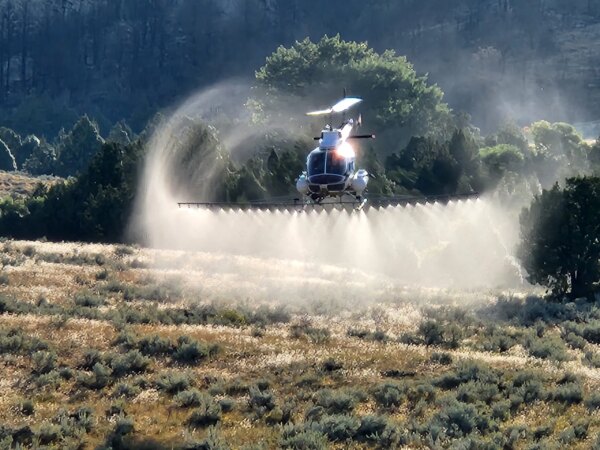

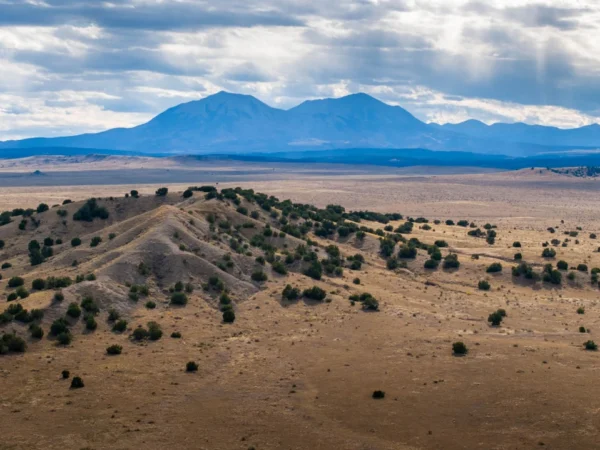
Sale of 30,000-acre Cucharas Ranch to The Nature Conservancy exemplifies the very best in land conservation
Read more


The Texas ranch real estate market has shifted—so what’s driving it today?
Harrison King of King Land & Water is back to break down what’s happening across Texas, from the east coast to Far West. Haley and Harrison dive into changing buyer trends, the growing role of conservation easements, the importance of water rights, and where the biggest opportunities lie for buyers and sellers in 2025.
Links
Want to watch this episode? Check it out on our Youtube Channel
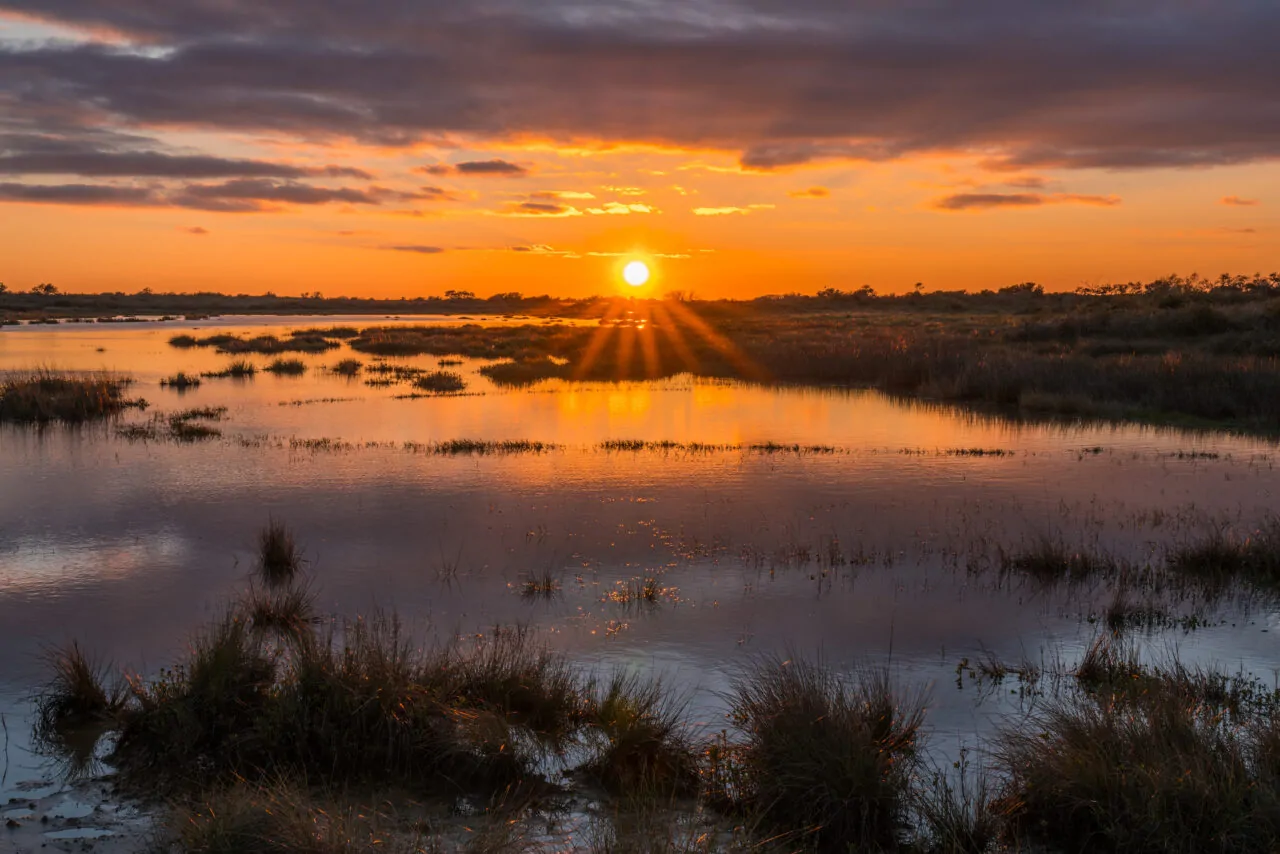
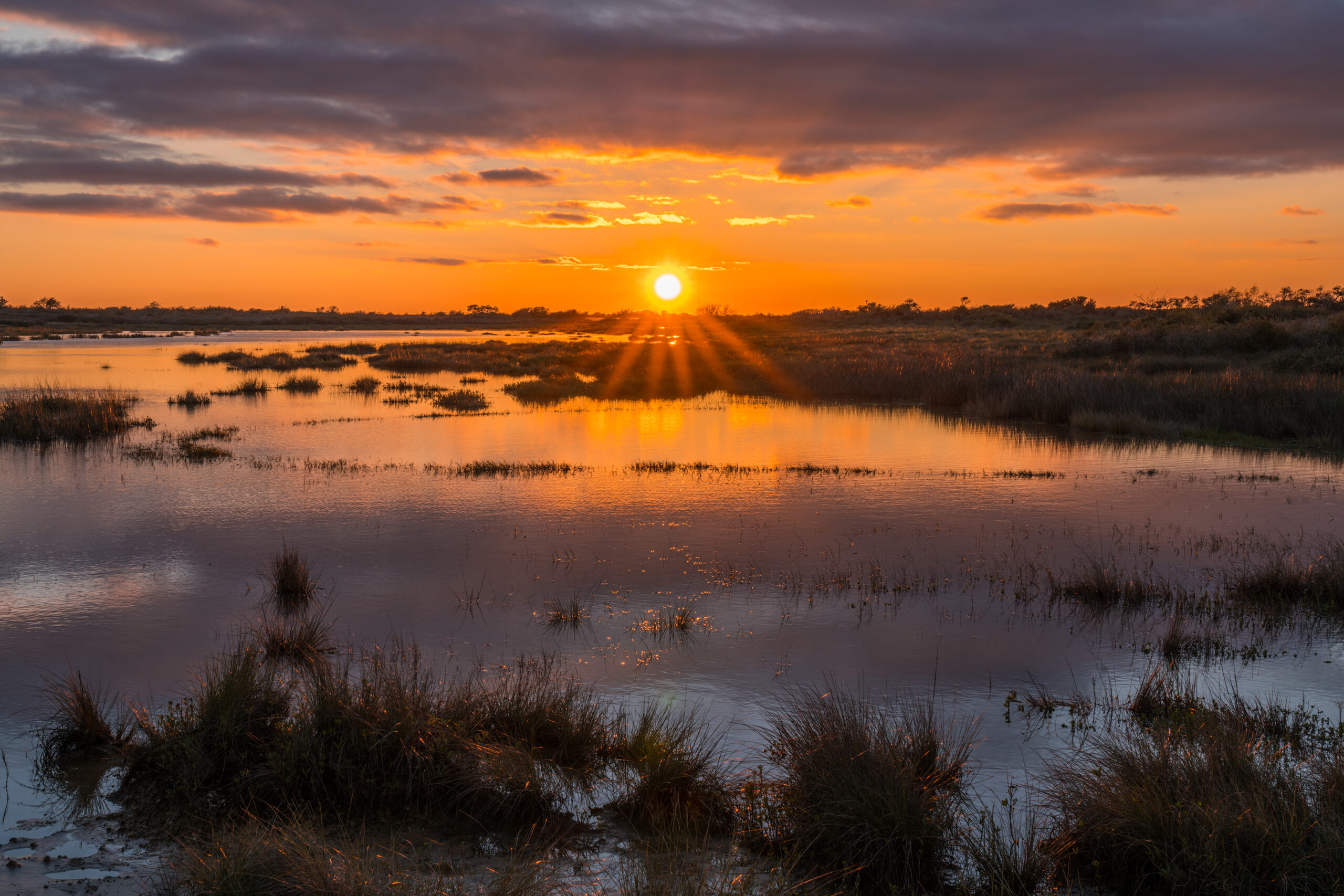
Texas, Calhoun County, Powderhorn West Ranch (please don’t use ranch name in captions), marsh at sunset
Haley Mirr (00:06):
Welcome back to the Land Bulletin podcast, where every other week we bring you experts in the field to impart their knowledge when it comes to the ranch and sporting property market, buying and selling advice, the latest, best stewardship practices, as well as topics that impact landowners every day. I’m your host, Haley Mirr. Let’s jump in.
(00:24):
Welcome back to the Land Bulletin podcast. This is Haley Mirr, and today we’re going to be having a good friend and partner of ours, Harrison King, on the show to go over what the market is looking like in Texas. We look a lot at some of the Rocky Mountain region, but looking at different markets also kind of dictates how to look at our own. So we wanted to have Harrison on the show to kind of look at what he’s been experiencing down there and see how it differs. So without further ado, welcome Harrison back to the podcast.
Harrison King (00:54):
Thanks, Haley. I’m glad to be back here and looking forward to catching up and talking with you.
Haley Mirr (01:01):
Awesome. Well thank you again for taking the time this year. We’ve experienced, it’s been a little bit different than we’ve experienced in years past up here kind of in Colorado, Wyoming, Rocky Mountain ranch. I would love to know how would you would describe the current state of the Texas Ranch real estate market? Has it kind of changed over the last couple years? I don’t know if you guys experienced the same type of influx in ranch buyers, but I guess we’ll just do high level to start.
Harrison King (01:30):
Yeah, I think definitely different than prior years, so I’m curious to see how that compares to what you guys are seeing. But if I had to sum it up, I would say kind of a plateau. I think definitely a slowdown from years past post COVID kind of boom and high demand. I think prices have held steady, volume has still been there. It’s just a lot slower, a little more work required for each. I think buyers are still finding incredible opportunities, those who are serious ranch buyers, looking for what they want, those opportunities being on the market and off the market. But what I don’t think we have is this first time ranch buyer, investor type people seeing different opportunities that we’re really crowding and a big part of the market in the past years almost made things too easy in some regard and especially in some markets. So I would say leveled off and almost back to where it was volume-wise at least a few years ago. But it definitely in transition for sure.
Haley Mirr (02:53):
Yeah, I would agree. I think there was a lot more buyers in the market post that had never been in the market that were like, let’s try this out. The market is being crazy, like the financial market. What a great place to hedge your money and land and let’s try that. And now I think people are kind of, it’s just a little bit slower to your point, but I think it also helps just our profession having to really evaluate and value these properties accurately instead of just kind of throwing numbers on there and hoping to fix. And it was for a couple years. So I think now we’re just having to be a little bit more realistic with how we value some of these things. I know you guys do a lot in West, west Texas, that’s like your bread and butter, but have you seen a difference in activity in some of the different regions you guys work in?
Harrison King (03:44):
Yeah, definitely. One I would say has been more active than usual is the coast. Texas has a long coastline and a lot of our coastline is regional cities, vacation areas, and a lot of it’s uninhabited in ranch land and there’s definitely been a lot of interest in that. I think our world, we just happen to also have a big portfolio of listings around this same time, but definitely seen a lot of interest. People want to be able to have a place where they can have a boat in the water in the summer, take their family, be close to a beach town or beyond the beach and at the same time at the winter have duck hunting recreation activities on a ranch on the coast. And so again, it kind of worked out that we had a big portfolio of properties that we slowly spaced out over a few years.
(04:44):
And so those listings, I saw a lot of that action I think this past year. I think the hill country and really any market that was pressured by urban sprawl and development has definitely been on the cooler side of things. I think that there’s not, and again, I think it goes back to who the buyers are. It’s not people who are new ranch buyers, developer types, investor types who are sitting at the edge of the urban sprawl. I’m saying, oh wow, look at this open space. I think that that has kind of made those markets cooler than they were. At the same time, I think that it’s kind of push people away from those markets. I think people are looking, Hey, where could I be somewhere close to these places, but I don’t want to see it. I don’t want it to be in my backyard. And so yeah, I think that those are two unique markets that have changed.
Haley Mirr (05:45):
And would you say too, I mean you talked about recreational properties. I mean we’re continuing to see a lot of interest in those higher recreational properties like fishing or hunting, you said boating, whereas we’re seeing a bit of a slowdown and maybe more of the very ag centric ranches that we have listed. I don’t know if you guys have experienced some of that in Texas, but to your point, those are the type of buyers that I think are still willing to pay a premium for some of these type recreational properties. I don’t know if you guys are experiencing that too down there. Just another thing.
Harrison King (06:16):
Definitely. Definitely. I think I agree with you. We’ve seen the recreation components be less of a priority and going back to the roots of the ranch, whether it’s or not, it’s an economic driver of the value of the ranch or not, but the ability to run cattle and to do those kind of more ranching ag focused properties is definitely stepping back up into the average buyer’ss priorities.
Haley Mirr (06:47):
And are you experiencing, and maybe it’s not as much as, because you guys have dealt with not having as much water for a really long time, but how has drought and long-term water concerns impacted buyer decisions or if it hasn’t, that’s also an answer to that. Yeah,
Harrison King (07:04):
I mean, it’s a great question. Water is always a priority in Texas, whether or not we’re in a drought or not. And I think right now getting a glimpse of coming out of a large drought relieved a lot of concerns about water, but I think it’s still the top of the list about what people are concerned about. I think that goes for the landscape itself, the quality and state of range land with water resources, spring aquifer, river lake levels, all of that. I think people had luckily were able to see during this last past drought, which we’re not out of yet. There’s been some relief in areas of the state where safe to say or out of, but seeing the rivers and creeks and springs in their worst state and seeing what is more resilient, I think that has been as crucial as ever. And now that some places have gotten rain greened up, there’s a lot of new listings and a lot of new photography of old listings that look a lot different. And I think being smart about not falling for that is now a priority. And I think water rights itself, it’s a hard topic in Texas and because we don’t have a lot of the controls and management of riots as other states do, it’s becoming a big priority right now and a big driver of some quiet investments across the state for people.
Haley Mirr (08:40):
That’s a really good point. Even what you were talking about about accurate marketing of some of these places where it shows up green and it looks like this whole different property and then you show up and the fields are fallow and the pivot doesn’t work anymore, and this is stuff. So just being very, and I think that’s why it’s important to work with a broker. They can really ask those questions, especially representing buyers because we’ve definitely run into issues like that before. Absolutely.
Harrison King (09:05):
And we’re all guilty of it because it’s hard not when it’s of property, when it looks it’s best, but I think, yeah, you’re right. Having someone representing you who can kind of decipher and be that guide, it’s crucial.
Haley Mirr (09:17):
And when you’re valuing ranches right now, what are you seeing buyers are seen as the most valuable components of a ranch We’ve experienced? Just as an example, vacant land is kind of harder to sell these days just because people are evaluating how much it costs to build your experience and some of that yourself, but build costs and things like that. We’re seeing more people interested in things with improvements or we’re looking at river frontage. What are the things that buyers are really looking for right now down in Texas?
Harrison King (09:49):
I think improvements is a component, but I think it’s also that’s two sided. I think a lot of sellers place way too much value on their improvements, and I think that it kind of distracts some of the land quality itself. And so definitely having something working improvements is great. I think that’s so of the people look for, they don’t want to go to that expense in time of starting from scratch and then water, it always is, whether it’s surface water and having a river coming through or being confident in the aquifer that you’re pulling from or even more adjudicated water rights and having those, it’s always the number one priority.
Haley Mirr (10:32):
And I’d love to now look at maybe some projects that you guys have worked on. I know this isn’t really necessarily one of the questions on the list, but what were some of the projects that you guys have worked on this year, whether buyers, sellers, things that you listed that you’re really excited about and kind of show where the market is headed in terms of what people are buying, what people are excited to sell inventory?
Harrison King (10:56):
I think I’m going to go back to answer that question. I’m going to point back to the coast. We had a portfolio of properties that were 19 individual properties with one seller. There were all conservation easement properties and that seller had bought those properties, placed conservation on them, improved them, done a lot of range restoration work, water projects. And we slowly put those on the market strategically over the years. And some of the first ones that we put out there, some of the larger ones had stayed on the market all the way until now. And some of them, once people got into it, they sold off the market before we could even get them out there because it just kind of fit different buyers’ needs. But I think the key point in all that is all of those buyers, and a lot of those buyers were first time conservation easement buyers.
(11:54):
They didn’t necessarily know what it all meant. They weren’t necessarily open to it. And I think that it shows that people see properties that are encumbered by conservation easements as opportunities to buy land at a different price point that they’re going to do the exact same thing that they would want to do with it. And they see the context of those properties amongst other conservation easements. Kind of going back to what I said about not wanting to be at the edge of the urban sprawl and looking further into rural areas, it’s kind of the same thing if people looking towards finding areas that have been protected with conservation easements and seeking those out. And so it was a really interesting year in that we sold the rest of that portfolio or had some other contract at the moment. But educating those buyers and having those conversations with them was just interesting because one guy, for example, he was 10 30 wanting a property that he sold.
(12:55):
He’s a developer and that’s what he does. And he sold a property to a track home builder outside of Houston, and that was what his land play was for his last investment. Well, he’s looking at a conservation easement property and it’s totally flipped his mind and he sees the value of, Hey, I can do what I want to do, hunt here with my family at a totally different price point here and I still see it appreciating. And so that was one kind of group of projects that really stood out and that it was a new pool of buyers going for something that they had never really been after before.
Haley Mirr (13:34):
That’s awesome. And with kind of a conservation story that were you able to still, it sounds like you guys are being, you’re selling most of the entire inventory if not all of it already. Did you see the conservation easement as an impediment in that regard, or was it to your point, a really interesting story where you were able to talk to these potential buyers and really show them the benefit of having an eased property like this amongst many others?
Harrison King (14:02):
Yeah, definitely not an impediment hurdle for sure. And I think it’s just that the conversation is part of getting people to see it in that light. I found it exciting to see it come to fruition. We talk about it all the time and we deal with a lot of properties, conservation events, and so to have so many of those same conversations with different groups of people, it really kind of helped in our minds at least prove that concept that we talk about.
Haley Mirr (14:33):
That’s awesome. And we’ve talked about this year, maybe the last couple years, where do you see the most opportunity in Texas for ranch buyers? Maybe we’re going away. You were saying it’s a little flatter kind of hill country closer to some of these more urban areas, but where do you see the most opportunity in the next couple years, do you think? Without giving away all your secret spots?
Harrison King (14:58):
Of course could never do that either. I got to look up. No, I think we see it, and especially specifically two projects right now that we’re working on, one off the market, one on the market is people relocating, not necessarily 10 31 and one property into another, but their focus in past ownerships and current ownerships had been proximity to cities. Well, now they’re looking an hour and a half further into the hill country, a little bit more remote. And they’re thinking long-term, these aren’t people speculating on a five year turnaround on a property is like, Hey, I’m going to own something for 40 years. Where do I want to be? Well, I want to be over here where I feel like I’m in a rural community. I feel like I’m around like-minded landowners and seeing, they’re basically forecasting and buyers are doing it themselves. It’s not really us pushing people, but people are naturally kind of shifting to where they want to be and what regions they see staying intact. And I think it’s hard. I mean, it’s different. I think obviously with a lot of states that you guys work in where you’re mostly public land and a lot of those areas are stable in that they won’t change on a broad scale. And here we’re susceptible to that. And I think people are starting to catch on to not necessarily being in control, but being in a region that is going in the right direction.
Haley Mirr (16:34):
Yeah, I would agree. And I think what’s great about some of those conserved properties near the coast that you’re talking about is those, you’re not owning all of it, but you have neighbors who are all protecting. So in a way, you’re kind of surrounded by what would be considered publicly, but taking care of in a way better way by being private, in my opinion. So that’s
Harrison King (16:53):
Cool. It’s exactly
Haley Mirr (16:55):
Something that we have seen a lot of recently. And I know you’re connected to the hospitality industry down in Texas. We’ve been seeing a lot of hospitality buyers and sellers in the Rocky Mountain region, and this is one archetype of one type of seller buyer, but I just thought it was interesting that we’re seeing more and more of those types of institutional sellers and buyers who are in the hospitality field. Have you guys experienced that at all in Texas or
Harrison King (17:26):
Definitely. And I think I’ve done a lot of that myself actually, and at least in thought. And I think definitely in buyers. I think there’s people out there with ideas, concepts of how can I utilize land differently, create business opportunities on these pieces, and seeing that the infrastructure is the hard part. And so people looking at existing infrastructure like, wow, this might make an interesting lodge recreation type component. And so we’ve definitely seen some of that. And we’ve actually had kind of off market, a couple clients reach out to us with existing hospitality concepts in kind of shop around for buyers some more so commercial rather than in a ranch setting or in a recreational component. But definitely that interest is spilling over into Texas as well.
Haley Mirr (18:21):
Yeah, I thought it was just interesting because for so long the buyers were always the ultra high net worth individual who’s buying it for his family or someone who is a ranch collector who is just increasing his operation. But we’re seeing more and more of these kind of creative types of buyers that we haven’t before. So I just didn’t know if that,
Harrison King (18:42):
And and to that point, if somebody isn’t in a position where the property is solely recreational for your family, it’s like what a great avenue into ranch or property ownership is if you can make it business and create revenue for you. And just today on King Land Water’s Instagram, we highlighted one of mirror’s listings, the Taylor River Lodge, and immediately I had a friend and client of ours text me, can I get some more information on that? What do those financials look like? And so you follow up and talk about that, but it’s definitely sparked peaks people’s interest because it’s really attractive idea
Haley Mirr (19:23):
And I think people are starting to spend their money rather on things, experiences. So we could do a whole other episode about that. And I’m sure you have a lot because you have some experience with those industries, but I just thought it was interesting and wanted to see your thoughts on that. One thing that we’ve noticed is, and a lot of people who are on the fence of selling, okay, inventory is really high right now. Should I wait a little bit? There’s this window where people can start to prepare to sell their land and kind of put their best foot forward once it is listed, in your opinion in Texas, and it’s probably a lot of the things are the same, but if people are considering selling, what are some of the things that Texas Ranch sellers should prepare for to have their property stand out when compared it to other things that might be listed right now?
Harrison King (20:14):
I would say just keep chipping away the small projects. I think especially in existing long-term ownership, a lot of people are hesitant to have to put in a lot of money to a property, even just to clean things up, keep it mowed, keep it maintained to display for showing. And so the more you can do year after year and slowly, the less of an ask is, especially in situations where multiple family members, multiple decision makers, not everyone’s going to be on the same page. If the broker comes and says, Hey guys, I think it’d really be helpful if you cleaned up that area or you started to cut the meadow more. And I think that the small low hanging fruit each year is important. And I think that it doesn’t have to be a big expense, it just has to be checking something off that might be a hurdle when the time comes to sell.
Haley Mirr (21:12):
Yeah, that’s great. And I think with that, just getting all your documentation, I mean, are you still seeing some multi-generational people selling or is it kind of transitioned into maybe second generation at this point?
Harrison King (21:27):
Definitely, definitely. And I think on the flip side of that, you see these legacy type landowners and lands get ready to sell, and a lot of ’em are not on the same page. A lot of ’em are disappointed that they gets that point, but at the same time, there are new next generation families ready to step in. And I think that specifically as the buyer side is people looking for not just a property that kind of fits their needs, but waiting and being patient year after year and asking us to go knock on doors of, Hey, are they ready? That’s really the property that I feel like is will be our family next legacy ownership the next a hundred years. And so I’ve definitely seen a lot of that and a lot of that going on despite what we said previously about the market generally being at a plateau, I think that those standout properties that are truly unique compared to that specific market are really standing out and so desirable. And I think kind of the circle back again on what we talked about on just hot and cool markets is just because a property’s in a certain region, county proximity to a certain town, it’s not a big blank slate of, Hey, that’s worth 10,000 an acre. It’s really the property next to it might be because it has all of these features that make it so unique, and we’re seeing a lot more, I think the market and buyers are being more discerning property to property, not just county to county, region to region.
Haley Mirr (23:21):
Yeah, I would say so. I think right now I would say it’s a buyer’s market more so than it has been in years past where you’re not competing that quickly against people, but for those very unique properties that have all the bells and whistles, you still might, but it does give you the chance to really kind of think about what your goals are, to your point, what your wants to be, what your family wants, and make those decisions instead of being hurriedly into a big investment choice in some of these things. So I think it’s a good thing. I think it’s keeping everyone honest. It’s keeping everyone in check. And I know residential market is very flat. I don’t know if it’s the same in Austin, but in Denver it’s like things are staying on for a while. And I think ranches, we don’t go through that big of ebbs and flows. It’s always kind of this consistent up. So I still think it’s a really good place for buyers and sellers to kind of be in the market.
Harrison King (24:25):
I agree. And to that point, I don’t like to play economists, but when people ask me clients, what are you seeing? Are interest rates affecting things? Is this, is that, and I really think that the properties and ranch real estate market speaks for itself in that when times are hot and the market’s hot and demand is there, yes, it’s going to be investment opportunities and people seeing a totally different potential where the completely opposite situation, a different pool of buyers are seeing the stability, the long-term value. And so I still think that those buyers are seeing a lot of great things in the market and getting opportunities that really great properties that, yeah,
Haley Mirr (25:20):
I would agree. And without making you be an economist, just because I don’t know all the things that happen locally in Texas, is there anything that has occurred in the last couple of years locally that has affected the market in any way? Any laws that have passed, things like that, that people should be aware of? And if there’s not, it’s okay too.
Harrison King (25:44):
No, I mean, do you mean more like
Haley Mirr (25:49):
Legislation or
Harrison King (25:53):
Let’s go back to water. I mean, everything revolves around water here, and it’s becoming a big issue legislatively in the state. So besides a few exceptions, the state of Texas in the most of the regions relies on the rule of capture is our water law. And it’s rooted in a hundred year old common law. And it’s been tested and proven several times in many supreme Texas Supreme Court cases. And basically what we rely on is that I can capture the water underneath my land despite what it does to Haley’s land next Door.
(26:34):
And so it’s very dangerous.
Haley Mirr (26:39):
I was going to say that stressed me out.
Harrison King (26:43):
There’s areas where there’s groundwater conservation districts around the state, which is a regulatory entity. Some places those groundwater districts are a great control and moderator of water usage and water export in sale of commercial water. In some areas, the lack of those groundwater conservation districts is a good thing because there’s not a avenue to get a permit or create those opportunities to export it. And so
(27:14):
Without getting into the weeds, there’s pros and cons of having those regulatory bodies. But at the end of the day, you have the right to the water underneath your feet that you can capture, and aside from doing it maliciously or doing it illegally, you have the right to do that no matter how it affects your neighbor. And I think that there are several organizations in Texas that are private property rights organizations and political factions that see both sides of the argument about why rural capture is a positive. And I think everybody’s kind of reassessing their opinion on it right now. There are several big public projects where people bought ranches with significant water rights and are testing the process of getting permits to develop, explore, and export those rights. And so people are saying, whoa, whoa, whoa. That’s not right. That’s taking water from this rural community, these people, but other people. And sometimes the same groups saying, well, that’s their right to explore that water. And so to answer your original question is yes, that is going to be on the forefront going forward is not only what water resources are there, but what are my rights to it, and how is that going to change in the future both regionally and in the statewide
Haley Mirr (28:45):
Level? Yeah, no, it’s huge. I mean, we’re dealing with the Colorado River Compact every day of our lives, but who knows when that’ll be fixed, but it’s no matter what, it’s good when you’re buying or selling to know what’s happening at that local level. So I’ll read more about that. I don’t know anything about that type of water, but seems like it’s a lot of different opinions that could probably be formed from what that means.
Harrison King (29:12):
I think another big thing that will be on the forefront is desal and how it affects our resources. There’s been a lot of poorly planned, proposed desal projects on the coast where they’re pumping waste, high salinity, brought water back into scissor base systems and not disposing of it properly, or people will organize and fight against that. Well, another one will pop up. Well, they said, well, we’ll just put it in this creek up here 50 miles inland, but it’s like that creek flows right down into a sensitive bay. So there’s a lot of things I think you’re going to change in Texas mostly around water supply. And I think the more people try to test what they can get away, I think the more hopefully that people will create the right controls on it and make sure it stays a good resource,
Haley Mirr (30:14):
I think. And Texas has always been landowner, and I feel like if even Colorado can figure out ways of, if you close your head gate for this amount of time, we’ll pay you this. And there’s all these different projects that are happening, I feel like there’s just going to be a solution. There has to be for some of this stuff. But in the end, if you do have water rights, it’s always going to be valuable no matter what, no matter what any of this legislation does, because always be a tool to you. So just kind of understanding what’s available, what that water right means, adjudication, figuring out what those terms are. And
Harrison King (30:53):
Then unfortunately,
(30:54):
A lot of that doesn’t exist in Texas. We don’t know what it needs to have this right, and to use that right versus just to have access to the reservoir sometimes is equal. And I think defining it is the hard part for us. And I think that the Western states, despite the water issues I’m familiar with, that you guys do run into the system, I think is so much more developed and the terminology and the controls and who is in charge is a lot more structured. And so I hope that we can evolve to a point where we’re mimicking some of that in context to our own needs.
Haley Mirr (31:34):
Well keep sending me articles as you guys continue to learn, and I’ll do the same. And I would love to know, just to sum up the Texas Ranch market’s direction. In one sentence, what would it be? Kind of like, where is it headed? What are you excited about? And it can be more than one sentence.
Harrison King (31:52):
Yeah, it will be hard to sum it up in one sense, but I think we’re poised to really showcase properties that stand out and are those 1 cent generation lifetime opportunities. I think that it’s not the time for buyers to sit on the sideline waiting for the next spike in demand to kick things off. I think if you’re a serious buyer and you know what you want, now’s a good time to explore those options and see what’s out there because you could get left behind, I think when the next spike in demand kicks the market off again.
Haley Mirr (32:33):
I would agree. And I think even though inventory may seem high, this is the perfect opportunity to kind of see what’s out there because a lot of really cool stuff on the market, and I’m sure you’re kind of seeing that too. So
Harrison King (32:45):
I don’t know where this fits into what we’ve talked about, but maybe it does. But one thing that I thought about multiple times in these questions and who are the buyers, and a lot of people come to us and ask us to go knock on doors, pull these off market properties, and we keep those for our own clients. And it’s been a weird kind of collision. Of course, we want to represent sellers and buyers, but when it comes to someone saying, I got the perfect buyer. They want to be in the prime Davis Mountains and people hounding us for years over specific properties and just areas in general, and when the moment’s right, we have to save that for clients of our own that we’ve been kind of saving, not actively saving, but saving the opportunity to go ask Landers. And we’ve had a few of those come up this week where we were shocked that the opportunities finally came around, but we’ve got a list of people and ours kind of go to the front. I don’t know if y’all run into that or not, especially I think, I’m curious from y’all’s perspective in a larger brokerage where you do have more brokers than we do, and people with their own specific clients is like, do y’all kind have a shorthand for how you handle competing clients and interests, especially in an off market properties, I guess? Or do y’all just throw it out there and just everyone be open and forward with each
Haley Mirr (34:34):
Other? Yeah, I mean, we try. So for instance, a lot of situations of off market opportunities, the reason they’re off market is because whoever’s selling doesn’t really want it to be seen by the public, doesn’t want it to be marketed, doesn’t want their business out there in the world. So that’s why they come to us. And a lot of times if it doesn’t sell during that off market opportunity, it eventually becomes this kind of public thing. But I will say those off market opportunities are nice because we are able to share it with all of our brokers clients and do kind of like a, Hey, this is coming up. These guys are here. We have this really cool one in New Mexico that I’ll send to you actually as we’re talking about this. But yeah, I think just figuring out what your buyer needs, we had one that was off market before it became live, and I think we had three of our internal buyers who were interested, but they were all represented by different brokers. So it was kind of like, bring us your final and best kind of situation, and that’s how we handled it. But yeah,
Harrison King (35:43):
And you can broaden your kind of off market, pre-market network because of everybody’s relationships. But
Haley Mirr (35:51):
Yeah, we do try as hard as we can, especially with the high inventory. I think sellers are a little bit more, they don’t want to have theirs fade into oblivion with all the other listings that are out there. So that’s why they try to be off market, but if they don’t sell, they always turn into actual marketed listings. So that’s kind of how we call it a soft launch, and then we kind of bring it out. But I think off market is still,
Harrison King (36:23):
We seem to run into a problem with it though, where we do that, we did the thing, we shop it around quietly and one we just sold this year, and it’ll never be, we won’t even post about it because
Haley Mirr (36:35):
It’s that. Yeah, and those suck because you want to be able to post about it.
Harrison King (36:42):
Some of them, it’s almost harder. One, for example, right now that we have, I’ll send you the packet, the owner’s like it’s for sale. It could be bought. I do not want it on the market, and we’ve been kind of shopping it for a year, but it’s like, we’ll show that to somebody and they say, and this guy has other properties, and they say, well, we want to go after that one. They want, if we have a packet or something kind of prepared, it’s almost worse If it’s not on market, like, what’s the deal one, why are you trying to trick me into it?
Haley Mirr (37:17):
Yeah, why is this a hidden gem?
(37:21):
And it’s also with the National Association of Realtors, with the commission structure and everything about buyer agents and yada yada. I think even more so now it’s you want to have buyer agents bring their buyers, you want them. It is just like a wider range of people to be able to see it. So we always say that too. We want to incentivize buyer agents to bring their buyers because there is a lot out there, and we just want to make sure you guys get the eyes. So that’s just something too that we’ve experienced a little bit, I would say. Cool. Well, it sounds like you guys are doing really well, and that this year was exciting. You found some new pockets, some new stories to tell about conservation and are working with some really interesting buyers. So I’m excited to see what King Land and Water does the remainder of the year and in the next couple of years. But as always, we value your partnership, and I really appreciate you taking the time to come on the show today, Harrison.
Harrison King (38:23):
You bet. Thanks for having me, Haley.
Haley Mirr (38:25):
Thanks for joining us today. To learn more about the ranch real estate market or our ranch marketing process, make sure to subscribe to our newsletter on our [email protected] or give us a call at (855) 930-2189. See you next time.
Be the first to see the latest Ranch news and advice
 0
0
Start saving properties by clicking the + button on any property page.